AMLR Solutions
 AMLR Consultation
 EUDI Wallet
 Onboarding
 Ongoing Monitoring
 FRAML
 KYC
 KYB
 KYI
 Age Assurance
 Workforce IAM
 Candidate Verification
 Account Takeover
 Bonus/ Promotion Abuse
 Chargeback Fraud
 Deepfake
 Document Fraud
 Fraud Networks
 Impersonation Fraud
 Money Mule Activity
 Multi-Accounting
 Party Fraud
 Regulatory & Compliance Risks
 Synthetic Identity Fraud
 Adult Content
 Banking
 Crypto
 Fintech
 Forex
 Compliance
 Fraud prevention
 Trust & safety
 Global expansion
 Compliance Officers
 Developers
 Fraud Analysts
 Product Managers
 Journey Builder
 Global Trust Platform
 Customer Profiles
 Vendor Comparison
 IDV Case Management
 AML Case Management
 Regulatory Reporting
 Agentic Rule Builder
 AI Compliance Co-Pilot
 Fraud Analytics
 Fraud Hub
 OCR
 Shufti AI
 Bank Account Verification
 Biometric Duplication
 Database Checks
 Document Intelligence
 Government ID
 Mobile Driver's License
 NFC
 Selfie Liveness
 Brand Personalisation
 Deployment Options
 Identity Methods
 IDV Modes
 Multi-tenancy
 On-Premise IDV
 Secure Capture
 Shufti MCP












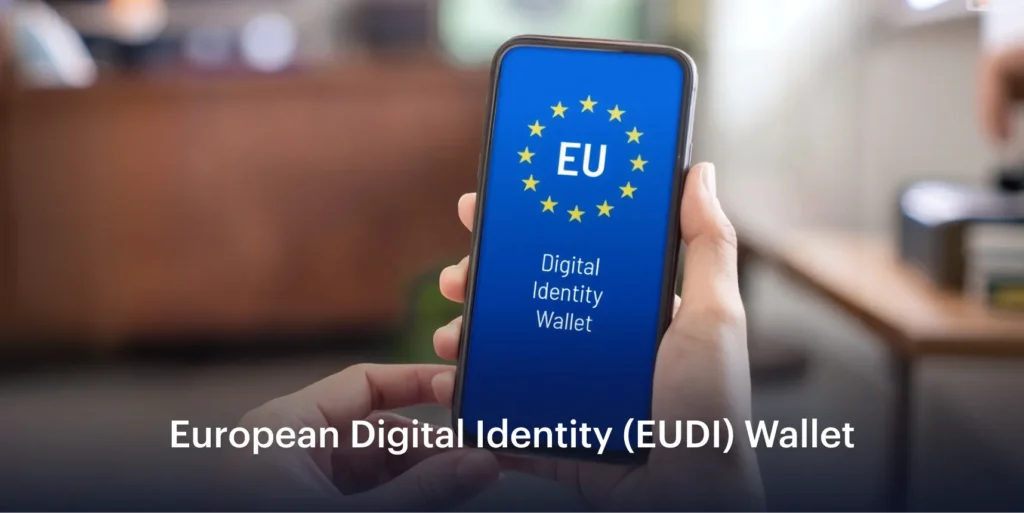

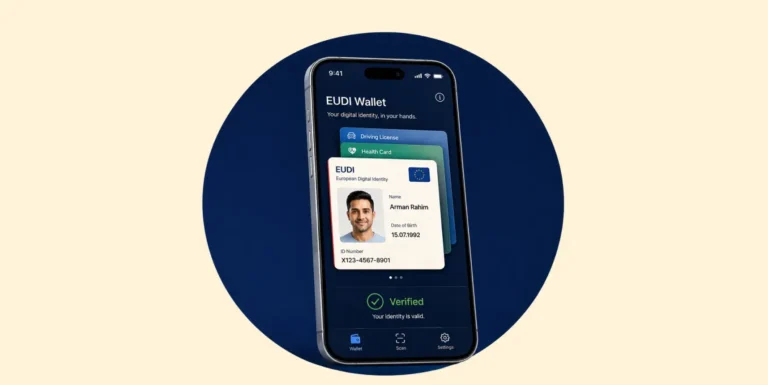
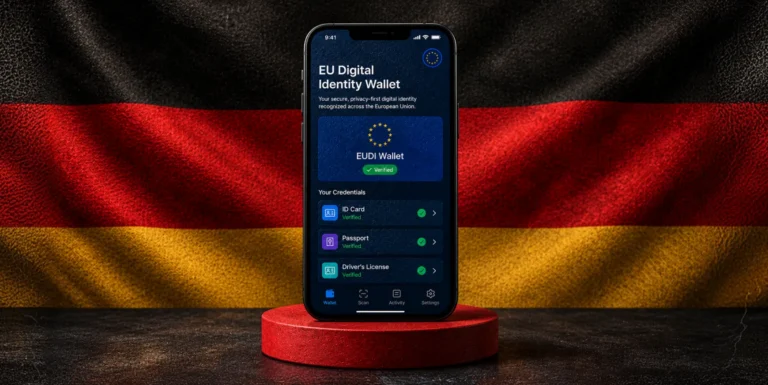
The European Digital Identity (EUDI) Wallet is an app that every EU Member State must provide to its citizens/nationals by the end of 2026, letting a person store and present verified identity data and official credentials under their own control. It was created by Regulation (EU) 2024/1183, which amends the 2014 eIDAS Regulation and is commonly called eIDAS 2.0.
What is the EUDI Wallet?
The EU Digital Identity Wallet is a free, voluntary digital mobile application which is mandated by the European Union under the eIDAS 2.0 regulation. This enables EU citizens, residents, and businesses to share official digital documents and credentials safely across all 27 member states.
The EUDI Wallet works with four categories of credentials that go from government credentials to everyday credentials.
1. PID (Person Identification Data)
PID translating to Person Identification Data it is the core digital identity that each certified EUDI wallet must hold. It must be issued by a government-appointed institution in every member state. The mandatory attributes of PID include the family name, given name, date of birth, place of birth, as well as nationality. PID is recognised by all EU member states.
2. Pub-EAA (Public Electronic Attestation of Attributes)
These include the official documents that have been issued by the public-sector authorities and the government. This includes documents like birth certificates, residence permits, or tax IDs.
3. QEAA (Qualified Electronic Attestation of Attributes)
These are digital credentials which are based on authenticated data extracted from public authorities. They are issued by qualified Trust Service Providers, and these carry the same weight as paper originals.
4. EAA (Non-Qualified Electronic Attestation of Attributes)
This includes daily-use credentials like online certificates, boarding passes, or memberships. An EAA can be issued by any business in an effort to reduce friction and improve user experience.
Who provides the EUDI Wallet?
Under Article 5a(2), wallets may be provided directly by a member state, under its mandate, or independently with its recognition. Article 5a(1) requires each member state to provide at least one wallet within 24 months of the entry into force of the implementing acts referred to in Articles 5a(23) and 5c(6).
Article 5a(4) sets what the wallet must let the user do:
- Request, select, combine, store, share and present identification data and attestations, with “selective disclosure of data” possible, so a user can prove age without revealing a birth date
- Generate pseudonyms stored encrypted locally
- Sign with a qualified electronic signature, with free use available to natural persons. Member states may restrict free use to non-professional purposes only.
- Check every transaction in a dashboard, can also request erasure under Article 17 of the GDPR, subject to legal retention obligations that may require certain records to be retained, and report a relying party to the data protection authority.
Issuance, use and revocation are free to all natural persons under Article 5a(13). Use is voluntary under Article 5a(15), and services must also remain reachable by other means.
What does the EUDI Wallet regulation say about privacy?
Article 5a(14) gives users full control of wallet data, and bars providers from collecting other information beyond what the service needs. Article 5a(16) requires the framework to prevent attestation providers from tracking or correlating transactions unless the user has clearly authorized such activity.
Who has to accept the EUDI Wallet?
| Party | Obligation under Article 5f | Timing |
| Public sector bodies requiring electronic identification for an online service | Must also accept wallets | Article 5f(1): Applies from the point at which a public online service requires electronic identification and authentication. Separate from Member State wallet rollout deadlines. |
| Private relying parties are legally or contractually required to use strong user authentication in sectors such as banking, healthcare, energy, transport, education, telecommunications and digital infrastructure. | Must also accept wallets, on the user’s voluntary request | No later than 36 months from entry into force of the implementing acts under Articles 5a(23) and 5c(6) |
| Very large online platforms (VLOPs) with 45 million or more average monthly active recipients in the EU, as designated under Article 33 of the Digital Services Act. | Must accept and facilitate wallet use, minimum data only | On the user’s voluntary request, when the platform requires authentication for access to its online services. |
| Microenterprises and small enterprises | Exempt from the private-sector obligation | Not applicable |
Article 5b mandates that a business that intends to rely on EUDI wallets must also register in the Member State where it’s established and declare the data it intends to request from users. You cannot ask for more than that list, and you must accept a pseudonym unless a law requires you to identify the user.
EUDI Wallet Use Cases
The Commission’s examples differ in what the wallet actually gives you. In order to open a bank account or for applying for a loan or for filing a tax return, the wallet sends the person’s identity details, like their name and date of birth along with their identity attributes required for the service where available directly from an authorised source instead of a photo or a document. Any information that is not available through the wallet may need to be collected separately. For an age-only check, the user can share proof that they meet the age threshold without disclosing their date of birth at all.
The wallet proves who someone is, but it does not say much about where their money came from; it can support identity verification, but it does not complete a business’s AML checks. The business still needs to carry out the due diligence and screening which is required for the customer and the service.
What does EUDI Wallet identity verification change for onboarding?
It has an influence on the input but not on the duty. A wallet presentation hands you cryptographically signed attributes from a state-backed source instead of a photographed document, but your due diligence, screening, and record-keeping obligations are untouched.
There are potential integration risks; one of them is coverage. Use is voluntary, and wallets go to Member State citizens and residents, so a digital identity wallet’s coverage in Europe depends on eligibility, availability, and adoption. An alternate route should be kept for applicants who cannot or choose not to use a wallet. Document and biometric verification stays in the flow. The second is fragmentation: build wallet acceptance separately, and there are two audit trails that do not reconcile.
Frequently Asked Questions
What is the EUDI Wallet?
A Member State-provided app that lets a person store and present verified identity data and attestations of attributes across the EU, established by Regulation (EU) 2024/1183.
Is the EU Digital Identity Wallet mandatory for users?
No. Article 5a(15) makes use voluntary and bars restricting access to services or the labour market for people who do not use one.
Is eIDAS 2.0 the same as the EUDI Wallet regulation?
Yes, in practice. eIDAS 2.0 is the informal name for Regulation (EU) 2024/1183, which amends Regulation (EU) No 910/2014 rather than replacing it.
Does the EUDI Wallet replace KYC?
No. It supplies verified attributes for identification, but AML duties for due diligence, screening, and record-keeping still apply.