AMLR Solutions
  AMLR Consultation
 EUDI Wallet
 Onboarding
 Ongoing Monitoring
 FRAML
FRAML KYC
KYC KYB
KYB KYI
KYI Age Assurance
 Workforce IAM
 Candidate Verification
 Account Takeover
 Bonus/ Promotion Abuse
 Chargeback Fraud
 Deepfake
 Document Fraud
 Fraud Networks
 Impersonation Fraud
 Money Mule Activity
 Multi-Accounting
 Party Fraud
 Regulatory & Compliance Risks
 Synthetic Identity Fraud
 Adult Content
 Banking
 Crypto
 Fintech
 Forex
Forex Compliance
 Fraud prevention
 Trust & safety
 Global expansion
 Compliance Officers
 Developers
 Fraud Analysts
 Product Managers
 Journey Builder
  Global Trust Platform
 Customer Profiles
 Vendor Comparison
 IDV Case Management
 AML Case Management
 Regulatory Reporting
 Agentic Rule Builder
  AI Compliance Co-Pilot
  Fraud Analytics
 Fraud Hub
  OCR
OCR Shufti AI
 Bank Account Verification
  Biometric Duplication
 Database Checks
 Document Intelligence
 Government ID
 Mobile Driver's License
 NFC
NFC Selfie Liveness
 Brand Personalisation
 Deployment Options
 Identity Methods
 IDV Modes
 Multi-tenancy
 On-Premise IDV
 Secure Capture
 Shufti MCP













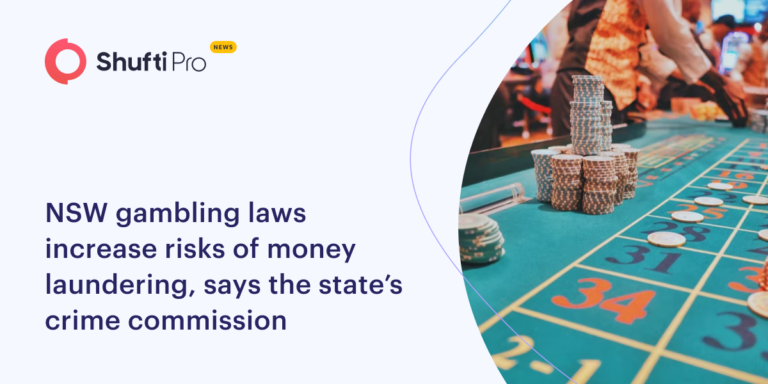
The FATF released a report on 9 September 2026 and warned that the rapid growth of online, cross-border gambling has opened new gateways for money laundering and published a set of red-flag indicators to help regulators and operators detect abuse. It was drawn from the questionnaire responses from 80 jurisdictions from across the FATF global network. The report singles out illegal and unlicensed offshore gambling as a significant risk and notes that the illegal market rivals or exceeds the legal ones in some countries.
What report covers & how exposed each sector is?
The report, Risks of Gaming and Gambling, is the first detailed report given by FATF on examination of online, illegal gambling, and updated analysis of how ML/TF/PF poses risks, last updated in 2009. It includes responses from 80 jurisdictions, written comments from the 29 jurisdictions, and consultation with the industry bodies, researchers over the period of one year. Since gaming and gambling is becoming more digital and cross-border interconnected, the FATF stated, money laundering, terrorist financing, and proliferation financing risks are also developing. Brick-and-mortar, online casinos, and sports betting are considered to be particularly exposed to money laundering (ML) risks, while the lotteries, scratch cards, and similar products are treated as lower risks. Terrorist financing (TF) as compared to online gambling remains limited, as well as the risks of proliferation financing (PF) in the context of gaming and gambling also remains limited.
How criminals launder money through the gaming and gambling platforms?
Operators are now accepting no cash, e-wallets, mobile money and virtual assets, a combination that allows rapid, anonymous, cross border transactions, and the conversion of value from one to another form. The report documents that laundering needs little or no-genuine play that includes depositing funds and withdrawing without barely betting, structuring of deposits into smaller amounts to fall under reporting thresholds, multiple individual aggregate or pool deposits in the operator’s or platform’s account, mule accounts and high velocity transfers. Suspicious betting patterns including coordinated or hedged betting which already covers every outcome and P2P chip-dumping manipulation. Online gaming and gambling platforms are also linked with social media to coordinate illicit activity such as advertising illegal or unlicensed gambling, recruiting money mules, dissemination of terrorist propaganda and fundraising for TF.
Hidden Ownership, Sham Merchants, and links with the organized crime:
Beyond individual transactions, the report also highlights the weakness in who owns and controls operators. Complex (and often cross-border) ownership structures, nominee arrangements, trusts and foundations that obscure beneficial ownership and control, which may conceal criminal elements during the licensing process. FATF also flags the ‘sham merchants’, where illicit operators pretend to be legitimate domestic businesses to process gambling-related payments that appear as ordinary retail transactions. Although there is decline in Junkets, it still poses risks for player anonymity and obscured beneficial ownership. The abuse of gambling operators for illicit finance is also linked with other crimes like corruption, professional ML, cyber-related fraud, and organized crime.
What the report tells operator to watch for
There are several identity and onboarding challenges like customers who open multiple accounts under the same or a fake name, mask their location through repeated VPN and multiple-device use, refuse to appear on a video call to verify their identity, or provide doctored documents that are difficult to authenticate. Others relating to screening include persons in sanction lists, PEPs, or those who appear in adverse media. The report also discusses platform-level weaknesses, including variations in customer due diligence (CDD) quality, weak ongoing monitoring, inadequate thresholds and limited training, and warns that regulatory framework differences across jurisdictions is enabling regulatory arbitrage.