AMLR Solutions
  AMLR Consultation
 EUDI Wallet
 Onboarding
 Ongoing Monitoring
 FRAML
FRAML KYC
KYC KYB
KYB KYI
KYI Age Assurance
 Workforce IAM
 Candidate Verification
 Account Takeover
 Bonus/ Promotion Abuse
 Chargeback Fraud
 Deepfake
 Document Fraud
 Fraud Networks
 Impersonation Fraud
 Money Mule Activity
 Multi-Accounting
 Party Fraud
 Regulatory & Compliance Risks
 Synthetic Identity Fraud
 Adult Content
 Banking
 Crypto
 Fintech
 Forex
Forex Compliance
 Fraud prevention
 Trust & safety
 Global expansion
 Compliance Officers
 Developers
 Fraud Analysts
 Product Managers
 Journey Builder
  Global Trust Platform
 Customer Profiles
 Vendor Comparison
 IDV Case Management
 AML Case Management
 Regulatory Reporting
 Agentic Rule Builder
  AI Compliance Co-Pilot
  Fraud Analytics
 Fraud Hub
  OCR
OCR Shufti AI
 Bank Account Verification
  Biometric Duplication
 Database Checks
 Document Intelligence
 Government ID
 Mobile Driver's License
 NFC
NFC Selfie Liveness
 Brand Personalisation
 Deployment Options
 Identity Methods
 IDV Modes
 Multi-tenancy
 On-Premise IDV
 Secure Capture
 Shufti MCP














A Guide to Risk-Aligned Transaction Monitoring
How to cut false positives and move from alerts to decisions faster.
Schedule a DemoHow Transaction Monitoring Should Actually Help in Detection of Risk
The core purpose of transaction monitoring is to identify suspicious activity by analysing whether customer transactions, account behaviour and activity patterns align with the customer’s expected risk profile. It applies rules and detection scenarios to identify unusual behaviour that may indicate financial crime risks.
Effective transaction monitoring depends on multiple factors, such as identifying the risks that can show links to potential money laundering activity. Those risks must be translated into precise monitoring rules, scenarios and thresholds that a transaction monitoring system can apply to real customer activity. Many organisations struggle to improve transaction monitoring accuracy because gaps between customer risk assessments and monitoring rules can result in missed suspicious activity and unnecessary false positives.
AML Transaction Monitoring vs Fraud Detection
Monitoring asks whether money is criminal in origin or destination. Fraud detection asks whether the transaction itself is legitimate and authorised.
AML transaction monitoring
- Asks whether this is consistent with what is known about the customer, and whether it matches a laundering typology.
- Carries the obligation to report suspicion to the Financial Intelligence Unit.
- Sits with the compliance function and the MLRO.
Fraud detection
- Asks whether this person is who they claim to be, and whether they intend this transaction.
- Carries the obligation to prevent loss and protect the customer.
- Sits with the fraud or risk team.

Money mule activity and authorised push payment fraud generate signals relevant to both disciplines. The guide sets out the supervisory work that makes the overlap explicit.
How Each Stage of Transaction Monitoring Process Works
The effective working of each stage in the transaction monitoring process depends on the stage before it, and a weakness at any point limits what later stages can achieve. For effective transaction monitoring, the most crucial stage to optimise is Alert Prioritisation, as it determines what reaches human oversight, what the order of significance is, and, most important, how the context in that alert helps the compliance officer make the decision.
How Transaction Monitoring Requirements Change Across Financial Service Providers
There is no one-size-fits-all transaction monitoring configuration because every financial institution has different financial crime risks based on its products, delivery channels, customer base, transaction patterns and geographic presence. A bank offering cross-border payments, a fintech providing digital wallets and a lender managing consumer loans may require different monitoring scenarios and data points to identify suspicious activity. Effective transaction monitoring requires analysing diverse data sources, including customer information, transaction behaviour, counterparties, locations, payment methods and historical activity, to ensure detection rules reflect the institution’s actual risk exposure.
Banks
Risk indicators vary across accounts, lending, trade finance, correspondent relationships and card, wire and ACH payments.
Fintechs and neobanks
Signals include rapid acquisition, remote onboarding and sudden behavioural change before a mature transaction history has formed.
Payment service providers
Relevant data points include merchant identity, acquiring relationships and instant rails that require a decision before settlement.
Marketplaces
Risk indicators sit in the relationship between buyer, seller, payment method and device rather than in a single payment.
Remittance and exchange houses
Relevant signals include high-volume, cross-border and often cash-funded transfers, with explicit CBUAE expectations on what monitoring must see.
Crypto and VASPs
Relevant data points include wallet and blockchain history, counterparty VASP and Travel Rule information alongside the account record.
iGaming
Risk indicators include deposits, withdrawals, source of funds and open-loop payments across methods and over time.
Transaction Monitoring Regulations and FATF Requirements
The FATF Recommendations set the international baseline for transaction monitoring that most national regimes implement. Five requirements bear directly on transaction monitoring.
Ongoing due diligence throughout the relationship
Scrutiny of transactions undertaken throughout the course of the relationship, to ensure they remain consistent with the institution’s knowledge of the customer, their business and risk profile, and, where necessary, their source of funds.
A risk-based approach
Institutions identify, assess and understand their money laundering and terrorist financing risks and apply measures proportionate to those risks.
Keeping transaction and customer records
Necessary records on domestic and international transactions, together with information obtained through customer due diligence, are retained to support ongoing monitoring, investigation and regulatory requirements.
Payment transparency
Required originator and beneficiary information accompanies relevant transfers, providing the information needed to identify and trace parties involved in payment activity.
Reporting suspicion promptly
Where an institution suspects, or has reasonable grounds to suspect, that funds are the proceeds of criminal activity or are related to terrorist financing, it reports its suspicions promptly to the Financial Intelligence Unit.
The current EU framework, and what changes from 10 July 2027 under Regulation (EU) 2024/1624, together with the UK and US positions on reporting deadlines and retention, build on this same baseline at the regional and national level.
Common Transaction Monitoring Challenges and Limitations
Many transaction monitoring challenges come from limitations in the underlying monitoring approach. When compliance teams cannot update detection rules easily, the system may fail to identify emerging risks. When monitoring capacity does not scale with growing transaction volumes and regulatory requirements, coverage gaps can appear. Without sufficient customer context, transaction data alone may not provide enough insight to determine whether activity is genuinely suspicious, particularly for instant payments that require rapid decisions. In addition, ineffective alert prioritisation and incomplete audit records can increase investigation workload and make compliance decisions harder to justify.
Each stage feeds the next, and the workload constrains the capacity to change the rules
Challenges of Building an In-House Transaction Monitoring System For Financial Service Providers
The FCA’s January 2025 review observed that some firms are developing in-house reg-tech solutions to better align monitoring capabilities with their business models, products and customer risk profiles. The review also highlighted areas requiring continued attention, including transaction visibility, scalability relative to transaction volumes and resources, monitoring-specific controls, alert effectiveness and false-positive management.
For Financial Service Providers, Building an in-house transaction monitoring solution can present several challenges, particularly around scalability, data management, rule maintenance, engineering dependency and maintaining effective detection coverage as transaction volumes and regulatory requirements grow.
Limited data breadth
Internal systems may not have access to the full range of customer, transaction, counterparty, behavioural, device and contextual data needed to detect complex typologies.
High engineering dependency
New rules, data fields, products and risk scenarios can require repeated development work, keeping compliance dependent on engineering capacity.
Typology maintenance burden
Financial-crime scenarios change continuously. Internal teams must research, design, test and update rules as new predicate-offence risks emerge.
Scaling complexity
Growth across customers, transactions, products and jurisdictions increases processing, scenario and investigation requirements at the same time.
Fragmented transaction ingestion
Supporting multiple payment rails, transaction schemas and messaging standards requires ongoing integration and data-normalisation work.
Slower customisation
Where rule changes require development cycles, monitoring may lag behind changes in the institution’s risk exposure.
Operational burden
Running monitoring in-house means owning alert operations, investigator workflows, rule tuning, data-quality checks, case management, reporting and audit readiness. As volumes and scenarios grow, that workload can expand faster than transaction volume.
Governance overhead
Backtesting, rule versioning, audit trails, explainability and investigation workflows all need to be built and maintained alongside the detection engine.
How Regulators Expect Transaction Monitoring Solutions to Operate
Hong Kong’s HKMA offers a useful reference point for what the right transaction monitoring solution should achieve. Its April 2024 thematic review of transaction monitoring systems set out five principles for choosing and running an effective solution. Detection scenarios should be risk-based, matched to the institution’s own money laundering and terrorist financing risks rather than a uniform set of rules. The underlying data should be complete, accurate and correctly mapped. Detection scenarios, thresholds and models should be tested and validated, so institutions understand what alert outcomes their scenarios produce. Monitoring should be continuously optimised as customer behaviour, products and typologies evolve. Where AI is used, it should improve effectiveness or efficiency, backed by proper governance, data and oversight, rather than being treated as an objective in itself.
How Shufti Supports the Transaction Monitoring Process
Shufti Transaction Trust Monitoring scores every transaction against deterministic AML and fraud rules, anchored to the identity verified at onboarding. The final section of the guide maps that approach against each challenge it establishes.

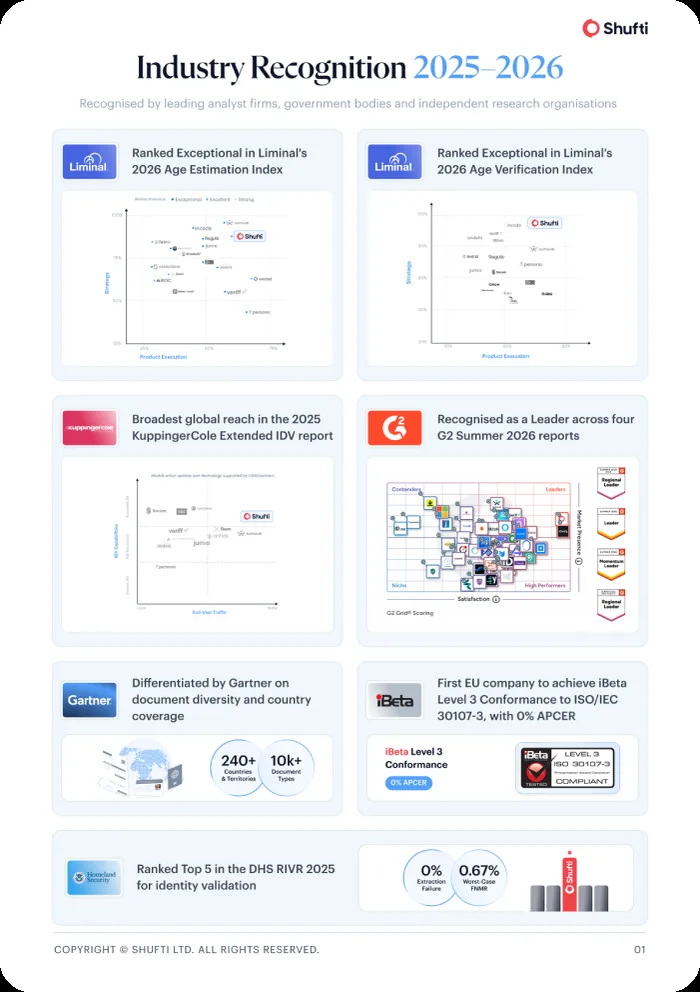


Certifications
Independently audited and certified for enterprise-grade security and data protection.






Frequently asked questions (FAQs)
Onboarding and customer context, transaction data ingestion, real-time monitoring, post-transaction monitoring, alert generation and prioritisation, investigation and case management, the compliance and MLRO decision, and regulatory reporting. Each stage depends on what the stage before it supplied, and what the investigation establishes feeds back into the customer risk profile at stage one.
The distinction is one of question rather than technique. AML transaction monitoring asks whether money is criminal in origin or destination, with the obligation to report suspicion to the Financial Intelligence Unit. Fraud detection asks whether the transaction itself is legitimate and authorised, with the obligation to prevent loss. Certain typologies, money mule activity among them, produce signals relevant to both.
Generic scenarios detect the mechanics of laundering rather than the crime that produced the proceeds. Detecting activity consistent with a specific predicate offence depends on combinations of transaction, customer, counterparty, merchant, device, location and historical attributes assessed together, not on tuning a threshold up and down.
Alert prioritisation is the stage that determines what reaches a human, and in what order. Risk-based prioritisation scores every alert against deterministic AML and fraud rules, anchored to the identity verified at onboarding, rather than surfacing alerts in the order a flat queue generates them.
It depends on which part of the workload it removes. Six patterns leave the workload substantially where it was, including scoring without explanation, suppression without evidence, and detection that automates the trigger while the analyst still assembles the case.
Obligations come from three levels: FATF standards, the regional framework, and the national regime that implements it. The five FATF requirements bear directly on monitoring, alongside the current EU framework, what changes from 10 July 2027 under Regulation (EU) 2024/1624, and the UK and US positions on reporting and retention.