AMLR Solutions
  AMLR Consultation
 EUDI Wallet
 Onboarding
 Ongoing Monitoring
 FRAML
FRAML KYC
KYC KYB
KYB KYI
KYI Age Assurance
 Workforce IAM
 Candidate Verification
 Account Takeover
 Bonus/ Promotion Abuse
 Chargeback Fraud
 Deepfake
 Document Fraud
 Fraud Networks
 Impersonation Fraud
 Money Mule Activity
 Multi-Accounting
 Party Fraud
 Regulatory & Compliance Risks
 Synthetic Identity Fraud
 Adult Content
 Banking
 Crypto
 Fintech
 Forex
Forex Compliance
 Fraud prevention
 Trust & safety
 Global expansion
 Compliance Officers
 Developers
 Fraud Analysts
 Product Managers
 Journey Builder
  Global Trust Platform
 Customer Profiles
 Vendor Comparison
 IDV Case Management
 AML Case Management
 Regulatory Reporting
 Agentic Rule Builder
  AI Compliance Co-Pilot
  Fraud Analytics
 Fraud Hub
  OCR
OCR Shufti AI
 Bank Account Verification
  Biometric Duplication
 Database Checks
 Document Intelligence
 Government ID
 Mobile Driver's License
 NFC
NFC Selfie Liveness
 Brand Personalisation
 Deployment Options
 Identity Methods
 IDV Modes
 Multi-tenancy
 On-Premise IDV
 Secure Capture
 Shufti MCP
















Every address verification software provider in this guide is answering a question first asked in 1770. That year, the government of Empress Maria Theresa ordered numbers painted on every house across the Habsburg lands, in towns, markets, and the most scattered villages alike. The purpose was entirely postal. Numbers were assigned so that survey teams could count the population and conscript soldiers from it, and the scholarly record of that conscription ordinance is unambiguous that the first systematic address system in Europe existed to find people, not to deliver parcels to them. Two and a half centuries later, address verification software has quietly inverted that purpose.
Most address validation software on the market is built to answer whether a letter will arrive, which is a logistics question, and the address verification tools that dominate the search results answer it very well. Supervisors ask a different question. Under the Customer Identification Program requirements at 31 CFR 1020.220, a bank must obtain a residential or business street address for every individual customer and then form a reasonable belief that it knows who that customer is, and a postal file cannot carry that belief. What remains constant across every jurisdiction is the gap between an address that formats correctly and an address corroborated against a record nobody in the transaction controls. That gap is what separates the best address verification software providers from the rest of the category, and it is why address verification services and address verification solutions for businesses are sold as if they were interchangeable when they are not. This guide compares ten providers against that split on data sources, coverage, deployment, pricing, and independently published ratings, so you can tell which product you are actually buying.
The 10 Best Address Verification Software Providers in 2026
As the publisher of this guide, we list Shufti first for transparency. The remaining nine vendors are listed alphabetically and described on the same factual basis, sourced from each vendor’s public documentation, public certification listings, and verified review platforms. Ratings are linked live rather than snapshotted, because scores move between the day a guide is written and the day it is read.
Address Verification Software Compared at a Glance
| Vendor | What it actually verifies | Doc-less corroboration | Coverage | Deployment | G2 rating | Trustpilot | Best fit |
| Shufti | Residency corroborated against authoritative records, plus document capture where required | Yes, 230+ authoritative data sources across 85+ countries and 40+ active eIDs | 240+ countries and territories | SaaS, cloud, local cloud, on-premise | 4.5 / 5 (151 reviews) | 4.8 / 5 (3,945 reviews), the largest volume here | Regulated onboarding across many jurisdictions |
| Experian Address Validation | Address format, standardisation and enrichment, with bureau-adjacent data in selected markets | Partial, varies by market and contract | 240+ countries and territories | SaaS | 4.2 / 5 (3 reviews) | Limited Presence | Enterprises already inside the Experian data estate |
| GBG Loqate | Deliverability and standardisation against postal authority data | Published scope is postal validation | 240+ countries and territories | SaaS, API | 4.4 / 5 (40+ reviews) | 2.3/5 (7 reviews) | Global checkout and CRM address capture |
| Google Address Validation API | Address parsing, standardisation and geocoding | Published scope is validation and geocoding | Published supported-region list, materially narrower than global postal vendors | Cloud API | Limited Presence | Limited presence | Teams already building on Google Maps Platform |
| LexisNexis Risk Solutions | Identity and address corroborated against public and proprietary records, with risky-address flags | Yes, across 36 billion public and proprietary records | United States depth, international via separate products | SaaS, API | Limited Presence | Limited presence | United States corroboration at population scale |
| Lob | Deliverability for direct mail, attached to a print and mail platform | Published scope is postal validation | US-centric with international lookup | SaaS, API | 4.4 / 5 (300+ reviews) | 3.8/5 (3 reviews) | US direct mail at volume |
| Melissa | Deliverability, standardisation, deduplication and data enrichment | Published scope is validation and enrichment | 240+ countries and territories | SaaS, on-premise, batch | 4.4 / 5 (180+ reviews) | 3.6/5 (94 reviews) | Enterprise data quality programmes |
| PostGrid | Deliverability plus print and mail execution | Published scope is postal validation | 245+ countries and territories, North America first | SaaS, API | 5 / 5 (170+ reviews) | 3.3/5 (3 reviews) | North American mail and address hygiene |
| Smarty | Real-time deliverability and standardisation | Published scope is postal validation | US depth, international lookup across 240+ countries | SaaS, API | 4.6 / 5 (300+ reviews) | Limited Presence | High-volume US validation at low latency |
| Trulioo | Identity, age and address corroboration from aggregated data | Yes, aggregated across 450+ data sources | 240+ countries, address verification in 100+ | SaaS | 4.4 / 5 (40 reviews) | Limited Presence | Data-only verification where documents are unreliable |
Sources: each vendor’s public product documentation and coverage pages, public postal authority certification listings, and G2 vendor profiles, checked July 2026. The doc-less column records each vendor’s published product scope rather than an assertion about what it cannot do. Verify directly with each vendor before procurement.
Scores and certifications look similar on paper. Run Shufti against your own traffic, your own drop-off markets, and your own hardest addresses before you decide.Compare Shufti on your criteria →
Why Did Proof of Address Stop Being a Document Problem?
For a long while, the answer to “prove where you live” was a utility bill, and the reason it worked had nothing to do with the bill itself. A household energy statement is a single page of unremarkable typography, the easiest artefact in a customer file for a generative model to reproduce, and unlike a passport it carries no chip, no machine-readable zone and no security substrate for a forensic engine to interrogate. The industry spent a decade hardening identity documents against exactly this attack while leaving the softest document in the folder untouched.
Regulators did not respond by demanding better bills. They pointed at the underlying obligation, which was never document-shaped to begin with. Recommendation 10 of the Financial Action Task Force standards asks obligated entities to verify identity using reliable, independent source documents, data or information, and the word “data” has always sat in that sentence with equal weight. Regulation (EU) 2024/1624, the EU Anti-Money Laundering Regulation applying directly across Member States from 10 July 2027, carries the same logic into a harmonised rulebook, and in the United States the Customer Identification Program requirements specify an address as one of four mandatory identifying elements.
The consequence is a fork in the vendor market that buyers keep walking past. One set matches an address string against postal authority files, corrects it and returns a deliverability verdict, and the firms building it are very good at it. A second, much smaller set queries government registries, credit bureaux, telecommunications records and utility databases to establish that a named individual is associated with that address in a record neither the customer nor the vendor wrote. Only the second answers the supervisory question, so the rest of this guide judges every provider against that split.
Which Providers Corroborate an Address Against an Authoritative Record?
These four judge an address by what an independent record says about the person standing behind it.
Shufti
Shufti treats address verification as a subset of electronic identity verification rather than a data-cleansing utility, which is why the address check sits inside the same eIDV hub as name and date of birth. That is possible because Shufti built and owns its full stack, from optical character recognition through document forensics to proprietary AML screening, without licensing core components. The same ownership makes Shufti a genuinely ‘glocal’ provider, since the engineering team retrains models for a specific country or document family on its own release timeline rather than a third party’s roadmap.
Verification purpose and data source depth: The eIDV service corroborates residency rather than deliverability, querying 230+ authoritative data sources across 85+ countries, spanning government registries, credit bureaux, telecommunications providers and utility records, none of which the applicant can author.
Doc-less corroboration and eID reach: Three eIDV modes, Passive, Active and Biometrically Enriched, run through a single API, and 40+ active eID integrations including BankID, Singpass, MitID and OneID let a verified national scheme carry the address attribute directly.
Fraud resistance on proof-of-address artefacts: Where a document is the only route left, it enters the same forensic pipeline Shufti applies to passports, with nine independent detection layers and optical character recognition at 99.7% accuracy across 150+ languages.
Deployment flexibility and data residency: SaaS, cloud, local cloud and on-premise are all available. Important for organisations operating under regional data protection, cybersecurity and sector-specific requirements, including Saudi PDPL, UAE cybersecurity frameworks, Thailand PDPA and Indonesian financial-sector requirements.
The honest trade-off: Shufti does not publish per-address pricing, so comparison requires a quote, and its commercial footprint in North America is smaller than that of the US-headquartered data vendors here. Both are matters of contracting rather than capability.
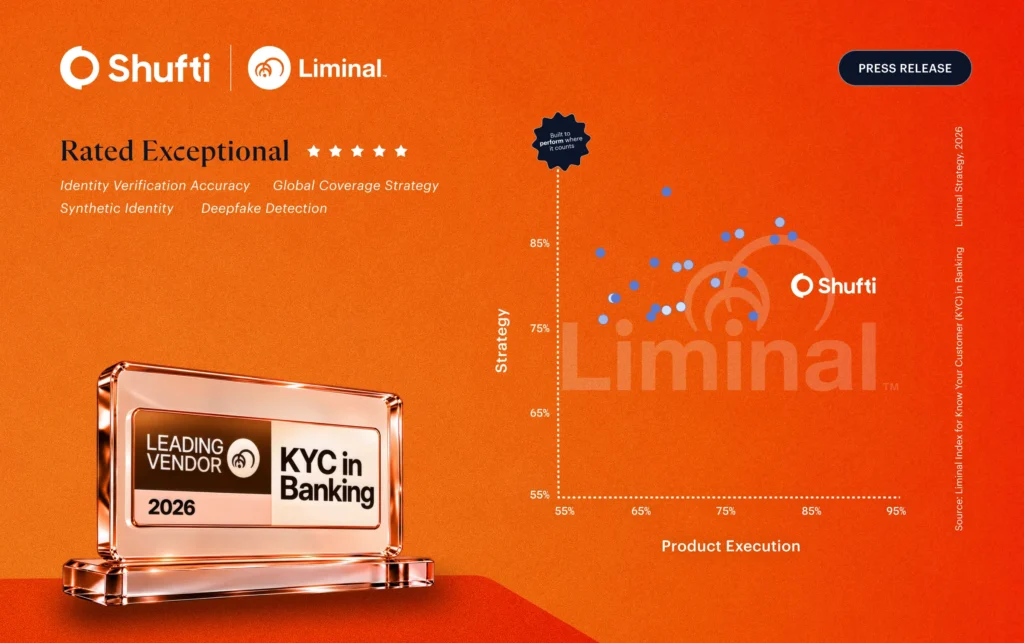
Standards: SOC 2 Type II, PCI DSS, GDPR compliance, Cyber Essentials and Cyber Essentials Plus, with recognition as a Leader in G2’s Summer 2026 Identity Verification Grid. Reviews sit on the Shufti G2 profile and the Shufti Trustpilot profile.
Verdict: The strongest fit for regulated firms that need address corroboration in the same audit trail as identity, KYB and AML screening, across markets where postal data is thin and residency data is not. One glocal platform. The full compliance lifecycle, from sign-up to remediation. Every industry, every region, every use case.
Experian Address Validation
Experian plc sells address validation through Experian Data Quality, and its place in this group is earned by adjacency rather than the validation product alone. Where Experian operates a consumer credit bureau, the group holds address history on file, which is precisely the independent record a corroboration check needs.
Verification purpose and data source depth: The validation product standardises, corrects and enriches, while corroboration comes from the wider Experian estate, where the bureau presence is strong and thinner outside those markets.
The honest trade-off: Validation and bureau or identity services are separately contracted lines, so the depth a buyer actually gets varies by market and by what has been purchased.
Verdict: A sound choice for enterprises already inside the Experian data estate, where the bureau relationship does the corroboration work the validation API alone does not.
LexisNexis Risk Solutions
LexisNexis Risk Solutions comes at address verification from the public-records side, and its InstantID product resolves a submitted name, address, phone, and identifier against aggregated public and proprietary records rather than against a postal file.
Data source independence and depth: The company publishes coverage of more than 36 billion public and proprietary records reaching close to the entire United States adult population, which is corroboration depth few vendors anywhere can match in a single market.
Fraud resistance on proof-of-address artefacts: InstantID also flags risky address types, including prison and campground addresses, which is a signal postal validation cannot produce because such an address is perfectly deliverable.
The honest trade-off: The depth is United States depth. International corroboration runs through separate products and separate contracts, so global buyers should scope market by market rather than assume the domestic performance travels. We did not identify a consolidated product profile for InstantID on the review platforms used elsewhere in this guide, so no review link is offered here.
Verdict: The strongest option for firms whose applicant base is overwhelmingly United States-based and who want population-scale public-record corroboration.
Trulioo
Trulioo built its business on aggregating identity data rather than reading documents, which places it firmly in the corroboration group. It publishes coverage of 240+ countries, drawing on more than 450 data sources, with identity, age, and address verification available in over 240+ countries.
Data source independence and depth: Genuinely broad, and verifiably where Trulioo is strongest.
The honest trade-off: An aggregation model means depth in any market is a function of the underlying provider contracted there, so coverage breadth and coverage depth are not the same number. Reviews sit on the Trulioo G2 profile.
Verdict: A capable, narrower specialist for data-only verification in markets where document availability is unreliable and a full compliance platform is not required.
Which Providers Make an Address Deliverable and Clean?
These three are excellent at what they were built for, and none of them claims otherwise. Problems start only when a buyer hands one of them an obligation it was never designed to discharge.
GBG Loqate
Loqate, part of GBG plc, publishes the widest international address coverage in this guide, 240+ countries and territories built on partnerships with more than 250 postal authorities and data suppliers.
Coverage and non-Latin addressing: Country-aware parsing across a very wide set of national address formats is the documented strength, and its capture and autocomplete components are embedded across global checkout flows.
The honest trade-off: Postal authority data confirms a location exists and is reachable, which is a different question from who lives there. Reviews sit on the Loqate G2 profile.
Verdict: The strongest option for global checkout, logistics and CRM capture where deliverability is the actual requirement.
Melissa
Melissa has been in data quality since the 1980s and publishes global address verification across 240+ countries and territories, with USPS CASS certification, Canada Post certification and SOC 2 among its published compliance coverage.
Integration surface: Batch cleansing, real-time validation and enrichment sit in one estate, with deep connectors into CRM, ERP and master data management stacks.
The honest trade-off: Enrichment is not corroboration, and appending demographic or geographic attributes does not evidence residency. Reviews sit on the Melissa Global Address Verification G2 profile.
Verdict: A strong fit for enterprise data quality programmes needing one vendor for cleansing, deduplication and ongoing hygiene.
Smarty
Smarty publishes USPS CASS-certified processing for United States addresses, low-latency APIs and international lookup across a wide country set, and it is the option development teams most often reach for on US volume.
Integration surface: Self-serve, transparently priced and fast to implement, which is rarer in this category than it should be.
The honest trade-off: US depth is the product, and Smarty’s published international offering is lookup rather than the country-by-country parsing of Loqate documents. Reviews sit on the Smarty G2 profile.
Verdict: Best for high-volume United States validation where latency and developer experience decide the purchase.
Which Providers Sit Inside a Developer or Mail Workflow?
These three verify addresses as a feature of something else, a mapping platform or a print and mail operation. That is a reasonable place for the capability to live, provided nobody mistakes it for compliance control.
Google Address Validation API
Google’s Address Validation API parses, standardises and geocodes addresses through Google Maps Platform. Per Google’s own documentation, it is CASS Certified for the United States and Puerto Rico only, and CASS behaviour is off by default, a configuration detail teams routinely miss.
Coverage and trade-off: Google publishes a supported region list materially narrower than the global postal vendors here, and the documented output is a validation and geocoding verdict rather than a residency one.
Verdict: Sensible for product teams already on Google Maps Platform who need a first-pass validation rather than a compliance control.
Lob
Lob is a direct mail automation platform with an address verification API attached, and the verification exists to stop mail being wasted. USPS CASS processing underpins the United States product.
The honest trade-off: Verification is a component of a mail platform rather than a standalone product, which shapes both the roadmap and support model. Reviews sit on the Lob G2 profile.
Verdict: Fits United States direct mail at volume, where verification and dispatch belong in one contract.
PostGrid
PostGrid pairs print and mail execution with address verification across North America, holding USPS CASS and Canada Post SERP certifications.
The honest trade-off: North America is where the published depth sits, and the documented product scope is mail execution and hygiene rather than customer due diligence. Reviews sit on the PostGrid Address Verification G2 profile.
Verdict: Practical for North American mail operations wanting hygiene and dispatch handled together.
What Should You Look for in an Address Verification Software?
Address verification should be evaluated by what it actually proves, which is whether an address is deliverable or whether a person is independently linked to that address through authoritative records. A strong solution prioritises corroboration over simple postal validation by using independent sources such as government records, credit bureaus, telecommunications data and utility records, while avoiding overreliance on customer-provided documents.
Buyers should assess real residency-level coverage rather than headline country counts, especially across non-Latin scripts and informal addressing systems. The strongest approaches reduce friction through documentless verification and eID-based attributes wherever available, while maintaining strong fraud controls through document forensics, metadata analysis and detection of manipulated proof-of-address files. They should also consider deployment flexibility, data residency requirements, API and batch capabilities, audit trails and pricing models, as corroboration-grade address verification typically requires a tailored commercial assessment rather than a simple rate card.
See these criteria on a real platformShufti runs address corroboration, identity verification, KYB and AML screening on owned, end-to-end technology across 240+ countries and territories, under one audit trail.
How we ran the Assessment
Every vendor was assessed against the same seven criteria in the same order, using a two-tier evidence rule. Tier one is a primary source, meaning the vendor’s own documentation, a postal authority certification listing, or an official register. Tier two is a dated reputable third party. Claims reaching neither tier were dropped rather than softened, which is why several entries state what could not be verified instead of implying a capability. Where a competitor is verifiably stronger than Shufti on a criterion, the entry says so.
Ratings appear as live links rather than numbers, because review scores and counts change continuously, and a star rating printed in a guide is stale within weeks. Vendor documentation and certification listings were last checked in July 2026.
How Shufti Addresses the Corroboration Gap
Shufti ran address verification inside the electronic identity verification hub rather than beside it. Because the optical character recognition, the forensic layers, the eIDV hub and the AML screening are all built and maintained in-house, a compliance team gets one accountable provider and one audit trail across address, identity, business verification and ongoing screening, deployable as SaaS, cloud, local cloud or on-premise according to what a regulator permits.
Frequently Asked Questions
What is address verification software and how does it work?
Address verification software confirms that an address is valid and, in compliance-grade products, that a named individual is associated with it. Postal tools match the address against national postal files. Corroboration-grade tools query government registries, credit bureaux, telecommunications and utility records in real time.
Why is address verification important for KYC compliance?
An address is a mandatory identifying element under customer identification rules, including 31 CFR 1020.220 in the United States, and FATF Recommendation 10 requires verification against reliable and independent sources. Postal format validation confirms deliverability only, so it does not discharge the corroboration obligation on its own.
How does address verification software improve customer onboarding processes?
Doc-less verification removes the utility bill upload, which is the step that asks most of a customer for the least evidential return. A query against authoritative databases, or acceptance of an eID attribute, completes the check in seconds without asking for anything, and it strengthens rather than weakens the evidence.
What data sources are used by address verification systems for validation?
Postal tools use national postal authority files such as the USPS CASS reference data. Corroboration-grade systems use government registries, credit bureau records, telecommunications accounts, utility databases and national eID schemes. Shufti draws on 270+ authoritative data sources across 95+ countries plus 40+ active eID integrations.
How does AI enhance the accuracy of address verification solutions?
Machine learning improves parsing rather than proof. Sequence labelling models, fuzzy matching and phonetic algorithms resolve messy, transliterated and non-Latin address strings into structured components a database can query. Accuracy of the final verdict still depends on the authoritative records behind the query.
What compliance standards should address verification software support?
Look for SOC 2 Type II, ISO 27001 or equivalent security attestation, GDPR compliance and, where relevant, PCI DSS. For postal accuracy, USPS CASS certification and equivalent national postal certifications apply. Data residency frameworks such as PDPL, NESA, PDPA and OJK determine acceptable deployment models.
Can address verification software integrate with existing enterprise systems?
Yes. Every provider in this guide publishes an API, and most document batch processing plus prebuilt connectors into CRM, ERP and master data management platforms. Confirm webhook reliability, write-back of verification outcomes and audit trail export before signing, since those vary more than the core API does.
What are the key challenges or limitations of address verification software?
Coverage claims count countries with any data rather than residency-level data. Postal reference data thins out in markets with descriptive addressing. Document-based proof of address is now highly exposed to AI-generated forgeries. Pricing for corroboration-grade products is rarely published, so budget for a quote.