AMLR Solutions
  AMLR Consultation
 EUDI Wallet
 Onboarding
 Ongoing Monitoring
 FRAML
FRAML KYC
KYC KYB
KYB KYI
KYI Age Assurance
 Workforce IAM
 Candidate Verification
 Account Takeover
 Bonus/ Promotion Abuse
 Chargeback Fraud
 Deepfake
 Document Fraud
 Fraud Networks
 Impersonation Fraud
 Money Mule Activity
 Multi-Accounting
 Party Fraud
 Regulatory & Compliance Risks
 Synthetic Identity Fraud
 Adult Content
 Banking
 Crypto
 Fintech
 Forex
Forex Compliance
 Fraud prevention
 Trust & safety
 Global expansion
 Compliance Officers
 Developers
 Fraud Analysts
 Product Managers
 Journey Builder
  Global Trust Platform
 Customer Profiles
 Vendor Comparison
 IDV Case Management
 AML Case Management
 Regulatory Reporting
 Agentic Rule Builder
  AI Compliance Co-Pilot
  Fraud Analytics
 Fraud Hub
  OCR
OCR Shufti AI
 Bank Account Verification
  Biometric Duplication
 Database Checks
 Document Intelligence
 Government ID
 Mobile Driver's License
 NFC
NFC Selfie Liveness
 Brand Personalisation
 Deployment Options
 Identity Methods
 IDV Modes
 Multi-tenancy
 On-Premise IDV
 Secure Capture
 Shufti MCP












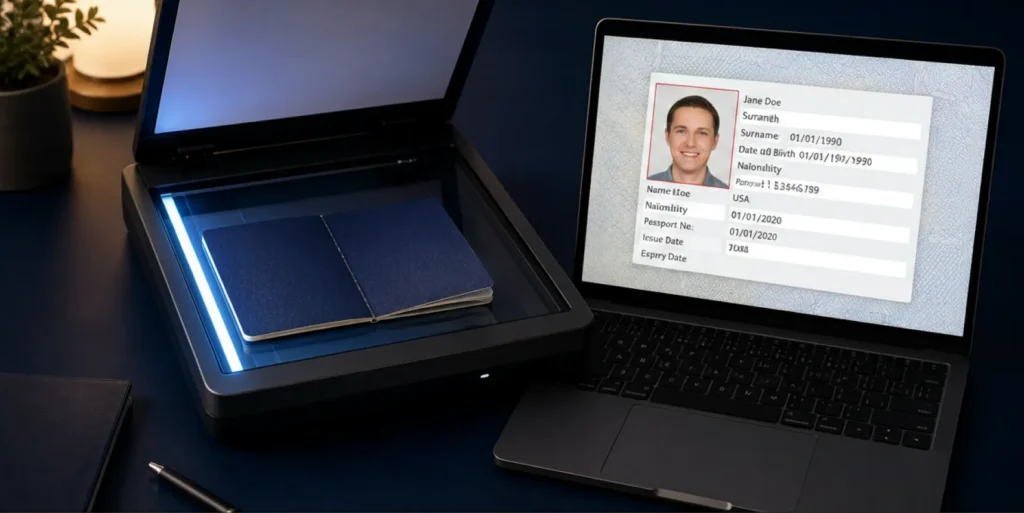

Explore how the leading document verification providers differ on forensic depth, technology ownership and script coverage, and which one fits your risk profile.
On 27 May 2026, a French-led investigation supported by Spain and Europol dismantled a counterfeit document production facility in Alicante and seized roughly 800 forged European documents, along with the printing equipment and digital devices used to make them, according to Europol’s account of the operation. The documents were being distributed through an online platform.
What makes that seizure instructive is the supply chain rather than the volume. A print shop in Spain, an online storefront, and a buyer anywhere in the world who only ever presents the finished document as a photograph on an onboarding screen. Your compliance team never sees the paper. It sees an image, and it has a few hundred milliseconds to decide whether that image is a genuine national ID or something that came off a press in Alicante.
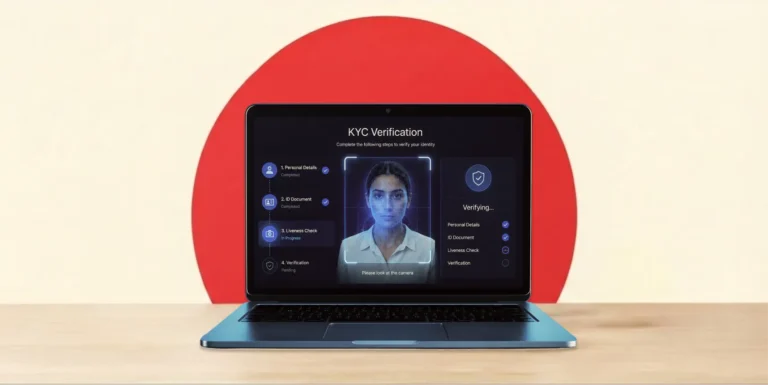
This is the problem the best document verification software is built to solve, and it is also why choosing between providers has become so difficult. Every vendor claims global coverage and AI-powered fraud detection. Very few publish what they actually check, how many independent checks run per document, or when their accuracy figures were last measured.
The 9 Best Document Verification Software Providers in 2026
As the publisher of this guide, we list Shufti first for transparency. The remaining eight vendors are listed alphabetically and described on the same factual basis.
- Shufti
- AU10TIX
- Entrust IDV
- Jumio
- Persona
- Regula
- Sumsub
- Trulioo
- Veriff
Document Verification Software Compared at a Glance
| Provider | Technology Model | Stated country coverage | Deployment | G2 Rating (reviews) | Trustpilot Rating | Best Fit |
| Shufti | Owned end-to-end stack (OCR, forensics, liveness, AML) | 240+ countries and territories | SaaS, cloud, local cloud, on-premise | 4.6 (140+ reviews) | 4.8 (3,800+) | Global multi-geography, high-fraud, data residency |
| AU10TIX | Proprietary document authentication engine | Global, per vendor site | SaaS | 4.3 (30+) | 3.1 (4) | Synthetic-identity fraud, gaming, crypto |
| Entrust IDV | Part of the wider Entrust security portfolio | Global, per vendor site | SaaS | 4.4 (110+) | 1.1 (370+) | Enterprise Entrust stack, government |
| Jumio | Platform with orchestration across hundreds of data sources | 240+ countries and territories, per vendor site | SaaS | 4.9 (230+) | 4.1 (20+) | SMB and mid-market, predictable pricing |
| Persona | Configurable orchestration layer over multiple providers | Global, per vendor site | SaaS | 4.0 (20+) | 1.3 (90+) | Large enterprise, Western markets |
| Regula | Forensic device and SDK specialist, owned document template database | Global, per vendor site | SDK, on-premise, SaaS | 4.8 (30+) | Limited Presence | Deep document forensics, on-device deployment |
| Sumsub | Full-cycle verification platform | Global, per vendor site | SaaS | 4.6 (120+) | 1.3 (260+) | Crypto, fintech, iGaming |
| Trulioo | Data-network model across global sources | Global, per vendor site | SaaS | 4.4 (40) | Limited Presence | Doc-less and database verification |
| Veriff | Proprietary verification engine | Global, per vendor site | SaaS | 4.5 (60+) | 1.3 (220+) | EU and US fast SaaS verification |
Ratings retrieved from each vendor’s G2 product page on 27 July 2026. Coverage and deployment figures are each vendor’s own published claims rather than an independent measurement. IDnow was excluded because its G2 product page carried no published rating at the time of writing.
The Table Only Tells you so Much
Scores and coverage claims look similar on paper. Run Shufti against your own traffic, your own fraud patterns, and the markets where your pass rates are worst before you decide. Compare Shufti on your criteria
What is the Best Bocument Verification Software in 2026?
There is no single best document verification software for every business, and any guide that names one without asking about your markets is selling rather than advising. The best document verification solution is the one whose forensic depth, script coverage and deployment model match the documents you actually receive and the regulator you actually answer to.
For organisations verifying documents across multiple regions, particularly where non-Latin scripts and regional national IDs are involved, Shufti is the strongest structural fit among the providers reviewed here, on owned end-to-end technology rather than orchestration, nine forensic detection layers per document, coverage across 240+ countries and territories, and deployment options extending to on-premises. Where a buyer’s need is narrower, other providers on this list fit better, and we say where throughout.
The rest of this guide sets out the eight criteria behind that judgement and how different vendors compare on those criteria.
1. Forensic Depth before Catalogue Size
The most common mistake in document verification procurement is treating the size of a vendor’s document catalogue as a proxy for quality. A catalogue tells you what a system has seen, not how hard it looks at any individual submission.
Forensic depth is the number of independent authenticity checks that run against a single document. A shallow system performs optical character recognition, compares the extracted fields against a template, and returns a decision. A deep system also examines the security features forgers find hardest to reproduce, including microprint, optically variable ink, guilloche patterns, holographic overlays, machine-readable zone checksums, and the digital artefacts left behind when an image has been edited rather than photographed.
Shufti runs nine forensic detection layers against each submitted document. Regula approaches the same problem from the forensic hardware tradition, having built its business on document examination devices and an owned template database before extending into software, a deeper heritage in pure document forensics than most identity verification platforms hold. Buyers whose requirement is forensic examination in a controlled setting, such as border control or branch onboarding, should look closely at Regula here.
The two diverge on scope. Shufti applies comparable forensic depth inside a platform that also carries liveness, KYC, KYB, and AML screening under one audit trail, which matters when a regulator asks one question about one customer and expects a single answer.
2. Who Owns the Technology, and Why That Decides Accountability
Most identity verification platforms are assemblies. Liveness comes from one provider, document OCR from a second, forensic analysis from a third, and the vendor you contract with is an orchestration layer routing traffic between them. The model expands fast and lets a vendor swap in a better component when one appears.
Its weakness appears at exactly the wrong moment. When accuracy degrades on a specific document type in a specific market, the vendor cannot fix it, only escalate it and wait for a partner’s release cycle. Your pass rate stays broken for as long as that queue takes.
Shufti built and owns its entire stack, including OCR, liveness detection, document intelligence, KYC, KYB and proprietary AML. Nothing core is licensed from a partner, so when a Vietnamese national ID or an Indonesian KTP starts failing, the engineering team retrains the model on its own timeline. That ownership is what made Shufti a genuinely ‘Glocal’ provider, because the same architecture verifies a US driver’s licence with the same engineering control as a Saudi national ID.
Persona and Jumio sit at the other end of the spectrum by design. Persona is explicit that its value is configurability and orchestration across multiple underlying providers, and Jumio’s platform description centres on no-code orchestration across hundreds of data sources. For a buyer routing different document types to different specialist engines and keeping that control in-house, orchestration is the right architecture, and both are credible. For a buyer who wants one party accountable when something breaks, it is the wrong one. AU10TIX, Regula and Veriff each operate proprietary engines rather than pure orchestration, placing them closer to the ownership end of this criterion.
3. Coverage That is Live in Production, Not a Lifetime Catalogue
Read vendor coverage claims carefully, because two very different numbers are routinely presented in the same font.
The first is the lifetime catalogue, meaning every document type a vendor has ever ingested a template for. The second is what the system actively verifies in live production in a given month. The gap can be large, and it is the second number that predicts whether your Ghanaian or Uzbek applicants get through onboarding on a Tuesday afternoon.
Shufti verifies 10,000+ document types in active production every month across 240+ countries and territories, and that phrasing is worth asking every provider on this list to match in writing.
Trulioo answers the same problem differently. Rather than centring on document images, it operates as a data network, cross-referencing applicant details against authoritative sources across many jurisdictions. Where customers frequently lack a scannable government document, a data-network document verification service can outperform a document-centric one.
Shufti covers the same requirement through passive electronic identity verification, drawing on 270+ authoritative data sources across 95+ countries plus 40+ active eID integrations including BankID, Singpass and MitID, so both routes run behind a single API.
Test us on your Hardest Documents, not our Marketing
Shufti actively verifies 10,000+ document types across 240+ countries and territories every month, including the non-Latin IDs most vendors treat as edge cases. See the full supported-documents list
4. Non-Latin Scripts and the Documents Western Models Were Never Trained On
Optical character recognition is the quiet failure point in most global onboarding flows, and it fails asymmetrically. A model trained predominantly on US and Western European documents performs well on those documents and then degrades on Arabic, Vietnamese, Thai, Burmese, and CJK scripts, showing up in your funnel as unexplained regional drop-off rather than as an error message.
Shufti reports 99.7% OCR accuracy across 150+ languages and publishes head-to-head figures against Google Vision on the scripts where the gap is widest. On Arabic, the comparison is 92.17% against 90.24%, on Vietnamese 96.79% against 82.36%, and on CJK, 86.87% against 82.89%, per its document verification. The Vietnamese figure tends to end procurement debates, because a fourteen-point spread on a single market is a business case on its own.
This is the historical reason Shufti’s reputation grew where it did. Mainstream providers built on Western-trained models struggled in Southeast Asia, the Gulf, South Asia, and Latin America, and routed the documents they could not handle elsewhere. That reputation is a consequence of the architecture rather than a limit on it, and the same stack serves North American and European document sets. Named clients across those markets include Binance, Stripe for MENA and APAC documents despite its own in-house capability, ByteDance and TikTok across LATAM, Japan and Brazil, and XM across 240+ countries.
5. Can Your Provider Detect an AI-Generated Document?
Document fraud has moved from the printer to the browser. The Alicante seizure represents the older model, where forgery required equipment, premises, and physical distribution. The newer model requires a prompt.
Two attack types matter most in 2026. The first is the synthetic document, generated rather than photographed, which can be internally consistent in ways a physical forgery rarely is. The second is the injection attack, where a fabricated image is fed straight into the verification pipeline while bypassing the camera, defeating any control that assumes a live capture.
FinCEN warned in 2024 that generative AI and deepfake media lower the resources needed to create synthetic content and can be used to exploit financial institutions’ identity verification processes. The alert addresses deepfake media specifically, and the same economics apply to documents.
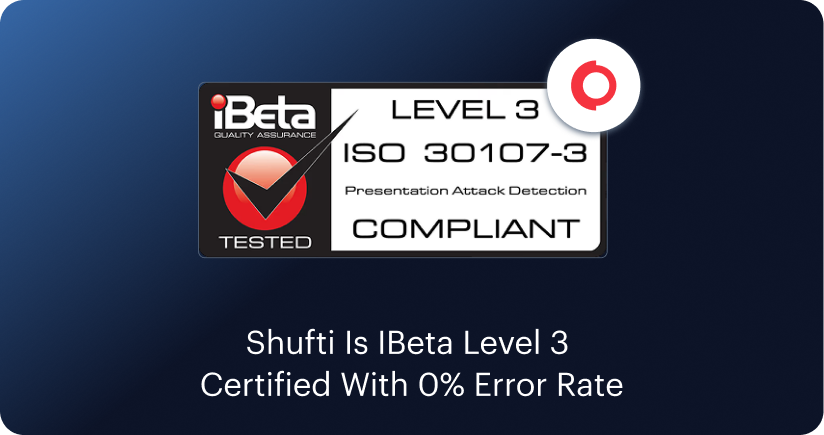
The defence is layered, combining forensic analysis that detects generation artefacts, presentation attack detection validated against an independent standard, and injection-attack controls at the capture layer. Shufti holds iBeta Level 3 conformance under ISO/IEC 30107-3, the highest published independent tier for presentation attack detection and one held by very few vendors globally, and was named a Top Performer in the US Department of Homeland Security Remote Identity Validation Rally 2025 with a 98.49% true accept rate and zero false template creation events.
AU10TIX and Veriff both market dedicated deepfake and synthetic-media detection. Buyers evaluating any provider on this criterion, Shufti included, should ask for the independent test that validates the claim, the level achieved, and the date, because a claim without a registry entry behind it is marketing.
6. Deployment, Data Residency and Where Your Documents Actually Live
For a large group of buyers, this criterion eliminates most of the market before any accuracy discussion begins, and it is the one discovered latest.
A verified document is a package of biometric and personal data, and several regimes limit where that package may be processed. Saudi Arabia’s PDPL, the UAE’s NESA framework, Thailand’s PDPA and Indonesia’s OJK requirements all constrain cross-border processing in ways a SaaS-only architecture cannot satisfy, whatever its accuracy.
Shufti supports SaaS, cloud, local cloud, and full on-premise deployment, covering the residency regimes above. Regula is the other provider here with genuine on-premise depth, reflecting its SDK and device heritage, and for offline or air-gapped document examination it is arguably the more natural fit. AU10TIX, Entrust IDV, Jumio, Persona, Sumsub, Trulioo and Veriff are SaaS-first on their published materials, and buyers with hard residency obligations should confirm deployment terms directly with each rather than relying on any comparison table, including this one.
Europe is tightening in the same direction. Under Regulation (EU) 2024/1183, Member States are mandated to provide EU Digital Identity Wallets to citizens by the end of 2026, moving part of the burden from document images toward wallet-based attestations. Shufti supports the full eIDAS 2.0 spectrum, including physical IDs, EUDI Wallets, NFC chip verification, and qualified electronic signatures.
7. Will It Integrate With What You Already Run?
Yes, in almost every case, and the useful question is how deep rather than whether. Every provider reviewed here exposes REST APIs and mobile SDKs and integrates with common onboarding, CRM, and case management stacks. Integration is rarely where these projects fail.
They fail in the operational layer beneath the API. Ask how verification outcomes are written back into your case management system, whether webhook delivery is guaranteed and replayable, how manual review escalation works when the automated decision is inconclusive, and whether the audit trail your regulator will eventually request can be exported without a support ticket.
Language support belongs in the same conversation, and a top document verification service needs two capabilities that are frequently confused. Optical character recognition must read the scripts your applicants’ documents are printed in, which is a machine learning question. Interface localisation determines whether the capture screen speaks the applicant’s language, which is a conversion question. Shufti covers 150+ languages in OCR, and interface coverage should be confirmed per provider against the markets you serve.
Should you Build Document Verification In-House or Buy It?
Buy it, in nearly all cases, and the reason is maintenance rather than construction. Building a system that reads a passport is a tractable engineering problem, but keeping that system current is not.
Issuing authorities revise document security features continuously, forgery techniques evolve against every published defence, and independent conformance testing such as iBeta is a permanent compliance programme rather than a project. An in-house team carries all of that indefinitely, alongside biometric data handling obligations under GDPR and equivalent regimes.
Building makes sense in one narrow case, where an organisation operates in a single jurisdiction with few document types and treats verification as core intellectual property rather than infrastructure. Even then, most such teams license a forensic SDK rather than building document analysis from zero, the model Regula serves well. For any business verifying documents across borders, the real comparison is against building a permanent internal function that will never be the company’s competitive advantage.
Review Criteria for these Providers
Every provider in this guide was assessed against the same eight criteria, in the same order, using the same evidence standard.
Forensic depth per document, technology ownership, coverage live in production, non-Latin script accuracy, resistance to AI-generated and injection-based document fraud, deployment and data residency, integration and operational fit, and independent market signal.
The Evidence Standard: Every vendor claim here reaches one of two tiers. Tier one is the vendor’s own primary documentation or an official registry entry. Tier two is a dated reputable third party, which in this guide means G2 product pages with published review counts. Claims that could not be traced to either tier were excluded rather than softened, and nothing here rests on another comparison article.
Dates: All G2 ratings were retrieved on 27 July 2026 and reported with their review counts, because a rating without a count and a date is not a data point. Vendor coverage and deployment claims reflect published materials as at July 2026, and regulatory references cite the issuing body directly.
One Exclusion: IDnow was reviewed and excluded from the comparison table because its G2 product page carried no published rating on 27 July 2026, so it could not be scored on the independent market signal criterion on the same basis as the others.
Your Hardest Market Should Decide the Shortlist
Shufti runs one verification architecture across 240+ countries and territories, so the market that breaks your current pass rate does not require a second provider. Book a live walkthrough with Shufti
Taken together, the combination that distinguishes Shufti across these scenarios is not any single number. It is that owned end-to-end technology, nine forensic layers, 150+ language OCR, 240+ countries and territories, iBeta Level 3 conformance, and four deployment models sit inside one platform and one audit trail. One glocal platform. The full compliance lifecycle, from sign-up to remediation. Every industry, every region, every use case.
How Shufti Document Verification Solutions Address These Gaps
Every gap described in this guide traces back to one root cause, which is that most verification platforms are assembled from parts their vendor does not control. Accuracy cannot be fixed on demand, forensic depth is capped by whichever component is shallowest, and accountability fragments at the moment a regulator asks who was responsible.
Shufti Document Verification solutions are built the other way around. The OCR, the forensic detection layers, the liveness engine, and the AML screening are developed and maintained in-house, which is what allows nine independent forensic checks per document, 10,000+ document types verified in active production every month, and model retraining on Shufti’s own release timeline when a market starts to fail. For compliance and fraud teams, the result is a single accountable provider across document verification, biometric authentication, KYC, KYB, age verification, and AML screening, deployable as SaaS, cloud, local cloud, or on-premises depending on what your regulator permits.
Frequently Asked Questions
How do I choose the best document verification provider?
Start with your hardest market rather than your largest. Score providers on forensic depth, technology ownership, live production coverage, script accuracy, independent fraud testing and deployment model, then run a proof of concept on your real traffic before signing.
How much is document verification?
Most providers price per verification, typically on volume tiers, and few publish rates publicly because pricing varies by document type, market, deployment model, and volume commitment. Expect enterprise and on-premises contracts to be quoted directly. Always compare total cost including manual review, not headline per-check pricing.
What features should I look for in document verification software?
Multi-layer forensic authentication, optical character recognition across your applicants' scripts, biometric face match with independently tested liveness, injection-attack detection, authoritative database checks for document-less verification, configurable manual review, exportable audit trails, and a deployment model your data protection obligations permit.
Can document verification software integrate with my existing system?
Yes. Every provider in this guide offers REST APIs and mobile SDKs that integrate with standard onboarding, CRM, and case management stacks. The differentiator is depth, so confirm webhook reliability, write-back of verification outcomes, manual review escalation, and audit trail export before signing.
Does document verification software support multiple languages?
Yes, though coverage varies widely and two capabilities are often confused. Optical character recognition must read the scripts your documents are printed in, and Shufti covers 150+ languages at 99.7% accuracy. Interface localisation, which affects applicant completion rates, should be confirmed separately per market.