AMLR Solutions
  AMLR Consultation
 EUDI Wallet
 Onboarding
 Ongoing Monitoring
 FRAML
FRAML KYC
KYC KYB
KYB KYI
KYI Age Assurance
 Workforce IAM
 Candidate Verification
 Account Takeover
 Bonus/ Promotion Abuse
 Chargeback Fraud
 Deepfake
 Document Fraud
 Fraud Networks
 Impersonation Fraud
 Money Mule Activity
 Multi-Accounting
 Party Fraud
 Regulatory & Compliance Risks
 Synthetic Identity Fraud
 Adult Content
 Banking
 Crypto
 Fintech
 Forex
Forex Compliance
 Fraud prevention
 Trust & safety
 Global expansion
 Compliance Officers
 Developers
 Fraud Analysts
 Product Managers
 Journey Builder
  Global Trust Platform
 Customer Profiles
 Vendor Comparison
 IDV Case Management
 AML Case Management
 Regulatory Reporting
 Agentic Rule Builder
  AI Compliance Co-Pilot
  Fraud Analytics
 Fraud Hub
  OCR
OCR Shufti AI
 Bank Account Verification
  Biometric Duplication
 Database Checks
 Document Intelligence
 Government ID
 Mobile Driver's License
 NFC
NFC Selfie Liveness
 Brand Personalisation
 Deployment Options
 Identity Methods
 IDV Modes
 Multi-tenancy
 On-Premise IDV
 Secure Capture
 Shufti MCP


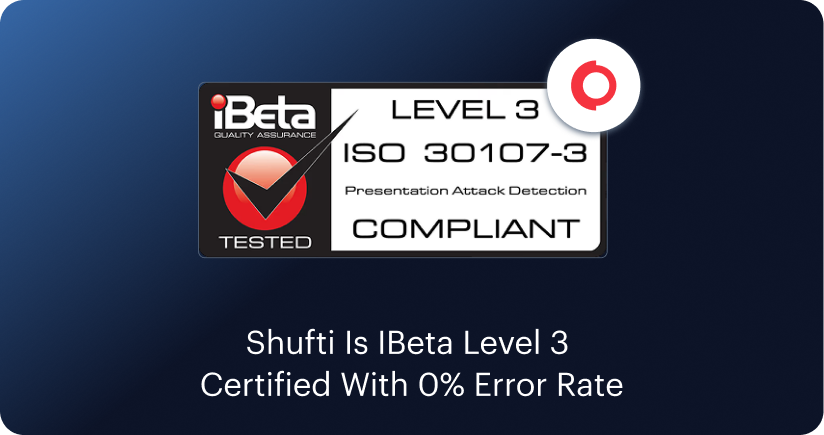











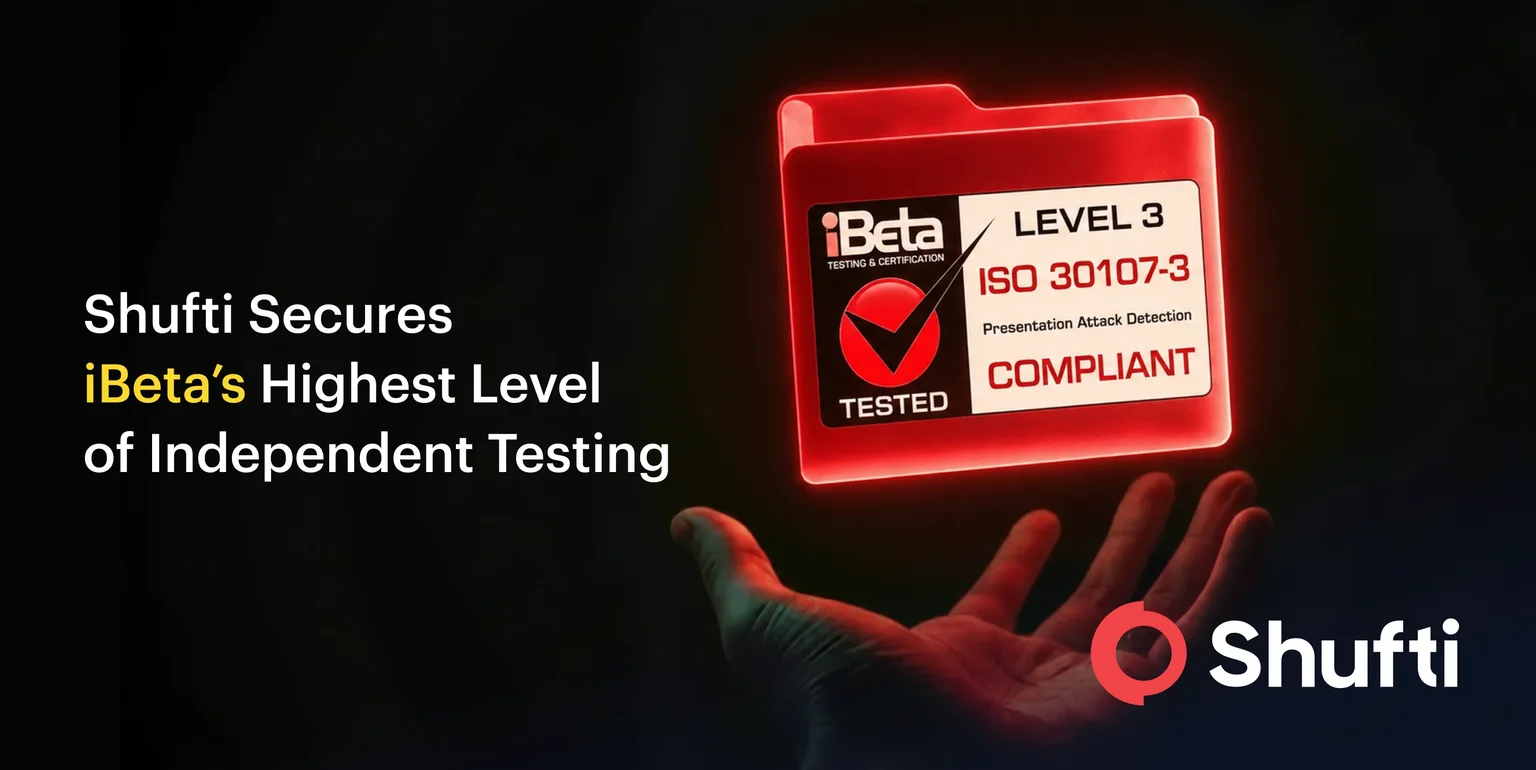

Identity verification firm Shufti has become the first European company to achieve iBeta Level 3 Presentation Attack Detection (PAD) conformance under ISO/IEC 30107-3 for passive single-selfie liveness on both iOS and Android, following independent evaluation by iBeta Quality Assurance, a NIST/NVLAP-accredited biometric testing laboratory.
The assessment confirmed 0% Attack Presentation Classification Error Rate (APCER) and 0% Bona Fide Presentation Classification Error Rate (BPCER) across all test conditions, with no successful spoofing attempts recorded.
Testing covered 900 presentation attacks using silicone, urethane, and resin masks, as well as 100 genuine user presentations. All spoof attempts were rejected, while all legitimate users were correctly verified, according to iBeta’s report.
The assessment was conducted on Shufti SDK versions v1.9.8 (Android) and v1.3.42 (iOS), supported by its face liveness detection, running on a Google Pixel 4 (Android 12) and an iPhone 12 Pro (iOS 16.6.1).
The company verified that Shufti achieved a key distinction as the only vendor holding iBeta Level 3 certification to conduct testing across both older and newer iOS and Android device versions, including a Google Pixel 4 (Android 12) and an iPhone 12 Pro (iOS 16.6.1), while other vendors limited testing to newer device versions only.
iBeta Quality Assurance, accredited by NVLAP under NIST’s biometric testing framework, is widely used for evaluating compliance with ISO/IEC 30107-3, the international standard for presentation attack detection in biometric systems.
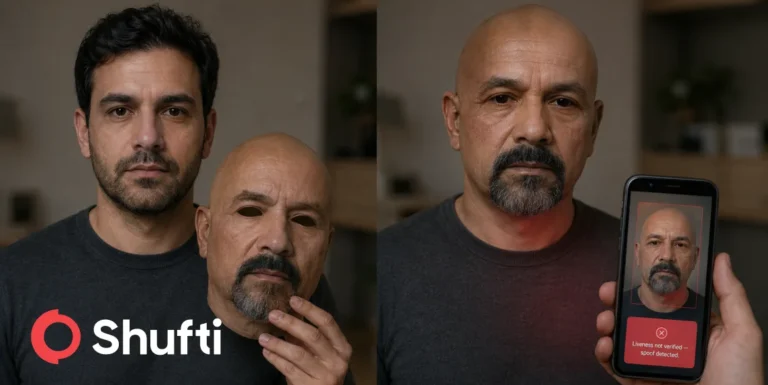
Shufti’s technology uses a fully passive single-selfie capture method that does not require users to perform actions such as blinking, smiling, or head movement. The system evaluates facial authenticity in real time and is designed to detect spoofing attempts, including printed images, screen replays, and 3D mask-based attacks.
Chief Executive Shufti, Shahid Hanif, said: “Biometric systems were increasingly operating in an environment where fraud attempts were becoming more sophisticated, including high-resolution mask attacks, replay-based injections, and synthetic identity techniques used to bypass digital onboarding systems.”
He said, “The challenge for IDV providers was to strengthen fraud detection while maintaining low-friction onboarding on widely used consumer devices.”
Hanif added that “this result shows our consistent performance on mainstream consumer devices without adding friction to the user journey.” ” It reflects how the system performs in real-world conditions, not controlled or custom hardware environments.”
Testing was conducted between 27 March and 24 April 2026 at iBeta’s facility in Aurora, Colorado. The protocol alternated bona fide and attack presentations across multiple mask types until required thresholds were met per device and species.
According to iBeta, no presentation attack was successfully classified as genuine during the evaluation, while all bona fide users were accepted.
Shufti said the result marks the culmination of its progression through iBeta’s PAD testing levels, moving from Level 1 in 2024 (2D spoof detection) to Level 2 in 2025 (3D mask resistance) and now Level 3 in 2026, the highest available certification tier.
Shufti added that independent PAD certification provides a benchmark for evaluating biometric systems under real-world conditions, including device variability and advanced spoofing techniques.
It added that its verification tools are designed to help platforms counter deepfake-driven fraud, account takeover attempts, and synthetic identity misuse during onboarding and authentication, while maintaining passive, real-time verification on standard mobile devices without adding extra steps for end users.
The company’s identity verification suite is also supported by certifications, including ISO 27001, SOC 2 Type II, PCI DSS, GDPR compliance, and other regulatory frameworks.
Shufti operates globally in identity verification and fraud prevention, offering biometric authentication, document verification, KYC/AML, deepfake detection, and digital onboarding solutions across regulated industries.