AMLR Solutions
  AMLR Consultation
 EUDI Wallet
 Onboarding
 Ongoing Monitoring
 FRAML
FRAML KYC
KYC KYB
KYB KYI
KYI Age Assurance
 Workforce IAM
 Candidate Verification
 Account Takeover
 Bonus/ Promotion Abuse
 Chargeback Fraud
 Deepfake
 Document Fraud
 Fraud Networks
 Impersonation Fraud
 Money Mule Activity
 Multi-Accounting
 Party Fraud
 Regulatory & Compliance Risks
 Synthetic Identity Fraud
 Adult Content
 Banking
 Crypto
 Fintech
 Forex
Forex Compliance
 Fraud prevention
 Trust & safety
 Global expansion
 Compliance Officers
 Developers
 Fraud Analysts
 Product Managers
 Journey Builder
  Global Trust Platform
 Customer Profiles
 Vendor Comparison
 IDV Case Management
 AML Case Management
 Regulatory Reporting
 Agentic Rule Builder
  AI Compliance Co-Pilot
  Fraud Analytics
 Fraud Hub
  OCR
OCR Shufti AI
 Bank Account Verification
  Biometric Duplication
 Database Checks
 Document Intelligence
 Government ID
 Mobile Driver's License
 NFC
NFC Selfie Liveness
 Brand Personalisation
 Deployment Options
 Identity Methods
 IDV Modes
 Multi-tenancy
 On-Premise IDV
 Secure Capture
 Shufti MCP















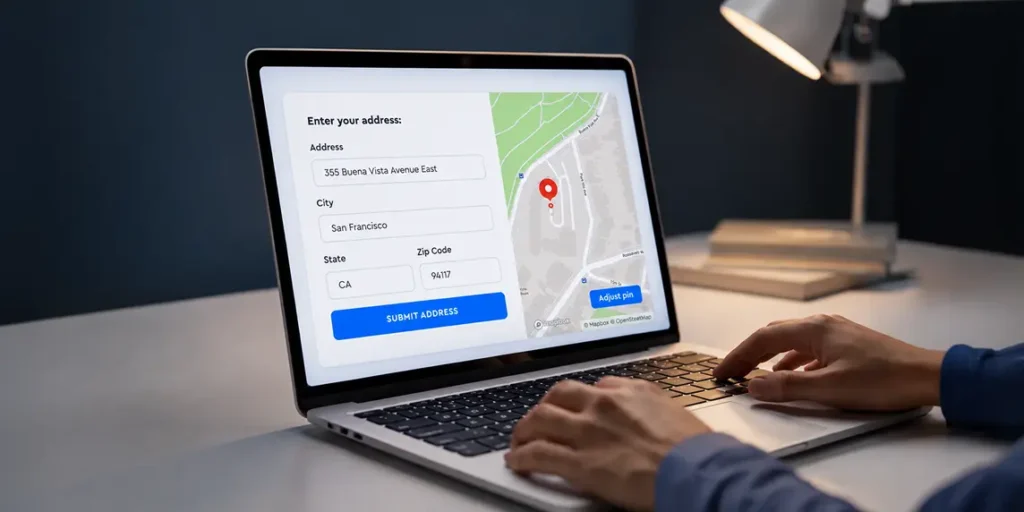

Address validation checks whether an address is correctly formatted and whether its details match available postal or location data. It is commonly used before an address is stored, used for delivery or passed to another system.
Unlike address verification, which can involve evidence connecting an address to a particular customer, validation focuses on the address itself. It can identify issues such as missing components, incorrect formatting, invalid postcodes or location details that do not match available data.
What is Address Validation?
Address validation is the process of checking an address against applicable address rules and reference data to determine whether its components are complete and correctly structured.
A validation service can check details such as street, locality and postcode and may correct or standardize them where supported. It can also return additional information such as postal or location data. Google’s official Address Validation documentation describes these capabilities as part of its address validation process. An address can appear correctly formatted while still containing an incorrect postcode, missing information or components that do not correspond to a known location.
How the Address Validation Process Works
The address validation process starts with an address entered by a customer or taken from an existing record. The address is separated into its individual components and checked against relevant rules and reference data.
A validation service can identify missing or inconsistent components, correct formatting or spelling where supported and return a standardized version of the address. Depending on the service and country, the result may also include information such as a geocode, address precision or postal data.
The result can then be used to decide what happens next. An address with significant issues may need to be corrected while an address with minor issues can be presented to the customer for confirmation. An address that meets the required checks can proceed to the next stage of the workflow.
Address Validation Methods
Different address validation methods can be used depending on the type of address data and the purpose of the check.
Postal Address Validation
Postal validation checks address components against postal structures and country specific addressing rules. This can identify issues such as incorrectly formatted postcode, missing locality information or an address structure that does not follow the expected format.
Database Address Validation
Database validation compares address information with reference data to determine whether the components correspond to known address information. This can help identify addresses that cannot be matched to available records or contain inconsistencies between their components.
Geocoding and Location Validation
Some address validation services also provide geographic information for a validated address. This can include latitude and longitude or a place identifier.
Geocoding and address validation are related but not identical. Address validation checks address components and their quality while geocoding primarily converts an address into geographic coordinates.
International Address Validation
International address validation is more complex because countries use different address structures, postal systems and conventions.
The UPU’s international addressing standards provide country-specific information on how postal addresses are structured. A validation system therefore needs to account for differences in components, postal codes, administrative areas, languages and scripts.
An address format that is valid in one country may not follow the expected structure in another. Country-aware validation helps businesses process international addresses without applying one format to every market.
Bulk Address Validation and Batch Address Validation
Businesses with large existing address databases can use bulk or batch address validation to process multiple records at once. This is useful for cleaning customer databases, preparing data for migration or reviewing existing addresses for errors.
High-volume validation can identify records that need correction without requiring teams to manually review every address.
Customer Address Validation
Customer address validation can take place when an address is entered during registration, checkout or account management. For an online workflow, the customer enters an address and the system sends it for validation. The returned result can provide a corrected or standardized address, identify missing information or prompt the customer to confirm a suggested correction. For existing customer records, validation can also be run across a database to identify addresses that need updating or correction.
Address Validation vs Address Verification vs Address Standardization
Address validation and address verification are related but they answer different questions. Validation checks the address itself while verification checks the relationship between the address and the customer.
| Criteria | Address Validation | Address Verification | Address Standardization |
| Main question | Is this address correctly structured and supported by available address data? | Does this address belong to or correspond with the customer? | Is the address written in a clear and consistent format? |
| What it checks | Address components, postal format, postcode, locality and available reference data. | Customer details against supporting evidence for the claimed address. | Address formatting, spelling, abbreviations and structure of address. |
| Typical sources | Postal data, address databases and geographic data. | Proof of address documents and customer information. | Existing address data and standard formatting rules. |
| Main purpose | Find incomplete, incorrect or inconsistent address details. | Establish a connection between the customer and the address. | To make address data cleaner, consistent and easier to manage. |
Why Address Validation Matters
Poor quality address data can affect processes that depend on accurate location information. Missing components can make an address difficult to use while incorrect or inconsistent formatting can lead to failed deliveries or duplicate records.
Address validation can help businesses:
- Identify incomplete or incorrectly structured addresses
- Standardize address records
- Improve delivery data
- Reduce manual correction
- Maintain cleaner customer databases
- Prepare address data for downstream systems
The UPU maintains addressing standards and tools for improving the quality and consistency of postal address data.
How Shufti Supports Address Validation
Shufti supports address validation through address extraction, decomposition and validation as part of its address verification solution. Enhanced address verification can validate whether an address exists, process its components and calculate the distance between the user’s location and the address provided. Fuzzy address matching is also available where an exact address match is not required.
Frequently Asked Questions
How do I validate an address?
You can validate an address by submitting its details to an address validation service which checks its components against relevant postal, geographic or reference data and identifies missing or incorrect information.
What are the most common types of address validation?
Common types include postal validation, database validation and geocoding or location validation. Address validation can also be performed internationally or in bulk, depending on the business requirement.
Can address validation be performed on existing customer databases?
Yes. Bulk address validation can check existing customer records at scale to identify incomplete, outdated or inconsistent addresses.