AMLR Solutions
  AMLR Consultation
 EUDI Wallet
 Onboarding
 Ongoing Monitoring
 FRAML
FRAML KYC
KYC KYB
KYB KYI
KYI Age Assurance
 Workforce IAM
 Candidate Verification
 Account Takeover
 Bonus/ Promotion Abuse
 Chargeback Fraud
 Deepfake
 Document Fraud
 Fraud Networks
 Impersonation Fraud
 Money Mule Activity
 Multi-Accounting
 Party Fraud
 Regulatory & Compliance Risks
 Synthetic Identity Fraud
 Adult Content
 Banking
 Crypto
 Fintech
 Forex
Forex Compliance
 Fraud prevention
 Trust & safety
 Global expansion
 Compliance Officers
 Developers
 Fraud Analysts
 Product Managers
 Journey Builder
  Global Trust Platform
 Customer Profiles
 Vendor Comparison
 IDV Case Management
 AML Case Management
 Regulatory Reporting
 Agentic Rule Builder
  AI Compliance Co-Pilot
  Fraud Analytics
 Fraud Hub
  OCR
OCR Shufti AI
 Bank Account Verification
  Biometric Duplication
 Database Checks
 Document Intelligence
 Government ID
 Mobile Driver's License
 NFC
NFC Selfie Liveness
 Brand Personalisation
 Deployment Options
 Identity Methods
 IDV Modes
 Multi-tenancy
 On-Premise IDV
 Secure Capture
 Shufti MCP
















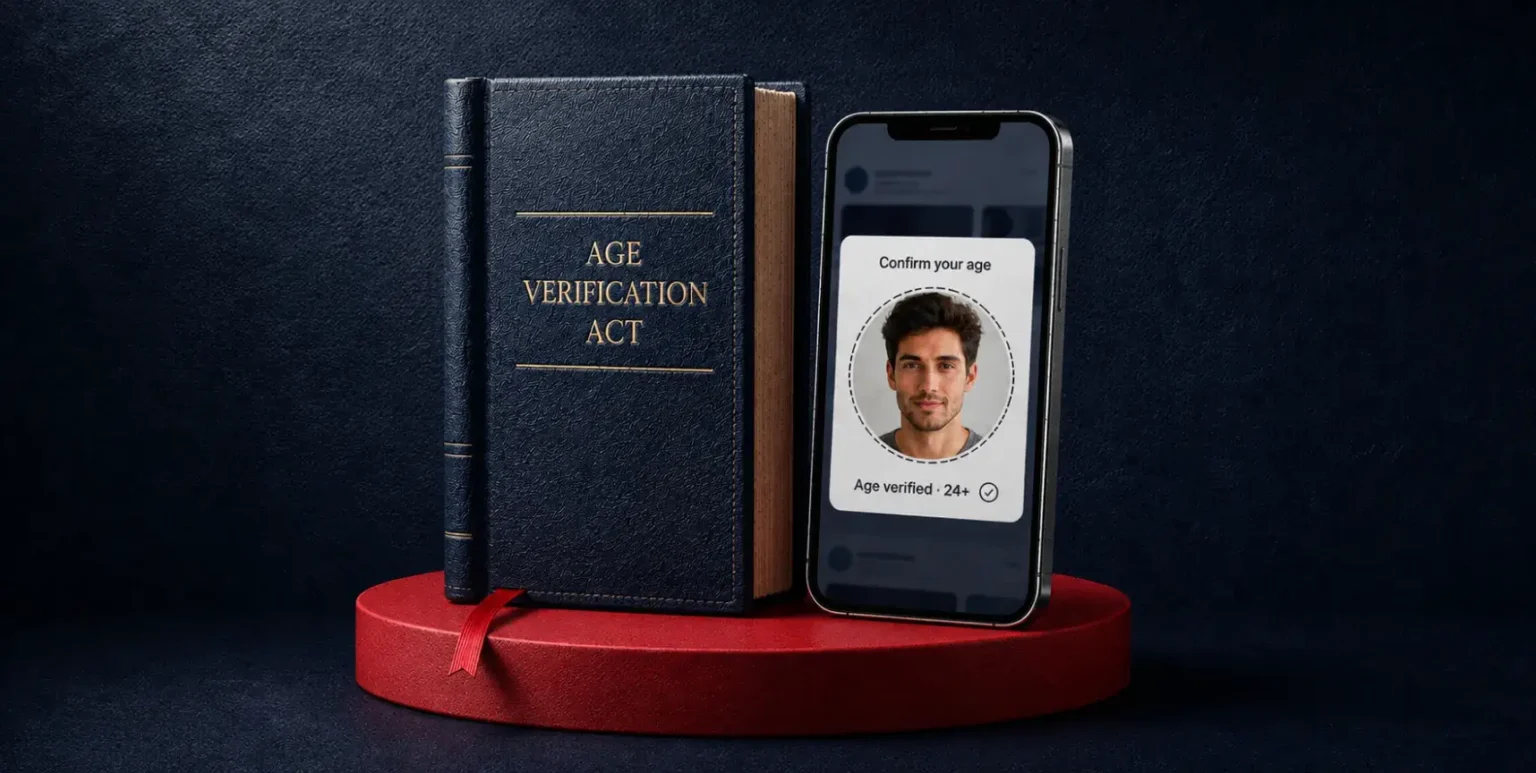

Missouri’s age verification statute took effect on August 28, 2026, requiring adult content websites to confirm through a third-party service that visitors are at least 18, one day before a multistate attorneys general settlement imposed age-assurance obligations on Meta’s Facebook and Instagram. The two actions, landing within a single week, move age verification out of adult content and into mainstream social platforms.
Missouri’s HB1839 requires commercial sites where more than one third of the material is sexual content harmful to minors to route age checks through a third party rather than self-certify, accepting either digital age recognition or an uploaded identity document, and bars operators from retaining the identifying information they collect. The Missouri Attorney General’s office enforces the statute, starting from complaints of statutory violations. Attorney General Catherine Hanaway told St. Louis Public Radio that her office has “no desire to go after individual users” and that investigations would target companies to confirm they are actually requiring verification. The statute codifies a rule Hanaway issued under the Merchandising Practices Act in late 2025, which had already prompted Pornhub to block Missouri traffic.
The Meta settlement announced on August 26 commits the company to pay more than $17 billion and resolves claims brought by 47 states, the District of Columbia, Puerto Rico, American Samoa and the Northern Mariana Islands. Under its terms Meta must bar under-13s from Instagram and Facebook, cap 13-to-17-year-olds at two hours of daily use with nighttime and school-hour restrictions, and apply what the agreement calls “enhanced age-assurance measures” to both new and existing accounts. Meta may license commercial verification tools or build its own, but must hold false-positive rates below 5% for the 13-to-15 bracket and 10% for 16-to-17-year-olds. Adults who decline to verify default into teenage-user protections.
Missouri becomes the twenty-seventh US state with an adult-content age verification law on the books, according to a Recording Law survey of state statutes, in a regime the Supreme Court upheld in June 2025. The trajectory outside the US runs the other way. France’s Conseil constitutionnel struck down President Emmanuel Macron’s under-15 social media ban on August 14, 2026 in decision 2026-911 DC, ruling the blanket restriction disproportionate under Article 11 of the 1789 Declaration of Rights because it applied universally without regard to the risks posed by each service. The Council also held that enforcing the ban implies even adults must prove their age, and that the legislature set no legal safeguards governing how that verification would happen. Macron has tasked Prime Minister Sébastien Lecornu with redrafting the measure ahead of spring 2027.
Those rulings define the constraint platforms now operate under. American statutes and settlements are converging on quantified accuracy standards while simultaneously prohibiting data retention, and the French decision establishes that a verification mandate can fail constitutional review on privacy grounds alone. A document-upload flow satisfies an accuracy threshold and creates precisely the retained-identity risk that Missouri’s statute forbids and the Conseil constitutionnel cited. Nico Perrino of the Foundation for Individual Rights and Expression described the Meta agreement as “a backdoor effort to mandate age verification,” and Nick Krosse of the American Action Forum warned that strict error-rate standards could push Meta toward more privacy-invasive photo ID checks. The compliance question is no longer whether platforms verify age, but whether they can prove accuracy without accumulating the identity data that makes the mandate legally vulnerable.
Platforms facing these obligations need age assurance that meets a measurable error rate without building an identity database. Shufti addresses that through AI-driven facial age estimation that clears visibly adult users in under a second without documents or retained biometric data, escalating to document and biometric verification only for users near the threshold, with reusable age credentials for repeat access.
The platform is certified by Germany’s KJM commission for regulated content, covers 240+ countries and territories, and was named a Leader in both the age verification and age estimation categories of Liminal’s 2026 index. Operators weighing their options can review Shufti’s age verification capabilities or request a demo.