


 Face Verification
 Address Verification
 Document Verification
 Age Verification
 VideoIdent
 Fast ID
 eIDV
eIDV
 Consent Verification
 NFC Verification
 Business Verification
 Due Diligence
 Investor Verification
 E-Signature

 QES
QES
 AML Screening
 Transaction Monitoring
 Adverse Media
 Business AML Screening
 PEP & RCA
 Sanctions
 Watchlist
 Behavioural Biometrics
 Device Fingerprinting
 1:1 Authentication
 MFA
MFA
 Fraud Hub
 Onboarding
 Ongoing Monitoring
 KYC
KYC
 KYB
KYB
 KYI
KYI
 Age Assurance
 Identity Verification
 Workforce IAM
 Candidate Verification
 Compliance
 Fraud prevention
 Trust & safety
 Global expansion
 Product Managers
 Compliance Officers
 Fraud Analysts
 Developers
 Deepfake
 Bonus Abuse / Promotion Abuse
 Account Takeover
 Synthetic Identity Fraud
 Document Fraud
 Impersonation Fraud
 Multi-Accounting
 Fraud Networks
 Chargeback Fraud
 Money Mule Activity
 Party Fraud
 Regulatory & Compliance Risks
 Fintech
 Crypto
 iGaming
 Forex
Forex
 Social Network
 Marketplace
 Banking
 Gig Economy
 Blind Spot Audit
 Deepfake Detector
 Liveness Spoofs
 Document Originality
 Document Deepfake
 Global Trust Platform
 Journey Builder
 Case Management
 Shufti AI
 Fraud Analytics
 Vendor Comparison
 Brand Personalisation
 IDV Modes
 AI Compliance Co-Pilot
 OCR
OCR
 Secure Capture
 Deployment Options
 Identity Methods
 API Documentation
 Mobile SDKs
 Service Status
 Help Center
 Contact Us
 Technical Support
 Supported Documents
 Content library
 Blogs
Blogs
 News
News
 Reports
 Insights
 Knowledgebase
 ROI calculator
 About
About
 Career
 Press Release
 Certifications
 Partnership
 Awards
 Events & Webinar
 Interactive Demo
 Podcast Studio
 Spotlight Studio
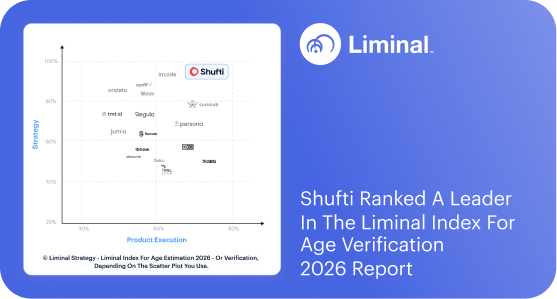
How to Choose Facial Verification Software
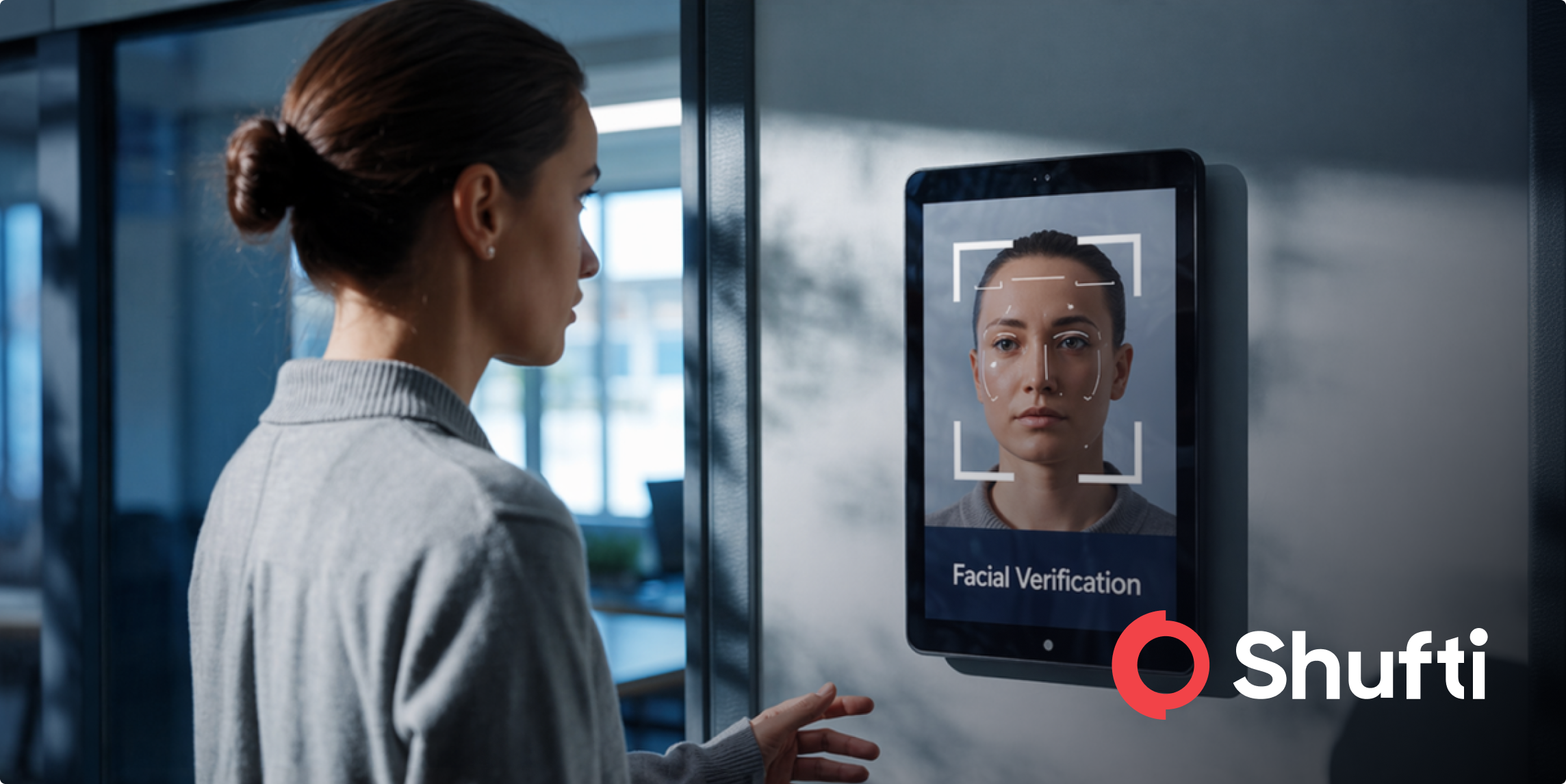
Europol’s Innovation Lab found that 49% of companies surveyed had experienced deepfake fraud and warned the technology “could become a staple tool for organised crime.” The facial verification market has grown in response, and so has the gap between what vendors claim and what their systems can withstand against current attacks.
Facial verification software confirms a person’s identity by comparing a live biometric capture against a reference image, typically from a government-issued document. It uses liveness detection to confirm physical presence and biometric matching to confirm identity. Most vendor pitches look identical at this level. The differences surface when you push on five specific criteria.
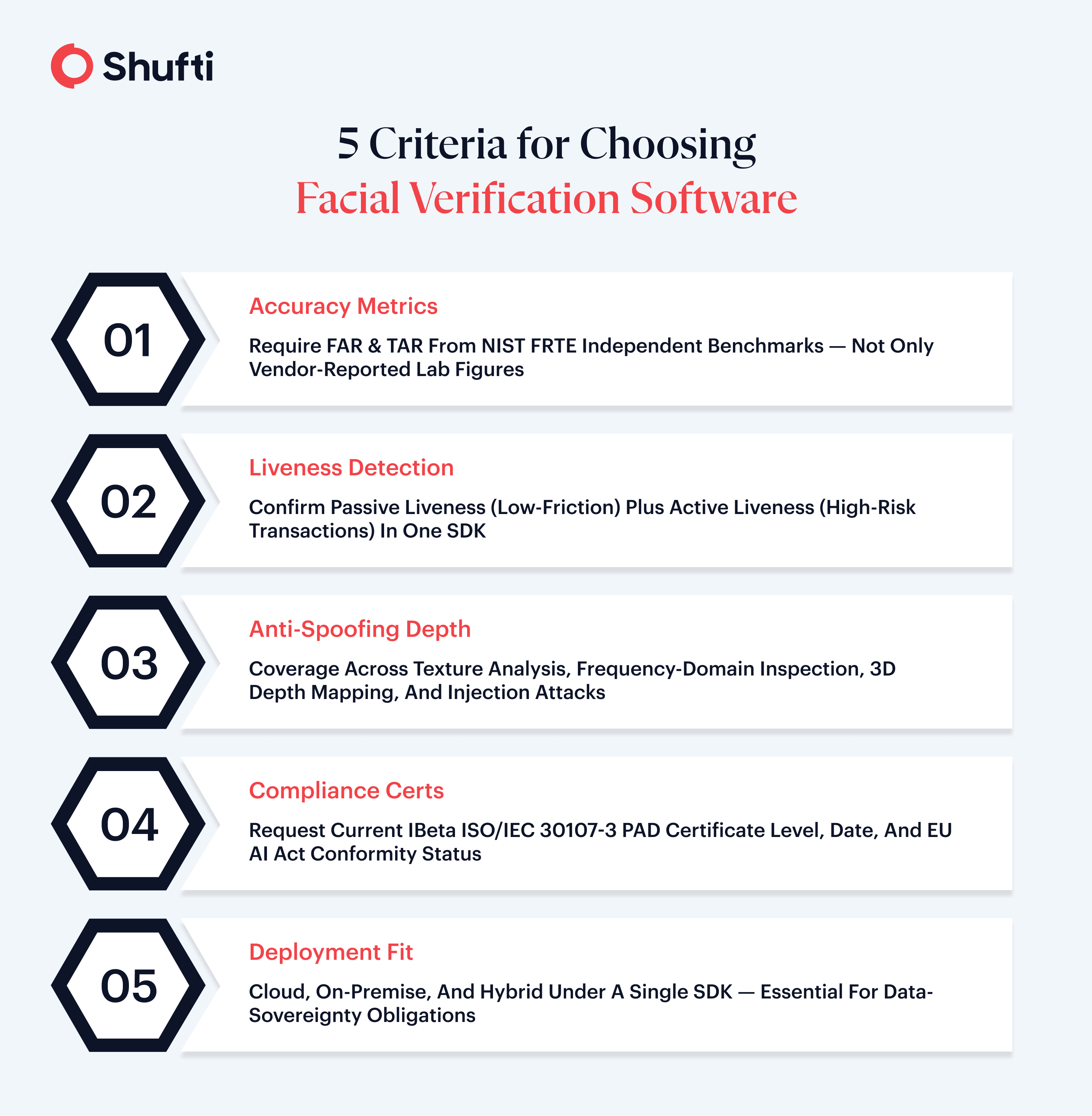
Five Criteria that Separate Reliable Software from the Rest
1. FAR, TAR, and Benchmark Evidence that Holds up
Two numbers define a system’s accuracy. The False Acceptance Rate (FAR) measures how often the system incorrectly accepts a different person as a match. The True Acceptance Rate (TAR) measures how reliably it accepts a genuine match.
Vendor-reported figures are a starting point, not a decision basis. The NIST Face Recognition Technology Evaluation (FRTE) runs independent, continuous benchmarks across demographics, age groups, and imaging conditions. Ask any vendor whether their algorithm has been submitted to NIST and where it ranks. Systems that cite only internal data without independent verification deserve harder scrutiny before you proceed.
Real-world accuracy also degrades outside controlled conditions. An algorithm that performs well on studio-quality images may produce meaningfully worse results on mid-range devices, in variable lighting, or across certain demographic groups. Ask specifically for performance data from real-world capture conditions, not just lab tests. You also have to make sure the system has a high level of accuracy without compromising on speed.
2. Liveness Detection: Passive vs Active, and Why You Need Both
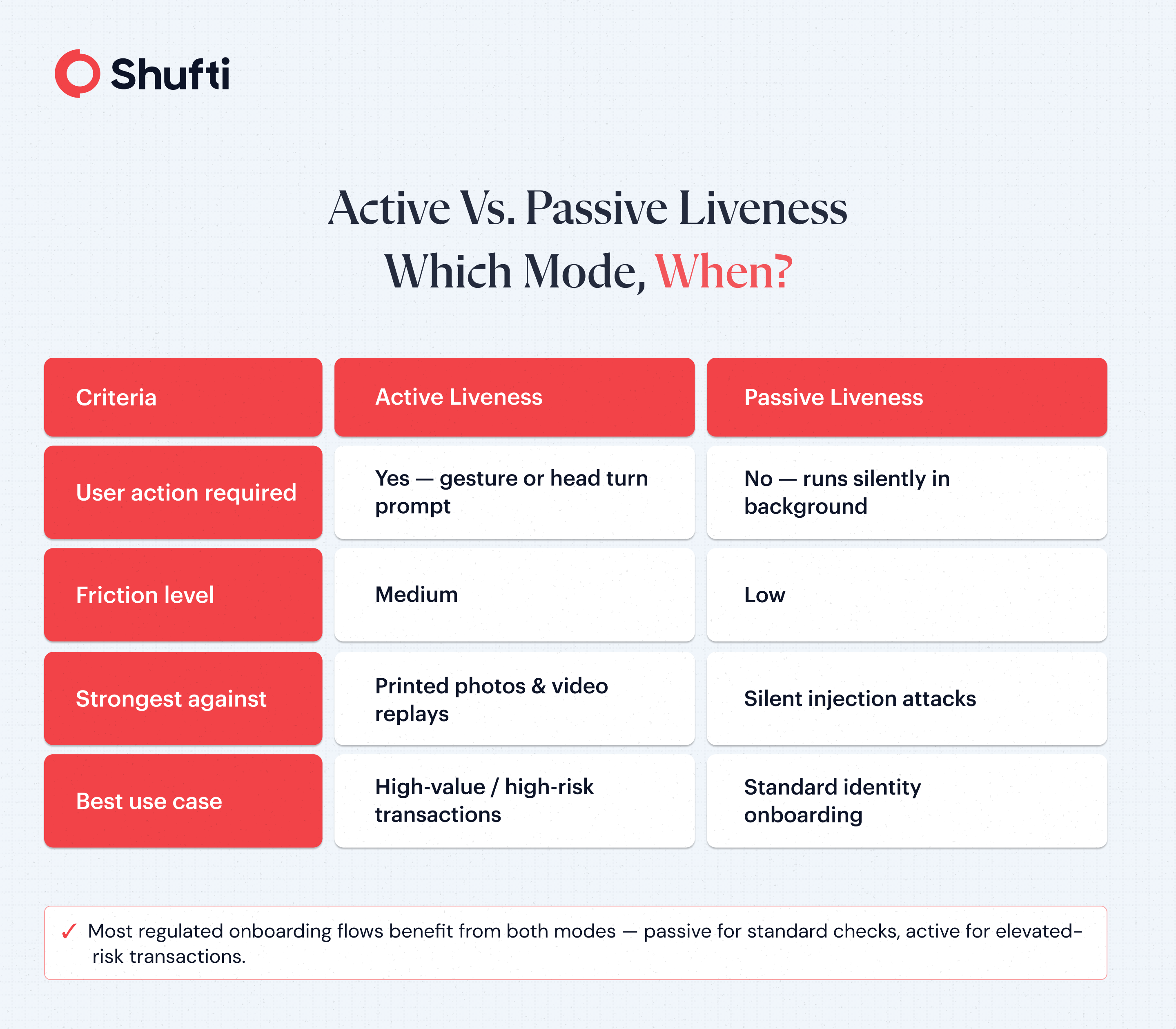
Liveness detection confirms a live person is present rather than a photo, screen replay, or digitally injected stream. Two approaches exist, and they are not interchangeable.
Active liveness prompts the user to perform a small gesture, such as a slight head turn or blink. It is strong against printed photos and static-screen attacks. Passive liveness runs in the background while the user holds their face in frame, analysing 3D depth and texture without any instruction.
Most regulated onboarding flows benefit from both modes being available. Passive liveness reduces drop-off during standard identity checks. Active liveness adds a stronger layer for high-value or high-risk transactions. Software that forces you to pick one is asking you to accept a friction or security penalty that current technology has already resolved.
3. Anti-Spoofing Depth: What Surface-Level Detection Misses
Interpol’s “Beyond Illusions” report confirmed that synthetic facial data is actively used to construct false identities for credit fraud and financial account takeover. Today’s attack surface includes high-quality video replays, 3D-printed masks, and AI-generated deepfake streams engineered specifically to pass basic liveness checks.
Systems relying on RGB camera input alone will not catch frequency-domain attacks designed to defeat pixel-level inspection. Look for solutions that explicitly cover texture analysis, frequency-domain inspection, 3D depth mapping, and injection attack detection. A specific count of covered attack vectors is a more meaningful evaluation signal than a broad claim of “AI-powered liveness.”
A review of how current spoofing attacks bypass face verification in practice is useful context before shortlisting vendors, so you can frame your proof-of-concept evaluation around specific attack types rather than general capability claims.
4. Compliance Certifications: What the Labels Actually Prove
Two certification frameworks carry real weight in vendor evaluation.
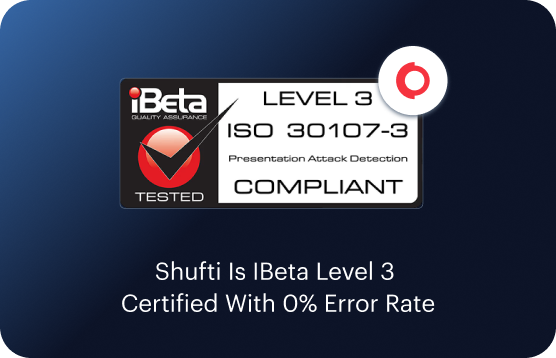
The ISO/IEC 30107-3 Presentation Attack Detection test administered by iBeta, a NIST-accredited laboratory, runs at Levels 1, 2, and 3. Level 1 covers basic attacks including printed photos and screen replays. Level 2 extends to three-dimensional attacks. Level 3, introduced in 2025, sets the current global standard for AI-generated face presentation detection. Ask for the vendor’s current certification letter with its test date. A reference to a Level 1 certificate from two years ago is not a current Level 3 claim.
The EU AI Act (Regulation 2024/1689), in force from August 2024 and fully applicable by August 2026, classifies remote biometric identification systems as high-risk AI. Vendors operating in EU markets must meet mandatory conformity assessments, human oversight requirements, and transparency obligations. This creates compliance obligations for both the vendor and the organisation deploying the system.
5. Deployment Flexibility: Cloud, On-premise, and Hybrid
Where biometric data is processed matters as much as how it is processed. Cloud deployment offers faster time to production and managed infrastructure. On-premise deployment keeps biometric templates inside your own environment, which is a regulatory requirement for many financial institutions, government agencies, and defence contractors.
A vendor that supports cloud only is architecturally ineligible for organisations with data-sovereignty obligations. Before running a proof of concept, confirm whether on-premise and hybrid deployment are available through the same SDK and contract structure, or whether each model requires separate agreements and integrations. That distinction shapes your procurement timeline significantly.
Integration Capability and Biometric Data Compliance
A facial verification system that operates as a standalone tool creates a gap between biometric confirmation and your wider identity workflow. Each handoff between separate vendors is a point where data consistency breaks and the audit trail fragments.
Under UK GDPR Article 9, biometric data processed to uniquely identify individuals is classified as special category data, requiring an explicit lawful basis and a mandatory Data Protection Impact Assessment (DPIA). Your vendor’s architecture should make it straightforward to document that basis and produce a defensible audit trail, not add obstacles to it.
For teams working through how facial liveness and document-based identity verification connect in practice, mapping your technical and compliance requirements before the shortlist stage will save time and prevent scope drift during evaluation.
Avoiding Risk: What Your Solution Must Deliver
When your facial verification software cannot tell a live face from a deepfake or injected video stream, every identity it passes is a liability you will not see until it shows up in fraud losses or a regulatory finding. Shufti’s face verification covers 56+ anti-spoofing attack vectors, runs active and passive liveness through a single SDK, and carries DHS RIVR 2025 validation across diverse demographics, with cloud, on-premise, and hybrid deployment options for organisations with data-sovereignty requirements. Request a demo to run deepfake and injection samples through the pipeline and see the decision output against your own onboarding flow.
Frequently Asked Questions
What factors should I consider when choosing facial verification software?
Evaluate FAR and TAR from independent benchmarks like the NIST FRTE, liveness detection type, anti-spoofing coverage, iBeta ISO 30107-3 certification level, deployment flexibility, and how the system integrates with your document verification and AML workflow.
Should facial verification software support passive or active liveness detection?
Both. Passive liveness is lower-friction for standard onboarding. Active liveness provides stronger assurance for high-value transactions, so look for systems that support both modes rather than forcing you to choose between security and user experience.
Does facial verification software need to comply with GDPR?
Yes. Under Article 9 of UK and EU GDPR, biometric data processed to uniquely identify individuals is classified as special category data, requiring an explicit lawful basis, a mandatory DPIA, and appropriate technical safeguards before processing begins.
What is the difference between on-premise and cloud-based facial verification?
Cloud deployments process biometric data on vendor infrastructure and typically deploy faster. On-premise keeps all biometric data within your own environment, which is a regulatory requirement for many financial institutions and government-sector organisations with data-sovereignty obligations.
Can facial verification software integrate with existing identity platforms?
Yes. Look for a unified SDK or documented API that connects face verification to document checks, AML screening, and your existing onboarding workflow, rather than a standalone tool that creates separate integrations and gaps in your audit trail.