


 Face Verification
 Address Verification
 Document Verification
 Age Verification
 VideoIdent
 Fast ID
 Docless Verification
 Consent Verification
 NFC Verification
 Business Verification
 Due Diligence
 Investor Verification
 E-Signature

 QES
QES
 AML Screening
 Transaction Monitoring
 Adverse Media
 Business AML Screening
 PEP & RCA
 Sanctions
 Watchlist
 Behavioural Biometrics
 Device Fingerprinting
 Biometric Face Authentication
 MFA
MFA
 Fraud Hub
 Onboarding
 Ongoing Monitoring
 KYC
KYC
 KYB
KYB
 KYI
KYI
 Age Assurance
 Identity Verification
 Workforce IAM
 Candidate Verification
 Compliance
 Fraud prevention
 Trust & safety
 Global expansion
 Product Managers
 Compliance Officers
 Fraud Analysts
 Developers
 Deepfake
 Bonus Abuse / Promotion Abuse
 Account Takeover
 Synthetic Identity Fraud
 Document Fraud
 Impersonation Fraud
 Multi-Accounting
 Fraud Networks
 Chargeback Fraud
 Money Mule Activity
 Party Fraud
 Regulatory & Compliance Risks
 Fintech
 Crypto
 iGaming
 Forex
Forex
 Social Network
 Marketplace
 Banking
 Gig Economy
 Payments
 Ride Hailing
 Adult Content
 Blind Spot Audit
 Deepfake Detector
 Liveness Spoofs
 Document Originality
 Document Deepfake
 Global Trust Platform
 Journey Builder
 Case Management
 Shufti AI
 Fraud Analytics
 Vendor Comparison
 Brand Personalisation
 AI Compliance Co-Pilot
 OCR
OCR
 Secure Capture
 Deployment Options
 Identity Methods
 API Documentation
 Mobile SDKs
 Service Status
 Help Center
 Contact Us
 Technical Support
 Supported Documents
 Supported Countries
 Content library
 Blogs
Blogs
 News
News
 Reports
 Insights
 Knowledgebase
 ROI calculator
 About
About
 Career
 Press Release
 Certifications
 Partnership
 Awards
 Events & Webinar
 Interactive Demo
 Podcast Studio
 Spotlight Studio
Florida SB 757: Synthetic Media Law Covering Minors and NCII
TL;DR
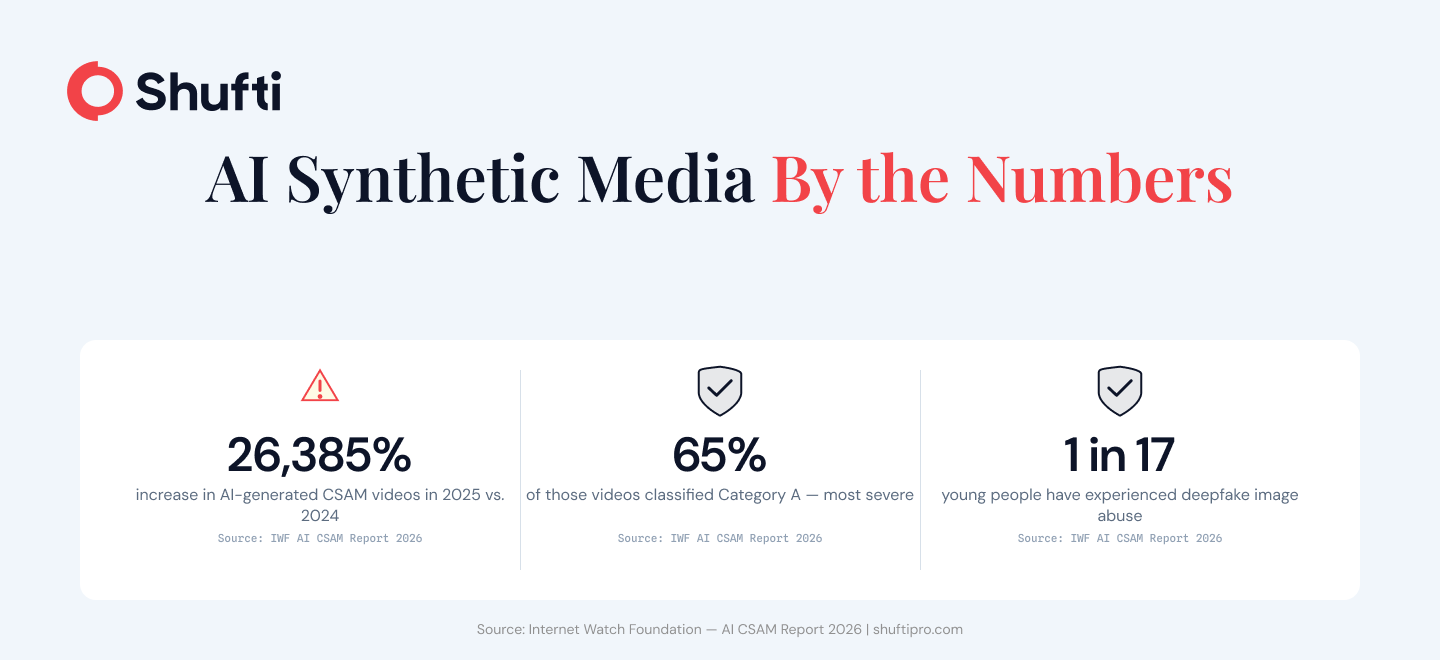
- AI-generated CSAM identified by IWF rose 26,385% (2024–2025); Florida responded with HB 757 (SB 757), signed May 27, 2025, criminalising both adult NCII and synthetic child sexual content under one statute (most states cover only one).
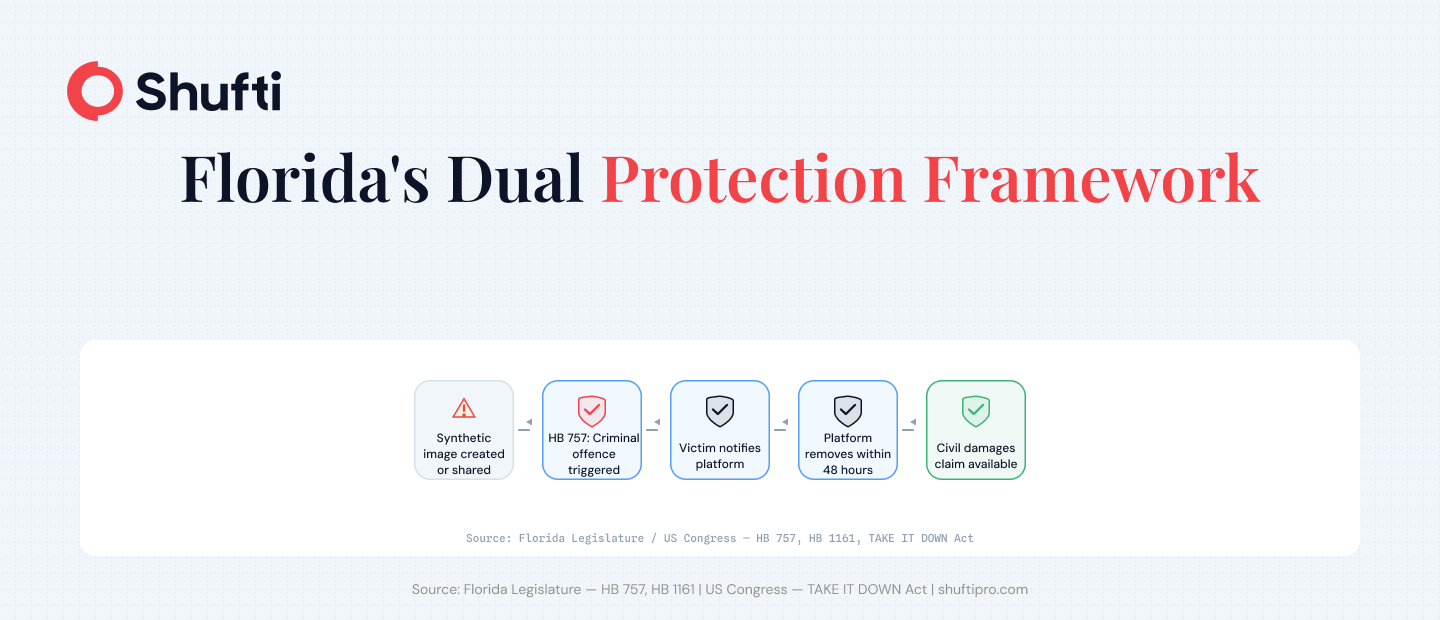
- Penalty tiers: creating/soliciting/possessing = 3rd-degree felony (up to 5 years, $5,000 fine); possession with intent to distribute = 2nd-degree felony (up to 15 years); civil damages start at $10,000/violation plus attorney’s fees.
- Companion law, Brooke’s Law (HB 1161/SB 1161), puts the obligation on platforms: publish a removal policy, act within 48 hours of a valid victim request, and the compliance deadline was Dec 31, 2025.
- Federal TAKE IT DOWN Act (signed May 19, 2025) runs in parallel with the same 48-hour removal window; platforms have until May 19, 2026 to be compliant, Florida platforms now face concurrent state, federal exposure.
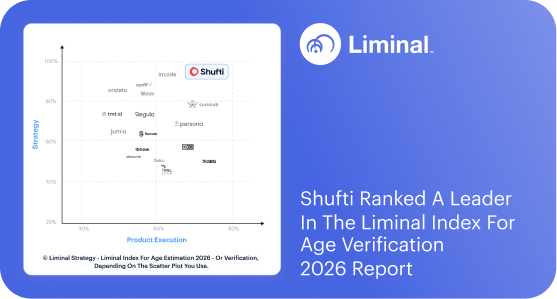
AI-generated child sexual abuse videos identified by the Internet Watch Foundation (IWF) rose 26,385% between 2024 and 2025, from 13 confirmed videos to 3,443. Florida did not wait for a coordinated federal response. On May 27, 2025, Governor DeSantis signed House Bill 757 into law, a statute tracked on the Florida Senate legislative database as SB 757. Unlike most state deepfake laws that address either non-consensual intimate imagery (NCII) or child protection separately, Florida HB 757 criminalises both under one framework. This piece explains what the Florida deepfake dual protection law requires, how companion legislation, Brooke’s Law (HB 1161), adds platform obligations, and what compliance looks like for platforms reaching Florida users.
The Scale of the Synthetic Media Problem
The statistics behind the legislation do not leave room for ambiguity. A Childlight “Into the Light” study recorded a 1,325% rise in harmful AI-generated online abuse material between 2023 and 2024, with deepfake tools placing real children’s faces onto sexual imagery and distributing the results across public and dark-web platforms. The IWF’s 2026 report found that 65% of the AI-generated child sexual abuse videos it assessed fell into Category A, the most severe classification on record. Adults face the same threat. The IWF’s research shows 98% of deepfake videos online are sexually explicit, with 99% targeting women and girls. One in 17 young people has personally experienced deepfake image abuse. Florida legislators cited these patterns directly when drafting what has become the Florida deepfake minors law and NCII statute combined in a single act.
What does Florida SB 757 actually cover?
Florida HB 757, filed and tracked in Senate systems as SB 757 and also referred to as the Florida HB757 deepfake law, is a criminal statute that took effect on May 27, 2025. Its scope spans two distinct groups of victims, which separates it from most contemporaneous state legislation that chose one or the other.
For adults, the law prohibits the creation, solicitation, and possession of any altered sexual depiction of an identifiable person produced without that person’s consent. This captures the NCII problem directly. AI tools generate realistic intimate imagery from real faces without any authorisation, and the statute makes producing or holding that imagery a criminal act.
For minors, the statute is categorical. Synthetic child content under Florida SB 757 is treated with the same seriousness as other forms of child sexual abuse material. Where the victim is under 18, Florida’s existing child exploitation statutes apply in parallel, creating a compound exposure for offenders targeting minors.
The dual scope covering adult NCII and synthetic child content under a single act is why Florida HB 757 is frequently described as the Florida AI minor NCII combined bill. Most states have passed one form of protection or the other. Florida wrote both into a single statute, with a shared penalty structure and concurrent civil remedies available to all victims.
What are the penalties under Florida SB 757?
The penalty structure is tiered, with criminal charges and civil claims running at the same time. Florida HB 757 creates meaningful distinctions between different levels of involvement in the creation, possession, and distribution of synthetic intimate imagery. The involvement of a minor as a victim is a separate aggravating factor that can trigger additional charges under Florida’s child exploitation framework.
Creating or soliciting deepfake intimate imagery
Creating, soliciting, or knowingly possessing AI-generated sexually explicit imagery of an identifiable person without consent is a third-degree felony. The maximum sentence is five years in prison, with a fine of up to $5,000. This tier applies regardless of whether the victim is an adult or a minor. Where the victim is under 18, the conduct can trigger additional charges under Florida’s existing child exploitation statutes, which carry substantially higher maximum penalties. The law covers imagery generated by any technology that produces a realistic depiction of a real identifiable person in a sexual context without consent.
Possession with intent to distribute
Possessing synthetic intimate imagery with intent to promote or distribute it escalates to a second-degree felony, carrying a maximum sentence of 15 years in prison. The distinction between passive possession and distribution-oriented possession is meaningful for prosecution. Sharing a single deepfake image with a third party can move a case into this higher felony tier. The law does not require wide distribution. Intent to share with even one other person meets the threshold.
Civil damages for victims
Florida HB 757 creates an independent civil right of action that runs alongside any criminal proceeding. Damages start at $10,000 per violation, with attorney’s fees recoverable in addition. Civil claims can result in court orders requiring the removal or destruction of the imagery. For victims seeking relief where criminal thresholds are not reached, the civil route under the Florida deepfake minors law provides a direct and independent path. A factual primer on what deepfake content is and how it is generated offers useful background for understanding what qualifies as synthetic intimate imagery under the statute.
What must platforms do under Brooke’s Law and the TAKE IT DOWN Act?
Florida HB 757 handles criminal liability for individuals. A companion statute, HB 1161, known as Brooke’s Law and accompanied in the Senate as SB 1161, addresses the obligations of platforms directly. Understanding the difference between SB 757 and SB 1161 is straightforward. One criminalises the act of creating or possessing synthetic intimate imagery without consent. The other mandates how online platforms must respond when victims report it.
Under HB 1161 (SB 1161), any covered platform serving Florida users must establish and publish a removal policy. On receipt of a valid victim request, the platform has 48 hours to remove the reported content and make reasonable efforts to identify and take down identical copies. The compliance deadline for establishing these systems was December 31, 2025.
At the federal level, the TAKE IT DOWN Act, signed on May 19, 2025, runs a parallel structure. It federally criminalises knowingly sharing NCII and AI-generated intimate imagery of real people, with increased penalties where the content depicts a minor. Covered platforms have until May 19, 2026, to implement compliant notice-and-removal processes. The removal window mirrors the Florida statute. Platforms must act within 48 hours of receiving valid notice.
Platforms operating in Florida now sit under both frameworks simultaneously. A failure to act on a valid removal request creates concurrent exposure under state and federal enforcement. Platforms deploying synthetic media detection at the upload stage can reduce the volume of removal requests they receive before the 48-hour window ever starts.
How does Shufti help platforms detect synthetic media content?
Platforms required to act within 48 hours of a removal request need more than a reporting button. The operational challenge is that synthetic intimate imagery is difficult to detect at scale without automated tools running upstream. Removal queues fill faster than manual review teams can clear them, and identical copies of a flagged image scatter across platform sections within minutes of the original upload.
Shufti’s deepfake detection runs at the point of upload and interaction, scanning for synthetic media signals across 56+ attack vectors. The coverage includes AI face-swap techniques, frequency-domain manipulation, and injection-based attacks that bypass standard liveness checks. By flagging synthetic content before it propagates, platforms reduce both the volume reaching victims and the reactive removal burden that follows a valid request.
For age-gated platforms with specific obligations around minors, age verification integrated at the point of registration provides a second control layer, limiting access by unverified users and creating an auditable record at onboarding. As of April 2026, Shufti holds DHS RIVR 2025 top-performer status across face verification and age estimation, recognised across diverse demographic groups.
Synthetic media compliance is tightening at both the state and federal levels through 2026. Platforms that put detection and removal infrastructure in place now avoid the reputational and legal exposure that follows a reactive posture when a removal request hits an unprepared queue.
Frequently Asked Questions
Does Florida SB 757 ban AI-generated child content?
Yes. Florida HB 757 (SB 757) criminalises creating, soliciting, or possessing AI-generated sexually explicit imagery of minors without consent. Penalties escalate when the victim is a child and can intersect with existing child exploitation statutes in Florida.
What is the difference between Florida SB 757 and SB 1161?
SB 757 (HB 757) is the criminal statute. It punishes individuals who create, solicit, or possess synthetic intimate imagery without consent. SB 1161 (HB 1161, Brooke's Law) is the platform statute. It requires covered platforms to establish removal processes and act within 48 hours of a victim's request.
What are the penalties for deepfake child content in Florida?
Creating or possessing AI-generated child sexual content is a third-degree felony under HB 757, carrying up to five years in prison. Possession with intent to distribute is a second-degree felony, carrying up to 15 years. Civil damages start at $10,000 per violation.
How does Florida protect minors from synthetic media?
Florida HB 757 criminalises synthetic sexual imagery of minors, including purely AI-generated content. Brooke's Law (HB 1161) requires platforms to remove it within 48 hours of a valid request, and the TAKE IT DOWN Act adds federal enforcement of the same removal obligation as of May 2025.
Who can be prosecuted under Florida SB 757?
Any individual who creates, solicits, or knowingly possesses AI-generated sexually explicit imagery of an identifiable person without consent. Possession with intent to distribute triggers a higher felony charge. Both Florida residents and out-of-state individuals whose conduct affects Florida victims can face prosecution.