




 Face Verification
 Address Verification
 Document Verification
 Age Verification
 VideoIdent
 Fast ID
 Docless Verification
 Consent Verification
 NFC Verification
 Business Verification
 Due Diligence
 Investor Verification
 E-Signature

 QES
QES
 AML Screening
 Transaction Monitoring
 Adverse Media
 Business AML Screening
 PEP & RCA
 Sanctions
 Watchlist
 Behavioural Biometrics
 Device Fingerprinting
 Biometric Face Authentication
 MFA
MFA
 Fraud Hub
 Onboarding
 Ongoing Monitoring
 KYC
KYC
 KYB
KYB
 KYI
KYI
 Age Assurance
 Identity Verification
 Workforce IAM
 Candidate Verification
 Compliance
 Fraud prevention
 Trust & safety
 Global expansion
 Product Managers
 Compliance Officers
 Fraud Analysts
 Developers
 Deepfake Detection
 Bonus Abuse / Promotion Abuse
 Account Takeover
 Synthetic Identity Fraud
 Document Fraud
 Impersonation Fraud
 Multi-Accounting
 Fraud Networks
 Chargeback Fraud
 Money Mule Activity
 Party Fraud
 Regulatory & Compliance Risks
 Fintech
 Crypto
 iGaming
 Forex
Forex
 Social Network
 Marketplace
 Banking
 Gig Economy
 Payments
 Ride Hailing
 Adult Content
 Blind Spot Audit
 Deepfake Detector
 Liveness Spoofs
 Document Originality
 Document Deepfake
 Global Trust Platform
 Journey Builder
 Case Management
 Shufti AI
 Fraud Analytics
 Vendor Comparison
 Brand Personalisation
 AI Compliance Co-Pilot
 OCR
OCR
 Secure Capture
 Deployment Options
 Identity Methods
 API Documentation
 Mobile SDKs
 Service Status
 Help Center
 Contact Us
 Technical Support
 Supported Documents
 Supported Countries

 Content library
 Blogs
Blogs
 News
News
 Reports
 Insights
 Knowledgebase
 ROI calculator
 About
About
 Career
 Press Release
 Certifications
 Partnership
 Awards
 Events & Webinar
 Interactive Demo
 Podcast Studio
 Spotlight Studio
KYC for Challenger Banks: High-Volume Onboarding & Regulatory Compliance 2026

-
Add us as a Preferred Source
- 01 What Is a Challenger Bank?
- 02 The KYC Compliance Gap at Scale
- 03 How Does the Digital Bank Onboarding Process Work?
- 04 KYC Automation Banking: Solving High-Volume Verification
- 05 AML compliance and fraud detection for digital banks
- 06 How Shufti helps challenger banks scale compliance
TL;DR
- The FCA’s £28.9 million fine against Starling Bank in October 2024 set a clear precedent: scaling customer acquisition faster than KYC infrastructure is a regulatory liability, not just an operational gap. Challenger banks face active enforcement, not just guidance.
- Challenger bank KYC compliance failures are almost never a gap in intent. They are a gap in infrastructure. As onboarding volumes rise, manual review queues fill, abandonment increases, and compliance exposure widens simultaneously on both the commercial and regulatory side.
- Compliant digital onboarding runs through three sequential layers: document verification, biometric liveness matching, and AML screening against sanctions lists, PEP registries, and adverse media. All three must scale together, not independently.
- AML risk has two distinct windows that both require coverage: the onboarding window (sanctioned individuals, synthetic identities) and the post-onboarding window (customers whose risk status changes after passing initial checks). Running AML screening only at onboarding leaves the second window completely unmonitored.
- KYC automation through a single API integration resolves the speed-versus-compliance tension. Clean cases complete in seconds with a full automated audit trail. Edge cases route to prioritised human review without holding up the broader onboarding queue.
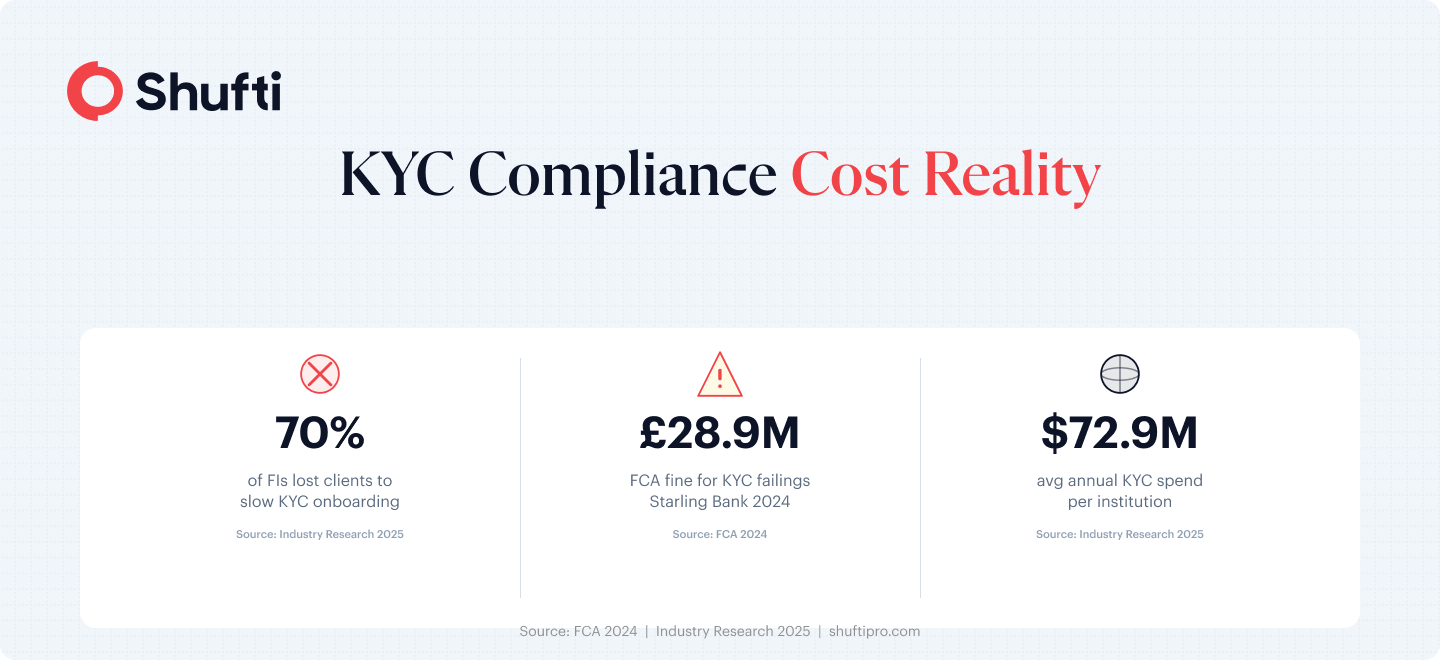
In October 2024, the FCA fined Starling Bank £28.9 million for opening over 54,000 accounts for high-risk customers while screening against only a fraction of the full financial sanctions list for six years. The bank had grown faster than its KYC (Know Your Customer) infrastructure, and that gap cost it nearly thirty million pounds. Every challenger bank running high-volume onboarding faces the same tension: acquisition speed versus verification depth. This article walks through the controls digital banks need to scale customer onboarding without creating the regulatory exposure that enforcement actions are made of.
What Is a Challenger Bank?
A challenger bank is a digital-first financial institution that operates through mobile or online channels rather than physical branches. The term covers app-only current accounts, digital lending platforms, and mobile-only savings products. Unlike traditional retail banks, challenger banks do not carry the cost base of branch networks or legacy core banking systems, which funds the lower fees and faster account opening they offer customers.
That structural advantage comes with a compliance obligation most challenger banks underestimate at launch. The identity verification banks must implement to satisfy modern regulators is more demanding than for most other financial sectors, because the digital-only channel removes the in-person judgment layer that branch staff previously provided. Customer onboarding banking at scale requires KYC systems that grow with acquisition, not systems that hold up under modest volume and fail when a referral campaign drives thousands of simultaneous applications.
The KYC Compliance Gap at Scale
Challenger bank KYC compliance programmes face a specific risk as they grow: infrastructure investment does not keep pace with customer acquisition. The Starling Bank case is the clearest example available. The bank opened accounts for 49,000 high-risk customers after agreeing with the FCA not to do so, and its automated sanctions screening had been operating against an incomplete sanctions list for six years. The October 2024 enforcement action made explicit that scale does not excuse control gaps. It intensifies them.
The compliance failure at fast-growing digital banks is rarely a gap in intent. It is almost always a gap in infrastructure. As acquisition volume rises, the gap between onboarding throughput and compliance controls widens, and both the commercial cost of abandonment and the regulatory cost of exposure grow with it. Neobank FCA compliance means satisfying both sets of demands, and that requires investment in infrastructure, which most challenger banks deprioritised during their early growth phases.
The Starling Bank fine KYC enforcement case is a useful benchmark. The gap between what a fast-scaling digital bank promises regulators and what its systems actually deliver is where penalties are built.
How Does the Digital Bank Onboarding Process Work?
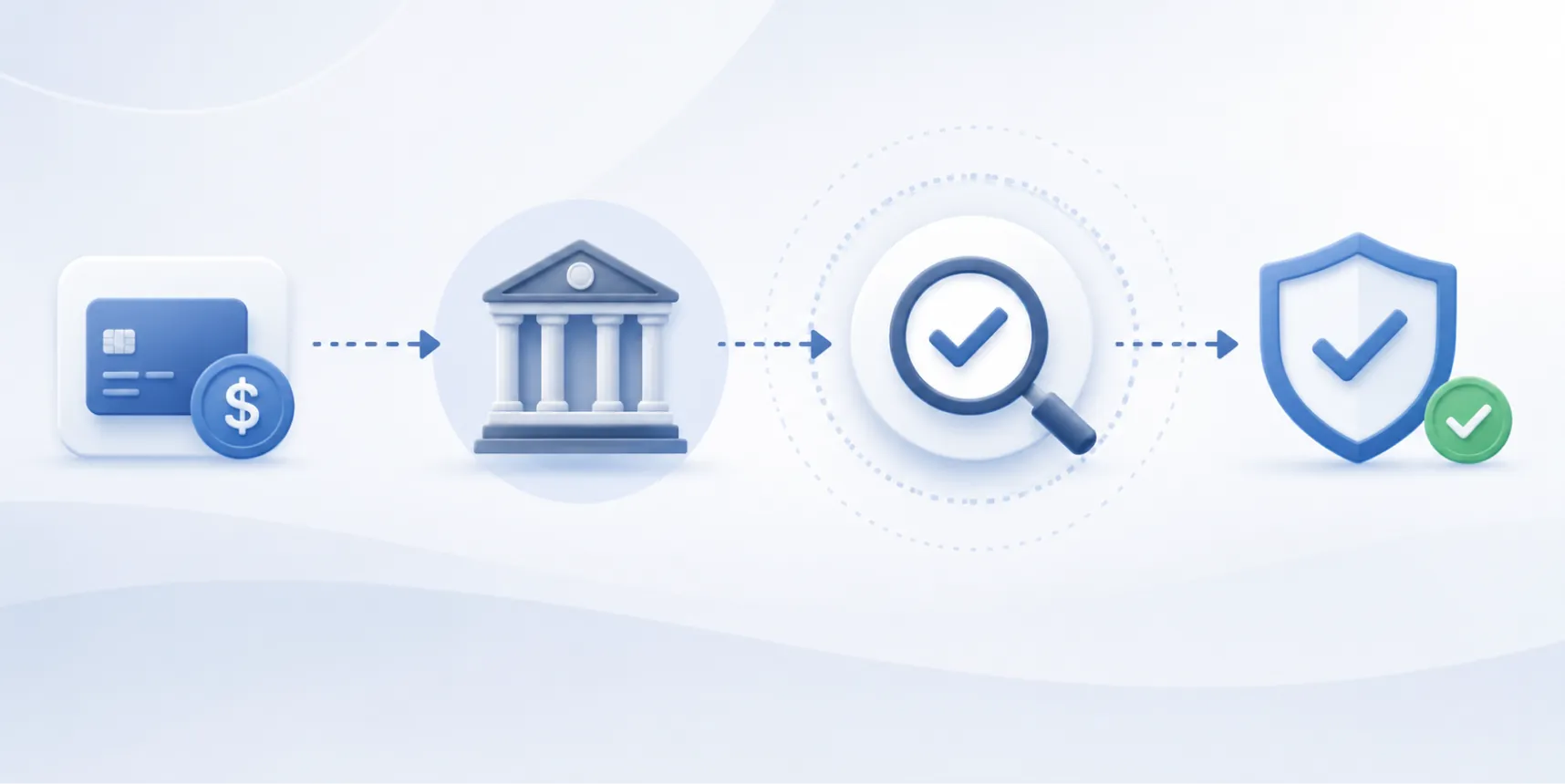
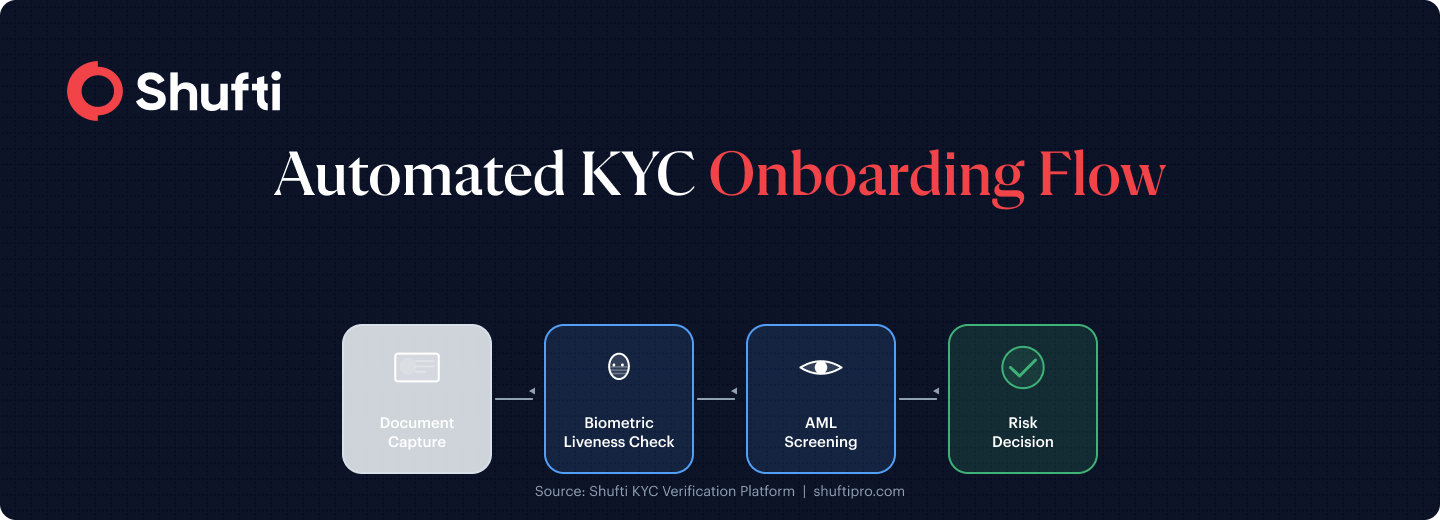
The digital bank onboarding process in a compliant challenger bank runs through three layers. Document verification comes first. The customer submits a government-issued ID that is checked for authenticity, expiry, and data integrity. Biometric matching follows. The customer completes a liveness check confirming that the submitted document belongs to the person presenting it, not to a fraudster using a stolen identity. The final layer is AML (Anti-Money Laundering) screening, where the customer’s name, date of birth, and nationality are checked against global sanctions lists, PEP registries, and adverse media databases before the account activates.
The problem for most challenger banks is that each layer was designed for a manageable queue of applicants, not for thousands of simultaneous applications during a product launch. When volume spikes, manual review queues fill up, completion rates drop, and customers abandon. Manual review represents the largest cost driver in KYC operations across most financial institutions, with labour-intensive case management scaling directly with application volume when automation is absent.
Global challenger banks face an added complication. A customer in the EU presents a biometric passport. A customer in West Africa presents a national ID card. A customer in Southeast Asia may present a document that the bank’s manual review team has never encountered. Automated identity verification systems that support thousands of document types across over 200 countries handle this diversity without requiring specialist document knowledge in-house.
KYC Automation Banking: Solving High-Volume Verification
The identity verification banks choose determines not just their compliance posture but the customer experience they can deliver. A system that processes applications too slowly creates abandonment. One that is too permissive creates regulatory exposure. KYC automation banking resolves this by running document verification, biometrics, and AML screening through a single pipeline rather than three separate queues.
A KYC API banking integration passes the customer’s identity data to a verification engine that applies optical character recognition, biometric comparison, and watchlist screening in parallel. The result returns in seconds, not days. For the compliance team, every decision, data source, and rejection reason is logged automatically, without manual data entry.
High-volume KYC verification places additional demands on the architecture. The system must handle burst traffic without degradation, maintain accuracy across a global mix of identity documents, and route edge cases to human review without holding up clean applicants. The best KYC software for banks separates these flows. Clear cases complete automatically. Ambiguous documents or watchlist matches enter a prioritised review queue with full context attached. Customer onboarding banking rates improve when straightforward applications never touch a human desk.
The compliance benefit mirrors the operational one. An automated audit trail means every verification decision is documented by default. During a regulatory review, this log provides the evidence trail that manual processes rarely produce with consistent completeness.
AML compliance and fraud detection for digital banks
Digital bank AML programmes need to address two distinct risk windows. Onboarding exposure covers a sanctioned individual, a PEP with undisclosed risk factors, or a synthetic identity, clearing initial checks and opening an account. Post-onboarding exposure covers a customer who passed initial checks, later becoming involved in suspicious transaction patterns, which routine periodic review may not catch in time.
Fraud detection in banking has shifted toward the identity layer because fraudsters have adapted to the digital-only channel. AML compliance digital banks implement today address synthetic identity fraud, where real personal data is combined with fabricated credentials, alongside account takeover attempts using stolen KYC documents. As of early 2026, the Central Bank of Nigeria (CBN) had introduced mandatory minimum standards for automated AML solutions across all regulated financial institutions and mobile money operators in Nigeria. The direction of travel for mobile-first banking markets is the same. Automated, continuous screening has moved from a competitive differentiator to a regulatory expectation.
Challenger bank KYC compliance programmes that run digital bank AML screening only at onboarding leave the post-onboarding window unmonitored. Ongoing AML and KYC monitoring that flags changes in transaction behaviour, updated PEP status, or new adverse media coverage closes that gap without requiring re-verification of every customer.
How Shufti helps challenger banks scale compliance
Shufti’s KYC platform handles document verification across 10,000+ document types from 230+ countries, biometric liveness detection, and automated AML screening through a single integration point. For banks operating at volume, compliance teams get a full audit trail on every decision. Customers see an experience that completes in under 15 seconds for clean cases.
Shufti’s AML Screening covers 100,000+ data sources, 3,500+ global watchlists, and 2.6 million PEP profiles updated every 15 minutes. A sanctions designation issued after initial onboarding is caught before it becomes a regulatory exposure rather than after it has become a headline. Compliance teams can configure verification workflows without additional engineering resource, adapting KYC steps to product type, customer risk tier, and jurisdiction as the bank grows. For digital banks building a compliant onboarding stack, that means connecting identity verification and AML into a single workflow without managing multiple vendor integrations.
Frequently Asked Questions
What is a challenger bank?
A challenger bank is a digital-first financial institution operating through mobile or online channels rather than physical branches. Challenger banks compete with traditional banks on speed, lower fees, and frictionless account opening, and rely on automated KYC to onboard customers without in-branch identity checks.
How do banks carry out KYC verification?
Banks verify identity through document verification, biometric liveness matching, and AML screening against sanctions lists, PEP registries, and adverse media databases. Automated platforms run all three layers through a single API call, returning a risk decision in seconds rather than routing applicants to a manual review queue.
What is digital onboarding in banking?
Digital onboarding banking means verifying and activating a customer account entirely through a mobile or web interface, without branch attendance. It covers document capture, biometric verification, and AML screening, completing the full KYC process in minutes.
How do digital banks prevent onboarding fraud?
Digital banks prevent onboarding fraud by combining document authenticity checks, biometric liveness detection, and AML screening at sign-up. Liveness checks detect presentation attacks using photos or deepfakes. AML checks surface high-risk individuals before accounts activate. Post-onboarding transaction monitoring catches synthetic identities that pass initial checks.
How often are KYC checks updated for digital bank customers?
Most regulatory frameworks require periodic KYC review. High-risk customers typically need annual refreshes. AML screening should run continuously rather than only at onboarding, catching changes in sanctions status, PEP designation, or adverse media in real time rather than at scheduled review intervals.