




 Face Verification
 Address Verification
 Document Verification
 Age Verification
 VideoIdent
 Fast ID
 Docless Verification
 Consent Verification
 NFC Verification
 Business Verification
 Due Diligence
 Investor Verification
 E-Signature

 QES
QES
 AML Screening
 Transaction Monitoring
 Adverse Media
 Business AML Screening
 PEP & RCA
 Sanctions
 Watchlist
 Behavioural Biometrics
 Device Fingerprinting
 Biometric Face Authentication
 MFA
MFA
 Fraud Hub
 Onboarding
 Ongoing Monitoring
 KYC
KYC
 KYB
KYB
 KYI
KYI
 Age Assurance
 Identity Verification
 Workforce IAM
 Candidate Verification
 Compliance
 Fraud prevention
 Trust & safety
 Global expansion
 Product Managers
 Compliance Officers
 Fraud Analysts
 Developers
 Deepfake Detection
 Bonus Abuse / Promotion Abuse
 Account Takeover
 Synthetic Identity Fraud
 Document Fraud
 Impersonation Fraud
 Multi-Accounting
 Fraud Networks
 Chargeback Fraud
 Money Mule Activity
 Party Fraud
 Regulatory & Compliance Risks
 Fintech
 Crypto
 iGaming
 Forex
Forex
 Social Network
 Marketplace
 Banking
 Gig Economy
 Payments
 Ride Hailing
 Adult Content
 Blind Spot Audit
 Deepfake Detector
 Liveness Spoofs
 Document Originality
 Document Deepfake
 Global Trust Platform
 Journey Builder
 Case Management
 Shufti AI
 Fraud Analytics
 Vendor Comparison
 Brand Personalisation
 AI Compliance Co-Pilot
 OCR
OCR
 Secure Capture
 Deployment Options
 Identity Methods
 API Documentation
 Mobile SDKs
 Service Status
 Help Center
 Contact Us
 Technical Support
 Supported Documents
 Supported Countries
 Content library
 Blogs
Blogs
 News
News
 Reports
 Insights
 Knowledgebase
 ROI calculator
 About
About
 Career
 Press Release
 Certifications
 Partnership
 Awards
 Events & Webinar
 Interactive Demo
 Podcast Studio
 Spotlight Studio
Address Verification in New Zealand 2026: AML/CFT Act Changes and New Risk-Based Rules

-
Add us as a Preferred Source
- 01 Key Takeaways
- 02 What is address verification under NZ AML/CFT law?
- 03 How risk-based address verification works under NZ AML rules
- 04 Why address verification matters for NZ compliance
- 05 What counts as proof of address in New Zealand?
- 06 How Shufti helps NZ fintechs adapt to the new compliance rules
Key Takeaways
- The Statutes Amendment Act 2025 (in force 27 November 2025) removed the blanket requirement to verify every customer’s address under NZ AML/CFT law.
- Standard CDD still requires collecting a customer’s address, but verification is now only mandatory when enhanced due diligence (EDD) is triggered.
- EDD triggers include PEPs, overseas clients, non-face-to-face relationships, and any customer your risk assessment flags as elevated.
- Accepted proof of address in NZ includes utility bills, bank statements, government correspondence, and electronic database verification, all dated within three months.
- Reporting entities still verifying every customer’s address are not acting unlawfully, but they are generating unnecessary onboarding friction for low-risk customers.
- New Zealand’s AML/CFT regime is supervised by three agencies: the Reserve Bank of NZ (banks/insurers), the FMA (capital markets), and the DIA (all others).
On 27 November 2025, the Statutes Amendment Act 2025 became law in New Zealand, removing the universal requirement to verify customer addresses during standard customer due diligence for the first time since the Anti-Money Laundering and Countering Financing of Terrorism (AML/CFT) Act 2009 came into force. Every reporting entity still verifying every customer’s address is now over-verifying low-risk customers and carrying a compliance cost the law no longer requires. This guide explains what changed, what the new risk-based framework demands, and how to update your address verification New Zealand programme to match.
What is address verification under NZ AML/CFT law?
“Address verification NZ” means confirming that a customer’s declared residential or business address is genuine and belongs to that individual. Under the AML/CFT Act 2009, address verification sits within customer due diligence (CDD), the identity and background checks that reporting entities must carry out before establishing a business relationship or processing a designated transaction. KYC requirements New Zealand imposes on reporting entities under the AML/CFT Act NZ have always included address collection, but until November 2025, they also required verification for every customer regardless of risk profile.
That universal requirement no longer applies. As of 27 November 2025, the AML/CFT Act NZ only requires address verification when enhanced due diligence (EDD) is triggered. Standard CDD still requires collecting the address. Address confirmation through proof of address methods, whether documentary or electronic, is now a risk-triggered obligation rather than a blanket one. PoA verification NZ reporting entities run today sit within EDD, not standard onboarding. AML compliance NZ programs that continue verifying every customer’s address are not acting unlawfully, but they are generating friction that the updated rules do not require for lower-risk customers.
This distinction affects every business defined as a reporting entity. Banks, fintech lenders, crypto exchanges, payment companies, lawyers, accountants, and real estate agents all fall within the scope. New Zealand’s three AML/CFT supervisors are the Financial Markets Authority (FMA), the Reserve Bank of New Zealand (RBNZ), and the Department of Internal Affairs (DIA), each covering different categories of reporting entities. All three apply the same underlying rule change.
How risk-based address verification works under NZ AML rules
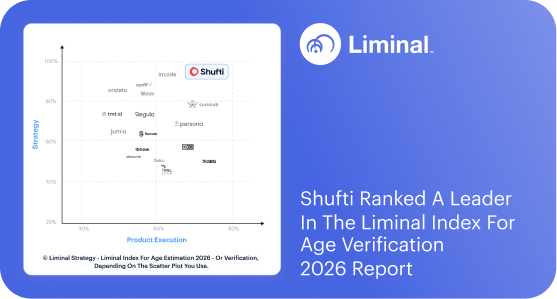
The Statutes Amendment Act 2025 splits your address verification obligation into two tracks based on each customer’s assessed risk level. Which track applies determines whether you need to confirm an address at all and how you document that decision in the customer’s file.
Under standard CDD, a reporting entity collects the customer’s address and records it during onboarding. No further verification step is required for customers who present a normal risk profile. Your process documents the address and the risk rationale behind that assessment, and that satisfies the obligation under the amended Act. The DIA’s AML/CFT guidance is explicit on this point. Supervisors will expect file notes showing why each customer was assessed as standard risk and why address verification was therefore not conducted. Good documentation matters as much as the verification decision itself.
Under enhanced due diligence (EDD), address verification becomes mandatory. The New Zealand Ministry of Justice’s AML/CFT framework identifies the common EDD triggers. These include politically exposed persons (PEPs), overseas clients, complex or opaque ownership structures, non-face-to-face onboarding relationships, and any customer your own risk assessment flags as elevated. When any of these conditions are present, confirming the address is a compliance requirement. Identity verification for NZ fintech companies, now run as a standard workflow, typically checks the address electronically first, cross-referencing it against government registries, telecom records, and financial databases. Where no match is returned, or the risk level warrants documentary evidence, the customer is escalated to upload a PoA document. Digital KYC New Zealand database coverage is broad enough to resolve most standard NZ residents electronically, which removes document upload friction for the majority of EDD cases.
Why address verification matters for NZ compliance
A risk-based framework does not mean a weaker one. The fraud problem driving New Zealand’s AML/CFT regime has not diminished. Accurate risk assessment here means mapping the real fraud environment behind the regulation, not treating address verification as a checkbox exercise.
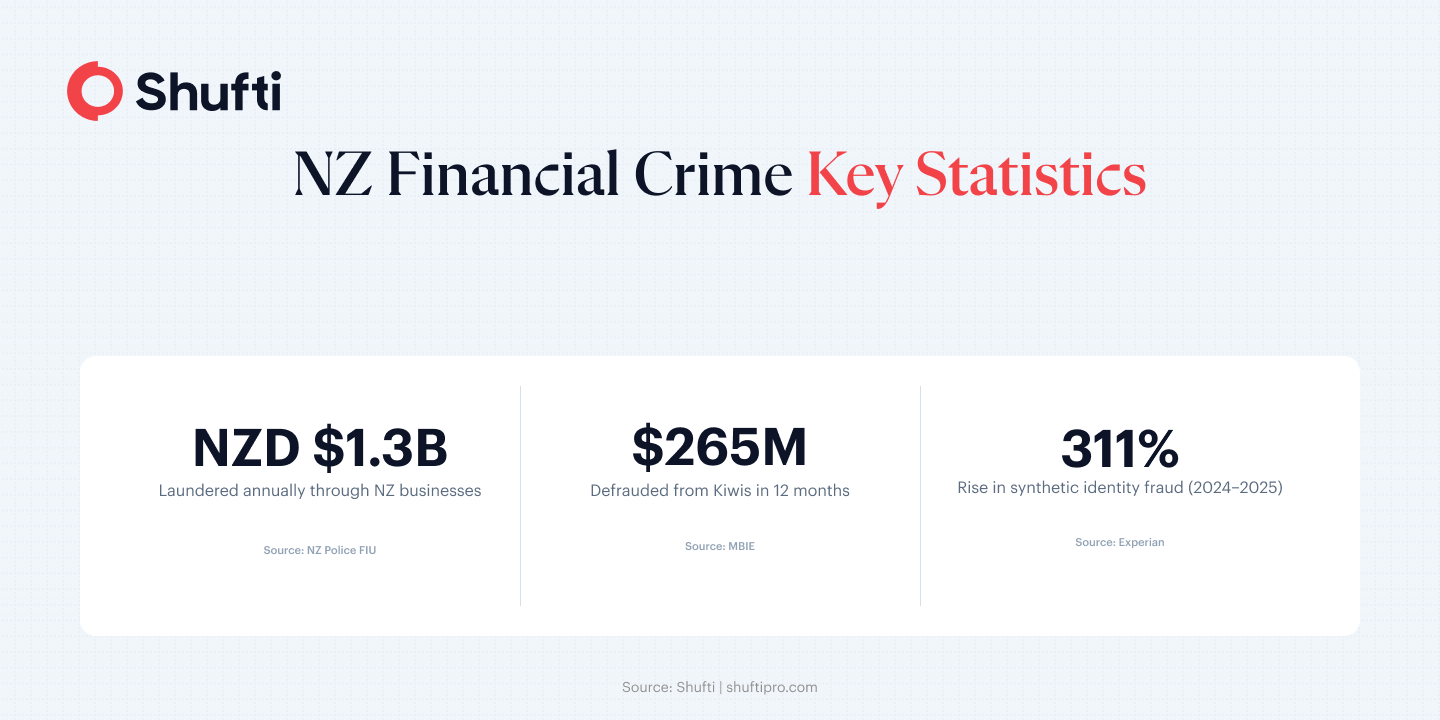
New Zealand estimates that approximately NZD $1.3 billion is laundered through New Zealand businesses annually, driven primarily by drug offending and fraud. The Ministry of Business, Innovation and Employment (MBIE) reported that scammers defrauded New Zealanders of $265 million in a single 12-month period. Fake address NZ fraud is embedded in that picture. A fabricated or borrowed residential address is often the simplest component of a synthetic identity to construct.
In its 2024 follow-up assessment, the Financial Action Task Force (FATF) noted that New Zealand remains partially compliant on 11 recommendations, with improving the quality of AML supervision a continuing priority. New Zealand’s updated risk-based framework aligns more closely with FATF’s own proportionality principles, which direct supervisors toward methodology-documented, risk-calibrated CDD rather than blanket verification processes applied regardless of customer risk level.
What counts as proof of address in New Zealand?
When EDD is triggered and address verification becomes mandatory, reporting entities need to know which documents and methods satisfy the obligation. The complete proof of address verification guide covers the broader compliance picture, but for NZ businesses, the accepted approaches fall into four categories. Your choice depends on the customer’s situation, your assessed risk level, and whether the address verification service NZ teams select has reliable database coverage for that customer population.
Utility bills and service statements
Utility bills from electricity, gas, water, and telecommunications providers are among the most widely accepted forms of proof of address for New Zealand verification. The document must show the customer’s name and address, be dated within the last three months, and come from an independent provider. Utility bill verification NZ compliance teams carry out today should go beyond data extraction. AI-generated forged utility bills now pass standard optical character recognition without forensic metadata checks, making document intelligence an increasingly relevant layer in any documentary PoA workflow.
Bank statements and financial records
A recent bank statement from a recognised NZ financial institution, dated within three months and showing the customer’s name and current address, satisfies standard PoA requirements for most EDD scenarios. The statement does not need to be certified for standard-risk EDD cases, though some reporting entities require certification for PEPs or very high-risk customers operating through complex structures.
Government-issued correspondence
Official correspondence from New Zealand government agencies, including letters from Inland Revenue, the Ministry of Social Development, or local council rates notices, is accepted as address verification NZ evidence. Government-issued documents carry an implicit authenticity advantage because the technical barrier to fabricating them is higher than for utility bills or financial statements.
Electronic database verification
For many EDD cases involving NZ residents, a reputable address verification service cross-references the customer’s declared address against government registries, telecom records, and financial data sources, returning a match result in seconds with no document upload required. Where the address falls within the covered datasets, this approach is faster and produces an equally auditable outcome as documentary PoA. Outside that coverage, or when the risk level requires documentary evidence, the process escalates to document collection automatically.
How Shufti helps NZ fintechs adapt to the new compliance rules
The new risk-based framework creates a practical implementation challenge. Your onboarding system needs to behave differently for standard CDD customers versus those who trigger EDD, and it needs to do this within a single consistent workflow. For lower-risk customers, the address is collected and recorded with no verification step. EDD customers follow a different path. The system escalates to electronic database verification first, then to documentary proof of address with forensic analysis where needed.
Shufti’s address verification solution handles this escalation automatically. Doc-less electronic verification cross-references the customer’s address against 235+ trusted data sources, including government registries, telecom records, and financial databases, returning a result in under 3 seconds with no document upload required. Where a document is needed, the Document PoA module accepts utility bills, bank statements, and official correspondence, running forensic checks on document metadata and structure to detect AI-generated forgeries that standard OCR cannot catch. Both paths produce a unified audit trail recording the verification method used and the risk rationale, giving your compliance team the examination-ready documentation that the DIA, FMA, and Reserve Bank of New Zealand expect to see on file. Shufti covers 240+ countries, which is relevant for NZ reporting entities onboarding overseas clients who trigger EDD by definition under the updated Act.
Frequently Asked Questions
Q: What are the AML/CFT address verification rules in New Zealand?
As of 27 November 2025, the 2025 amendment to the AML/CFT Act made address verification risk-based. Standard CDD requires collecting a customer's address but not verifying it. Verification only becomes mandatory when enhanced due diligence is triggered, such as for politically exposed persons or overseas clients.
Q: What counts as proof of address in New Zealand?
Accepted documents include recent utility bills, bank statements, and government-issued correspondence. Each must show the customer's name and address and be dated within three months. Electronic verification against government and telecom databases is also accepted and removes the document upload requirement for most NZ residents.
Q: Is KYC required in New Zealand?
Yes. Every entity defined as a reporting entity under the AML/CFT Act 2009 must conduct KYC, including CDD on customer identity. The level of due diligence required depends on the customer's risk profile. Address verification is now required only when enhanced due diligence applies.
Q: Who regulates AML compliance in New Zealand?
Three agencies supervise New Zealand's AML/CFT regime. The Reserve Bank of New Zealand oversees banks and insurers. The Financial Markets Authority supervises capital markets and participants. The Department of Internal Affairs covers other reporting entities, including lenders, money changers, and casinos.
Q: How does digital KYC work for address verification in New Zealand?
Digital KYC New Zealand address verification cross-references a customer's declared address against government registries, telecom records, and financial databases without requiring document upload. A result returns in seconds. Where no database match exists or EDD requires documentary evidence, the customer is directed to upload a recent proof of address document.