AMLR Solutions
 AMLR Consultation
 Onboarding
 Ongoing Monitoring
 FRAML
FRAML KYC
KYC KYB
KYB KYI
KYI Age Assurance
 Workforce IAM
 Candidate Verification
 Account Takeover
 Bonus/ Promotion Abuse
 Chargeback Fraud
 Deepfake
 Document Fraud
 Fraud Networks
 Impersonation Fraud
 Money Mule Activity
 Multi-Accounting
 Party Fraud
 Regulatory & Compliance Risks
 Synthetic Identity Fraud
 Adult Content
 Banking
 Crypto
 Fintech
 Forex
Forex Compliance
 Fraud prevention
 Trust & safety
 Global expansion
 Compliance Officers
 Developers
 Fraud Analysts
 Product Managers
 Advanced Journey Builder (AJB)
 Global Trust Platform
 Customer Profiles
 Vendor Comparison
 IDV Case Management
 AML Case Management
 Regulatory Reporting
 Travel Rule Protocols
 Agentic Rule Builder
 AI Compliance Co-Pilot
 Fraud Analytics
 Fraud Hub
 OCR
OCR Shufti AI
 Bank Account Verification
 Biometric Duplication
 Database Checks
 Document Intelligence
 Government ID
 Mobile Driver's License
 NFC
NFC Selfie Liveness
 Brand Personalisation
 Deployment Options
 Identity Methods
 IDV Modes
 Multi-tenancy
 On-Premise IDV
 Secure Capture











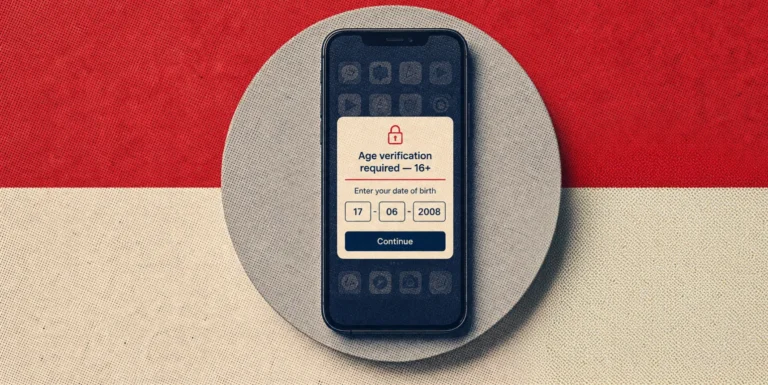
Enforcement of the UK Online Safety Act began in February 2026. In the first two months, the Ofcom team issued 90+ enforcement notices and over £1M in fines to platforms that couldn’t prove they were verifying user age.
This is not unusual, but it is the new baseline.
If you’re a product manager at an e-commerce site, a fintech, a gaming platform, or a telecom company, you’ve probably already heard from either legal or compliance.
The conversations usually go like this, for example:
“We need age verification by December.” Then come the hard questions: Which method? Who should implement it? How much friction is acceptable? What happens to our conversion rate?
This guide answers those questions. It covers eight methods you’re likely to encounter, what each method does, where it actually works, and what it is likely to cost you in user experience and privacy risk. By the end, you’ll know why some companies use one method in isolation and why the smartest ones layer them together.
What Age Verification Truly Means and what it Does not?
Before going through the methods, it is imperative to create a distinction that matters, which is that age estimation and age verification are not the same thing, and regulators treat them very differently.
Age verification means confirming a user’s actual birth date. Document-based verification does this. Liveness detection plus facial matching does this. Open banking does this; the users are either above or below the threshold without disclosing their actual age.
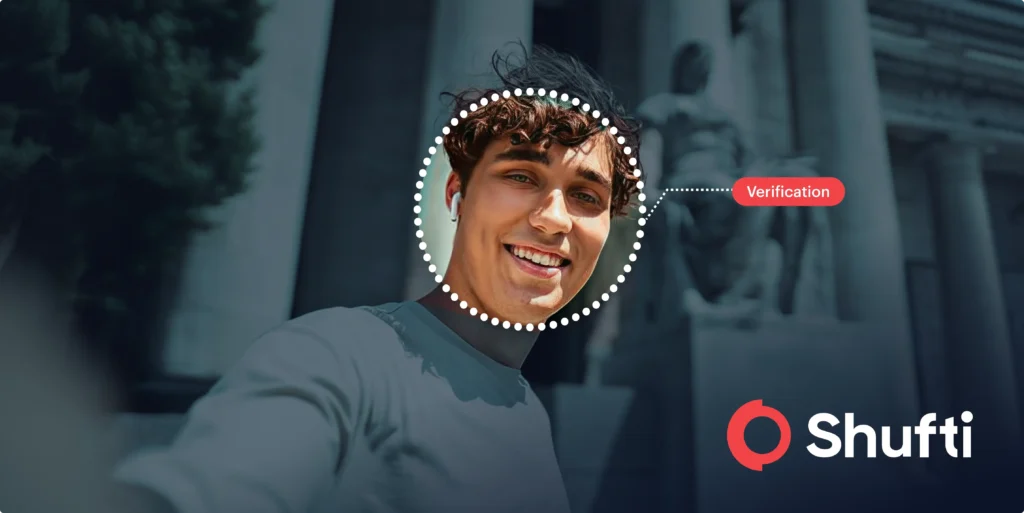
Age estimation means guessing someone’s age from their face, usually as a binary (adult/minor). It’s faster, creates less friction, and requires no ID. It’s also less reliable, and regulators have raised real questions about whether it meets compliance bars where the stakes are high.
The methods below include both. Know the difference when you’re evaluating.
1. Document Upload + OCR
The user uploads an ID document (passport, driver’s license, national ID card). Optical character recognition (OCR) extracts their date of birth. The system then further compares it to today’s date. The accuracy result is 100%, especially when the document is real and readable. The friction is usually high, primarily because the users are required to find a physical ID, either photograph it or scan it, and then upload it. On mobile, this process usually takes 2-5 minutes, given that the user has the document on hand; some do not have it on hand. As a result of this, drop-off is common. The privacy risk remains medium-high; this is because you are storing a copy of someone’s official ID document, which adds responsibility for the protection of a very sensitive government credential. If data is breached, it results in compliance nightmares.
The process of document verification is an approved method for UK OSA compliance, as explicitly listed by UK Ofcom. Most regulators choose to accept it, as it is a safe choice.
It is, however, best for banking, insurance, and high-compliance verticals where friction doesn’t kill your business model. Also, in scenarios where you’re already collecting ID anyway (account opening, loan applications).
2. Biometric Face Matching and Liveness Detection
It works in such a way that when a user takes a live photo or video selfie, the system verifies that they are an actual person (liveness detection) and compares their face to the ID document that was collected earlier. A match would mean that the adult’s age is confirmed. The accuracy rate for biometric face matching and liveness detection is 98.7% (NIST benchmarks on standard datasets). It is also considered to be more reliable than facial age estimation because you’re matching against a known document, not guessing age from appearance alone.
The friction rate remains at medium. It requires a selfie and usually an ID upload first (a two-step process). The lighting and camera quality issues result in multiple retries. While the average time for the entire process to end successfully is between 60 and 90 seconds.
The privacy risk is medium for this process. This is because a face template is being stored and then compared to an ID. The regulators monitor facial biometric storage closely; however, the data footprint is relatively smaller than the raw form of ID documents.
The regulatory acceptance is conditional. UK Ofcom approves it for OSA. GDPR-compliant implementations are standard. However, some regions restrict facial biometric use in certain sectors (the EU is watching closely).
However, it is best for fintech onboarding, gaming platforms, and social media. Any vertical where you need proof of liveness and age can tolerate a selfie step.
3. AI Facial Age Estimation (No ID Required)
AI facial age estimation is a machine learning model that simply looks at the user’s face and makes a prediction or an estimation of their age. This is usually for adults or minors, primarily by an assessment of their facial features alone, for which there is no longer any necessity.
Its accuracy rate is between 95% and 99% binary (adult/minor classification). However, in this case, the threshold for errors matters. NIST studies show facial age estimation errors of ±1.88 to ±2.7 years on average at age boundaries (17–19); this remains a real problem.
The friction rate is relatively low; just a selfie without any ID would work fine. The total time taken for the entire process to materialize is usually from 15 to 30 seconds.
The privacy risk, on the other hand, remains high. The document is not just stored; there are sensitive inferences being made about identity from biometric data. The model’s training is done on datasets that have known bias issues around ethnicity and gender; as a result, the regulators are skeptical.
The regulatory acceptance remains conditional. UK Ofcom does not approve facial age estimation alone for OSA compliance. However, it can be part of a waterfall strategy (see below), but not necessarily a lone, singular method. Most regulators want something more deterministic.
The AI facial age estimation is the best option for user acquisition funnels where age gating is a convenience feature, not a legal requirement. Although in some regions, regulators now recognize age estimation as a valid method for age gating. Non-regulated verticals (general e-commerce, content platforms). Or as Layer 1 in a multi-method stack.
4. Credit Card & Open Banking Checks
During this whole process, the user provides a payment card or a bank account (via Open Banking API). The payment processor or bank confirms the account holder’s age from their own financial records.
This method has a 100% accuracy rate. The banks have verified identity data; hence, if there is an account that exists and the name matches with it, the age can be confirmed and verified through it.
The friction rate remains at medium. This is because the process requires linking a payment account or feeding card details. Familiar to e-commerce users (it’s how they pay anyway), but it adds a step if age-checking happens before purchase.
The privacy risk is relatively lower but not non-existent. An ID is not, but financial data is being collected. PCI DSS, along with GDPR compliance, is required.
The regulators accept financial record verification as strong proof of age, and Ofcom approves of it.
It is best for e-commerce, fintechs, gaming, and any vertical where users are already providing any sort of payment information. Particularly effective for recurring billing (subscriptions, memberships).
5. Mobile Carrier Data Checks
Your system contacts the user’s mobile carrier via an API and asks, “Is this phone number’s account holder 18+?” The carrier then checks for their billing records. The accuracy rate for this is high (95%+). The carriers opt for thorough and detailed identity verification for account opening. Once they confirm, it can be trusted.
In this case, the rate of friction is rather low. The user enters their phone number. A backend API call is made, and the entire process completes within 10–15 seconds.
The privacy risk in this case is medium-high. The carrier learns that you’re verifying age in some EU markets, like France, authorities demand double anonymity, which means service providers should not know about the identity of the users, whereas verification providers should not know which service the user is accessing.
This method is partially accepted, specifically in the UK and the US. Some EU regulators have concerns about carrier data sharing for age checks (excess).
It is best for gaming platforms, social apps, and use cases in which the users are already on a mobile carrier network and mobile-first products.
6. Digital Identity Wallets (EU eID, UK Gov.UK Verify)
The user verifies with a government-issued digital ID (EU eID, UK Post Office, Swedish BankID), and at this point, the wallet provider confirms the age of the user. It has an accuracy rate of 100% because it is backed by the government.
The friction rate goes from low to medium, completely depending on the wallet (UK Post Office is 30 seconds; EU eID varies by country).
The privacy risk is low. The government wallet controls the data release. You typically don’t see the full ID, but you get a verified claim.
It is a widely accepted method by regulators. The UK Online Safety Act explicitly mentions digital identity as a preferred method. EU eIDAS 2.0 pushes digital wallets hard.
It is best for EU markets (especially Germany, Sweden, and the Netherlands, which have mature eID ecosystems) and the UK. It is also expected to become the gold standard by 2027.
7. Self-Declaration (Why It Fails)
A user checks a box: “I am 18+,” and that’s it. Its accuracy rate is 0%; as a result, it is completely unreliable. There is no friction, along with no privacy risk.
There is no regulatory acceptance for the self-declaration method. Ofcom explicitly rejected self-declaration in its guidance. No regulator accepts it alone for the Online Safety Act or similar age-gating laws. It fails every compliance audit. It cannot be used as a primary verification method.
8. Waterfall/Orchestration (Layering Methods Together)
Your system tries methods in sequence. For example, if the user has open banking, verification could be done through that. If not, then facial matching could be the best method for it. If that fails, ask for a document. Each layer filters users who cannot or would not provide proof, and each layer is optimized for speed.
The accuracy rate hovers around 95–99% (adaptive per user). There is 100% accuracy for users who can provide documents or bank data, and 98.7% for those who do facials, and you filter out the ambiguous cases before they become a compliance problem.
The users eventually adapt to the waterfall (layering methods). The users who can quickly verify see it in less than 30 seconds. Users who need a document see longer. On average, there are 40% fewer false positives, and the drop-off is lower than that of single-method approaches.
The privacy risk is excellent. Only the minimum data collected is needed per user. If facial recognition works, there is no need to ask for a document.
The waterfall method is widely accepted amongst regulators. They prefer this method and its approaches because they strike a balance between accuracy and a smooth user experience. Ofcom guidance mentions orchestration favorably.
It is best for any regulated vertical, be it gaming, fintech, social, or e-commerce. If you’re serious about compliance along with conversion, then this is the standard.
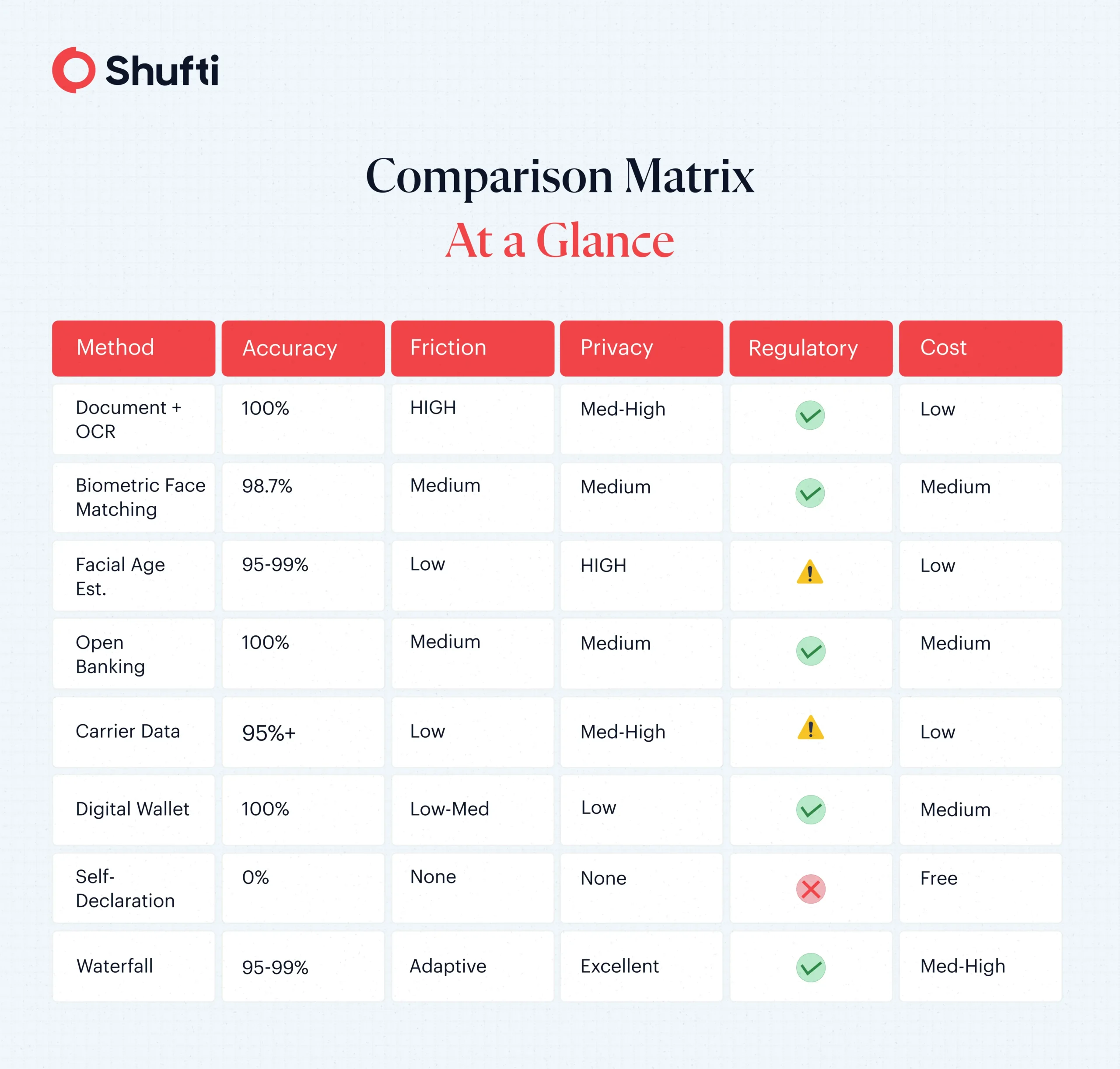
Comparison Matrix: At a Glance
Gaming and Social Platforms
Multiple gaming platforms are prone to handling relatively higher amounts of traffic and, as a result, cannot tolerate document friction. Most use a waterfall: digital wallet or carrier data as Layer 1, facial matching as a fallback, and documents as a final resort. This creates a balance between speed and compliance.
Fintech and Neobanks
These are regulated like banks. Document + biometric is the norm. You need 100% accuracy, and you’re already collecting ID for account opening in order for friction to be acceptable.
Telecom Providers
Many use carrier data checks (they have it anyway), sometimes layered with facial recognition as confirmation. Fast and accurate.
E-Commerce
Open banking, or card-based verification, is standard because users are already paying. If a user doesn’t have a payment method, then use document verification or face verification.
Healthcare and Age-Restricted Pharmaceuticals
Document + identity verification, along with some additional checks. Regulatory requirements are strict. Friction is secondary.
How do modern platforms work on the Complexity: Orchestration?
The companies that have cracked age verification aren’t using one method. They’re using all of them, intelligently layered.
Here’s how it works in practice:
- Layer 1: Fastest route. Verify whether the user has a digital wallet or carrier account linked. If yes, verify in seconds. If not, move to Layer 2.
- Layer 2: Maintain a balance between accuracy and friction. Ask for a selfie with liveness detection as well as facial matching against any ID on file. Works for 80–90% of remaining users.
- Layer 3: Final verification. For the remaining users, ask for a document upload. It takes longer but results in 100% accuracy.
- Layer 4: Rare edge cases. The users won’t or can’t provide proof. Those are flagged either as a result of denied access or for manual reviews.
What this approach does:
- Minimizes friction (most users verify in < 30 seconds)
- Maximizes accuracy (the overall rate remains between 98–99%, with 100% for users providing documents)
- Reduces false positives by 40% compared to single-method approaches
- Gives you privacy control (you collect minimum data per user)
- Passes every regulator’s audit
Ready to Future-Proof Your Age Verification?
Age verification will only get more advanced with tighter regulations and the evolution of fraud. The companies ahead right now are those using intelligent orchestration, like layering methods to get the best of all worlds: speed, accuracy, privacy, and compliance.
Request a demo of Shufti’s orchestration platform and see how waterfall verification works in practice. See how users can be routed through the right method at the right time and why 40% fewer false positives actually matter to your bottom line.
Frequently Asked Questions
Q1: What is the most privacy-friendly age verification method?
Digital identity wallets. You don't see the full ID; the wallet provider releases only a verified claim that the user is 18+. Open banking is second, followed by facial age estimation.
Q2: What age verification method does the UK Online Safety Act require?
The Online Safety Act of the UK doesn't mandate a specific method. However, Ofcom's guidance lists document verification, biometric matching, open banking, and digital identity as approved. Self-declaration and facial age estimation alone are not approved.
Q3: Can a website use facial age estimation instead of ID?
Not for regulated compliance. Facial age estimation is 95–99% accurate at binary classification (adult/minor), but the error margins are real (±1.88 to ±2.7 years). Regulators don't accept it as a sole method. You can use it as Layer 1 in a waterfall (fast filtering), but it must be backed up by stronger verification if the user fails.
Q4: What is a waterfall age verification approach?
A multi-method strategy that tries verification methods in order. If a digital wallet works, great. If not, try biometrics. If that fails, ask for a document. Each layer filters users based on what they can provide, minimizing friction while maximizing accuracy.
Q5: What is the difference between liveness detection and facial age estimation?
Liveness detection confirms you're a real person (not a deepfake or photo). It doesn't guess your age. Facial age estimation analyzes the face to predict one’s age. Liveness + document matching is accurate (98.7%). Age estimation alone is less reliable for age-gating edge cases. Regulators prefer liveness + ID or liveness + facial matching.
Q6: Which age verification method has the lowest friction?
Mobile carrier data checks (10–15 seconds, if the user's carrier supports the API). Digital wallets are second (15–45 seconds, depending on the wallet). Facial age estimation alone is third (15–30 seconds), but regulators don't accept it for compliance. Document upload is slowest (2–5 minutes).
Q7: What is open banking age verification?
Open Banking APIs or bank-provided APIs) allow you to confirm a user's identity and age from their bank account. You ask for permission, the bank confirms the account holder's age from their records, and you get a yes/no.