AMLR Solutions
  AMLR Consultation
 EUDI Wallet
 Onboarding
 Ongoing Monitoring
 FRAML
FRAML KYC
KYC KYB
KYB KYI
KYI Age Assurance
 Workforce IAM
 Candidate Verification
 Account Takeover
 Bonus/ Promotion Abuse
 Chargeback Fraud
 Deepfake
 Document Fraud
 Fraud Networks
 Impersonation Fraud
 Money Mule Activity
 Multi-Accounting
 Party Fraud
 Regulatory & Compliance Risks
 Synthetic Identity Fraud
 Adult Content
 Banking
 Crypto
 Fintech
 Forex
Forex Compliance
 Fraud prevention
 Trust & safety
 Global expansion
 Compliance Officers
 Developers
 Fraud Analysts
 Product Managers
 Journey Builder
  Global Trust Platform
 Customer Profiles
 Vendor Comparison
 IDV Case Management
 AML Case Management
 Regulatory Reporting
 Agentic Rule Builder
  AI Compliance Co-Pilot
  Fraud Analytics
 Fraud Hub
  OCR
OCR Shufti AI
 Bank Account Verification
  Biometric Duplication
 Database Checks
 Document Intelligence
 Government ID
 Mobile Driver's License
 NFC
NFC Selfie Liveness
 Brand Personalisation
 Deployment Options
 Identity Methods
 IDV Modes
 Multi-tenancy
 On-Premise IDV
 Secure Capture
 Shufti MCP












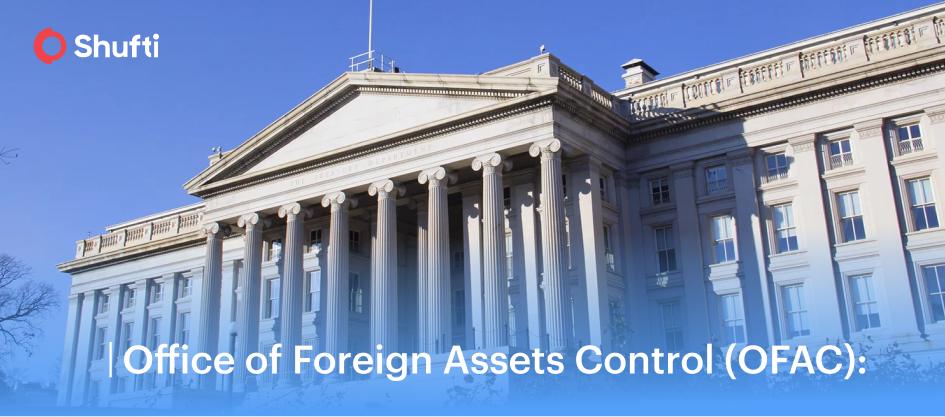

One of the strongest instruments that governments employ in the fight against terrorism, human rights violations, and threats to global stability is economic sanctions. The Office of Foreign Assets Control (OFAC) is the main body in the United States that monitors the execution of such measures. OFAC is instrumental in safeguarding national security and maintaining international standards against financial exploitation by applying economic and trade sanctions.
What is OFAC?
The Office of Foreign Assets Control (OFAC) is an agency of the U.S. Department of the Treasury that administers and enforces economic sanctions within the U.S. foreign policy and national security goals. It has a mandate to target states, regimes, individuals, and organizations that engage in activities like terrorism, drug trafficking, proliferation of weapons, and human rights violations.
How did OFAC originate?
The origin of OFAC can be traced back to 1940, when the Office of Foreign Funds Control was established during World War II to ensure that enemy countries could not access assets that were under the jurisdiction of the United States. In 1950, it was restructured as the Division of Foreign Assets Control and officially named OFAC in 1962. It has its powers mainly based on the Trading with the Enemy Act (TWEA) and the International Emergency Economic Powers Act (IEEPA), which give the President the powers to limit financial transactions in the event of a national emergency.
What is the Purpose and Importance of OFAC?
The aim of OFAC is to avert the abuse of the U.S. financial system, along with the advancement of U.S. foreign policy, without resorting to the use of military force. The sanctions are imposed to cut access to funds, goods, and technology that may be employed to damage the U.S. interests or disrupt world peace.
The agency’s work is essential in several ways. It disrupts the financial networks sustaining terrorism and organized crime, strengthens diplomatic pressure without conflict, and prevents financial institutions from accidentally facilitating any illegal activity. Since the U.S. dollar is the most widely used currency worldwide, the impact of OFAC’s sanctions is much broader than the U.S. border and affects international banking and trade.
How Does OFAC Function?
OFAC drafts and enforces sanctions programs after an order or approval from Congress and the President. They may be extensive programs, affecting whole countries, or narrower programs, which are focused on particular individuals, firms, or industries.
One of the primary aspects of OFAC’s activities is the maintenance of sanctions lists, the most prominent being the Specially Designated Nationals and Blocked Persons (SDN) List. The persons and organizations listed in the SDN list are deprived of their assets in the U.S jurisdiction, and U.S citizens are forbidden to do business with them. There are also other lists, including the Sectoral Sanctions Identifications (SSI) and Non-SDN Lists, which implement more limited restrictions based on specific sectors or activities.
While sanctions prohibit certain transactions, OFAC also provides mechanisms for legitimate activity to continue. It issues general licenses, which allow specific categories of transactions under already decided terms, and specific licenses, granted on a case-specific basis for activities deemed consistent with U.S. policy.
-
Legal Authority and Regulatory Framework
OFAC operates under several key regulations and executive directives that establish its authority and responsibilities:
- International Emergency Economic Powers Act (IEEPA) – Enables the President to regulate commerce and block assets during national emergencies related to foreign threats.
- Trading with the Enemy Act (TWEA) – Authorizes sanctions during wartime.
- Executive Orders – Define specific sanctions programs and designate new targets or categories.
- 31 Code of Federal Regulations, Chapter V – Contains detailed OFAC regulations outlining compliance requirements and procedures.
This framework ensures that OFAC’s actions are legally grounded, transparent, and enforceable across government and industry.
-
Compliance and the Role of Financial Institutions
Compliance with OFAC regulations applies to all U.S. persons, including citizens, residents, and companies organized under U.S. law, as well as their foreign branches. In certain cases, non-U.S. entities must also comply when their transactions involve U.S. goods, services, or financial systems.
Financial institutions are supposed to adopt a Sanctions Compliance Program (SCP) that aligns with the framework of OFAC. This consists of robust internal controls, good risk assessments, employee training, and screening mechanisms for transactions. Through a risk-based approach, the organizations can customize their controls depending on the magnitude of exposure to the risks associated with sanctions.
What is the OFAC 50% Rule?
The OFAC 50 Percent Rule implies that entities owned 50 percent or more, directly or indirectly, by sanctioned individuals or entities must be treated as if they were themselves sanctioned, even if they are not listed explicitly.
What are the types of OFAC Sanctions?
OFAC’s sanctions programs fall into three main categories:
- Comprehensive Sanctions: Apply to entire countries or governments, prohibiting nearly all forms of trade and financial interaction.
- Targeted Sanctions: Focus on specific persons, entities, or organizations involved in illicit or destabilizing activities.
- Sectoral Sanctions: Limit activities in designated industries such as energy, defense, or finance within specific jurisdictions.
Each program defines prohibited transactions, potential exemptions, and licensing pathways that allow limited engagement under approved conditions.
What are the Challenges of Compliance with OFAC sanctions?
The sanctions landscape continues to evolve as global finance becomes more complex. OFAC now faces challenges related to cryptocurrencies, cyber-enabled sanctions evasion, and opaque ownership structures used to conceal sanctioned parties.
Another key challenge is maintaining timely compliance with frequent updates to OFAC’s sanctions lists. Financial institutions must ensure their screening systems are updated in real time to avoid missed matches or delayed responses, which can lead to regulatory exposure and penalties. Implementing an AML Screening Solution helps automate these updates, ensuring continuous alignment with the latest sanctions data and reducing the risk of compliance gaps.
Technological advancements, including artificial intelligence and blockchain analytics, are enhancing detection and screening processes, while international cooperation is improving transparency around beneficial ownership. However, as regulatory scrutiny increases, financial institutions must balance vigilance with operational efficiency to avoid over-compliance or unnecessary de-risking.
How to get delisted from OFAC’s Sanction List?
Individuals or entities designated under OFAC sanctions have the right to request removal through a delisting process. To be considered, the applicant must demonstrate that the circumstances leading to their designation have changed or that the designation was made in error. OFAC reviews these petitions thoroughly before issuing a decision.
What is the Future of Sanctions Enforcement?
As global conflicts and technologies evolve, OFAC’s role will continue to expand. The agency is increasingly addressing issues such as digital asset misuse, corruption, human rights violations, and environmental crimes. Future enforcement will likely involve closer collaboration with international partners and greater integration of data-driven compliance technologies.
Final Thoughts
The Office of Foreign Assets Control stands at the center of the United States’ economic defense system. Through its sanctions programs, it safeguards the financial system from abuse, enforces foreign policy objectives, and promotes accountability on a global scale.
For businesses and financial institutions within the US and those with access to the US market or have stakes in the US market, OFAC compliance is not optional but a core regulatory obligation. Maintaining robust controls, being aware of the changing sanctions regimes, and promoting a culture of compliance are essential to operate within the U.S. and international financial systems safely and responsibly.