


 Face Verification
 Address Verification
 Document Verification
 Age Verification
 VideoIdent
 Fast ID
 Docless Verification
 Consent Verification
 NFC Verification
 Business Verification
 Due Diligence
 Investor Verification
 E-Signature

 QES
QES
 AML Screening
 Transaction Monitoring
 Adverse Media
 Business AML Screening
 PEP & RCA
 Sanctions
 Watchlist
 Behavioural Biometrics
 Device Fingerprinting
 Biometric Face Authentication
 MFA
MFA
 Fraud Hub
 Onboarding
 Ongoing Monitoring
 KYC
KYC
 KYB
KYB
 KYI
KYI
 Age Assurance
 Identity Verification
 Workforce IAM
 Candidate Verification
 Compliance
 Fraud prevention
 Trust & safety
 Global expansion
 Product Managers
 Compliance Officers
 Fraud Analysts
 Developers
 Deepfake
 Bonus Abuse / Promotion Abuse
 Account Takeover
 Synthetic Identity Fraud
 Document Fraud
 Impersonation Fraud
 Multi-Accounting
 Fraud Networks
 Chargeback Fraud
 Money Mule Activity
 Party Fraud
 Regulatory & Compliance Risks
 Fintech
 Crypto
 iGaming
 Forex
Forex
 Social Network
 Marketplace
 Banking
 Gig Economy
 Payments
 Ride Hailing
 Adult Content
 Blind Spot Audit
 Deepfake Detector
 Liveness Spoofs
 Document Originality
 Document Deepfake
 Global Trust Platform
 Journey Builder
 Case Management
 Shufti AI
 Fraud Analytics
 Vendor Comparison
 Brand Personalisation
 IDV Modes
 AI Compliance Co-Pilot
 OCR
OCR
 Secure Capture
 Deployment Options
 Identity Methods
 API Documentation
 Mobile SDKs
 Service Status
 Help Center
 Contact Us
 Technical Support
 Supported Documents
 Supported Countries
 Content library
 Blogs
Blogs
 News
News
 Reports
 Insights
 Knowledgebase
 ROI calculator
 About
About
 Career
 Press Release
 Certifications
 Partnership
 Awards
 Events & Webinar
 Interactive Demo
 Podcast Studio
 Spotlight Studio
Why Liveness Vendors Should Be Tested on the Phones Real People Use
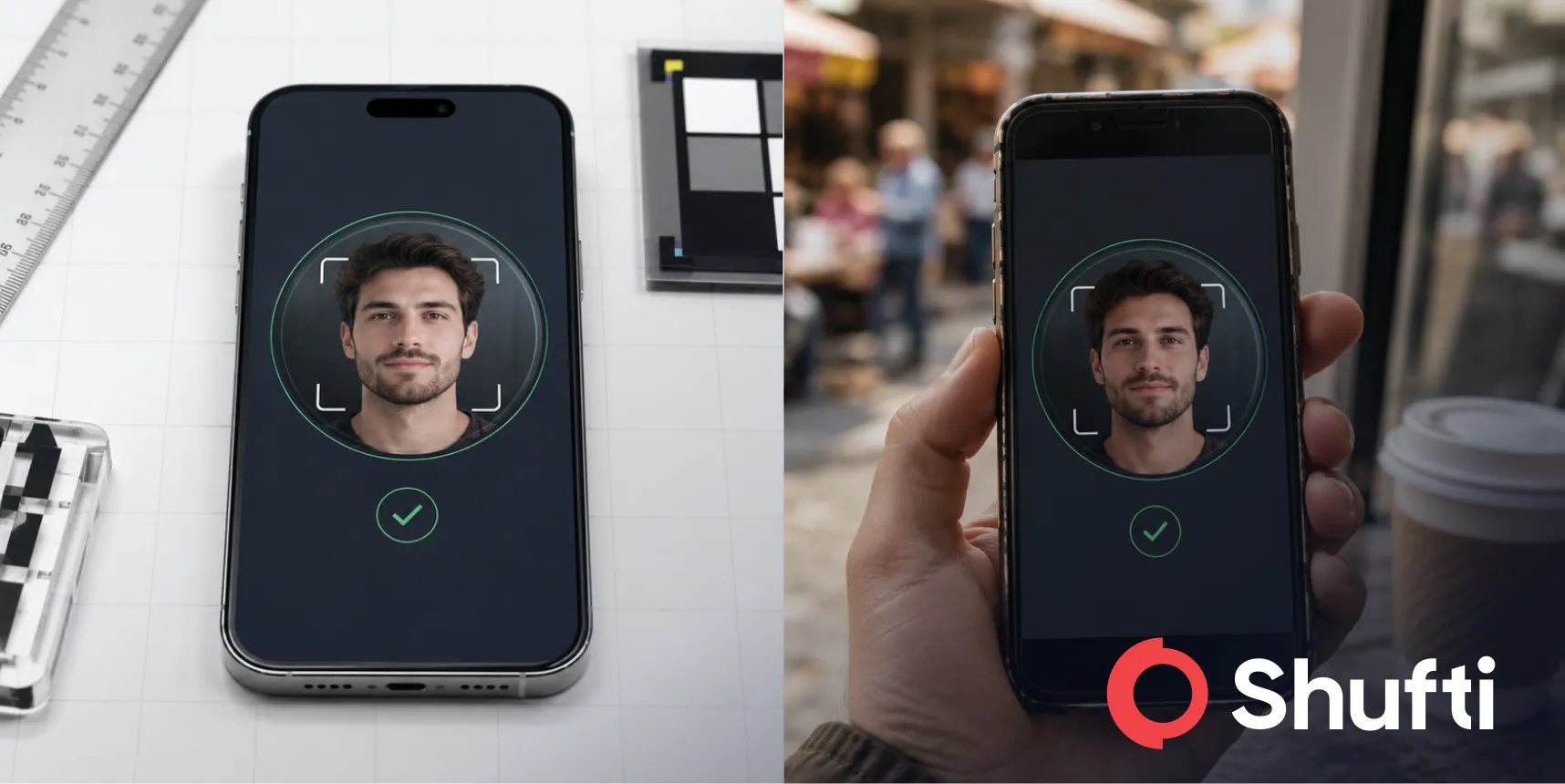
The way most identity verification systems get tested does not match the way they get used.
In the lab, the cameras are clean. The lighting is controlled. The phones are usually the latest models, often the same generation as the engineers who built the software. The numbers come back impressive. 99% accuracy and zero attacks accepted. This is the kind of result that looks great on a marketing page.
In production, when the same system has to verify a freelancer in Manila, a delivery driver in Lagos, or a customer signing up to a remittance app on a four-year-old Android, the numbers can look very different.
This gap between lab performance and real-user performance is the variable most vendor comparisons quietly skip. It is also the variable that most decides whether your onboarding flow actually works.
Where Liveness Lab Numbers Come From
When a vendor publishes a liveness result, it usually comes from one of two places.
The first is internal testing. The company runs its own evaluation on its own setup, picks favourable conditions, and publishes the result on a marketing page. There is no third party watching.
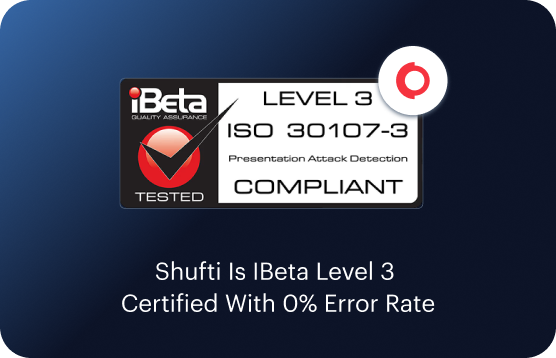
The second is independent lab certification. Organisations like iBeta Quality Assurance run formal tests against international standards such as ISO/IEC 30107-3. These tests are taken seriously by procurement teams because they are audited, repeatable, and evidence-based.
Both produce numbers. But the most important question, what hardware the test was actually run on, often gets buried in the fine print or skipped entirely.
The Hardware Most Vendors Choose
Look at the published lab results in the liveness space over the last two years and a pattern shows up. The hardware is almost always premium-tier and recently released. The newest iPhone Pro, latest Google Pixel, or a flagship Samsung from the current generation.
These are excellent phones. High-resolution sensors, powerful chips, the best camera tuning the manufacturer offers. They make liveness systems look good.
But they do not represent the device a typical user is holding.
Across many of the markets where digital onboarding is growing fastest, including Southeast Asia, the Gulf, Africa, and Latin America, mid-range and older phones make up the majority of active devices. The customer signing up to a fintech in Kenya or a wallet in Indonesia is unlikely to be on the latest flagship. They are more likely on a four-year-old Android, a budget Samsung from 2021, or a Pixel from 2019 still being passed through a household.
If a vendor’s lab result was produced on hardware that customer does not have, the result is a poor predictor of what happens in production.
Why This Gap Matters in Procurement
Identity teams writing requests for proposal (RFPs) for liveness usually focus on three things: lab certification level, accuracy numbers, and price. The hardware question rarely makes it onto the comparison sheet.
This is a problem. The same vendor’s system can produce different results on different devices. Camera sensors, processing power, and color rendering can make big difference. A passive liveness model that was trained and validated only on premium hardware will sometimes misfire on a mid-range chipset because the input signal is genuinely different.
For an onboarding team operating in a market with broad device diversity, a vendor that only proves itself on flagship phones is taking a quiet risk on the team’s behalf. The risk shows up as drop-off, false rejections, and complaints from users who did everything right but still failed verification.
The Test That Actually Predicts Production
What buyers should look for is independent lab testing on devices that match deployment reality. Not just any phone. The phones their users actually have.
In practical terms, this means asking a vendor for the device list from their most recent lab evaluation. If the answer is two flagship handsets released in the last 18 months, that is a yellow flag. If the list includes mid-range or older devices, the result is more credible.
It also means asking about demographic coverage. Lab testing under ISO/IEC 30107-3 typically samples across age, gender, and skin tone. Not all certifications make that data public, but the ones that do are the ones worth weighting more heavily. A liveness system that was tested only on a narrow demographic will perform unevenly in production.
How Shufti Approached that Question with Independant Evaluation
In Shufti’s most recent independent lab evaluation, the test devices were a Google Pixel 4, released in October 2019, and an Apple iPhone 12 Pro, released in October 2020. At the time of testing, those devices were five and six years old.
The result was a 0% attack acceptance rate and a 0% rejection rate for genuine users across 900 presentation attacks under iBeta PAD Level 3, the highest tier of the ISO/IEC 30107-3 standard.
The test crew was deliberately diverse: 40% female, 30% non-Caucasian, with age groups represented.
Both choices were made on purpose. Shufti operates across 240+ countries, and the platform has to work in markets where mid-range phones make up most of the active install base. A test that did not reflect that reality would not have told us, or our customers, anything useful about how the system actually performs.
|
Book a demo to see how Shufti performs on the devices in your deployment footprint. |