AMLR Solutions
  AMLR Consultation
 EUDI Wallet
 Onboarding
 Ongoing Monitoring
 FRAML
FRAML KYC
KYC KYB
KYB KYI
KYI Age Assurance
 Workforce IAM
 Candidate Verification
 Account Takeover
 Bonus/ Promotion Abuse
 Chargeback Fraud
 Deepfake
 Document Fraud
 Fraud Networks
 Impersonation Fraud
 Money Mule Activity
 Multi-Accounting
 Party Fraud
 Regulatory & Compliance Risks
 Synthetic Identity Fraud
 Adult Content
 Banking
 Crypto
 Fintech
 Forex
Forex Compliance
 Fraud prevention
 Trust & safety
 Global expansion
 Compliance Officers
 Developers
 Fraud Analysts
 Product Managers
 Journey Builder
  Global Trust Platform
 Customer Profiles
 Vendor Comparison
 IDV Case Management
 AML Case Management
 Regulatory Reporting
 Agentic Rule Builder
  AI Compliance Co-Pilot
  Fraud Analytics
 Fraud Hub
  OCR
OCR Shufti AI
 Bank Account Verification
  Biometric Duplication
 Database Checks
 Document Intelligence
 Government ID
 Mobile Driver's License
 NFC
NFC Selfie Liveness
 Brand Personalisation
 Deployment Options
 Identity Methods
 IDV Modes
 Multi-tenancy
 On-Premise IDV
 Secure Capture
 Shufti MCP












Main Takeaway
- An eIDV match is only as strong as the source sitting behind it.
- Aggregate data-source counts hide whether your specific markets are actually covered.
- The best eIDV solutions escalate to document and biometric checks inside one flow.
- Independent evidence now splits into presentation-attack and injection-attack testing.
- EU member states must offer a digital identity wallet by 31 December 2026.
During an eIDV check, a person’s identity is checked against authoritative records rather than a document upload. This means that the quality of the check doesn’t heavily depend on what document was uploaded; instead, it depends on what data sources the person is being checked against.
Another important thing that comes into play here is how easily and clearly a business can present an audit trail to defend their check when a regulator asks for what the check actually established.
For example, if a bank onboarded a customer in Spain and their system performs checks and passes the customer, it doesn’t mean the account is 100% secure and won’t get surfaced eighteen months later. If it ran against the national population register, the bank can show it confirmed a named person’s date of birth and address against a government record on a specific date. If it ran against a credit-header file, all it can show is that someone with that name has held a credit agreement at that address, which never establishes that the applicant was that person.
It’s possible that it would, and when it happens, the company needs to show an audit trail.
Same pass at onboarding, two very different positions to defend.
Timing sharpens the decision. Under eIDAS 2.0, Regulation (EU) 2024/1183, every EU member state must make at least one EU Digital Identity Wallet available by 31 December 2026.
This guide compares 10 electronic identity verification providers against six criteria, and matches them to the situations buyers face.
The 10 Best eIDV Software Providers In 2026
As the publisher of this guide, we list Shufti first for transparency. The remaining nine vendors are listed alphabetically and described on the same factual basis. All product details are sourced from each vendor’s public website, the Gartner Magic Quadrant for Identity Verification 2025, the KuppingerCole Analysts 2025 market assessment, public iBeta conformance listings, and verified review platforms.
eIDV Vendor Comparison At A Glance
Most eIDV providers price per verification or by volume tier and quote rates on request, so a like-for-like comparison should weigh architecture, coverage and deployment before price.
| Vendor | eIDV architecture | Data and eID reach (vendor-published) | iBeta PAD | Deployment | G2 | Best fit |
| Shufti | Own IP, full stack | 270+ authoritative sources, 85+ countries, 40+ active eIDs | Level 3 | SaaS, Cloud, Local Cloud, on-premise | 4.5 | Multi-mode eIDV across uneven markets |
| GBG | Own IP plus orchestration | 195+ countries via GBG Go, documents via Acuant | Level 2 via Acuant | SaaS | 4.4 | Data-based eIDV in mature markets |
| IDnow | Own plus ARIADNEXT | EU-weighted, eIDAS QTSP status | Level 2 | SaaS, EU residency | N/A | EU video-ident and QES |
| Jumio | Own, liveness in-housed 2024 | 5,000+ document types, 42 languages | Level 2 | SaaS | 4.1 | Large existing enterprise estates |
| Onfido (Entrust IDV) | Own plus iProov, Namirial, SecureKey | 6,000+ government IDs, 44 languages | Level 2 | SaaS | 4.4 | Entrust security portfolio buyers |
| Persona | Orchestrated | Configurable third-party verification steps | Level 2 | SaaS, US and EU residency | 4.3 | Developer-led workflow design |
| Socure | Own plus partner, predictive alternative data | Consortium signals from 2,800+ customers, US-weighted | Not submitted | SaaS, US residency | 4.5 | US-only identity risk scoring |
| Sumsub | Own plus Smart Engines, Inverid, Resistant.ai | 14,000+ document types, 140 languages | Level 2 | SaaS | 4.6 | Crypto and iGaming onboarding |
| Trulioo | Own plus partner | 450+ data sources, documents across 240+ countries | Limited public information | SaaS | 4.4 | Doc-less verification at global scale |
| Veriff | Own plus data partner | 12,000+ government IDs, 240+ countries, 48 languages | Level 2 | SaaS, EU residency | 4.5 | Fast EU and US verification |
Sources: Gartner Magic Quadrant for Identity Verification 2025, KuppingerCole Analysts 2025 market assessment, public iBeta conformance listings, vendor public sites, G2.com and Trustpilot vendor profiles. Competitor figures last verified May 2026. Verify directly with each vendor before procurement.
The Table only Tells you so Much
Published source counts and PAD levels look similar on paper. Run a provider against your own traffic, in your hardest markets, before the contract rather than after. Compare Shufti on your criteria
1. Shufti
Shufti is a UK-headquartered identity verification vendor that built and owns its entire stack, including OCR, liveness, document intelligence, KYC, KYB and AML. For eIDV, this ownership is very important because it decides and provides information about what happens at the back end where the data is handed over to the system and what it does with it.
Source Depth and What a Match Proves: Shufti’s eIDV hub runs passive checks on name, date of birth, and address against 270+ authoritative data sources across 85+ countries, drawn from government registries, credit bureaus, telco records and utility data.
The system is designed in a way that presents the source type for the check behind each market to the buyer, which makes a result interpretable when a regulator asks what the check was about and what it established.
eID Reach: Active verification runs through 40+ national eID integrations including BankID, Singpass, MitID and OneID, so a user in a scheme market authenticates against the scheme itself rather than against an inference about them.
Escalation Architecture: All three modes, passive, active and biometrically enriched, run through one API on one stack. When the data layer cannot carry the risk, the flow escalates into Shufti’s own document forensics and liveness rather than handing off to a partner’s API, so one audit trail covers the whole decision and one vendor is accountable when it fails. That single-owner escalation path is the structural difference between an eIDV product and an eIDV integration project.
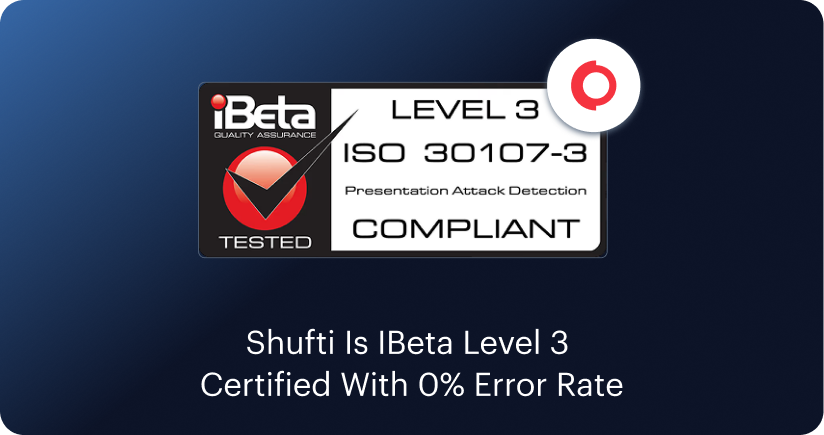
Independent Validation: Shufti holds iBeta Level 3 conformance under ISO/IEC 30107-3 for the biometric step, alongside a DHS RIVR 2025 Top Performer result.
Regulatory Acceptance: The platform covers the full eIDAS 2.0 spectrum, including physical IDs, EUDI Wallets, NFC chip reads and qualified electronic signatures.
Beyond the eIDV layer, Shufti actively verifies 10,000+ document types across 240+ countries and territories every month, with in-house OCR reaching 99.7% accuracy across 150+ languages and outperforming Google Vision on several non-Latin scripts. Public clients include Binance, Stripe, ByteDance/TikTok, XM and Coinbase. That combination is what made Shufti a genuinely ‘Glocal’ vendor, verifying a US driver’s licence with the same engineering control as a Vietnamese national ID.
The Honest Trade-Off: Shufti’s commercial presence in North America is smaller than that of US-headquartered peers, a brand and contracting consideration rather than a capability one. Pricing varies by deployment model and is quoted directly rather than published per transaction.
Deployment Options:
- SaaS
- Cloud
- Local Cloud
- On-premise for data-residency compliance
Certifications and recognitions:
- iBeta Level 3 conformance under ISO/IEC 30107-3, the highest published presentation-attack detection tier, held by three vendors in iBeta’s public listing as of July 2026
- DHS RIVR 2025 Top Performer, 98.49% True Accept Rate with zero False Template Creation events
- SOC 2 Type II, PCI DSS, ISO 27001, GDPR compliance, Cyber Essentials and Cyber Essentials Plus
- Leader in the G2 Summer 2026 Identity Verification Grid, with Momentum Leader status and Leader placements in the AML, Asia and Asia Pacific grids
- KuppingerCole Analysts 2025, highest overall technical capability score at 79/100
Ratings (as of July 2026):
- Shufti G2 Reviews: 4.5 / 5 (151 reviews), Leader in the Summer 2026 Identity Verification Grid
- Shufti Trustpilot Reviews: 4.8 / 5 (3,945 reviews), the highest rating-and-volume combination among the vendors compared
Verdict: Shufti fits organisations that need one accountable partner across passive, active and biometrically enriched eIDV in markets where data quality is uneven and a clean fallback matters more than a headline source count. One glocal platform. The full compliance lifecycle, from sign-up to remediation. Every industry, every region, every use case.
2. GBG
GBG is a UK-headquartered identity data vendor founded in 1989 and the clearest data-first player here, assembled through the IDology acquisition in 2019 and Acuant in 2021, and delivered through GBG Go across 195+ countries via a single API.
Source Depth and What a Match Proves: Authoritative data coverage for doc-less verification is genuinely deep in mature markets, and it is the strongest part of the offering.
Escalation Architecture: Document authentication and biometric liveness come through Acuant rather than one in-house engine, so the escalation path crosses an acquisition boundary. Public iBeta conformance sits at Level 2 via Acuant FaceID.
Certifications and Recognitions:
- ISO/IEC 27001:2022, PCI DSS, Cyber Essentials and Cyber Essentials Plus across parts of the business
- iBeta PAD Level 1 and Level 2 conformance via Acuant FaceID
Ratings (as of May 2026):
- G2: 4.4 / 5 (47 reviews)
- Trustpilot: 2.3 / 5 (7 reviews), a review base too small to read much into
Verdict. GBG suits regulated lenders and financial services firms whose volume sits in mature data markets and who value depth there over global evenness.
3. IDnow
IDnow is a German vendor with a long record in EU video-ident and a deep DACH footprint, holding eIDAS Qualified Trust Service Provider status following its ARIADNEXT acquisition.
Regulatory Acceptance: QTSP status is the standout, supporting qualified electronic signature use cases most vendors here cannot serve directly.
Deployment and Residency: Regional EU data-centre options meet European residency needs, though the model does not extend to GCC or Southeast Asian on-premises mandates. IDnow combines its own technology with ARIADNEXT capabilities rather than running one in-house stack, and public iBeta conformance is Level 2.
Certifications and Recognitions:
- ISO/IEC 27001, eIDAS Qualified Trust Service Provider status via ARIADNEXT
- ETSI standards under eIDAS, GDPR compliance with EU data-centre options
Ratings (as of May 2026):
- G2: N/A
- Trustpilot: 3.4 / 5 (16,000+ reviews), a large consumer-side base reflecting video-ident experience
Verdict: IDnow fits EU-headquartered organisations needing video-ident at scale plus qualified signatures, particularly DACH financial services.
4. Jumio
Jumio is a US-headquartered provider with one of the category’s largest enterprise customer bases, spanning document verification, biometric checks and database-driven identity and AML screening.
Escalation Architecture: Per the Gartner Magic Quadrant 2025, Jumio brought liveness in-house in late 2024, tightening a path that previously ran through a partner. Public iBeta conformance is Level 2.
Source Depth and What a Match Proves: Document and language coverage, at roughly 5,000 types and 42 languages, is narrower than vendors trained on non-Latin documents from inception, and the data layer is not this platform’s centre of gravity.
Certifications and Recognitions:
- ISO/IEC 27001:2022, SOC 2 Type 2, PCI DSS
- iBeta Level 2 PAD conformance under ISO/IEC 30107-3
Ratings (as of May 2026):
- G2: 4.0 / 5 (24 reviews)
- Trustpilot: 1.2 / 5 (78 reviews)
Verdict: Jumio fits enterprises with substantial existing deployments, or mature-market buyers weighing vendor scale above architectural ownership.
5. Entrust IDV
Entrust IDV, is a UK-founded vendor that per the Gartner Magic Quadrant 2025 combines its own technology with capabilities from iProov, Namirial and SecureKey.
Escalation Architecture: Three named partner dependencies sit inside the verification path, and per Gartner MQ 2025 human reviewers act as fallback for non-Latin script OCR, adding cost and latency at exactly the point an automated flow should be resolving. Public iBeta conformance is Level 2.
Regulatory Acceptance: ETSI-certified IDV for qualified electronic signatures under eIDAS is a real strength for European signature workflows.
Certifications and Recognitions:
- ISO 27001 (BSI certified), SOC 2 Type II
- ETSI-certified IDV for qualified electronic signatures under eIDAS
Ratings (as of May 2026):
- G2: 4.4 / 5 (122 reviews)
- Trustpilot: 1.2 / 5 (381 reviews)
Verdict: Entrust IDV fits enterprise buyers already inside the Entrust security portfolio, particularly alongside government-sector deployment.
6. Persona
Persona is a US-headquartered, API-first identity platform, described in the KuppingerCole Analysts 2025 assessment as an orchestration-led entrant offering configurable workflows across document, biometric and database steps.
Escalation Architecture: The workflow builder is the product and it is genuinely good, with link analysis across verifications and unusually granular control for engineering teams. The components it orchestrates belong to third parties. Public iBeta conformance is Level 2.
Deployment and Residency: SaaS-only with US and EU data residency, which rules it out where GCC or Southeast Asian localisation applies.
Certifications and Recognitions:
- ISO 27001, SOC 2 Type II, PCI DSS, HIPAA
- ISO/IEC 30107-3 liveness conformance, GDPR and CCPA compliance
Ratings (as of May 2026):
- G2: 4.3 / 5 (45 reviews)
- Trustpilot: 1.2 / 5 (155 reviews)
Verdict: Persona fits US-headquartered marketplaces and platforms whose engineering teams want to design onboarding logic themselves and can accept SaaS-only deployment.
7. Socure
Socure is a US-headquartered vendor focused almost entirely on the American market, scoring identity risk in real time from alternative data including phone, email, address, IP, device and behavioural signals.
Source Depth and What a Match Proves: For US identities this is among the deepest signal sets available, with consortium fraud data drawn from a network of 2,800+ customers, and it answers the doc-less question well.
Deployment and Residency: SaaS-only with US data residency, and per Gartner MQ 2025 almost all documents processed are North American, so coverage thins sharply outside the US. No public iBeta submission surfaced as of May 2026.
Certifications and Recognitions:
- Refer to socure.com for current trust documentation, as specific public listings were not prominently surfaced as of May 2026
Ratings (as of May 2026):
- G2: 4.5 / 5 (103 reviews)
- Trustpilot: 2.6 / 5 (4 reviews), a very small review base
Verdict. Socure fits US-only programmes that value predictive risk scoring and alternative-data depth and have no near-term plan to verify outside North America.
8. Sumsub
Sumsub is a UK-incorporated verification platform with strong fintech, crypto and iGaming adoption, spanning identity verification, KYB, transaction monitoring and AML screening.
Escalation Architecture: Per the Gartner Magic Quadrant 2025, Sumsub orchestrates components from Smart Engines, Inverid and Resistant.ai alongside AML partners rather than owning an in-house stack, which assembles fast and diffuses accountability when a check fails. iBeta lists a Level 2 conformance letter dated 25 March 2025, filed via Raritex Trade, with no Level 3 submission.
Source Depth and What a Match Proves: Published document coverage is wide at 14,000+ types across 140 languages, with self-reported metrics of a 90% average pass rate and 30-second verification.
Certifications and Recognitions:
- ISO 27001, ISO 22301:2019, ISO/IEC 27017, ISO/IEC 27018
- SOC 2 Type II, SOC 3, PCI DSS, ETSI standards under eIDAS
- iBeta Level 2 PAD conformance under ISO/IEC 30107-3, letter dated 25 March 2025
Ratings (as of May 2026):
- G2: 4.6 / 5 (125 reviews)
- Trustpilot: 1.6 / 5 (254 reviews)
Verdict: Sumsub fits crypto, fintech and iGaming operators needing fast integration and a broad suite, where Level 2 liveness conformance meets the procurement bar.
9. Trulioo
Trulioo is a Canada-headquartered vendor and the purest data-based eIDV specialist in this list, confirming an identity against authoritative records rather than a document upload.
Source Depth and What a Match Proves: Access to 450+ data sources globally is the largest published figure here, and for buyers whose problem is genuinely doc-less breadth, Trulioo is verifiably strong on this criterion.
Escalation Architecture: Trulioo combines its own technology with partner capabilities, and the document and biometric leg is less developed than the data leg. Public information on presentation-attack detection conformance is limited.
Certifications and Recognitions:
- ISO 27001, certified since 2015
- SOC 2 Type 2, since February 2024
Ratings (as of May 2026):
- G2: 4.4 / 5 (40 reviews)
- Trustpilot: 2.8 / 5 (3 reviews), a very small review base
Verdict: Trulioo fits buyers whose requirement is data-based verification at breadth, particularly cross-border payments where document-based KYC alone is insufficient.
10. Veriff
Veriff is an Estonia-headquartered vendor known for AI-driven document and biometric verification, combining its own technology with a data partner per the Gartner Magic Quadrant 2025.
Source Depth and What a Match Proves: Published coverage is 12,000+ government IDs across 240+ countries in 48 languages, though training-data weighting toward EU and US documents makes non-Latin performance narrower than vendors trained on those documents from the start.
Deployment and Residency: SaaS-only with EU data residency hosted on AWS, with no on-premises or local cloud option for GCC or Southeast Asian mandates. Public iBeta conformance is Level 2.
Certifications and Recognitions:
- ISO/IEC 27001:2022, ISO/IEC 27017:2015, ISO/IEC 27018:2019, SOC 2 Type II
- Cyber Essentials, GDPR and CCPA compliance, iBeta Level 2 PAD conformance under ISO/IEC 30107-3
Ratings (as of May 2026):
- G2: 4.5 / 5 (61 reviews)
- Trustpilot: 1.4 / 5 (209 reviews)
Verdict: Veriff fits EU and US digital platforms and marketplaces prioritising speed and conversion-optimised flows that can work within SaaS-only deployment.
What Methodology We Used To Compare Best eIDV Software Providers
Every vendor was assessed against the same six criteria in the same order, using primary-source evidence wherever it exists.
- Criteria: Data-source depth and what a match proves, national eID reach, escalation architecture, independent validation split into presentation-attack and injection-attack evidence, deployment and residency, and regulatory acceptance.
- Evidence standard: Vendor claims were taken from each vendor’s own public product and trust documentation or from a registry, with the Gartner Magic Quadrant for Identity Verification 2025 and the KuppingerCole Analysts 2025 assessment used as corroboration rather than primary evidence. Certification status was checked against public iBeta conformance listings.
- Ratings: G2 and Trustpilot profiles, cited with the platform, the score and the review count where published.
How To Choose The Right eIDV Provider For Your Business
The right provider verifies your actual users, under your regulatory regime, with a deployment model your data-residency rules accept. Most buyers land in one of five situations.
For Fintech and bank onboarding at volume
For high-volume fintech and bank onboarding, Shufti is the broadest fit, clearing low-risk users passively against authoritative data and escalating to document and biometric checks only when risk demands it, all through one API. Passive checks resolve in seconds, and a document-plus-biometric flow completes in under a minute with a well-implemented SDK. Socure is a strong specialist for programmes certain to remain US-only, where its consortium fraud data is deepest.
For Cross-border verification across uneven data markets
Where a footprint spans strong and weak data markets, Shufti’s owned full stack and proven non-Latin accuracy make it the default, because one architecture is retrained per market rather than swapped at the border. Trulioo is a narrower specialist where the requirement is purely doc-less coverage and document availability is unreliable.
For Data residency and on-premises deployment
Where data-sovereignty rules bind, Shufti is one of the few vendors offering SaaS, local cloud and on-premises deployment for frameworks such as Saudi PDPL, the UAE PDPL and Indonesia’s OJK rules. IDnow suits buyers whose residency requirement is EU-specific. Every SaaS-only vendor here is excluded by architecture rather than preference.
Frequently Asked Questions
Does the best eIDV software provider offer real-time verification?
Yes. Leading eIDV providers return results in real time. Passive database checks clear a user in seconds with no document upload, while document and biometric flows typically complete in under a minute. Real-time response is now a baseline expectation rather than a differentiator.
What are the best eIDV software available in 2026?
The most evaluated eIDV providers in 2026 are Shufti, GBG, IDnow, Jumio, Onfido (Entrust IDV), Persona, Socure, Sumsub, Trulioo and Veriff. The right choice depends on your markets, regulatory regime, deployment constraints and fraud exposure rather than on a single ranking.
What features should the best eIDV solutions include?
Passive checks against authoritative data sources, national eID integrations, document verification with forensic fraud detection, and biometric liveness, ideally through one API. Also look for named source types per market, independent liveness conformance, deployment flexibility, and support for the regimes you operate under.
How can an eIDV verification tool speed up customer onboarding?
An eIDV verification tool clears low-risk users passively against authoritative data, so most genuine customers upload nothing. Document and biometric steps are reserved for higher-risk cases. Lower friction means fewer abandoned applications and faster time to first use.