AMLR Solutions
 AMLR Consultation
 Onboarding
 Ongoing Monitoring
 FRAML
FRAML KYC
KYC KYB
KYB KYI
KYI Age Assurance
 Workforce IAM
 Candidate Verification
 Account Takeover
 Bonus/ Promotion Abuse
 Chargeback Fraud
 Deepfake
 Document Fraud
 Fraud Networks
 Impersonation Fraud
 Money Mule Activity
 Multi-Accounting
 Party Fraud
 Regulatory & Compliance Risks
 Synthetic Identity Fraud
 Adult Content
 Banking
 Crypto
 Fintech
 Forex
Forex Compliance
 Fraud prevention
 Trust & safety
 Global expansion
 Compliance Officers
 Developers
 Fraud Analysts
 Product Managers
 Advanced Journey Builder (AJB)
 Global Trust Platform
 Customer Profiles
 Vendor Comparison
 IDV Case Management
 AML Case Management
 Regulatory Reporting
 Travel Rule Protocols
 Agentic Rule Builder
 AI Compliance Co-Pilot
 Fraud Analytics
 Fraud Hub
 OCR
OCR Shufti AI
 Bank Account Verification
 Biometric Duplication
 Database Checks
 Document Intelligence
 Government ID
 Mobile Driver's License
 NFC
NFC Selfie Liveness
 Brand Personalisation
 Deployment Options
 Identity Methods
 IDV Modes
 Multi-tenancy
 On-Premise IDV
 Secure Capture











TL;DR
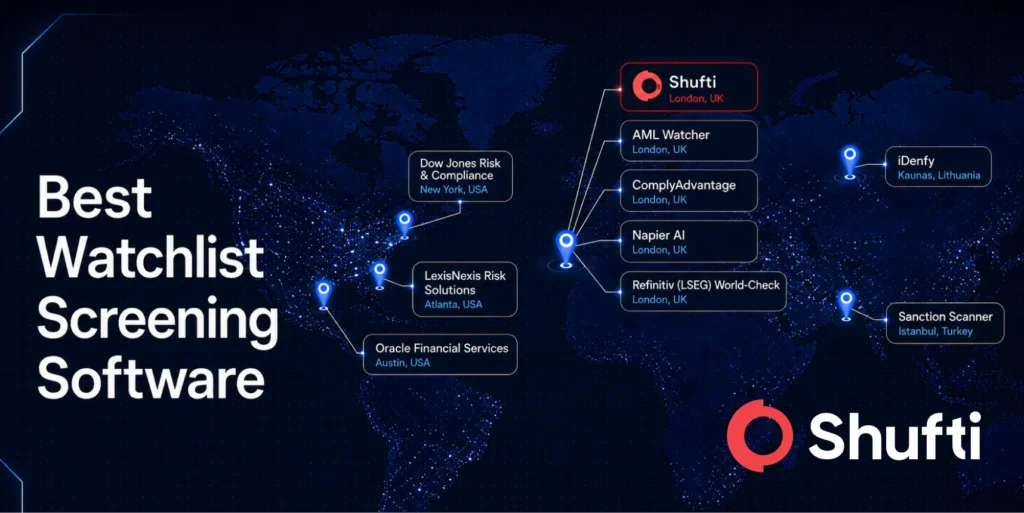
- The top 10 best watchlist screening solution provider compared in this guide: Shufti, AML Watcher, ComplyAdvantage, Dow Jones R&C, iDenfy, LexisNexis Risk, Napier AI, Oracle FCCM, Refinitiv World-Check, and Sanction Scanner.
- OFAC 2025 civil penalties have already exceeded $254 million, confirming that missed sanctions hits carry financial consequences regulators are actively enforcing.
- The gap between good and poor screening is list freshness, not just list coverage: outdated databases let sanctioned entities pass during update windows.
- Automated watchlist screening eliminates the manual refresh cycle that creates those windows in the first place.
- Delta-based screening re-checks only changed records on a list update, cutting false positive volume without sacrificing compliance coverage.
- Strong watchlist screening tools cover OFAC, UN Security Council, EU sanctions, FATF grey and black lists, PEPs, and adverse media through a single, low-latency API call.
A compliance officer who missed an OFAC list update in 2025 learned the hard way that sanctions lists do not wait for batch processes. The U.S. Treasury’s Office of Foreign Assets Control imposed civil penalties exceeding $254 million in 2025 alone, and enforcement targets are broadening: freight forwarders, investment managers, digital asset platforms, and fintechs all received penalty notices that year.
Meanwhile, FATF’s 2025 progress reporting confirms that 85 of 117 jurisdictions have enacted Travel Rule legislation, extending watchlist screening obligations explicitly into virtual asset transactions.
The problem most compliance teams face is not whether to screen, that question is settled by regulation. However, the problem which emerges is to figure out which automated watchlist screening software actually keeps pace with the velocity of list changes, handles transaction volumes without adding latency, and integrates cleanly into an onboarding or payments stack that was not designed around a standalone screening tool.
This guide compares the 10 best watchlist screening tools available in 2026, covering list breadth, false positive management, deployment flexibility, and the specific procurement scenarios each fits best.
What to Look for in a Watchlist Screening Provider in 2026
The evaluation criteria that separate defensible watchlist screening from box-checking compliance come down to seven questions a procurement team should answer before shortlisting.
List coverage and real-time freshness
The minimum viable list set for most financial institutions includes OFAC (SDN, Consolidated Sanctions, and Non-SDN lists), the UN Security Council consolidated list, EU sanctions under the Common Foreign and Security Policy, UK HM Treasury Financial Sanctions, FATF grey and black lists, and domestic terrorist financing designations. For payments and crypto platforms, VASP-specific lists and jurisdiction-specific national lists add further scope.
Coverage breadth is the baseline whereas freshness remains the differentiator. A screening database ingesting updates on a 24-hour batch cycle can miss a designation issued at 11pm and allow a flagged transaction through before the morning refresh. Real-time ingestion with automated alerts when a covered list changes is the standard that defensible programmes now require.
Delta-based watchlist management to reduce false positives
False positives are the operational cost of broad list coverage. Every unnecessary alert consumes analyst time, delays legitimate onboarding, and creates pressure to lower sensitivity which is how real hits get missed.
Delta-based watchlist management addresses this by re-screening only the records that changed on a list update, rather than running the entire customer base through a full re-screen every time any list is updated. When an OFAC list update adds 14 new entries, only customers whose identity attributes overlap with those 14 entries are re-screened.
This reduces alert volume significantly without reducing coverage. Tools that apply probabilistic name-matching with configurable fuzzy-match thresholds compound the benefit: teams tune sensitivity to their risk appetite rather than accepting a fixed false positive rate.
API integration depth and latency for high-volume transaction screening
Onboarding-only screening is a starting point, not a complete programme. Transaction screening checking both the originating and beneficiary parties against watchlists before a payment clears requires sub-second response times at scale. A compliance tool that adds 800ms to every outbound payment is a payment operations problem, not just a compliance tool problem.
Deployment flexibility and data residency
SaaS-only watchlist screening tools cannot serve organisations subject to data-residency regulations in the GCC, Southeast Asia, or certain EU frameworks without careful vendor diligence. Saudi Arabia’s PDPL, the UAE’s NESA standards, Thailand’s PDPA, and Indonesia’s OJK frameworks all carry requirements that may restrict the jurisdictions in which customer data can be processed. An organisation operating under those frameworks needs a vendor offering Local Cloud or on-premises deployment, not just a data-processing agreement.
AML ecosystem integration (one platform versus point solution)
A standalone watchlist screening tool creates an audit trail problem: when a customer triggers a PEP alert during onboarding, the screening alert, the KYC record, and subsequent transaction monitoring flags exist in separate systems. Regulators and internal audit teams increasingly expect a unified compliance record showing that the onboarding screen, the ongoing monitoring, and the transaction alerts all relate to the same customer journey.
Platforms that integrate watchlist screening alongside KYC, KYB, and transaction monitoring under a single case management interface provide a continuous audit trail from onboarding through ongoing monitoring. This structural difference between a watchlist management platform and a watchlist widget bolted onto another system is one of the key questions buyers underweight during procurement.
Regulatory breadth: crypto and FATF Travel Rule compliance
FATF’s Recommendation 16 guidance extended Travel Rule obligations to VASPs virtual asset service providers must screen both the originating and beneficiary VASP against watchlists before completing a transfer and must transmit identity information alongside the transaction.
A watchlist screening tool deployed at a crypto exchange or payments platform must be capable of VASP screening and must ingest the specific sanctions lists FATF-aligned regulators require, which differ by jurisdiction.
Adverse media and PEP screening depth
Sanctions lists cover entities already designated. Adverse media screening addresses entities not yet designated but reported in credible news sources for money laundering, terrorism financing, bribery, or corruption. Politically exposed persons screening flags government officials and their relatives and close associates (RCAs) for enhanced due diligence. The quality of adverse media coverage depends on source breadth, language coverage of the natural language processing engine, and the recency of the data pipeline — not just the number of sources listed in a brochure.
The 10 Best Watchlist Screening Software In 2026
As the publisher of this guide, we list Shufti first for transparency. The remaining nine vendors are listed alphabetically and described on the same factual basis. Each entry includes an overview, key strengths, considerations, certifications and recognitions, current public ratings, and the use case the vendor is best suited to. All product details are sourced from each vendor’s public website, the Gartner Magic Quadrant for Identity Verification 2025, the KuppingerCole Analysts 2025 market assessment, public certification listings, and verified review platforms.
- Shufti
- AML Watcher
- ComplyAdvantage
- Dow Jones Risk & Compliance
- iDenfy
- LexisNexis Risk Solutions
- Napier AI
- Oracle Financial Services
- Refinitiv (LSEG) World-Check
- Sanction Scanner
Watchlist Screening Vendor Comparison at a Glance
| Vendor | List coverage | Real-time screening | Deployment | G2 rating | Trustpilot | Best fit |
| Shufti | OFAC, UN, EU, HM Treasury, FATF, PEPs, adverse media + 270 data sources | Yes | SaaS, Local Cloud, on-prem | 4.5 (64 reviews) | 4.8 (3,800+ reviews) | Unified KYC + AML, multi-jurisdiction |
| AML Watcher | 1,300+ watchlists, PEPs, adverse media | Yes | SaaS (API-first) | 4.5/5 (1 review) | 4.1/5 (5 reviews) | Fintech standalone screening API |
| ComplyAdvantage | Sanctions, PEPs, adverse media (AI-driven) | Yes | SaaS | 4.4/5 (80 reviews) | Limited | Fintech & payments, false positive reduction |
| Dow Jones R&C | Sanctions, PEPs, Factiva adverse media | Yes | Enterprise SaaS | 4.3/5 (14 reviews) | Limited | Enterprise banking, adverse media depth |
| iDenfy | 200+ sanctions lists, PEPs, adverse media | Yes | SaaS | 4.9/5 (218 reviews) | 4.0/5 (25 reviews) | Integrated KYC + AML, fintechs |
| LexisNexis Risk | WorldCompliance: sanctions, PEPs, RCAs | Yes | Enterprise SaaS | 4/5 (647 reviews) | 1.3/5 (52 reviews) | Enterprise banking, PEP/RCA depth |
| Napier AI | Sanctions, PEPs, adverse media + TM | Yes | SaaS / hosted | 3.8/5 (2 reviews) | Limited
presence |
Mid-tier banks, AI-tuned screening |
| Oracle FCCM | Sanctions, PEPs, adverse media + TM | Yes | On-prem / cloud | Limited presence | Limited presence | Tier 1 banks, enterprise AML suite |
| Refinitiv World-Check | Curated sanctions, PEPs, adverse media | Yes | Enterprise SaaS | 4.4/5 (55 reviews) | Limited | Enterprise, curated risk intelligence |
| Sanction Scanner | 1,000+ watchlists, PEPs, adverse media | Yes | SaaS (API-first) | 4.8/5 (63 reviews) | 3.7/5 (1 review) | SMB fintechs, fast setup |
Sources: Vendor public sites, public certification listings, G2.com vendor profiles, Trustpilot vendor profiles. All data accurate as of June 2026.
#1. Shufti
Unlike most AML screening vendors that license watchlist data from a third-party aggregator and wrap it in a UI, Shufti built and owns its entire AML technology stack: watchlist screening, transaction monitoring, adverse media, and PEP checks are all developed and maintained in-house alongside its KYC and KYB capabilities. That ownership is what made Shufti a genuinely ‘Glocal’ compliance vendor: the same architecture that screens a payment originating from a user in Vietnam runs against the same in-house maintained watchlists as one originating in Germany, with no dependency on a third-party data partner’s update cycle.
Key strengths:
Shufti’s watchlist screening draws on 270+ authoritative data sources spanning government registries, credit bureaus, and identity databases across 95+ countries, enabling passive background checks alongside active watchlist hits. The platform covers OFAC, UN Security Council, EU CFSP, HM Treasury, FATF grey and black lists, global PEP databases, and adverse media all through a single API call with continuous monitoring enabled by default.
Because Shufti owns its transaction monitoring and watchlist screening under one platform, a PEP alert raised during onboarding automatically attaches to the same customer record as subsequent transaction monitoring flags, creating the continuous audit trail that EU AMLA and FATF-aligned programmes require. Named clients operating at global scale include Binance, Stripe, Coinbase, and ByteDance/TikTok clients whose transaction volumes test the platform’s throughput rather than approximate it.
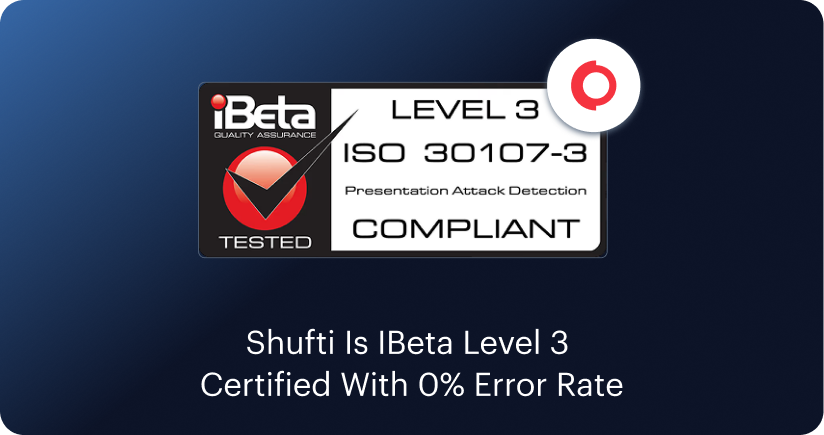
Shufti’s iBeta Level 3 conformance under ISO/IEC 30107-3 (held by only three vendors globally as of May 2026) is directly relevant to watchlist screening deployments where liveness-verified identity is the upstream data feeding the screening check a garbage-in problem many screening buyers underestimate.
Considerations:
Shufti’s commercial presence in North American markets is smaller than US-headquartered peers, a brand-awareness and contracting consideration, not a capability one. Pricing varies by deployment model and is not published per-transaction; enterprise and on-premises contracts are quoted directly.
Deployment Options:
- SaaS
- Cloud
- Local Cloud
- On-premise (for data-residency compliance under PDPL, NESA, PDPA, OJK, and similar frameworks)
Certifications and recognitions:
- iBeta Level 3 conformance under ISO/IEC 30107-3
- DHS RIVR 2025 Top Performer: 98.49% True Accept Rate, zero False Template Creation events in the U.S. Department of Homeland Security Remote Identity Validation Rally 2025
- SOC 2 Type II
- PCI DSS
- GDPR compliance, Cyber Essentials, Cyber Essentials Plus
- KuppingerCole Analysts 2025: highest overall technical capability score (79/100) and the only vendor in the assessment with no partner dependencies across core capabilities
Ratings (as of June 2026):
- Shufti G2 Reviews: 4.5 / 5 (64 reviews)
- Shufti Trustpilot Reviews: 4.8 / 5 (3,800+ reviews) the highest Trustpilot rating-and-volume combination among the vendors compared
Best for:
Organisations requiring watchlist screening as part of a unified KYC, KYB, and AML compliance platform particularly those operating across multiple jurisdictions, deploying in data-residency constrained environments, or building onboarding flows where liveness-verified identity feeds directly into the screening check. One platform. Fully owned technology. Global coverage with real local depth.
#2. AML Watcher
AML Watcher is a purpose-built AML data and screening platform offering real-time coverage across 1,300+ global watchlists, including OFAC, UN, EU, HM Treasury, FATF, domestic terrorist financing lists, and adverse media sources. The platform is designed for fintechs, payments companies, and digital asset operators that need broad watchlist coverage without the enterprise price tag of tier-one data providers.
Key strengths:
AML Watcher’s core differentiator is list breadth: its data pipeline ingests and normalises over 1,300 watchlists and PEP databases with real-time alerting when list content changes. Adverse media coverage spans multiple languages and source types. The platform offers both an API-first integration path for technical teams and a dashboard interface for compliance analysts.
Considerations:
AML Watcher is a screening data and alert platform rather than an end-to-end compliance suite. Organisations requiring integrated transaction monitoring or KYC case management will need to connect it to other tools. Configuration of fuzzy-match thresholds and alert prioritisation requires initial setup effort before the platform is tuned to an organisation’s specific risk appetite.
Certifications and recognitions:
- ISO 27001
- SOC 2 compliance documentation available on request per vendor site
- GDPR-aligned data processing
Ratings (as of June 2026):
- G2 Rating: 4.5/5 (1review)
- Trustpilot: 4.1/5 (5 reviews)
Best for:
Fintechs and digital asset platforms seeking broad watchlist and PEP coverage through a standalone screening API particularly those building their own compliance stack where watchlist data is one component alongside other specialist tools.
#3. ComplyAdvantage
ComplyAdvantage is a London-headquartered AI-driven AML data company founded in 2014. Its platform provides real-time sanctions screening, PEP checks, adverse media monitoring, and transaction monitoring, with a proprietary ML-based entity resolution engine designed to reduce the false positive rates associated with broad-coverage screening. ComplyAdvantage was named to G2’s 2026 Best Software Awards for Best Governance, Risk & Compliance Products.
Key strengths:
ComplyAdvantage’s proprietary data pipeline continuously ingests and re-processes sanctions list updates, PEP changes, and adverse media, updating entity profiles within minutes rather than hours.
Its ML-based entity resolution reduces false positives by disambiguating common names against contextual attributes: nationality, date of birth, role, affiliations rather than matching on name string alone. The API is developer-friendly, well-documented, and widely used by fintechs and payments platforms as a drop-in screening layer.
Considerations:
Some G2 reviewers note that adverse media results can require manual triage to distinguish material risk signals from low-relevance mentions, particularly for high-name-frequency entities. ComplyAdvantage is primarily a SaaS delivery model; organisations with strict data-residency requirements in certain GCC or APAC jurisdictions should verify available data residency options before contracting.
Certifications and recognitions:
- ISO 27001
- SOC 2 Type II
- GDPR compliance
Ratings (as of June 2026):
- G2: 4.3/ 5 (80 reviews)
- Trustpilot: Limited presence
Best for:
Fintechs, payments companies, and digital-first financial services platforms requiring a real-time AI-driven screening API with strong false positive reduction and rapid integration particularly where developer experience and data freshness are the lead procurement criteria.
#4. Dow Jones Risk & Compliance
Dow Jones Risk & Compliance is an enterprise risk intelligence platform backed by the Dow Jones data and Factiva news infrastructure. Its watchlist screening covers OFAC, UN, EU, HM Treasury, and national sanctions lists, with adverse media screening powered by Factiva’s global news archive, one of the deepest structured news datasets available commercially.
Key strengths:
The Factiva-powered adverse media layer is the primary differentiator: Dow Jones Risk & Compliance screens against a curated repository of global news coverage spanning decades, enabling retrospective adverse media checks alongside real-time monitoring. This depth is particularly relevant for enhanced due diligence on high-risk counterparties, PEPs, and UBOs where historical news context matters as much as current designation status. The platform integrates with major banking compliance workflows and ERP systems, contributing to its strong position in Tier 1 banking and capital markets.
Considerations:
Dow Jones Risk & Compliance is positioned as an enterprise product; smaller fintechs and PSPs may find pricing and implementation timelines optimised for large institutional buyers rather than SMB compliance teams. G2 public ratings data is limited given the platform’s primarily enterprise, direct-sales distribution model.
Certifications and recognitions:
- ISO 27001
- SOC 2 Type II
- GDPR compliance
- Dow Jones / News Corp enterprise security infrastructure standards
Ratings (as of June 2026):
- G2: 4.3/5 (13 reviews)
- Trustpilot: Limited public presence (enterprise B2B product)
Best for:
Tier 1 and Tier 2 banks, capital markets firms, and corporate compliance teams require deep adverse media coverage and retrospective due diligence depth alongside sanctions and PEP screening particularly where Factiva integration or existing Dow Jones data relationships are already in place.
#5. iDenfy
iDenfy is a Lithuania-headquartered identity verification and AML compliance platform founded in 2017. Its AML screening module covers global sanctions lists, PEP databases, and adverse media, and is offered alongside document verification, liveness detection, and KYC case management making it one of the more complete entry-level compliance stacks for fintechs and crypto platforms without an existing IDV relationship.
Key strengths:
iDenfy’s AML screening integrates directly with its identity verification flow, so a sanctions or PEP hit during onboarding is flagged within the same session as the document and biometric check, without requiring a separate API call or system handoff. The platform covers 200+ country-specific sanctions lists and PEP databases alongside adverse media. G2 reviewers in the AML category note fast result delivery and a clean analyst interface.
Considerations:
iDenfy’s watchlist screening is integrated into its broader IDV platform; organisations seeking a standalone screening API without the broader identity verification context will find more architectural flexibility in purpose-built AML data providers. As with most SaaS-delivered IDV platforms, the deployment model should be evaluated against data-residency requirements in GCC and certain APAC jurisdictions.
Certifications and recognitions:
- ISO/IEC 27001
- GDPR compliance
- G2 2025 Spring Report Leader Identity Verification and AML categories
Ratings (as of June 2026):
- G2: 4.9 / 5 (218 reviews)
- Trustpilot: 4.0 / 5 (25 reviews)
Best for:
Early-stage and growth-stage fintechs, crypto platforms, and iGaming operators requiring integrated KYC and AML screening with minimal integration overhead and where the team wants a single vendor covering both identity verification and watchlist compliance without stitching two separate systems together.
#6. LexisNexis Risk Solutions
LexisNexis Risk Solutions provides the WorldCompliance database: a curated risk intelligence repository covering sanctions, PEPs, adverse media, and state-owned enterprise data across 200+ jurisdictions. LexisNexis Risk Solutions is part of RELX Group and carries a long-established presence in financial crime compliance across banking, insurance, and government sectors.
Key strengths:
The WorldCompliance database covers an extensive PEP hierarchy including level-1 through level-3 PEPs, their relatives and close associates (RCAs), and adverse media profiles depth that matters for enhanced due diligence programmes where regulators expect more than sanctions list screening alone. LexisNexis Risk Solutions also integrates with its broader identity data assets telephone, address, property, and business registries enabling layered customer risk profiles that combine watchlist results with identity corroboration data. The platform supports both batch and real-time screening modes with workflow tools for alert disposition and case management.
Considerations:
LexisNexis Risk Solutions is primarily sold as an enterprise platform; API integration complexity and contract structures are calibrated to large institutional buyers. Organisations in the SMB and mid-market segment may find the implementation pathway less straightforward than API-first competitors.
Certifications and recognitions:
- ISO 27001
- SOC 2 Type II
- GDPR compliance
- RELX Group enterprise security and audit standards
Ratings (as of June 2026):
- G2: 4/5 (647 reviews)
- Trustpilot: 1.3/5 ( 52 reviews)
Best for:
Banks, insurers, and regulated enterprises requiring deep PEP and RCA coverage, layered identity corroboration, and an enterprise-grade data environment particularly those with existing LexisNexis Risk data relationships or programmes requiring enriched customer risk profiles beyond pure sanctions screening.
#7. Napier AI
Napier AI is a UK-based financial crime compliance technology company offering its Napier Continuum platform: an AI-powered suite covering client screening, transaction screening, transaction monitoring, and risk scoring. Napier is positioned for mid-sized financial institutions that need institutional-grade AML capabilities without a full Tier 1 enterprise implementation timeline.
Key strengths:
Napier AI’s platform includes a sandbox testing environment for tuning screening rules and alert thresholds, allowing compliance teams to model the impact of sensitivity changes on false positive rates before applying them to production traffic. This directly addresses one of the most common operational problems in top watchlist screening: teams that are reluctant to reduce false positive thresholds because they cannot model the compliance trade-off first. Napier’s AI-driven scoring layer applies risk context to screening alerts, ranking them by likely materiality rather than presenting all hits at equal priority.
Considerations:
Napier’s public G2 review footprint is limited compared to API-first competitors, making independent user sentiment harder to assess outside of analyst references. The platform is positioned primarily for regulated financial institutions; fintechs and PSPs requiring rapid self-serve integration may find the onboarding process more structured than plug-and-play alternatives.
Certifications and recognitions:
- ISO 27001
- GDPR compliance
- Recognised in multiple RegTech analyst assessments for AML and transaction monitoring capabilities
Ratings (as of June 2026):
- G2: 3.8/5 (2 reviews)
- Trustpilot: Limited presence
Best for:
Mid-sized banks, building societies, payment institutions, and e-money issuers requiring an AI-driven screening and transaction monitoring platform with configurable false positive controls, sandbox testing capability, and integrated client and transaction screening under one compliance workflow.
#8. Oracle Financial Services
Oracle Financial Services offers the Financial Crime and Compliance Management (FCCM) suite: an enterprise-grade platform covering watchlist filtering, transaction monitoring, customer due diligence, and regulatory reporting. Oracle FCCM is deployed by Tier 1 banks globally and is built to handle the transaction volumes, data volumes, and multi-jurisdictional regulatory complexity that enterprise banking compliance demands.
Key strengths:
Oracle FCCM’s watchlist filtering module supports configurable screening against OFAC, UN, EU, FATF, and jurisdiction-specific national lists, with integrated case management connecting screening alerts to transaction monitoring and CDD workflows. The platform’s integration with Oracle’s broader data and infrastructure ecosystem is an advantage for banks already running Oracle core banking or Oracle cloud infrastructure. Multi-jurisdictional rule sets can be maintained separately within the same platform, which matters for banks operating under simultaneous US, EU, and APAC regulatory obligations.
Considerations:
Oracle FCCM is an enterprise product with implementation timelines, licensing structures, and minimum viable deployment sizes calibrated to large institutions. Fintechs, mid-market compliance teams, and organisations seeking rapid integration will find the implementation complexity disproportionate to their scale.
Certifications and recognitions:
- ISO 27001
- SOC 2
- PCI DSS
- FedRAMP (US federal deployments)
- Oracle Cloud compliance certifications across multiple jurisdictions
Ratings (as of June 2026):
- G2: Limited Presence
- Trustpilot: Limited Presence
Best for:
Tier 1 and Tier 2 banks with complex, multi-jurisdictional AML obligations, high transaction volumes, and existing Oracle infrastructure where implementation depth, multi-jurisdictional rule management, and institutional-grade auditability outweigh time-to-deploy.
#9. Refinitiv (LSEG) World-Check
Refinitiv World-Check, now part of the London Stock Exchange Group (LSEG), is one of the most widely deployed risk intelligence databases in global financial crime compliance. World-Check One is the platform interface for accessing the underlying database, which covers sanctions, PEPs, adverse media, and country risk profiles across a globally curated entity set.
Key strengths:
World-Check’s entity database is the product of a dedicated research team that curates, verifies, and updates profiles not just an automated feed from public list aggregators. This means the quality control layer between raw regulatory list data and the screened record is managed by human researchers applying source-verification standards, reducing the noise that fully automated data pipelines sometimes introduce. The platform supports both bulk batch screening and real-time API screening, with integration SDKs for common banking platforms and compliance systems.
Considerations:
World-Check is a data-and-access product; the compliance workflow layer (case management, alert disposition, reporting) sits primarily in the World-Check One interface, which some enterprise buyers supplement with their own case management tooling. Pricing is not published and is structured for enterprise contracts. Organisations seeking a turnkey screening-to-monitoring platform rather than a data access product should evaluate whether World-Check’s scope matches their actual workflow needs.
Certifications and recognitions:
- ISO 27001
- SOC 2 Type II
- GDPR compliance
- LSEG regulatory and compliance infrastructure standards
Ratings (as of June 2026):
- G2: 4.4/5 ( 55 reviews)
- Trustpilot: Limited presence
Best for:
Global banks, multinational financial institutions, and enterprise compliance teams require a curated, research-grade risk intelligence database as the data layer beneath their own screening workflow particularly those where World-Check is specified or referenced in regulatory examination expectations.
#10. Sanction Scanner
Sanction Scanner is a Turkey-headquartered AML compliance platform founded in 2019. Its product covers real-time sanctions screening, PEP checks, adverse media monitoring, and transaction monitoring across 1,000+ global watchlists, delivered through an API-first architecture aimed at fintechs, PSPs, and mid-market compliance teams.
Key strengths:
Sanction Scanner’s core offering is broad watchlist coverage at a price point accessible to smaller organisations. Its screening API covers OFAC, UN, EU, HM Treasury, FATF, and national lists alongside PEP data, with configurable fuzzy-match sensitivity and AML risk scoring. The platform’s G2 reviewers consistently highlight ease of setup, breadth of pre-integrated watchlists, quality of alert management interface, and responsive support as strengths. Sanction Scanner also offers a transaction monitoring module for organisations that want to extend beyond onboarding-only screening.
Considerations:
Some G2 reviewers note that advanced customisation options and reporting flexibility can be limited compared to enterprise-tier competitors, and documentation occasionally lags behind new features. Sanction Scanner is a growth-stage company; organisations evaluating for enterprise-scale or mission-critical deployment should apply standard vendor stability due diligence.
Certifications and recognitions:
- ISO 27001
- SOC 2 compliance
- GDPR compliance
Ratings (as of June 2026):
- G2: 4.8/5 (63 reviews)
- Trustpilot: 3.7/5 (1 review)
Best for:
Fintechs, PSPs, e-money institutions, and mid-market compliance teams seeking fast-setup automated watchlist screening with broad list coverage, an accessible price point, and an API that can be integrated without a dedicated compliance engineering team.
How to Choose the Right Watchlist Screening Software for Your Business
The vendor that fits is the vendor that handles your screening volumes, under your specific regulatory regime, with a deployment model your data-residency requirements accept. Most buyers fall into one or more of six common procurement situations.
Scenario 1: Payments companies processing high-volume transactions
For payment processors and money transfer operators running millions of transactions daily, the screening question is not just which lists to cover — it is how to screen both the originating and beneficiary parties in real time without adding compliance latency to the payment rail. Shufti’s proprietary AML stack, built on the same architecture that handles identity verification at Stripe and Binance scale, handles synchronous API screening with sub-second response times and batch-mode support for settlement runs. The integrated nature of Shufti’s KYC and watchlist layers means an onboarding flag and a subsequent transaction alert share a single customer record which regulators examining payment rails increasingly expect. ComplyAdvantage is a narrower specialist for fintechs prioritising developer-first API integration and real-time adverse media, where deep deployment flexibility is less of a constraint.
Scenario 2: Crypto platforms and VASPs under FATF Travel Rule requirements
FATF Recommendation 16 requires VASPs to screen both sending and receiving parties against watchlists before completing a transfer, and to transmit identity attributes alongside the transaction. Crypto platforms need a screening tool that ingests VASP-specific lists, updates in real time as OFAC adds crypto addresses to the SDN list, and can be triggered per-transaction rather than per-onboarding session only. Shufti’s continuous monitoring architecture supports per-transaction screening at VASP scale, with coverage extending to OFAC digital currency address designations and jurisdiction-specific crypto-relevant sanctions. AML Watcher and ComplyAdvantage both offer API modes suitable for VASP transaction-level integration as standalone screening layers.
Scenario 3: Organisations requiring KYC and AML screening in a single platform
The most common compliance fragmentation problem is a KYC tool on one system and a watchlist screening tool on another, with no shared case management. Regulators examining a compliance programme expect a unified audit trail from onboarding through ongoing monitoring — not two separate alert histories. Shufti eliminates this fragmentation: watchlist screening, KYC, KYB, transaction monitoring, and case management all operate under a single platform and audit trail. For organisations that specifically need integrated KYC and AML screening without the full Shufti deployment scale, iDenfy offers the same architectural integration in a lighter-weight package suited to early-stage fintechs.
Scenario 4: Data-residency constrained deployments (GCC, APAC, EU)
Organisations operating under Saudi Arabia’s PDPL, the UAE’s NESA standards, Thailand’s PDPA, or Indonesia’s OJK frameworks cannot deploy SaaS-only screening tools without verifying that the vendor’s data processing is compliant with the applicable residency requirement. Shufti is one of the few watchlist screening vendors offering both Local Cloud and full on-premises deployment, specifically to serve organisations that cannot route customer data to third-country infrastructure. SaaS-only vendors are structurally excluded from scenarios where the data-residency requirement is strict and non-negotiable.
Scenario 5: Multi-jurisdictional screening covering OFAC, EU, UN, and national lists simultaneously
A bank operating in the US, UK, EU, and Singapore must maintain compliance with OFAC, HM Treasury, EU CFSP, MAS, and UN Security Council lists simultaneously, and must be able to demonstrate to each regulator that the applicable list set was screened at the time of a given transaction. Shufti’s AML module covers all major international and national sanctions lists through a single API call, with jurisdiction-configurable rule sets and a per-transaction audit record logging which lists were active at the time of screening. LexisNexis Risk Solutions and Refinitiv World-Check are narrower specialists for enterprise banking teams that need a curated data product to sit beneath an existing compliance workflow.
Run a proof of concept on your highest-risk transaction flows, and benchmark false positive rates and list coverage against any vendor on this list, through a live walkthrough with Shufti.
Frequently Asked Questions
What should I look for when choosing a watchlist screening software vendor?
Prioritise list freshness (real-time updates, not batch), the specific lists relevant to your jurisdiction (OFAC, UN, EU, FATF, national), false positive management through fuzzy-match tuning and delta-based screening, API latency under load, and whether the tool integrates with your KYC and transaction monitoring workflows or requires a separate system to complete the picture.
How do the top watchlist screening tools differ from each other?
Enterprise tools like Oracle FCCM and Refinitiv World-Check offer deep curated data and complex rule sets suited to Tier 1 banks. API-first tools like ComplyAdvantage and Sanction Scanner prioritise rapid integration and real-time data freshness for fintechs. Unified platforms like Shufti combine watchlist screening with KYC and transaction monitoring under one audit trail. The right fit depends on your scale, jurisdiction, integration architecture, and deployment constraints.
How long does it take to integrate a watchlist screening API into an existing onboarding flow?
A well-documented REST API from an API-first vendor (ComplyAdvantage, Sanction Scanner, Shufti) can be integrated into a standard onboarding flow in days for a straightforward implementation. Enterprise platforms with complex rule configuration (Oracle FCCM, Refinitiv World-Check) typically require weeks to months for full deployment. Timeline depends on your existing infrastructure, the complexity of your alert management requirements, and whether you need custom rule sets for multiple jurisdictions.
Can watchlist screening software handle high-volume transaction screening without latency issues?
Leading platforms support sub-second synchronous API responses for real-time transaction screening and parallel batch-mode processing for settlement-level screening. Evaluate vendors on their documented SLA under peak load, not just average response time. For payments-critical deployments, request a load test against your projected transaction volume before contracting rather than relying on published benchmarks.
What are the compliance consequences of running watchlist screening with outdated lists?
Regulators do not accept list-update lag as a mitigating factor. OFAC has assessed penalties for transactions that occurred while a sanctions designation was active but had not yet been ingested by the institution's screening database. Real-time or near-real-time list ingestion is the minimum standard for defensible compliance. Batch-daily updates are insufficient for payment flows processed continuously throughout the trading day.