


 Face Verification
 Address Verification
 Document Verification
 Age Verification
 VideoIdent
 Fast ID
 Docless Verification
 Consent Verification
 NFC Verification
 Business Verification
 Due Diligence
 Investor Verification
 E-Signature

 QES
QES
 AML Screening
 Transaction Monitoring
 Adverse Media
 Business AML Screening
 PEP & RCA
 Sanctions
 Watchlist
 Behavioural Biometrics
 Device Fingerprinting
 Biometric Face Authentication
 MFA
MFA
 Fraud Hub
 Onboarding
 Ongoing Monitoring
 KYC
KYC
 KYB
KYB
 KYI
KYI
 Age Assurance
 Identity Verification
 Workforce IAM
 Candidate Verification
 Compliance
 Fraud prevention
 Trust & safety
 Global expansion
 Product Managers
 Compliance Officers
 Fraud Analysts
 Developers
 Deepfake Detection
 Bonus Abuse / Promotion Abuse
 Account Takeover
 Synthetic Identity Fraud
 Document Fraud
 Impersonation Fraud
 Multi-Accounting
 Fraud Networks
 Chargeback Fraud
 Money Mule Activity
 Party Fraud
 Regulatory & Compliance Risks
 Fintech
 Crypto
 iGaming
 Forex
Forex
 Social Network
 Marketplace
 Banking
 Gig Economy
 Payments
 Ride Hailing
 Adult Content
 Blind Spot Audit
 Deepfake Detector
 Liveness Spoofs
 Document Originality
 Document Deepfake
 Global Trust Platform
 Journey Builder
 Case Management
 Shufti AI
 Fraud Analytics
 Vendor Comparison
 Brand Personalisation
 AI Compliance Co-Pilot
 OCR
OCR
 Secure Capture
 Deployment Options
 Identity Methods
 API Documentation
 Mobile SDKs
 Service Status
 Help Center
 Contact Us
 Technical Support
 Supported Documents
 Supported Countries
 Content library
 Blogs
Blogs
 News
News
 Reports
 Insights
 Knowledgebase
 ROI calculator
 About
About
 Career
 Press Release
 Certifications
 Partnership
 Awards
 Events & Webinar
 Interactive Demo
 Podcast Studio
 Spotlight Studio
How Address Validation APIs Are Evolving for Agentic Commerce in 2026
-
Add us as a Preferred Source
- 01 What is an Address Validation API?
- 02 The Agentic Commerce Shift
- 03 How Address Autocomplete API Fits Into This Picture?
- 04 Real-Time Address Validation: What It Means in 2026
- 05 Google Address Validation API vs. a Compliance-Grade Address API
- 06 AI Address Verification vs. Address Standardisation
- 07 Address Verification API Pricing: What to Ask Before You Sign
Your checkout just processed an order. No human typed the shipping address. An AI shopping agent did. Your validation layer approved it because the address was syntactically correct and matched no blocklist. The package was shipped to a reshipping warehouse.
This is the core problem with most address verification APIs right now. They were built for humans making typos, not machines moving at transaction speed.
What is an Address Validation API?
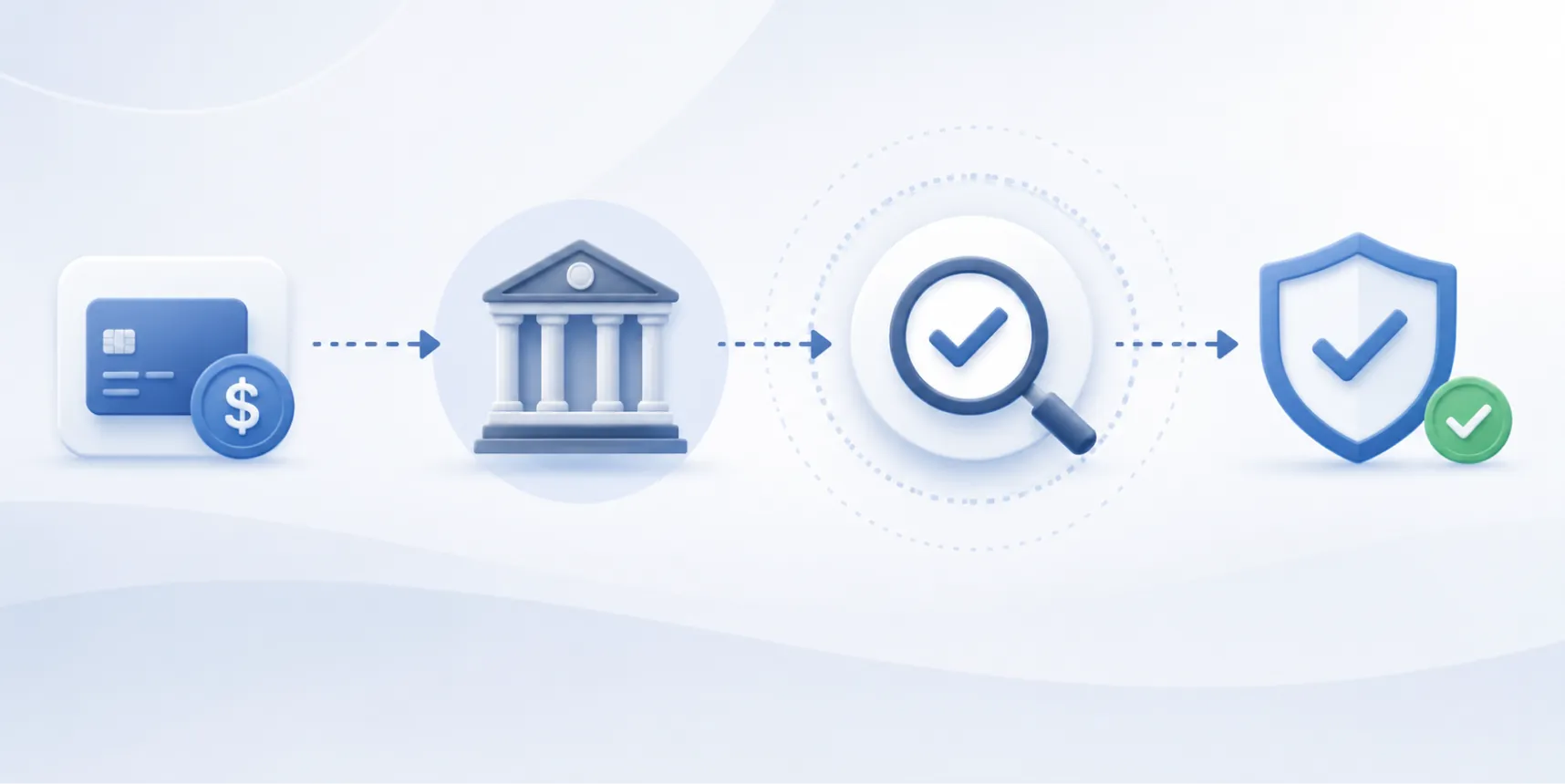
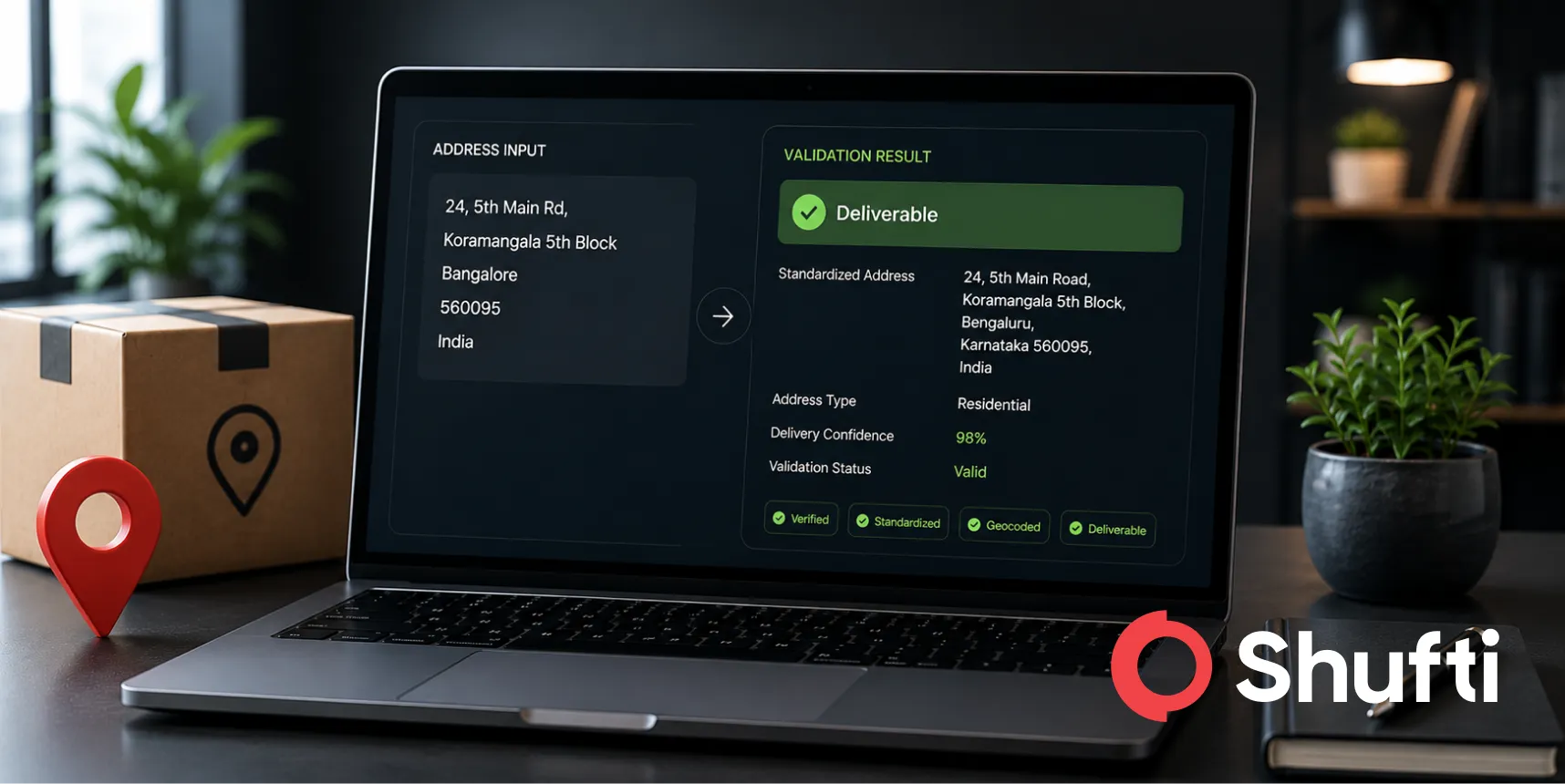
An address validation API checks whether a submitted address is real, correctly formatted, and deliverable, then returns a structured response your system can act on automatically. At the basic level, it parses free-form input into standardised postal components and confirms the address exists in a database. More advanced implementations cross-reference addresses against government, telco, and credit records and layer in fraud signals from geolocation analysis and document forensics. The practical difference between those two levels is the difference between knowing an address exists and knowing a real person lives there.
The Agentic Commerce Shift
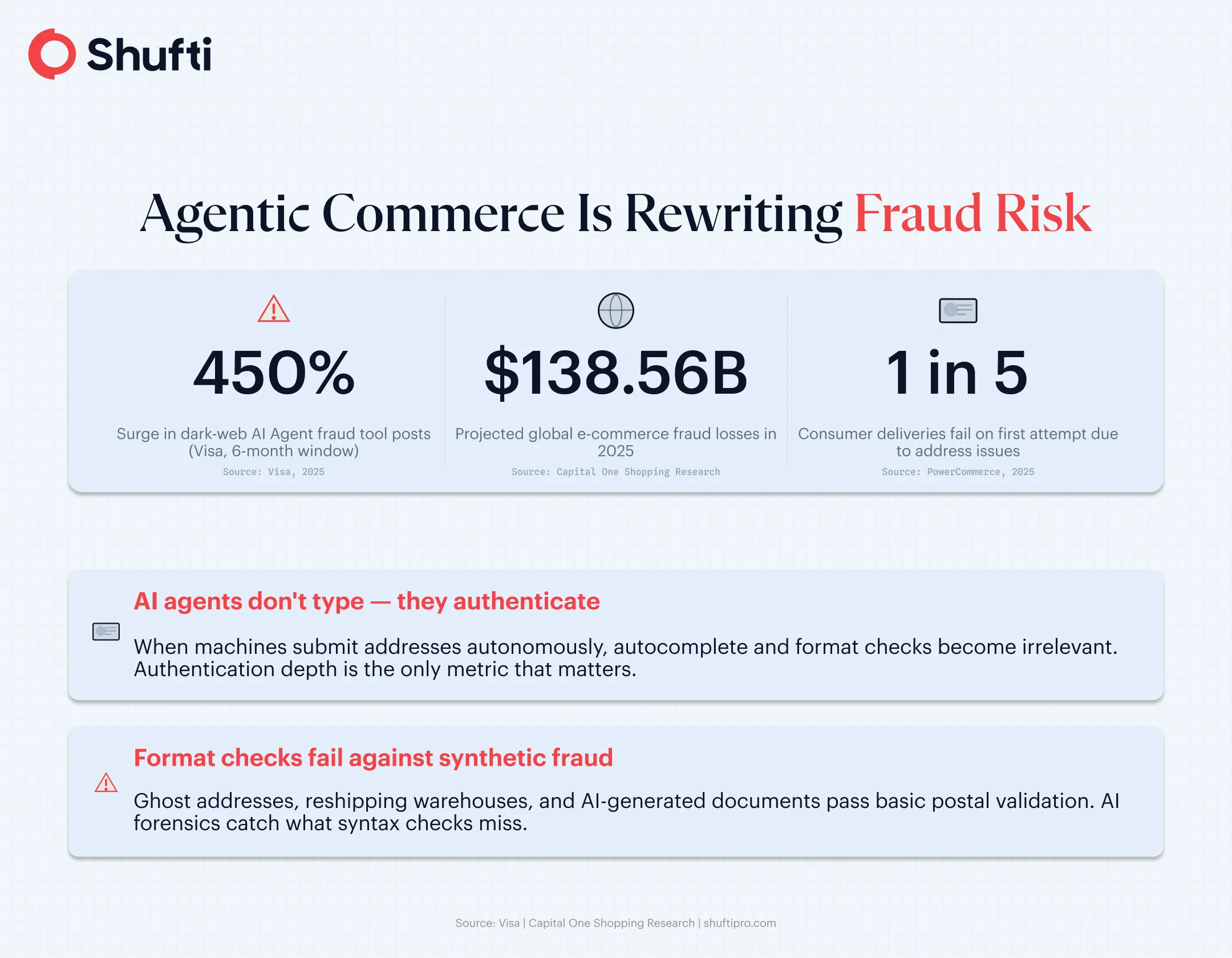
Visa’s fraud team has already flagged a 450% surge in dark-web posts discussing AI agent fraud tools over a recent six-month window. When agents book travel, place orders, and manage subscriptions autonomously, address verification becomes a trust protocol, not a UX convenience.
The agent submits an address. There is no human to challenge it, no browser fingerprint to cross-reference, and no form behaviour to analyse. If your address verification API only validates format and deliverability, you are checking syntax while fraud checks out.
How Address Autocomplete API Fits Into This Picture?
Address autocomplete APIs reduce address entry time from 60–90 seconds to under 15 seconds and can cut cart abandonment by up to 35% for human-driven checkout flows. On mobile, where checkout completion is already under pressure, autocomplete has a measurable impact on conversion. In agentic flows where no one is typing, autocomplete is irrelevant. The metric that matters there is customer authentication depth: can your API confirm the address belongs to this identity, not just that it exists in a postal database?
Real-Time Address Validation: What It Means in 2026
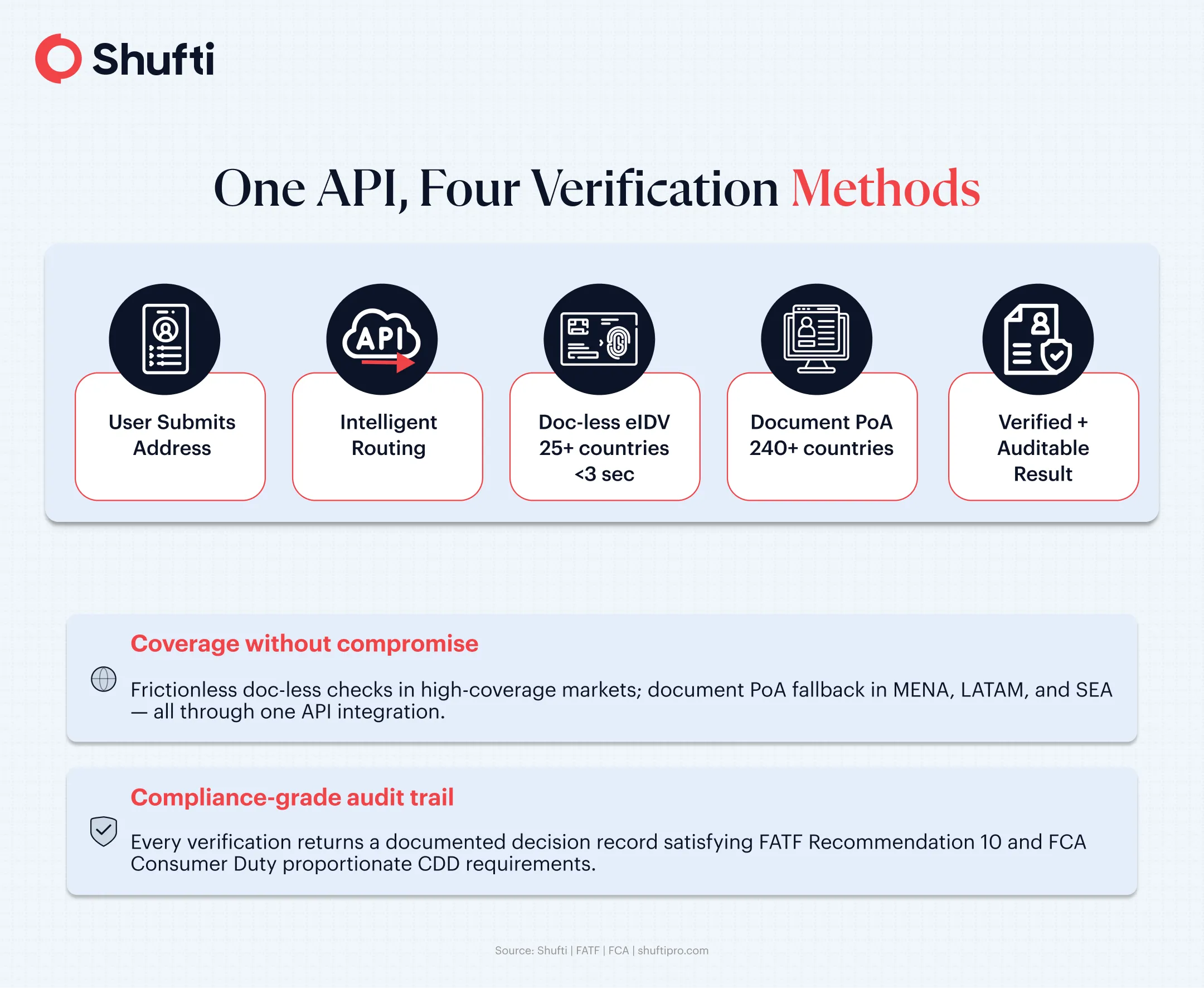
Real-time address validation in 2026 is not just a synchronous call to a postal database. Modern verification APIs cross-reference submitted addresses against 155+ trusted data sources, including government registers, telco records, credit bureaus, and utility databases, returning a residency confirmation in under three seconds. For doc-less flows, that means verifying a user’s claimed address without requiring a utility bill upload. For compliance flows, it means returning an auditable match record that satisfies FATF Recommendation 10’s proportionate CDD requirements, not just a binary pass or fail.
Google Address Validation API vs. a Compliance-Grade Address API
The Google Address Validation API is the right tool for what it was designed to do: Confirm a physical address exists and normalise its components for logistics. For e-commerce shipping routing and form completion, it performs well. What it does not return is a residency match against identity data, a geolocation fraud signal, an audit trail for regulators, or document-based proof of address for markets where database coverage is thin. For workflows where the FCA’s Consumer Duty or EU 6AMLD requires documented, auditable address verification decisions, a compliance-grade API is a separate requirement.
Global Address Validation: The Coverage Problem
Global e-commerce fraud was projected to total $138.56 billion in 2025, and address manipulation runs through a meaningful portion of those losses, with these risks continuing to evolve and persist into 2026. The challenge is structural: database-only address checks perform well in North America and Western Europe, where bureau infrastructure is dense. In MENA, LATAM, and Southeast Asia, those same databases cover 30–40% of the real population. A global address validation API that routes users to document-based proof of address in low-coverage markets and to frictionless database checks where coverage is strong solves this without forcing a uniform friction level on every user.
Shufti’s address verification suite handles that routing automatically: doc-less eIDV in covered markets and document verification as the fallback, all through a single API integration covering 240+ countries.
AI Address Verification vs. Address Standardisation
Address standardisation normalises “St” to “Street”, corrects zip codes, and formats input to postal standards. That matters for deliverability. AI address verification does something different: it detects tampered documents submitted as proof of address, flags ghost addresses such as mail drops and reshipping warehouses, identifies mismatches between a claimed address and the user’s device geolocation, and applies fuzzy matching to avoid rejecting valid users for minor typographic errors.
AI-driven verification catches the address errors that formatting checks pass right through, and the synthetic identity signals those checks were never designed to detect.
Address Verification API Pricing: What to Ask Before You Sign
Address verification API pricing typically follows per-verification, volume-tier, or flat subscription models. The cheapest per-check rate often becomes the most expensive at scale if global coverage requires layering additional regional vendors on top. Before committing, confirm: Does the API cover your target markets natively without surcharges? Does document verification come included or at a separate tier? Is there an address API free trial that covers both doc-less and document-based checks in your top markets?
Shufti’s address verification suite includes a free trial covering document, doc-less, and geolocation verification, which will tell you more about real-world accuracy than any benchmark report.
Request a demo to see how Shufti improves address validation for agentic commerce with accurate, fraud-resistant verification.
Frequently Asked Questions
What is an address validation API?
It is a service that checks whether a submitted address is real, formatted correctly, and deliverable, returning a structured result that your system can act on automatically.
How does an address verification API work?
It parses a submitted address into postal components, checks it against databases or identity data sources, and returns a confidence score alongside standardised address data.
What is the difference between Google Address Validation API and a KYC address API?
Google confirms an address is physically deliverable. A KYC address API also verifies the address belongs to the person submitting it and produces an auditable compliance record.
What is a global address validation API?
It is an API that covers multiple countries using a combination of database checks, document-based proof of address, and eIDV to confirm residency regardless of local postal infrastructure quality.
What is AI address verification and how is it different from traditional validation?
AI address verification uses machine learning to detect document tampering, ghost addresses, and synthetic identity signals, going beyond format checks to assess whether an address is genuinely linked to a real person.