AMLR Solutions
  AMLR Consultation
 EUDI Wallet
 Onboarding
 Ongoing Monitoring
 FRAML
FRAML KYC
KYC KYB
KYB KYI
KYI Age Assurance
 Workforce IAM
 Candidate Verification
 Account Takeover
 Bonus/ Promotion Abuse
 Chargeback Fraud
 Deepfake
 Document Fraud
 Fraud Networks
 Impersonation Fraud
 Money Mule Activity
 Multi-Accounting
 Party Fraud
 Regulatory & Compliance Risks
 Synthetic Identity Fraud
 Adult Content
 Banking
 Crypto
 Fintech
 Forex
Forex Compliance
 Fraud prevention
 Trust & safety
 Global expansion
 Compliance Officers
 Developers
 Fraud Analysts
 Product Managers
 Journey Builder
  Global Trust Platform
 Customer Profiles
 Vendor Comparison
 IDV Case Management
 AML Case Management
 Regulatory Reporting
 Agentic Rule Builder
  AI Compliance Co-Pilot
  Fraud Analytics
 Fraud Hub
  OCR
OCR Shufti AI
 Bank Account Verification
  Biometric Duplication
 Database Checks
 Document Intelligence
 Government ID
 Mobile Driver's License
 NFC
NFC Selfie Liveness
 Brand Personalisation
 Deployment Options
 Identity Methods
 IDV Modes
 Multi-tenancy
 On-Premise IDV
 Secure Capture
 Shufti MCP














Basic KYC gets a neobank to launch. It rarely gets it to scale. As sign-up volume climbs and fraud grows more sophisticated, the gap between a checkbox verification tool and a real-time KYC platform starts costing revenue, approvals, and audit confidence.
This guide compares real-time KYC against basic KYC for fintech and banking compliance leaders, and shows which capabilities actually support scalable onboarding, fraud prevention, and cross-border compliance.
What you'll learn:
- Basic KYC verifies identity once; real-time KYC verifies, scores risk, and monitors continuously.
- Neobanks outgrow basic KYC when onboarding volume, fraud pressure, or new markets exceed a single document check.
- Real-time KYC scales through automated decisioning, risk-based routing, and ongoing AML screening.
- Global identity verification fails on coverage, not technology: real coverage means many document types across 240+ countries.
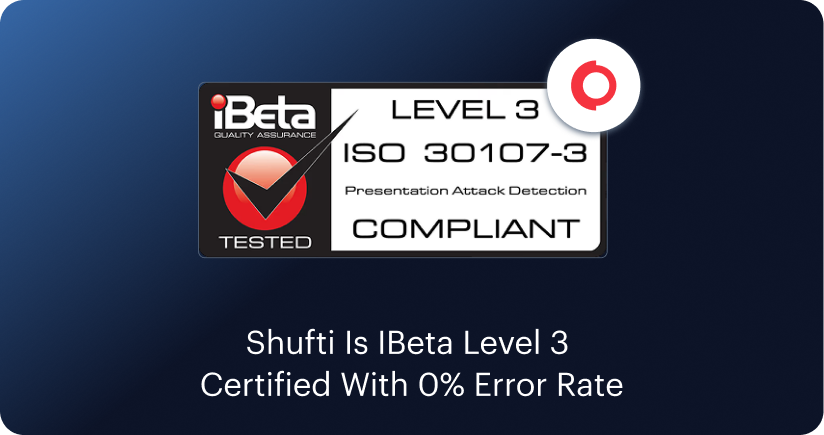
- Shufti runs real-time verification on an in-house stack, with iBeta Level 3 liveness across 240+ countries.
When do neobanks outgrow basic KYC verification tools?
Three signals usually mark the tipping point:
- Rising fraud that basic checks miss. Synthetic identities, deepfakes, and document forgery pass simple photo matching. Real-time verification with liveness and biometric depth catches what static checks cannot.
- Manual review queues that do not scale. When approvals depend on analysts clearing a backlog, growth turns into a bottleneck. Automated, real-time decisioning removes the queue.
- New markets with new rules. A tool built for one country breaks the moment you onboard users abroad. Cross-border expansion needs verification that already covers the documents and regulations of each new market.
Once any of these appears, the cost of staying on basic KYC (lost good users, admitted bad ones, and slower compliance sign-off) outweighs the cost of upgrading.
How do financial institutions scale real-time KYC identity verification?
Scalable real-time KYC rests on four things:
- Automated decisioning. Extraction, validation, biometric matching, and risk scoring run in one flow and return a pass, fail, or refer verdict in seconds.
- Risk-based routing. Low-risk users clear instantly. Higher-risk cases route to step-up checks or review, so friction lands only where it is warranted.
- Ongoing monitoring, not one-time checks. Real KYC does not stop at onboarding. Continuous AML, PEP, and sanctions screening keeps the risk picture current after the account is open.
- Infrastructure that owns the stack. Latency, uptime, and data control depend on whether verification runs on owned infrastructure or is stitched together from third-party vendors. Owned stacks give predictable performance under load.
Shufti runs verification on an in-house stack rather than reselling third-party engines, which keeps decisioning fast and consistent as volume grows. For the full onboarding workflow, see the KYC identity verification onboarding guide.
Why do fintechs struggle with global identity verification software?
The recurring failure points:
- Thin document and country coverage. Software that handles a handful of markets forces manual workarounds everywhere else. Real global coverage means verifying many document types across 240+ countries out of the box.
- Weak performance in hard markets. Regions with non-Latin scripts, low-quality ID images, or unusual document formats expose tools that were tuned for easy markets only.
- Fragmented compliance. Each jurisdiction has its own AML, data residency, and identity rules. Bolting on a separate tool per region multiplies cost and audit risk.
The fintechs that scale cleanly pick one platform with the coverage depth and compliance breadth to grow into new markets, instead of re-integrating for every launch.
Real-time KYC vs basic KYC: what actually differs
| Capability | Basic KYC | Real-Time KYC (Shufti) |
|---|---|---|
| Verification speed | Minutes to hours, often manual | Instant, automated decisioning |
| Fraud detection | Basic photo or data match | Liveness, biometrics, deepfake and forgery signals |
| Document and country coverage | Limited markets | Many document types across 240+ countries |
| Biometric depth | Basic or none | iBeta Level 3 tested liveness |
| Ongoing monitoring | One-time check | Continuous AML, PEP, and sanctions screening |
| Scalability | Breaks under volume | Built for high-volume onboarding |
| Compliance fit | Single-market | Data residency and multi-jurisdiction ready, eIDAS 2.0 and EUDI Wallet aligned |
KYC Onboarding: A Complete Guide for 2026. See how instant identity verification, AML screening, and fraud prevention come together in one onboarding flow.
Which real-time KYC platform fits a scaling neobank?
For US neobanks and global fintech teams, the decision usually comes down to whether one platform can:
- Approve good users instantly while catching synthetic and deepfake fraud.
- Verify identities across 240+ countries without per-market re-integration.
- Keep AML and sanctions screening running after onboarding.
- Hold up to audit with data residency and multi-jurisdiction compliance built in.
Shufti delivers these as core capabilities on owned infrastructure, which is what lets a neobank move from launch-stage basic KYC to institution-grade real-time verification without stitching vendors together.
Ready to scale onboarding without scaling fraud?
Shufti verifies users in real time across 240+ countries, with iBeta Level 3 liveness and continuous AML screening on one owned stack. Walk through it with our compliance team against your own onboarding requirements.
Book a demo