AMLR Solutions
 AMLR Consultation
 Onboarding
 Ongoing Monitoring
 FRAML
FRAML KYC
KYC KYB
KYB KYI
KYI Age Assurance
 Workforce IAM
 Candidate Verification
 Account Takeover
 Bonus/ Promotion Abuse
 Chargeback Fraud
 Deepfake
 Document Fraud
 Fraud Networks
 Impersonation Fraud
 Money Mule Activity
 Multi-Accounting
 Party Fraud
 Regulatory & Compliance Risks
 Synthetic Identity Fraud
 Adult Content
 Banking
 Crypto
 Fintech
 Forex
Forex Compliance
 Fraud prevention
 Trust & safety
 Global expansion
 Compliance Officers
 Developers
 Fraud Analysts
 Product Managers
 Advanced Journey Builder (AJB)
 Global Trust Platform
 Customer Profiles
 Vendor Comparison
 IDV Case Management
 AML Case Management
 Regulatory Reporting
 Travel Rule Protocols
 Agentic Rule Builder
 AI Compliance Co-Pilot
 Fraud Analytics
 Fraud Hub
 OCR
OCR Shufti AI
 Bank Account Verification
 Biometric Duplication
 Database Checks
 Document Intelligence
 Government ID
 Mobile Driver's License
 NFC
NFC Selfie Liveness
 Brand Personalisation
 Deployment Options
 Identity Methods
 IDV Modes
 Multi-tenancy
 On-Premise IDV
 Secure Capture











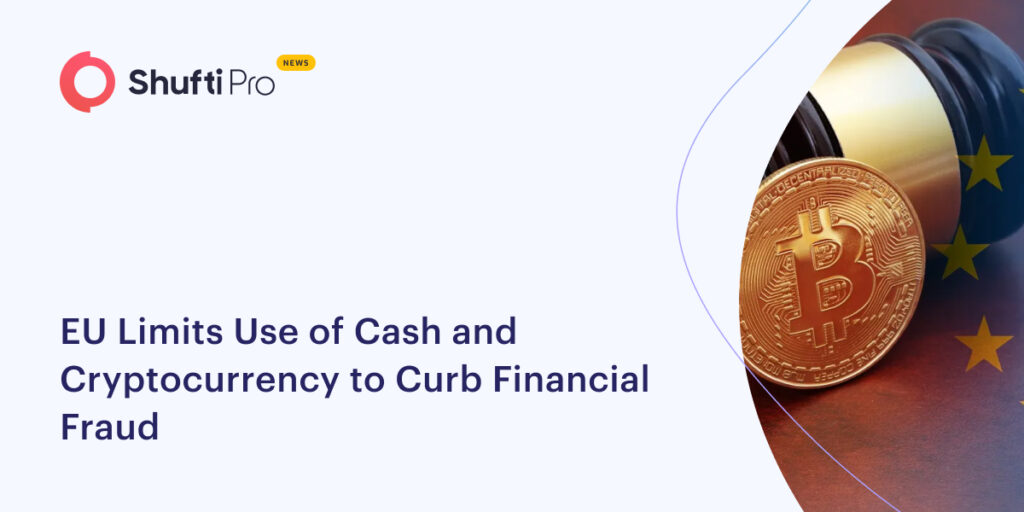
The European Union (EU) has issued new measures to limit use of cash and cryptocurrencies to tackle money laundering and other financial crimes.
Payments in cash will be restricted to a maximum of 10,000 euros under the new regulations, with member states having the option to set fewer thresholds.
Spain reportedly has a cap on cash payments of 1,000 euros. However, the European Central Bank (ECB) has already voiced resistance to such measures, labelling them “disproportionate” and highly detrimental to the acceptance of cash as legal money.
The new measures would also have an impact on the gold sector with heightened scrutiny of large cash payments and initiatives to make it more challenging to utilise cryptocurrencies and other valuables for money laundering. “Trying to stay anonymous when buying or selling crypto-assets will become much more difficult,” said Zbynek Stanjur, Minister of Finance of the Czech Republic. “Hiding behind multiple layers of ownership of companies won’t work anymore. It will even become difficult to launder dirty money via jewellers or goldsmiths.”
The EU will implement a classification system for nations based on their adherence to the Financial Action Task Force’s (FATF) recommendations. This would include FATF’s grey and black lists.
Additionally, when processing payments of 1,000 euros or more, service providers linked to crypto assets like exchanges will need to conduct party due diligence. This implies that while purchasing or selling cryptocurrencies, the provenance of the assets should be established in the exchange.
The user’s identity must also be verified for all transactions, regardless of the amount. Virtual Asset Service Providers (VASPs) will be subject to the same anti-money laundering and anti-terrorist funding procedures as other financial firms under EU regulations.
The organisations will be forced to implement risk mitigation strategies when it comes to self-hosted wallets and other measures for cross-border bitcoin payments.
Suggested Reads:
FATF Publishes Two New Updates on Global ML/TF Risks
European Banking Authority Publishes Final Guidelines on Remote Customer Onboarding
CBUAE Issues New AML/CTF Guidelines for the Insurance Sector