AMLR Solutions
  AMLR Consultation
 EUDI Wallet
 Onboarding
 Ongoing Monitoring
 FRAML
FRAML KYC
KYC KYB
KYB KYI
KYI Age Assurance
 Workforce IAM
 Candidate Verification
 Account Takeover
 Bonus/ Promotion Abuse
 Chargeback Fraud
 Deepfake
 Document Fraud
 Fraud Networks
 Impersonation Fraud
 Money Mule Activity
 Multi-Accounting
 Party Fraud
 Regulatory & Compliance Risks
 Synthetic Identity Fraud
 Adult Content
 Banking
 Crypto
 Fintech
 Forex
Forex Compliance
 Fraud prevention
 Trust & safety
 Global expansion
 Compliance Officers
 Developers
 Fraud Analysts
 Product Managers
 Journey Builder
  Global Trust Platform
 Customer Profiles
 Vendor Comparison
 IDV Case Management
 AML Case Management
 Regulatory Reporting
 Agentic Rule Builder
  AI Compliance Co-Pilot
  Fraud Analytics
 Fraud Hub
  OCR
OCR Shufti AI
 Bank Account Verification
  Biometric Duplication
 Database Checks
 Document Intelligence
 Government ID
 Mobile Driver's License
 NFC
NFC Selfie Liveness
 Brand Personalisation
 Deployment Options
 Identity Methods
 IDV Modes
 Multi-tenancy
 On-Premise IDV
 Secure Capture
 Shufti MCP













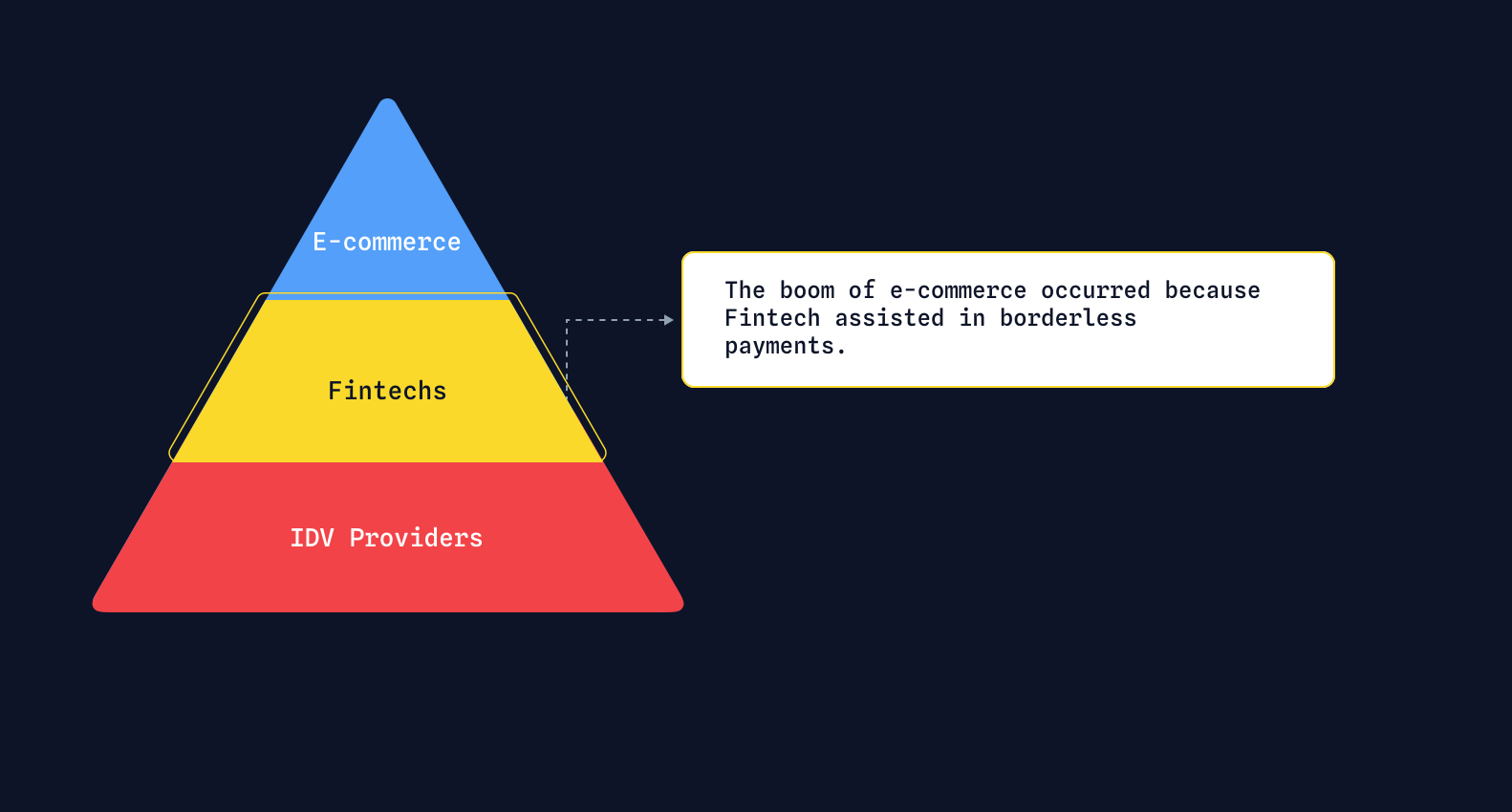
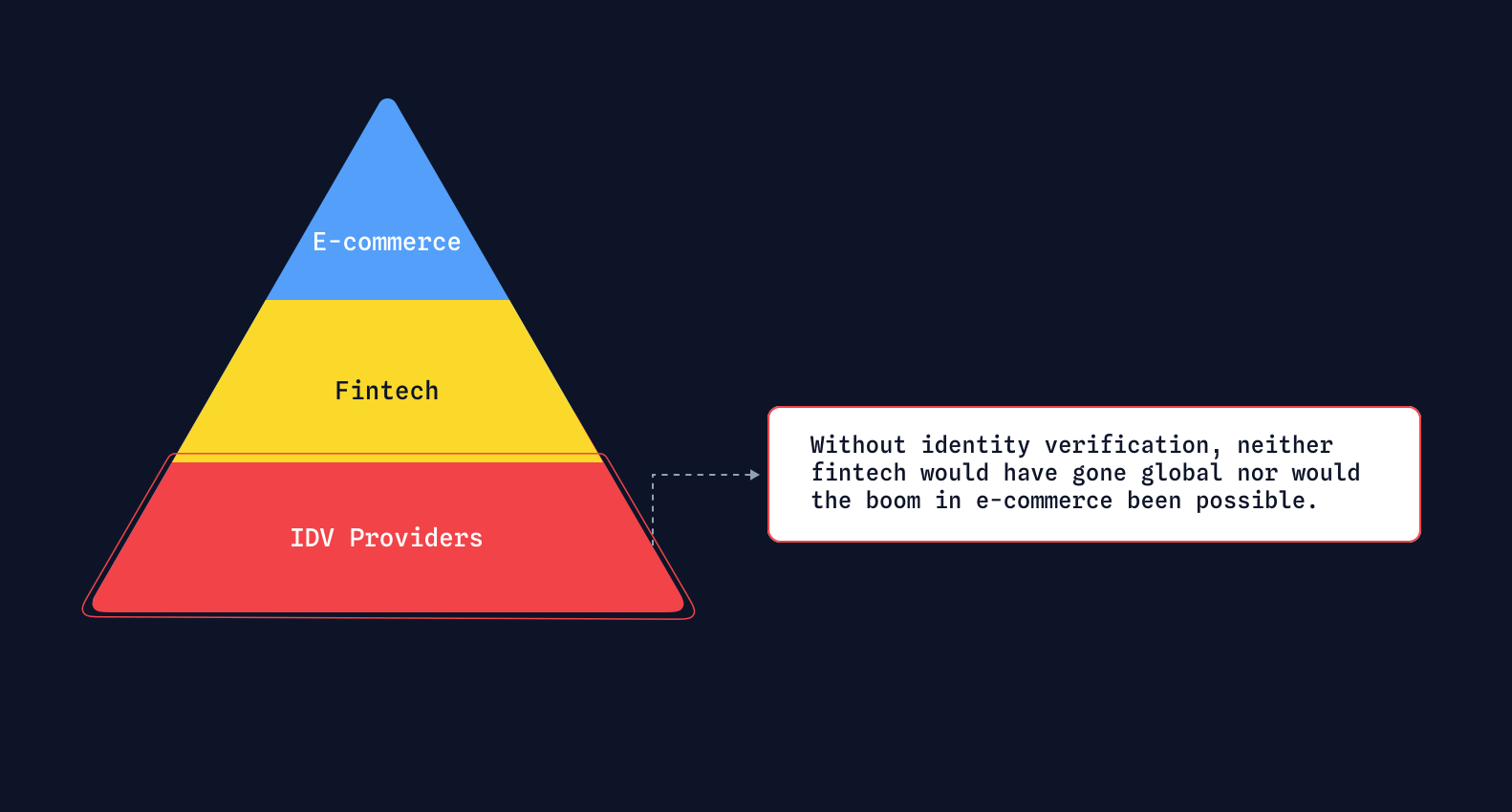
Fintechs went global because IDV made it possible.
The fintech market reached $340B in 2024 and is set to top $1.1T by 2032. This boom wasn’t just about technology. It was about trust. Identity Verification Providers became the silent trust infrastructure that enabled fintechs to scale across borders with confidence.

The scale of borderless finance
A quick view of the scale identity verification now operates at across global finance.
Global payments near $1 quadrillion
As of 2024, cross-border payment value approaches $1 quadrillion, flowing through banks, fintechs, and digital wallets.
29,995 Fintech startups in 2025
The fintech ecosystem is expanding faster than ever, with nearly 30,000 new companies competing to redefine finance.
9 in 10 use digital pay, 2024
As of 2024, nine in ten consumers in the US and Europe use digital payments; globally, 79% of adults hold an online bank account.
Global expansion requires the ability to verify diverse identities.
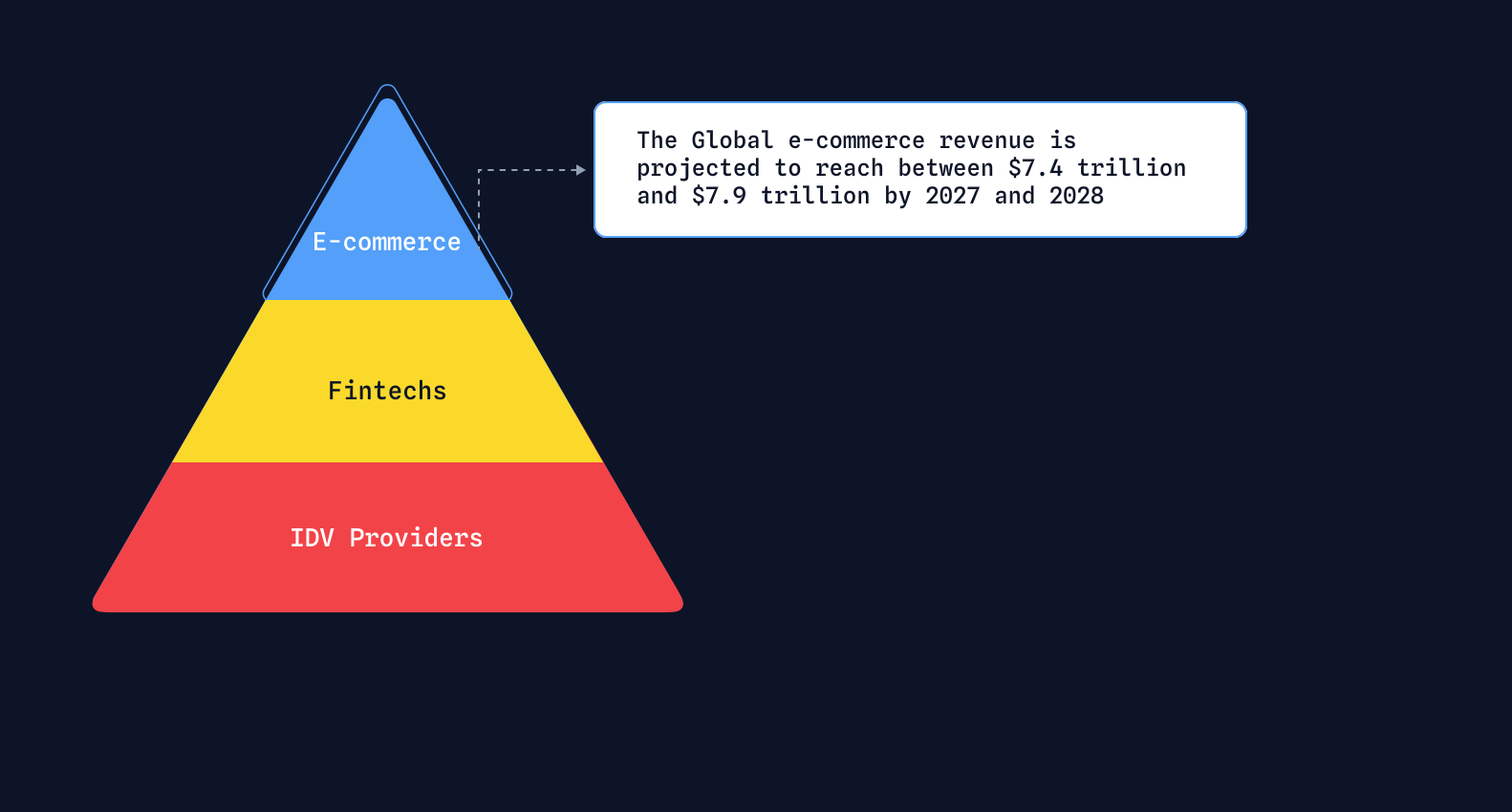
E-commerce transformed how the world buys. Fintech transformed how the world pays.
And beneath them both lies Identity Verification (IDV), the trust infrastructure that made borderless finance and global digital trade possible. As scale accelerated, expansion revealed the risks involving identity verification and compliance that Financial Technology alone couldn’t solve. IDV solutions stepped in to mitigate these risks and globalize finance.
Documents vary by jurisdiction
ID types, formats, and data sources vary by market, many in non-Latin scripts.
Transliteration and layout differences create constant integration friction just to verify identities worldwide.
Regulations vary with region
Regulations like GDPR, CCPA, and local data laws create overlapping, sometimes opposing, requirements.
Sharing or storing identity data safely across jurisdictions has become a compliance tightrope.
Fraud is evolving faster than ever
Fraud now spans synthetic identities and deepfakes, resulting in Account Takeover Fraud and AI-driven scams, which are harder to detect.
As fintechs expand, each market brings distinct data risks and threat models.
IDV: Foundation for global expansion
A fintech in Malaysia planning global reach must verify identities across all jurisdictions, each with unique identity document formats, KYC, AML rules, and data residency requirements.
Similarly, a fintech in Europe expanding into Asia must verify non-Latin documents, multilingual data capture, and country-specific onboarding standards that demand precise transliteration and validation.
The right IDV partner removes this friction. It standardizes identity flows across markets, applies jurisdiction-specific risk logic, enforces local compliance, and integrates multilingual document intelligence. The result is faster user onboarding, lower fraud, and confident expansion at a global scale.
Pass rate impact on conversions
At 100,000 monthly applications, pass rate improvements directly compound approved customers. The visuals below compare a baseline at 70% with a 75% scenario and a 99.3% pass rate.
Adds 5,000 approved customers per month and about 60,000 per year, before network effects and cross sell.
Moving from 70% to 99.3% increases monthly approvals by 29,300 and annual approvals by 351,600.
Figures are illustrative. They exclude network effects, retention, and cross sell. Bars indicate pass rate proportion relative to total applications.
Frequently Asked Questions
As fintechs scaled across borders, trust became the bottleneck. IDV provided the shared infrastructure to verify customers in every market — enabling compliant onboarding, lower fraud, and confident expansion.
There are 240+ jurisdictions, each with its own ID formats, scripts, and data laws (GDPR, CCPA and more). A single verification stack has to adapt to all of them to operate globally.
At 100,000 monthly applications, moving from a 70% to a 99.3% pass rate adds roughly 29,300 approved customers a month — about 351,600 more per year, before network effects and cross sell.
Shufti validates ICAO-compliant and non-standard documents, supports eIDV and NFC where available, and adds certified biometric matching and liveness — with policy controls aligned to local KYC/AML for audit-ready, low-friction journeys.