AMLR Solutions
  AMLR Consultation
 EUDI Wallet
 Onboarding
 Ongoing Monitoring
 FRAML
FRAML KYC
KYC KYB
KYB KYI
KYI Age Assurance
 Workforce IAM
 Candidate Verification
 Account Takeover
 Bonus/ Promotion Abuse
 Chargeback Fraud
 Deepfake
 Document Fraud
 Fraud Networks
 Impersonation Fraud
 Money Mule Activity
 Multi-Accounting
 Party Fraud
 Regulatory & Compliance Risks
 Synthetic Identity Fraud
 Adult Content
 Banking
 Crypto
 Fintech
 Forex
Forex Compliance
 Fraud prevention
 Trust & safety
 Global expansion
 Compliance Officers
 Developers
 Fraud Analysts
 Product Managers
 Journey Builder
  Global Trust Platform
 Customer Profiles
 Vendor Comparison
 IDV Case Management
 AML Case Management
 Regulatory Reporting
 Agentic Rule Builder
  AI Compliance Co-Pilot
  Fraud Analytics
 Fraud Hub
  OCR
OCR Shufti AI
 Bank Account Verification
  Biometric Duplication
 Database Checks
 Document Intelligence
 Government ID
 Mobile Driver's License
 NFC
NFC Selfie Liveness
 Brand Personalisation
 Deployment Options
 Identity Methods
 IDV Modes
 Multi-tenancy
 On-Premise IDV
 Secure Capture
 Shufti MCP













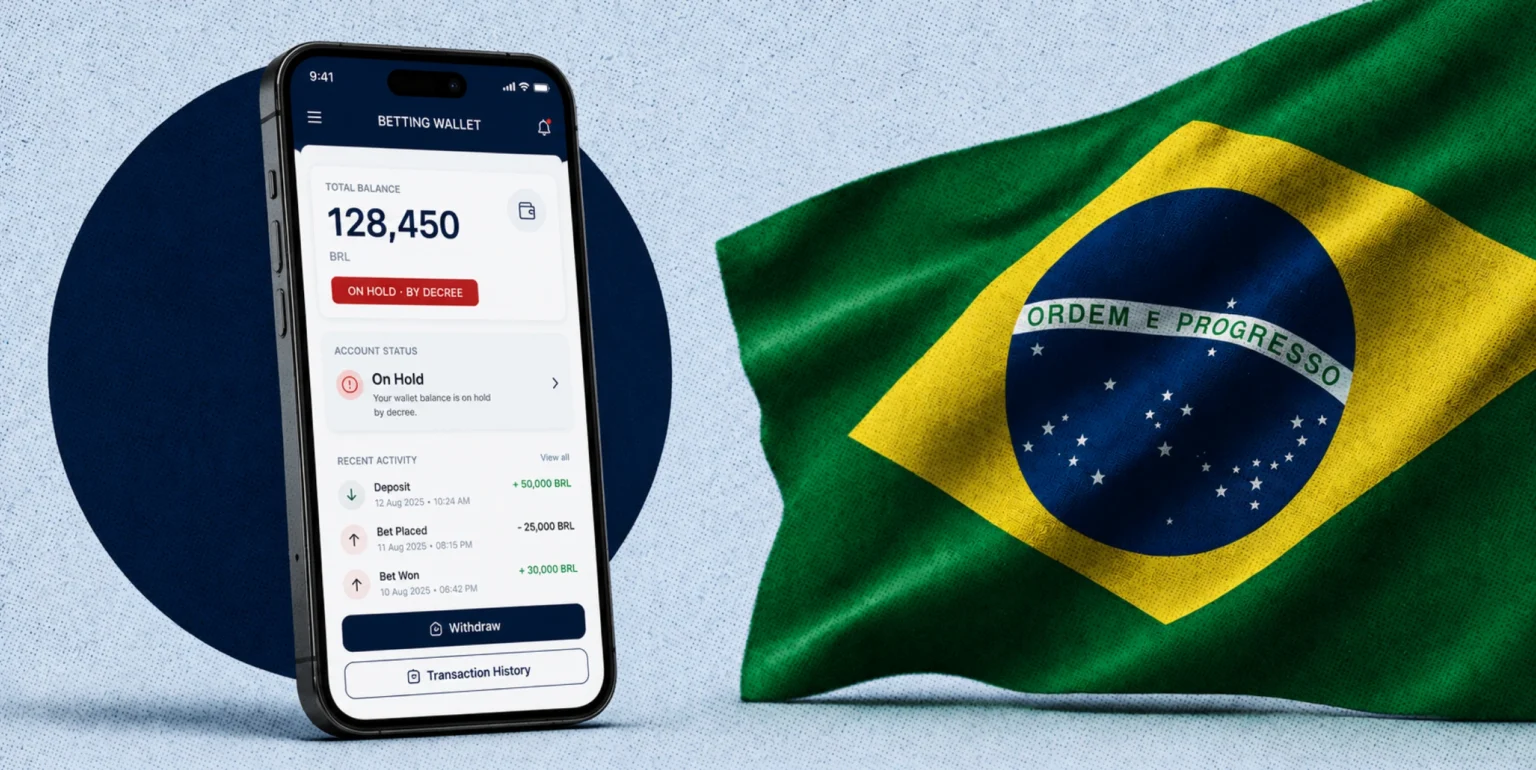

Two of Brazil’s leading gaming associations have backed the federal government’s latest move against illegal betting. The Brazilian Institute for Responsible Gaming (IBJR) and the National Association of Games and Lotteries (ANJL) publicly supported Decree No 13,033/2026, signed by President Lula on June 19, 2026, which lets the state freeze and confiscate the funds of unlicensed betting operators by targeting the payment institutions that move their money.
Decree Forces Banks to Freeze Operator Funds Within 24 Hours
The decree, paired with the Finance Ministry’s Ordinance No 1,766/2026, shifts enforcement away from website blocking toward direct intervention in payment flows. When the Secretariat of Prizes and Bets (SPA) flags an illegal operator, banks and payment firms must freeze the linked accounts within 24 hours and halt new transactions, then confirm compliance within 48 hours, according to reporting by Rio Times and Reuters.
Brazil’s central bank oversees the process, and funds declared forfeit are directed to the National Public Security Fund. The regulations also establish joint liability for financial institutions, payment companies and advertisers in collecting taxes tied to irregular fixed-odds betting. The government named 37 financial firms, mostly fintechs and payment companies, as conduits for illegal-bet money.
Illegal Sites Draw 25.2 Million Brazilian Bettors
The scale of the problem is large. Justice Minister Wellington César Lima said 25.2 million Brazilians have bet on illegal websites. Research by the Locomotiva Institute with LCA puts the illegal market at roughly BRL40 billion ($7.7 billion) a year, costing public coffers an estimated BRL10.8 billion annually, IBJR president Carlos Lima said. ANJL president Plínio Lemos Jorge said the figure shows the scale of the challenge and described the decree as the product of “an environment of dialogue and institutional cooperation.” Lima added that the measure “directly contributes to increasing the safety of bettors” while protecting operators that act within the law.
Clandestine Operators Skip the Checks Licensed Firms Must Pass
Illegal betting accounts for between 41% and 51% of all betting activity in Brazil, by the government’s own estimates. Clandestine operators sustain that share by skipping the identity and age checks licensed firms must perform and by routing deposits through payment channels that escape monitoring. By extending liability to the financial institutions and payment companies that process those flows, the decree makes the payment layer responsible for distinguishing legitimate operators from unlicensed ones. That places a verification and monitoring burden on firms that previously treated betting transactions as ordinary payments.
Verification and Monitoring Separate Legal Operators From Illegal Ones
Payment institutions and licensed operators in Brazil now need to confirm who they are serving and trace where funds originate, not simply process transactions. That requires identity verification that confirms a bettor’s identity and age at onboarding, alongside screening that flags suspicious flows and sanctioned or unlicensed counterparties.
Shufti’s KYC and AML screening solutions support document verification across 240+ countries and AML checks, combining biometric identity verification with ongoing transaction and watchlist screening to help regulated firms separate legitimate activity from illicit money movement. Financial institutions and operators adjusting to the new liability rules can request a demo to see the platform in action.