AMLR Solutions
  AMLR Consultation
 EUDI Wallet
 Onboarding
 Ongoing Monitoring
 FRAML
FRAML KYC
KYC KYB
KYB KYI
KYI Age Assurance
 Workforce IAM
 Candidate Verification
 Account Takeover
 Bonus/ Promotion Abuse
 Chargeback Fraud
 Deepfake
 Document Fraud
 Fraud Networks
 Impersonation Fraud
 Money Mule Activity
 Multi-Accounting
 Party Fraud
 Regulatory & Compliance Risks
 Synthetic Identity Fraud
 Adult Content
 Banking
 Crypto
 Fintech
 Forex
Forex Compliance
 Fraud prevention
 Trust & safety
 Global expansion
 Compliance Officers
 Developers
 Fraud Analysts
 Product Managers
 Journey Builder
  Global Trust Platform
 Customer Profiles
 Vendor Comparison
 IDV Case Management
 AML Case Management
 Regulatory Reporting
 Agentic Rule Builder
  AI Compliance Co-Pilot
  Fraud Analytics
 Fraud Hub
  OCR
OCR Shufti AI
 Bank Account Verification
  Biometric Duplication
 Database Checks
 Document Intelligence
 Government ID
 Mobile Driver's License
 NFC
NFC Selfie Liveness
 Brand Personalisation
 Deployment Options
 Identity Methods
 IDV Modes
 Multi-tenancy
 On-Premise IDV
 Secure Capture
 Shufti MCP










Identity verification started as a compliance requirement and became a trust requirement. Deepfakes made it cheap to impersonate a musician, a seller or an account holder, so confirming who someone is now protects revenue and reputation as much as it satisfies a regulator.
Why identity mistrust moved beyond compliance
Identity verification solutions are well-known in regulatory compliance environments, particularly for Know Your Customer (KYC) programs supporting Anti-Money Laundering (AML) efforts. But the threat of identity fraud touches many aspects of our modern lives, from bank account opening and securing medical records to online reputations and career prospects.
Unfortunately, rapidly advancing technology is driving the perception of identity mistrust from a “compliance issue” to an everyday threat. One of the major propellants for this technological shift is the rise of AI-generated deep fakes, making it easier for people with ill intent to mimic real people, create fake accounts or manipulate authentication checks to break into existing accounts.
The tooling has moved on since then. Generated faces now arrive as live video rather than as a still, and injection attacks feed those frames straight into a verification session without ever passing in front of a camera. The FBI’s 2025 Internet Crime Report carried its first ever section on artificial intelligence, covering 22,364 complaints and close to $893 million in losses, with voice clones, forged identity documents and believable video of public figures among the tactics named.
What deepfakes did to the creative industries
Art, acting, and music are examples of professions that are being profoundly affected by AI-based deepfakes. Clara Alex notes in her article, Kill the DJ, “Endless AI covers on YouTube and AI-generated scam ads with celebrities touting things they’d never tout are just a few cases to name. But the good news is that the industry, as well as content hosting platforms and social media are at least trying to fight it.”
What makes this different from ordinary fraud is that the asset being stolen is the person. A musician’s voice, a producer’s name and a label’s catalogue are the business. Once those can be generated convincingly, ownership stops being self-evident and has to be proved.
How .MUSIC verified an entire creator community
As the article indicates, that fight involves identity verification becoming a mainstream phenomenon, with positive far-reaching implications. For example, cultural icons like Taylor Swift and Lady Gaga, as well as industry giants like Live Nation and Spotify, pre-registered for ICANN-accredited .MUSIC domains, paying a one-time $1.99 identity verification fee.
The .MUSIC platform onboarded Shufti to verify its entire community before getting them onboard. Verifying that every .MUSIC domain is owned by the creator or brand claiming it is what makes the namespace trustworthy, and it is what allows anyone to determine who is sharing a piece of information or content. “This collaboration is a critical development for safeguarding the music community’s digital identity,” says .MUSIC Founder and CEO Constantine Roussos, as noted in a Music Connection article.
What this means for any business that opens consumer accounts
The same principles that safeguard musicians apply to any business that creates consumer accounts. Confidence in identity is foundational, whether that means trust between buyers and sellers in an online auction, verifying ownership of a social media account and the statements and videos posted from it, or protecting financial assets from theft and money laundering. For a business to thrive, it has to break free of identity mistrust and focus on its most important assets.
The distinction worth drawing is what triggers the check in the first place.
| Comparison | Compliance-driven verification | Trust-driven verification |
| What triggers it | A regulatory obligation such as KYC or AML | A commercial risk the business decides to carry or not |
| Who gets verified | Regulated customers, at defined thresholds | Every account holder, seller or creator on the platform |
| What failure costs | Fines, enforcement action, licence risk | Impersonation, fraud losses, brand damage, user departure |
| Typical sectors | Banking, crypto, lending, regulated gaming | Marketplaces, social platforms, ticketing, creator and music platforms |
| When it runs | At onboarding, then periodically for review | At onboarding and again wherever ownership is claimed or disputed |
How Shufti helps platforms prove who owns an identity
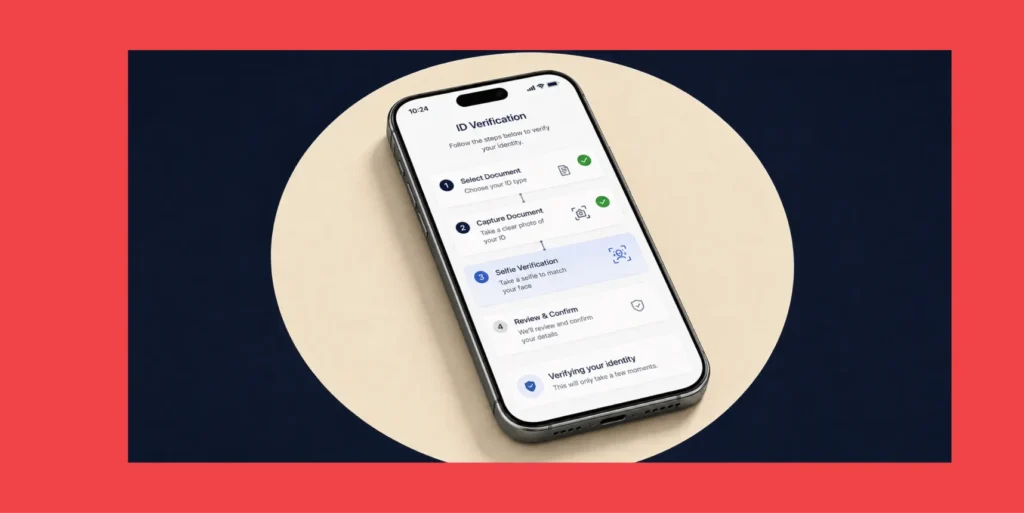
Identity verification services are what mitigate deep fakes and let businesses and consumers operate with greater trust. The check that holds up against a generated face is not the one that matches two images. It is the one that confirms a live person is present and that the video reaching the server came from a real camera, which is what deepfake detection and biometric face verification with liveness are for. At Shufti, we are glad to support .MUSIC with our identity verification solutions. Customers and businesses have the freedom to thrive because identity verification is not just about compliance anymore.
See how identity verification would work for your platform’s account holders in a 20-minute demo.
Frequently Asked Questions
Is identity verification only required for regulated industries?
Regulation is what makes it mandatory, not what makes it useful. Banks, lenders, crypto platforms and licensed gaming operators verify because KYC and AML rules oblige them to. Marketplaces, social platforms, ticketing sites and creator platforms verify because impersonation costs them users and revenue. The check is the same, the reason for running it is not.
How does identity verification stop deepfake impersonation?
A face match on its own does not stop it, because a generated face can satisfy a comparison between two images. Liveness detection confirms a real person is in front of the camera. Injection attack detection confirms the video reaching the server came from that camera rather than from a virtual one. Those two together are what a generated face has to defeat.
What did .MUSIC use identity verification for?
To confirm that every .MUSIC domain belongs to the creator or brand claiming it. .MUSIC onboarded Shufti to verify its community before those members were given domains, so that anyone encountering a .MUSIC address can rely on the identity behind it.
Can non-financial businesses use KYC-grade verification?
Yes, and increasingly they do. The document and biometric checks built for regulated onboarding work the same way for a marketplace seller or a creator account. What changes is the configuration, since a platform outside financial regulation can usually verify with a lighter data set and fewer retention obligations.