AMLR Solutions
 AMLR Consultation
 Onboarding
 Ongoing Monitoring
 FRAML
FRAML KYC
KYC KYB
KYB KYI
KYI Age Assurance
 Workforce IAM
 Candidate Verification
 Account Takeover
 Bonus/ Promotion Abuse
 Chargeback Fraud
 Deepfake
 Document Fraud
 Fraud Networks
 Impersonation Fraud
 Money Mule Activity
 Multi-Accounting
 Party Fraud
 Regulatory & Compliance Risks
 Synthetic Identity Fraud
 Adult Content
 Banking
 Crypto
 Fintech
 Forex
Forex Compliance
 Fraud prevention
 Trust & safety
 Global expansion
 Compliance Officers
 Developers
 Fraud Analysts
 Product Managers
 Advanced Journey Builder (AJB)
 Global Trust Platform
 Customer Profiles
 Vendor Comparison
 IDV Case Management
 AML Case Management
 Regulatory Reporting
 Travel Rule Protocols
 Agentic Rule Builder
 AI Compliance Co-Pilot
 Fraud Analytics
 Fraud Hub
 OCR
OCR Shufti AI
 Bank Account Verification
 Biometric Duplication
 Database Checks
 Document Intelligence
 Government ID
 Mobile Driver's License
 NFC
NFC Selfie Liveness
 Brand Personalisation
 Deployment Options
 Identity Methods
 IDV Modes
 Multi-tenancy
 On-Premise IDV
 Secure Capture






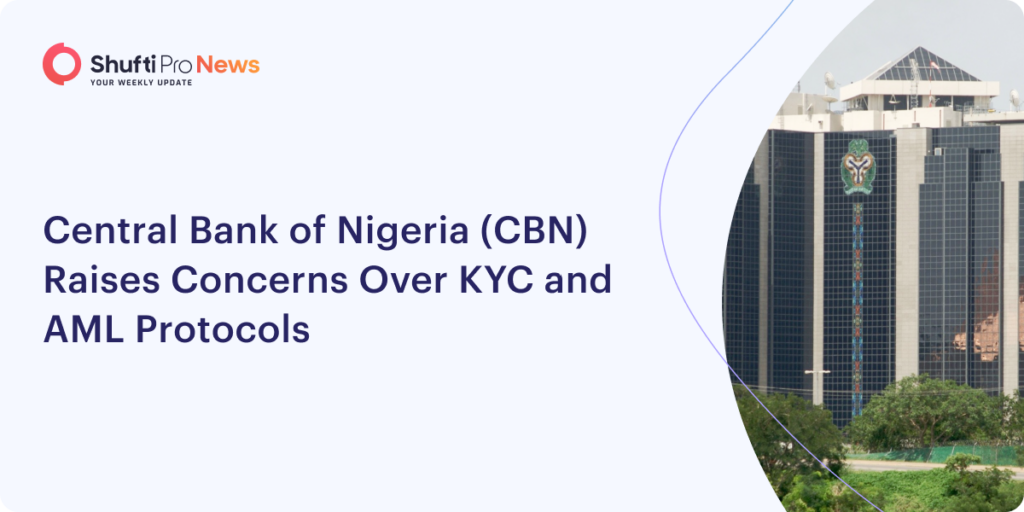
The Central Bank of Nigeria (CBN) has intensified pressure on financial institutions (FIs) to implement know your customer (KYC) protocols in two policy documents released at the weekend.
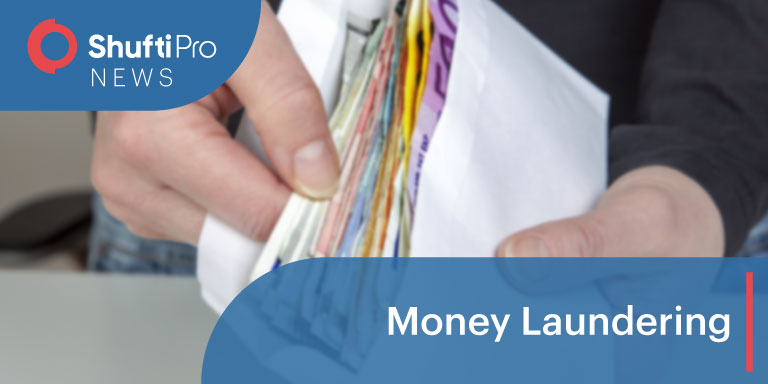
The Central Bank of Nigeria (CBN) issued two policy documents to increase the bar on Know your customer (KYC) and Anti-money laundering protocols this weekend. As a result of repeated accusations of aiding financial crimes by financial institutions, the guidelines issued to them contain call-to-actions banks should take to combat financial crimes, including the ‘Guidance Note on Politically Exposed Persons (PEPs) and ‘CBN Customer Due Diligence (CDD) Regulations 2023.’
It has been proposed that the regulation may raise questions regarding the line between the right to privacy and KYC following the Socio-Economic Rights and Accountability Project (SERAP). Customers’ social media handles were requested for identification under the customer due diligence regulation, which had a three-day deadline to “immediately delete patently unlawful provisions.”
SERAP argued in a letter to the apex bank, “The CBN Regulations and directive to banks to obtain details of customers’ social media addresses violate Nigerians’ rights to freedom of expression and privacy. It is inconsistent and incompatible with the rule of law. The CBN ought to contribute to advancing respect for the rule of law and human rights in discharging its statutory functions, and not undermine or violate these fundamental legal requirements and standards. The purported mandatory requirement would inhibit Nigerians from freely exercising their human rights online. If obtained, such information may also be misused for political and other unlawful purposes.”
In addition to comprehensive customer information, money deposit banks (MDBs) must include social media addresses as part of measures “Designed to improve the ability of financial institutions to identify and monitor potential risks linked to customer activities. By including social media handles as part of the customer identification process, banks seek to gain further insights into customers’ online presence and activities, helping to assess potential risks and monitor for suspicious behaviour.”
The CDD guidelines stated, “For individuals, the CDD process now encompasses gathering information such as legal name, addresses (permanent and residential), contact details (telephone, email, and social media handles), date and place of birth, Bank Verification Number (BVN), Tax Identification Number (TIN), nationality, occupation, public position held, name of employer, official personal identification number and a unique identifier contained in a valid government-issued document bearing the customer’s name, photograph and signature.”
The document also outlines several steps banks must take contractually and statutorily to identify and monitor PEPs and their relationships to prevent money laundering, terrorist financing, and proliferation financing (ML/FT/PF). “It is possible for them to misuse their power and influence for personal gain or advantage to themselves, close family members and/or associates”.
During last year’s Basel Institute on Governance, Nigeria has rated a high-risk country for terrorist financing and money laundering. Based on an assessment of 128 countries, the country scored 6.77 out of 10. Among the reasons for applauding the CBN decided that it reduced the country’s vulnerability. However, the bank’s efforts to reduce financial inclusion will be negatively impacted by overregulation, according to experts.
Suggested Reads:
AMLC DOWNGRADES TERROR FINANCING RISKS IN THE PHILIPPINES FROM HIGH TO MEDIUM-HIGH
NIGERIAN-OWNED TECH FIRM, FLUTTERWAVE, CLOSES 45 BANK ACCOUNTS DUE TO MONEY LAUNDERING