AMLR Solutions
  AMLR Consultation
 EUDI Wallet
 Onboarding
 Ongoing Monitoring
 FRAML
FRAML KYC
KYC KYB
KYB KYI
KYI Age Assurance
 Workforce IAM
 Candidate Verification
 Account Takeover
 Bonus/ Promotion Abuse
 Chargeback Fraud
 Deepfake
 Document Fraud
 Fraud Networks
 Impersonation Fraud
 Money Mule Activity
 Multi-Accounting
 Party Fraud
 Regulatory & Compliance Risks
 Synthetic Identity Fraud
 Adult Content
 Banking
 Crypto
 Fintech
 Forex
Forex Compliance
 Fraud prevention
 Trust & safety
 Global expansion
 Compliance Officers
 Developers
 Fraud Analysts
 Product Managers
 Journey Builder
  Global Trust Platform
 Customer Profiles
 Vendor Comparison
 IDV Case Management
 AML Case Management
 Regulatory Reporting
 Agentic Rule Builder
  AI Compliance Co-Pilot
  Fraud Analytics
 Fraud Hub
  OCR
OCR Shufti AI
 Bank Account Verification
  Biometric Duplication
 Database Checks
 Document Intelligence
 Government ID
 Mobile Driver's License
 NFC
NFC Selfie Liveness
 Brand Personalisation
 Deployment Options
 Identity Methods
 IDV Modes
 Multi-tenancy
 On-Premise IDV
 Secure Capture
 Shufti MCP













With a population of over 130 million people, Mexico presents a massive opportunity for digital businesses, from fintech and e-commerce to online services, as the growing population fuels a digital economy boost.
While this market can offer many opportunities for businesses, it also poses a lot of challenges due to the diversity and complexity of documents. The country uses a number of identity formats across federal, state, and municipal levels. Moreover, there isn’t a standard layout and design that is used across these identity documents, which makes the process even harder.
These identity documents are crucial and must be verified, especially in highly regulated industries, as they help validate a user’s address and allow businesses to verify it with databases.
Different document types used in Mexico
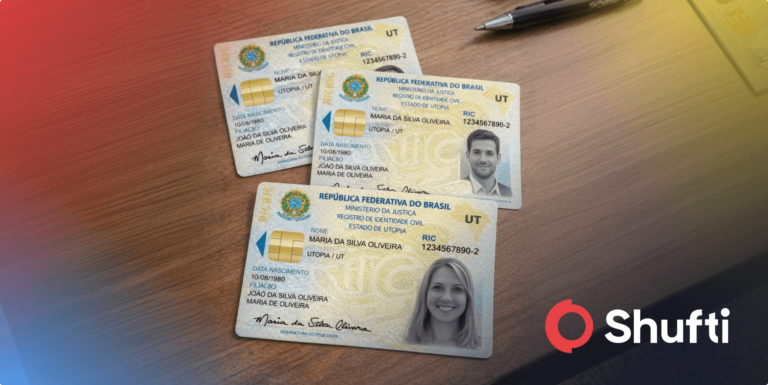
Mexico uses more than 57 official identity documents that have different print qualities, security patterns, field layouts, and holograms. Here are some commonly used identity documents in Mexico:
- Matrícula Consular ID
- Passports
- Social Security ID Card
- Permanent Resident Cards
- Residence Cards / Permits (INM)
- Residence Cards issued by the Ministry of Interior
- State-level driving licences with different designs in every state
Why general OCR engines struggle with Mexican ID documents
Apart from a diverse range of documents, another thing that makes address verification difficult is the complex nature of each ID document. The two biggest problems here are the way Mexican names are written and the security features added to the documents.
Complex Mexican name structure
Names in Mexico have multiple components, including the given name, maternal surname, and paternal surname. This poses an issue for OCR models that are not context-aware. Such models cannot figure out the right name and would misread it, resulting in mismatches and errors.
Security holograms
Holograms are commonly used in Mexican IDs as security features. But the problem is that they often sit directly on important information, such as names, DOBs, and addresses. This makes it difficult for an OCR model to read and extract data from.
Scale and complexity of address data
Mexico’s address landscape is not small or simple. Authoritative datasets list over 18 million georeferenced address records, covering cities, municipalities, and postal codes across the country.
This scale shows the high level of variability in how addresses are structured and represented across different regions and various document types. It’s very common for addresses to vary in formats, length, and hierarchy, and they are often embedded inside of identity documents that were not originally designed for automated extraction.
For address verification systems, this means that OCR must have capabilities to do more than just capture text. A strong OCR, especially for performing address verifications in Mexico, should be able to accurately identify, extract, and normalize address data in a way that aligns with large, complex reference datasets. This is essential because without strong, context-aware OCR, even legitimate addresses can fail verification.
Generation-Driven document diversity
Mexico’s population is spread across multiple generations. About 67% of it is aged 15–64, representing the largest working-age group. Each generation tends to rely on different identity documents depending on when and where they were issued.
Younger adults (often aged 15-40) often carry recently issued passports, state driving licenses, or modern residency cards, while older adults (40-45+) may still use legacy IDs or older federal documents.
This variation in documents caused by a difference in generations adds complexity for address verification. To be able to accurately and consistently verify addresses, OCR systems must recognize and correctly extract data from a wide range of layouts, field placements, and security features present in documents across generations.
Without systems that can perform verifications while keeping this differentiation in context, mismatches and misreads increase, leading to higher manual review rates and compliance risks.
How strong OCR enables accurate address verification in Mexico?
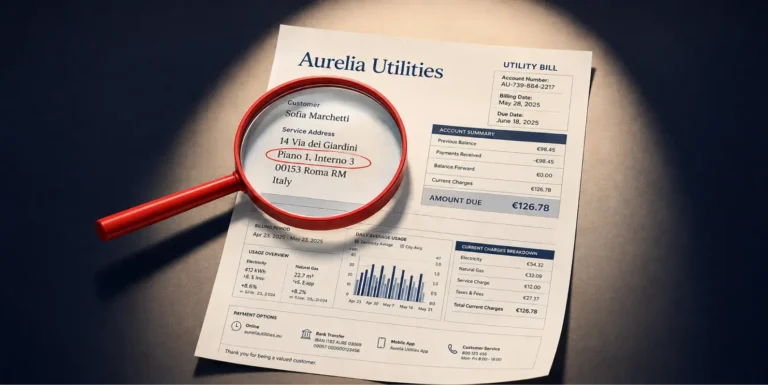
The same factors that complicate identity verification in Mexico are the ones that make address verification a challenge. Address fields appear in different positions across documents, are often multi-line, and may be partially covered by holograms or background patterns.
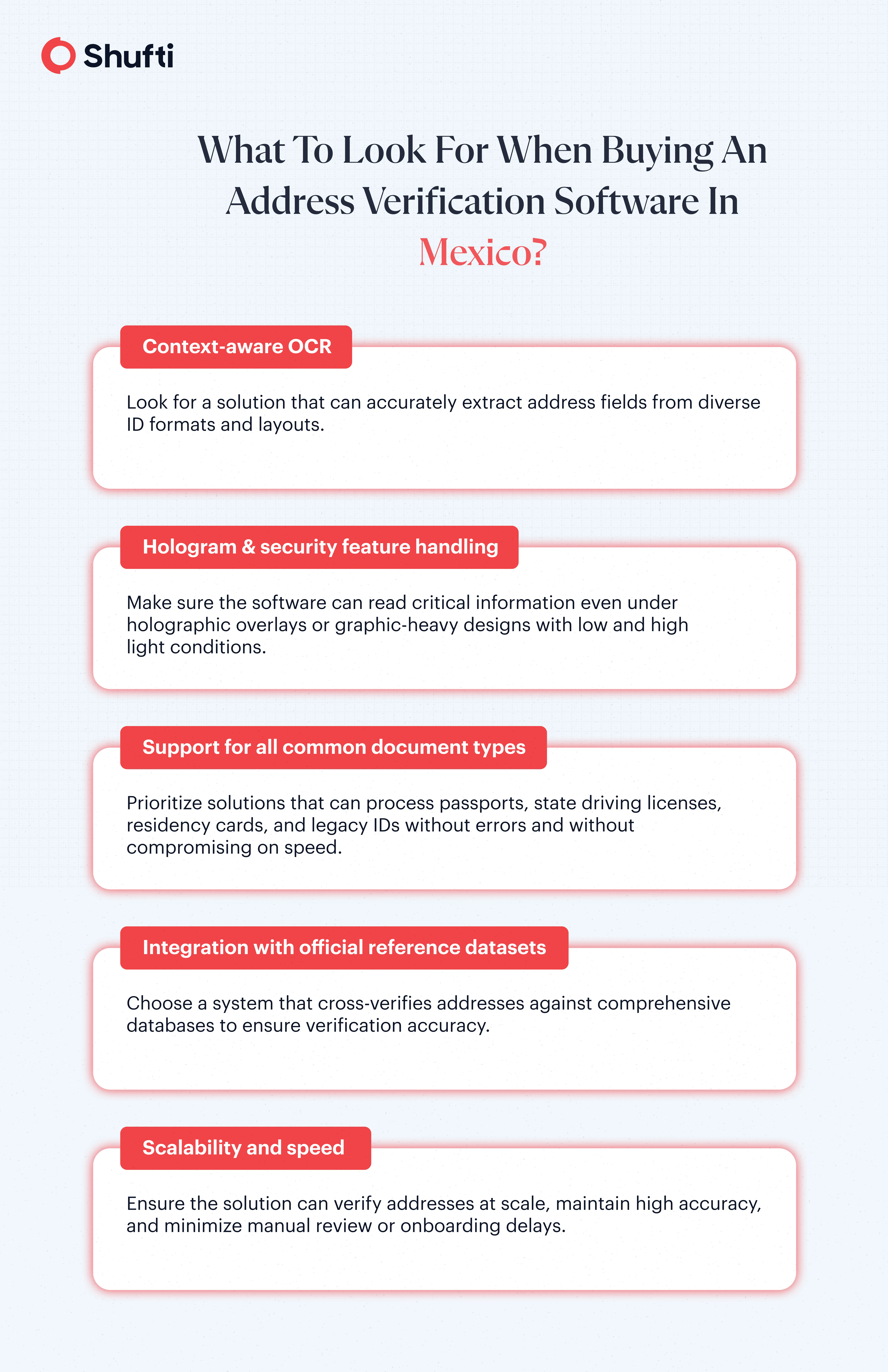
General OCR engines frequently extract incomplete or misclassified address data, increasing manual reviews and compliance risk. Strong, context-aware OCR helps overcome these challenges by:
- Accurately identifying address fields across different Mexican ID formats
- Extracting full address details despite holograms and graphic-heavy designs
- Correctly distinguishing address information from other text fields
- Enabling reliable address verification at scale without impacting conversion
The right approach for address verification in Mexico
Unlike countries with a single, standardized ID, Mexico has a diverse range of documents with complex naming conventions and security features that make verification more difficult.
Businesses looking to expand into the Mexican market with the right address verification solution must carefully account for these challenges. Successfully complying with KYC and AML requirements in Mexico depends on using verification approaches that understand local document diversity, address types, naming conventions, and security features—without sacrificing customer conversion or onboarding speed.
Contact us to see how Shufti can help you verify customers’ addresses in Mexico while maintaining KYC and AML compliance at scale.