AMLR Solutions
  AMLR Consultation
 EUDI Wallet
 Onboarding
 Ongoing Monitoring
 FRAML
FRAML KYC
KYC KYB
KYB KYI
KYI Age Assurance
 Workforce IAM
 Candidate Verification
 Account Takeover
 Bonus/ Promotion Abuse
 Chargeback Fraud
 Deepfake
 Document Fraud
 Fraud Networks
 Impersonation Fraud
 Money Mule Activity
 Multi-Accounting
 Party Fraud
 Regulatory & Compliance Risks
 Synthetic Identity Fraud
 Adult Content
 Banking
 Crypto
 Fintech
 Forex
Forex Compliance
 Fraud prevention
 Trust & safety
 Global expansion
 Compliance Officers
 Developers
 Fraud Analysts
 Product Managers
 Journey Builder
  Global Trust Platform
 Customer Profiles
 Vendor Comparison
 IDV Case Management
 AML Case Management
 Regulatory Reporting
 Agentic Rule Builder
  AI Compliance Co-Pilot
  Fraud Analytics
 Fraud Hub
  OCR
OCR Shufti AI
 Bank Account Verification
  Biometric Duplication
 Database Checks
 Document Intelligence
 Government ID
 Mobile Driver's License
 NFC
NFC Selfie Liveness
 Brand Personalisation
 Deployment Options
 Identity Methods
 IDV Modes
 Multi-tenancy
 On-Premise IDV
 Secure Capture
 Shufti MCP









Key Takeaways
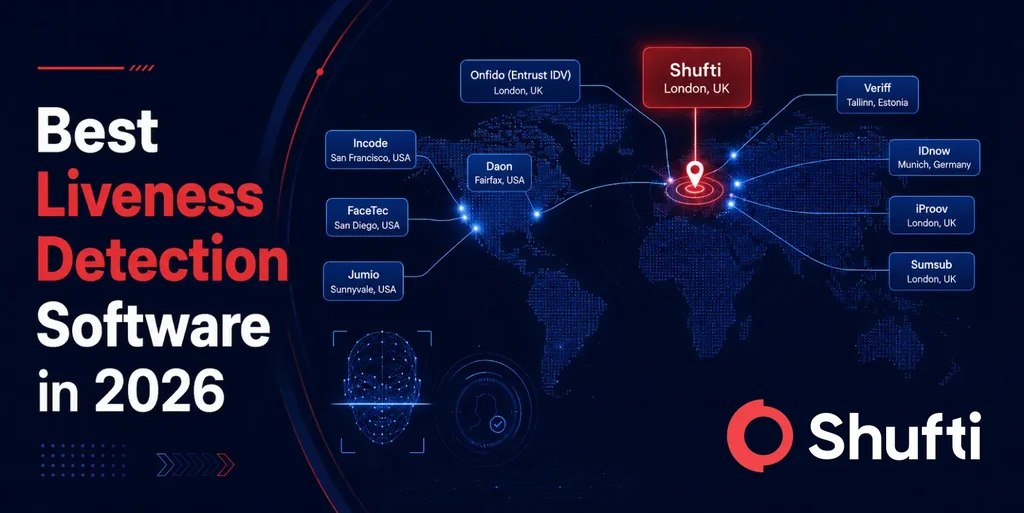
- The 10 best liveness detection software providers and vendors compared in this guide: Shufti, FACIA, Daon, FaceTec, IDnow, Incode, iProov, Jumio, Onfido (Entrust IDV), and Veriff.
- Every liveness vendor claims deepfake resistance, but iBeta PAD level is the verifiable proof.
- Presentation attacks and injection attacks are different threats; confirm a vendor defends both.
- Passive liveness protects onboarding pass rates; active liveness adds friction for extra assurance.
- Liveness pricing is quoted per verification or per contract, so benchmark on your own volume.
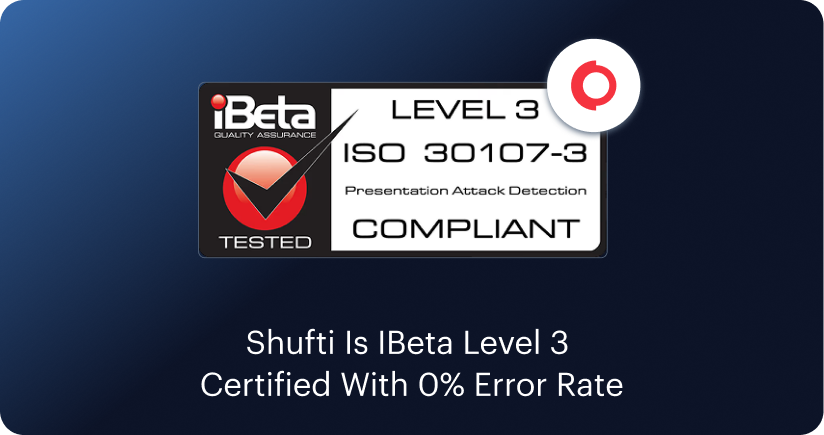
- Shufti holds iBeta Level 3 passive liveness conformance with 0% error across iOS and Android.
Every liveness detection vendor markets the same promise in 2026: stop deepfakes, block spoofs, prove a real human is present. The promise is identical; the engineering is not. The real decision is narrower: which vendor has independently proven its presentation attack detection, which also defends the injection attack surface, and which does it without wrecking your onboarding pass rate. That choice now carries regulatory weight, since NIST’s 2025 Digital Identity Guidelines (SP 800-63-4) make presentation attack detection mandatory for IAL2 remote identity proofing and require screening for AI-generated content. This guide compares the 10 strongest liveness detection software platforms on the criteria that actually change a procurement outcome.
What to look for in liveness detection software in 2026?
Most liveness demos look alike. The differences that should decide a vendor surface only against the criteria below.
Independent iBeta and ISO/IEC 30107-3 conformance
The most reliable signal is independent conformance testing. iBeta, a NIST/NVLAP-accredited lab, tests presentation attack detection against ISO/IEC 30107-3: Level 1 covers basic photo and screen spoofs, Level 2 higher-effort artefacts, and Level 3 sophisticated silicone, urethane, and resin masks. A vendor that cannot name its iBeta level and test date has not proven its claims.
Presentation attack versus injection attack defence
A presentation attack holds a fake to the camera. An injection attack pipes a synthetic video stream into the pipeline through a virtual camera, skipping the camera entirely. iBeta covers presentation attacks, so confirm separately how a vendor stops injected deepfakes, now the harder vector.
Technology ownership versus licensed liveness
Some vendors own their liveness models; others license and orchestrate third-party components. Ownership decides retraining speed against new attacks and gives one accountable chain of custody for sensitive biometric data.
Passive versus active liveness and pass rates
Active liveness asks the user to turn their head or blink; passive liveness analyses a single selfie with no gestures. Active adds assurance but also friction, and friction costs pass rates. The strongest solutions reach top-tier conformance with a passive flow.
Deployment, data residency, and how liveness is priced
Biometric data is special-category data under GDPR, and GCC and Southeast Asian regulators may require it to stay in-country, ruling out SaaS-only vendors for some buyers. Almost no vendor publishes pricing: Liveness sells as SaaS per verification, as API or SDK calls per request, or as annual on-premise licences. Cost per verification falls with volume, so benchmark on your own.
The 10 best liveness detection software platforms in 2026
As the publisher of this guide, we list Shufti first for transparency. The remaining nine vendors are listed alphabetically and described on the same factual basis. Details are sourced from vendor websites, the Gartner Magic Quadrant for Identity Verification 2025, public iBeta conformance listings, and verified review platforms.
Liveness detection software comparison at a glance
|
Vendor |
Technology ownership |
iBeta PAD level |
Deployment |
G2 rating |
Trustpilot |
Best fit |
|
Shufti |
Own IP (full stack) |
Level 3 |
SaaS, Local Cloud, on-prem |
4.4 (49) |
4.8 (3,800+) |
Full-stack IDV with top-tier liveness |
|
Daon |
Own IP |
Level 1 and 2 |
SaaS, flexible |
Not listed on G2 |
1 review |
Enterprise biometric authentication |
|
FaceTec |
Own IP (pure-play) |
Level 1 and 2 |
SDK, on-prem capable |
4.5 (15) |
1 review |
Standalone 3D face liveness |
|
IDnow |
Own plus partner |
Level 2 |
SaaS, EU residency |
4.4 |
3.4 (16,000+) |
EU video-ident, regulated onboarding |
|
Incode |
Own IP (full stack) |
Level 3 |
SaaS |
5.0 (52) |
1 review |
US enterprise IDV at scale |
|
iProov |
Own IP (pure-play) |
Level 1 and 2 |
SaaS, flexible |
No public reviews |
No public reviews |
Government-grade biometric assurance |
|
Jumio |
Own (liveness in-housed) |
Level 2 |
SaaS |
4.1 (16) |
1.5 (82) |
Large enterprise IDV deployments |
|
Onfido (Entrust IDV) |
Own plus partners |
Level 2 |
SaaS |
4.4 (111) |
1.1 (363) |
Entrust security stack buyers |
|
Sumsub |
Own plus partners |
Level 2 |
SaaS |
4.6 (112) |
1.3 (256) |
Crypto and fintech orchestration |
|
Veriff |
Own plus partner |
Level 1 and 2 |
SaaS, EU residency |
4.5 (63) |
1.5 (213) |
Fast SaaS verification, EU and US |
Sources: Gartner Magic Quadrant for Identity Verification 2025, public iBeta conformance listings, vendor public sites, G2.com and Gartner Peer Insights profiles, Trustpilot profiles. Data accurate as of May 2026; verify with each vendor before procurement.
1. Shufti
Shufti is a UK-headquartered identity verification provider built entirely on owned intellectual property: OCR, liveness, document intelligence, KYC, KYB, and AML, all developed in-house rather than licensed. That ownership shows in liveness: in May 2026 Shufti became the first European company and third globally to achieve iBeta Level 3 passive liveness conformance under ISO/IEC 30107-3, recording 0% APCER and 0% BPCER across iOS and Android. The same owned stack makes Shufti a genuinely ‘glocal’ vendor, verifying a US driver’s licence with the same engineering control as a Vietnamese national ID.
Key strengths:
Shufti’s liveness runs on its own AI models, retrained in-house against new attacks on Shufti’s release timeline. The single-selfie passive flow needs no head turns, blinks, or prompts, keeping onboarding friction low while clearing the highest published PAD level. It sits inside a full stack with document verification at 99.7% OCR accuracy, KYC, KYB, and AML. Public clients include Binance, Stripe, and ByteDance.
Considerations:
Shufti’s Level 3 conformance was published in May 2026, so buyers comparing it against vendors with multi-year Level 2 histories are weighing a very recent top-tier result against longer public track records. Liveness is delivered within the broader platform, so teams wanting a liveness-only module should confirm that scope during procurement.
Deployment Options:
- SaaS
- Cloud
- Local Cloud
- On-premise for data-residency compliance
Certifications and recognitions:
- iBeta Level 3 conformance under ISO/IEC 30107-3
- DHS RIVR 2025 Top Performer: 98.49% True Accept Rate, zero false templates Creation events
- SOC 2 Type II, PCI DSS
- GDPR compliance, Cyber Essentials, Cyber Essentials Plus
Ratings (as of May 2026):
- Trustpilot: 4.8/5 (3,800+ reviews), the highest rating-and-volume combination among the vendors compared
- G2: 4.4/5 (49 reviews)
Best for:
Businesses needing top-tier, independently proven liveness inside a complete verification platform, especially under deepfake-heavy fraud or strict data-residency rules. One platform. Fully owned technology. Global coverage with real local depth.
2. Daon
Daon is a biometric identity assurance vendor founded in 2000, with US operations in Fairfax, Virginia, and a leader in the 2025 Gartner Magic Quadrant for Identity Verification.
Key strengths:
Daon’s IdentityX platform combines face, voice, fingerprint, and behavioural authentication for both onboarding and ongoing access. Its 3D face liveness uses device movement to detect distortion, and Daon is widely deployed across banking and government.
Considerations:
Daon’s core strength is enterprise authentication breadth rather than standalone liveness, so buyers wanting only a liveness component should scope that explicitly. Public iBeta conformance is at Level 1 and 2.
Certifications and recognitions:
- ISO/IEC 30107-3 iBeta Level 1 and 2 conformance
- Leader, 2025 Gartner Magic Quadrant for Identity Verification
Ratings (as of May 2026):
- Trustpilot: one review only as of May 2026, too small a sample to form a rating
- Gartner Peer Insights: 4.6/5 (14 reviews) for the IdentityX platform
Best for:
Enterprises, especially banks, that want biometric onboarding and continuous authentication in a single platform.
3. FaceTec
FaceTec is a US-based pure-play specialist in 3D face liveness and matching. Its patented 3D FaceMap technology builds a depth map from a standard 2D camera selfie.
Key strengths:
FaceTec ships as device and server SDKs, so customer biometric data can stay behind the customer’s own firewall. It was the first face authenticator independently certified to iBeta Level 1 and 2 PAD testing and runs a long-standing public spoof bounty program.
Considerations:
FaceTec covers liveness and face matching only, not documents, KYC, or AML, so it is combined with other tools in a wider stack. Public iBeta conformance is at levels 1 and 2.
Certifications and recognitions:
- iBeta Level 1 and 2 ISO/IEC 30107-3 PAD conformance
- Ongoing public spoof bounty programme
Ratings (as of May 2026):
- Trustpilot: one review only as of May 2026, too small a sample to form a rating
- G2: 4.5/5 (15 reviews)
Best for:
Teams that want a dedicated, self-hosted 3D liveness and face-matching component to embed in their own platform.
4. IDnow
IDnow is a German identity verification provider with deep DACH-region presence, strong in regulated videoident and eIDAS qualified electronic signatures through its ARIADNEXT acquisition.
Key strengths:
IDnow pairs automated liveness and document checks with an expert-assisted videoident option for cases where regulators require human review and offers EU data center hosting.
Considerations:
IDnow’s focus is the European regulated market, so coverage and pricing weigh to EU use cases. Liveness conformance is at iBeta Level 2, and its high-volume consumer Trustpilot reviews are mixed.
Certifications and recognitions:
- ISO/IEC 27001
- iBeta Level 2 conformance
- eIDAS Qualified Trust Service Provider status via ARIADNEXT
Ratings (as of May 2026):
Best for:
EU-headquartered financial services that need regulated videoident and eIDAS-grade electronic signatures.
5. Incode
Incode is a San Francisco-based identity verification vendor founded in 2015, built on in-house AI, and a Leader in the 2025 Gartner Magic Quadrant for Identity Verification.
Key strengths:
In March 2026, Incode became the first vendor to pass iBeta Level 3 PAD testing on both iOS and Android, with 0% APCER and 0% BPCER for passive selfie liveness. Liveness sits inside a full IDV, KYC, and KYB platform.
Considerations:
Incode is SaaS-first and US-centric in deployment, without the on-premise option some data-residency-bound buyers need. Hard-market non-Latin document depth is narrower than vendors built for those regions.
Certifications and recognitions:
- iBeta Level 3 conformance under ISO/IEC 30107-3
- NIST Facial Recognition Vendor Test top performer
- Leader, 2025 Gartner Magic Quadrant for Identity Verification
Ratings (as of May 2026):
- Trustpilot: one review only as of May 2026, too small a sample to form a rating
- G2: 5.0/5 (52 reviews)
Best for:
US enterprises in finance, gaming, and hospitality that want top-tier passive liveness inside a full IDV platform.
6. iProov
iProov is a London-based biometric specialist focused purely on liveness and face verification. Its Dynamic Liveness uses patented Flashmark illumination to confirm a genuine person is present in real time.
Key strengths:
iProov is engineered for the injection attack surface as well as presentation attacks and is heavily deployed by governments, including the UK Home Office, GovTech Singapore, and the US Department of Homeland Security.
Considerations:
iProov delivers liveness and face verification only, not documents, KYC, or AML. Public iBeta conformance is at levels 1 and 2, and it sells through direct enterprise and government procurement.
Certifications and recognitions:
- ISO/IEC 30107-3 iBeta levels 1 and 2 conformance
- eIDAS Level of Assurance High
- FIDO Alliance face verification certification
Ratings (as of May 2026):
- iProov maintains G2 product listings but carries no published user reviews on G2 and no notable Trustpilot profile as of May 2026. It is better assessed through its independent certifications and public-sector deployments.
Best for:
Governments and large enterprises that need the highest-assurance biometric liveness as a standalone layer.
7. Jumio
Jumio is a US-headquartered identity verification provider with one of the category’s largest enterprise customer bases. It in-housed its liveness technology, previously licensed from iProov, in late 2024.
Key strengths:
Jumio offers passive liveness with deepfake screening inside an end-to-end IDV and AML platform and achieved iBeta Level 2 PAD conformance in 2025.
Considerations:
Jumio reported an 88% year-on-year rise in injection attacks against its platform in 2025, underlining the injection challenge category-wide. Its consumer Trustpilot rating is low, mostly from rejected legitimate users.
Certifications and recognitions:
- ISO/IEC 27001:2022
- SOC 2 Type 2, PCI DSS
- iBeta Level 2 conformance
Ratings (as of May 2026):
Best for:
Large enterprises that want liveness within an established, broad IDV and compliance platform.
8. Onfido (Entrust IDV)
Onfido, a UK-founded identity verification provider, was acquired by Entrust in 2024 and now operates as Entrust IDV. It was a leader in the 2025 Gartner Magic Quadrant for Identity Verification.
Key strengths:
Entrust IDV combines document verification with Motion, its biometric liveness product, inside the wider Entrust security and identity portfolio. That breadth suits buyers already standardised on Entrust.
Considerations:
Per the Gartner Magic Quadrant 2025, the platform draws on partner components, including iProov and Namirial, so accountability spans multiple providers. Liveness conformance is at iBeta Level 2.
Certifications and recognitions:
- ISO 27001, SOC 2 Type II
- iBeta Level 2 conformance
- ETSI-certified IDV for QES under eIDAS
Ratings (as of May 2026):
Best for:
Enterprises already invested in the Entrust security and identity stack.
9. Sumsub
Sumsub is a UK-incorporated verification platform with a strong crypto and fintech footprint, and a Leader in the 2025 Gartner Magic Quadrant for Identity Verification.
Key strengths:
Sumsub passed iBeta Level 2 PAD conformance in 2025 and ships an Adaptive Deepfake Detector with online self-learning updates, inside an orchestrated platform covering KYC, KYB, transaction monitoring, and fraud.
Considerations:
Per the Gartner Magic Quadrant 2025, Sumsub orchestrates third-party components for parts of its stack. Liveness conformance is at iBeta Level 2, below the Level 3 held by some peers.
Certifications and recognitions:
- ISO 27001, SOC 2 Type II, PCI DSS
- iBeta Level 2 conformance
- Leader, 2025 Gartner Magic Quadrant for Identity Verification
Ratings (as of May 2026):
Best for:
Crypto, fintech, and iGaming operators that want fast integration and wide verification orchestration.
10. Veriff
Veriff is an Estonia-based identity verification provider known for AI-driven document and biometric checks delivered as a fast SaaS service.
Key strengths:
Veriff offers passive and active liveness with deepfake screening, conforms to iBeta Level 1 and 2, and covers a large document-specimen library, with quick average verification.
Considerations:
Veriff is SaaS-only with EU data residency hosted on AWS, without on-premise or Local Cloud options for GCC or Southeast Asia residency rules. Its training data is weighted to EU and US documents.
Certifications and recognitions:
- ISO/IEC 27001:2022, SOC 2 Type II
- iBeta Level 1 and 2 conformance
Ratings (as of May 2026):
Best for:
EU and US digital platforms that prioritise fast SaaS verification over deployment flexibility.
How to choose the right liveness detection software for your business?
The right liveness vendor defends your actual attack surface, clears your regulatory regime, and deploys where your data must live. Most buyers fall into one of four situations.
Scenario 1: High deepfake and injection attack exposure
Crypto exchanges, neobanks, and forex brokers face the heaviest deepfake and injection-attack pressure, so independent conformance and owned technology matter most. Shufti fits directly, with iBeta Level 3 passive liveness conformance at 0% error and a fully owned stack its team can retrain without waiting on a partner. Incode is a strong alternative for US-centric platforms, also at Level 3. iProov is a specialist where the need is a standalone, government-grade biometric layer. For fintech companies, prioritise Level 3 conformance and injection-attack coverage over brand familiarity.
Scenario 2: Regulated identity proofing under NIST 800-63-4
Organisations doing regulated remote identity proofing must meet NIST SP 800-63-4, which requires presentation attack detection and deepfake screening at IAL2. Shufti suits this with independently tested Level 3 conformance and a documented DHS RIVR 2025 Top Performer result of 98.49% true accept rate. iProov is a specialist where buyers want a NIST-certified biometric layer only, and IDnow fits EU video-ident and eIDAS qualified-signature use cases.
Scenario 3: Biometric data residency and on-premise deployment
Biometric data is special-category data under GDPR, and some GCC and Southeast Asian regulators require it to stay in-country. Shufti is one of the few vendors offering SaaS, Local Cloud, and full on-premise deployment, so liveness runs inside your own environment. FaceTec is a specialist alternative, since its SDK model keeps biometric data behind your firewall, though it covers liveness only. SaaS-only vendors cannot meet strict on-premise residency requirements.
Scenario 4: Maximising onboarding conversion with passive liveness
For consumer onboarding, passive liveness that needs no head turns or blink prompts protects pass rates. Shufti’s single-selfie passive flow reached 0% error at iBeta Level 3 with no user gestures, pairing security with low friction. Incode also offers passive selfie liveness at Level 3, and Veriff is a specialist for fast SaaS verification where EU and US documents dominate.
Marketing pages will not reveal the right liveness vendor; performance on your real traffic will. The procurement question is which vendor’s structural advantages match your reality: exposure to deepfakes and injection attacks, your regulatory regime, where biometric data must reside, and how much onboarding friction you can absorb. For most buyers facing more than one of those, Shufti’s combination of independently verified iBeta Level 3 conformance, full-stack ownership, and deployment flexibility is the broadest single-vendor answer, and it lifts fraud-prevention ROI by blocking bad actors before onboarding.
Run a proof of concept on your hardest liveness cases, and benchmark the result against any vendor on this list through a live walkthrough with Shufti.
Frequently Asked Questions
How much does liveness detection software cost?
Most vendors do not publish liveness pricing. It is quoted per verification or as an annual contract, scaling with volume, deployment model, and whether liveness is bundled with document and identity checks. Enterprise use is custom-quoted.
What are the key features of liveness detection tools?
Core features are presentation attack detection, injection attack detection, deepfake screening, passive or active capture, iBeta or ISO/IEC 30107-3 conformance, robustness across demographics and low light, and SDK or API integration.
What should businesses look for when choosing liveness detection software?
Look for independent iBeta conformance and its level; coverage of both presentation and injection attacks; passive capture to protect pass rates; deployment that meets your data-residency rules; and pricing benchmarked on your real volume.
What are the benefits of liveness detection software?
Liveness detection confirms a real person is present, blocking photos, masks, replays, and injected deepfakes. It reduces account takeover and synthetic identity fraud, supports regulatory identity proofing, and protects onboarding without manual review of every user.
What pricing models do liveness detection vendors offer (API vs. SaaS)?
Most vendors offer SaaS billed per verification or active user, and API or SDK access billed per call. On-premise and local cloud deployments are usually annual licences. Pricing scales with volume and bundled checks.
Which liveness detection software is best for enterprise KYC?
For enterprise KYC, prioritise the highest independent conformance and liveness embedded in a full verification stack. Shufti, Incode, and Sumsub all fit large KYC programs; Shufti adds iBeta Level 3 and on-premise deployment.
How does liveness detection improve ROI in fraud prevention?
Liveness detection improves ROI by stopping fraudulent accounts before onboarding and cutting chargebacks, remediation, and manual review costs. Passive liveness also lifts pass rates, so fewer genuine users abandon, and conversion rises.
Is it better to build or buy liveness detection software?
Buying is better for almost all businesses. In-house liveness needs continuous retraining against new deepfakes and independent iBeta testing to be credible, a cost and certification burden established vendors absorb.