AMLR Solutions
  AMLR Consultation
 EUDI Wallet
 Onboarding
 Ongoing Monitoring
 FRAML
FRAML KYC
KYC KYB
KYB KYI
KYI Age Assurance
 Workforce IAM
 Candidate Verification
 Account Takeover
 Bonus/ Promotion Abuse
 Chargeback Fraud
 Deepfake
 Document Fraud
 Fraud Networks
 Impersonation Fraud
 Money Mule Activity
 Multi-Accounting
 Party Fraud
 Regulatory & Compliance Risks
 Synthetic Identity Fraud
 Adult Content
 Banking
 Crypto
 Fintech
 Forex
Forex Compliance
 Fraud prevention
 Trust & safety
 Global expansion
 Compliance Officers
 Developers
 Fraud Analysts
 Product Managers
 Journey Builder
  Global Trust Platform
 Customer Profiles
 Vendor Comparison
 IDV Case Management
 AML Case Management
 Regulatory Reporting
 Agentic Rule Builder
  AI Compliance Co-Pilot
  Fraud Analytics
 Fraud Hub
  OCR
OCR Shufti AI
 Bank Account Verification
  Biometric Duplication
 Database Checks
 Document Intelligence
 Government ID
 Mobile Driver's License
 NFC
NFC Selfie Liveness
 Brand Personalisation
 Deployment Options
 Identity Methods
 IDV Modes
 Multi-tenancy
 On-Premise IDV
 Secure Capture
 Shufti MCP












Philippines Account-Owner Verification Playbook
The fraud rarely starts with a forged document. It starts with a verified account that gets sold, rented, or handed over. This playbook shows Philippine banks, e-wallets, and lenders how to prove the right person controls the account at onboarding and at every risky moment after: across all four PhilSys formats, without tripping BSP’s PhilID handling rules or AFASA’s account-binding requirements.
Book a Philippines KYC DemoWhy the Philippines Demands a Different Verification Approach
The challenge in Philippine KYC isn't just at the onboarding; it's also about what happens after. Identity credentials, SIMs, e-wallets, and bank accounts have become transferable fraud assets. A fraudster doesn't always need a forged document. They can buy a verified account, rent a registered SIM, or use someone else's ID to open an account that looks entirely clean at the point of onboarding.
The Four KYC Challenges Financial Institutions Face in the Philippines
Philippine KYC breaks in four specific places, and none of them are about spotting a fake document. Each challenge below ties to a live regulatory obligation such as AFASA, the SIM Registration Act, and BSP Circulars 1214 and 1170, and to a fraud pattern that clears standard onboarding cleanly. Here's where off-the-shelf flows fall short.
Verified account resale
The real mule-account problem.
SIM registration
KYC volume, not identity certainty.
Defensible audit trails
AFASA & BSP Circular 1214.
PhilID back-scan
Scanning the back violates BSP rules.
01: Verified Account Resale Is the Real Mule-Account Problem
The fraud pattern that defines Philippine financial crime in this period is not document forgery. It is the resale of already-verified accounts. A verified GCash account bundled with a registered SIM card is a usable financial instrument that can be sold, rented, or lent to a third party who then uses it to move scam proceeds.
Verified e-wallet account + registered SIM = transferable fraud asset. Passes all standard KYC checks because it was legitimately verified.
Account clears onboarding cleanly. Ownership transfers after. The new controller uses it to receive and move scam proceeds.
AFASA (RA 12010), signed July 2024, does not leave room for ambiguity. Buying, renting, lending, selling, and fictitious-name account opening are all enumerated prohibited acts. The implication for institutions is that onboarding verification alone is no longer sufficient.
The question regulators and enforcement now ask is whether the platform verified that the right person controls the account at each material transaction, not just at registration.
02: SIM Registration Creates KYC Volume, Not Identity Certainty
Republic Act 11934, the SIM Registration Act, mandates registration for all subscribers, including foreign nationals, corporate users, eSIMs, IoT SIMs, and broadband SIMs. It is a meaningful step toward a more traceable telecommunications environment. But it creates a specific misconception in onboarding design: that a registered SIM is a sufficient identity anchor.
A registered SIM proves a number was connected to a document at a point in time. It does not prove the person presenting that number controls the account today.
SIM registration captures a link between a number and a document at one moment. Account takeover, SIM resale, and device transfer happen after that moment. OTP authentication re-authenticates the SIM, not the person holding it.
Tourist SIMs are valid for 30 days and deactivate automatically unless extended. Foreign nationals on work or study visas need an ACR I-Card or AEP. The result is a high-volume, multi-pathway registration environment where the link between SIM and account owner degrades over time unless step-up verification is built into the product flow.
Institutions that rely on OTP-based authentication at account recovery, device change, and transaction limit increase are effectively re-authenticating a SIM card. That is a significant gap when AFASA's enforcement focus is precisely account-owner binding, proving that the person who controls the account today is the person who opened it.
03: AFASA and BSP Circular 1214 Demand Defensible Audit Trails
BSP Circular 1214 (May 2025) operationalises AFASA's inquiry powers. The BSP's Consumer Account Protection Office can now investigate any financial account suspected of connection to AFASA-related offences. When an Inquiry Order is issued, the institution has 10 business days to submit the full financial account information and supporting documents.
The practical question for compliance and product teams is whether the verification records produced at onboarding and at every subsequent step-up event are retrievable, complete, and explainable.
A verification flow built on third-party liveness or outsourced OCR creates a gap in the accountability chain: the institution can produce the outcome but may not be able to explain how the decision was reached or surface the underlying data.
04: Scanning the Back of a PhilID Violates BSP Rules
Most Platforms Don't have the Option to Not Do it. BSP Circular 1170 (March 2023) explicitly state that when a PhilID is presented, only the front face should be photocopied or scanned. The PSN on the back must remain confidential.
A generic scan-both-sides workflow, the default in many off-the-shelf verification flows, creates a compliance exposure the moment PhilID is presented. The problem is not malicious; it is architectural. The flow was not built with Philippine-specific document handling in mind.
The operational consequence is equally concrete. One-document flows that accept only a single ID format create false rejections at scale and push volume into manual review. A platform that cannot handle all four PhilSys formats natively will over-reject, over-expose PSN data, or both.
How Shufti Addresses Each Challenge in Philippines?

01: Binding the Real Person to the Account
The mule-account problem requires three capabilities working in sequence: liveness detection that cannot be bypassed by a photograph, video replay, and duplicate detection that flags when the same biometric appears under a different identity.
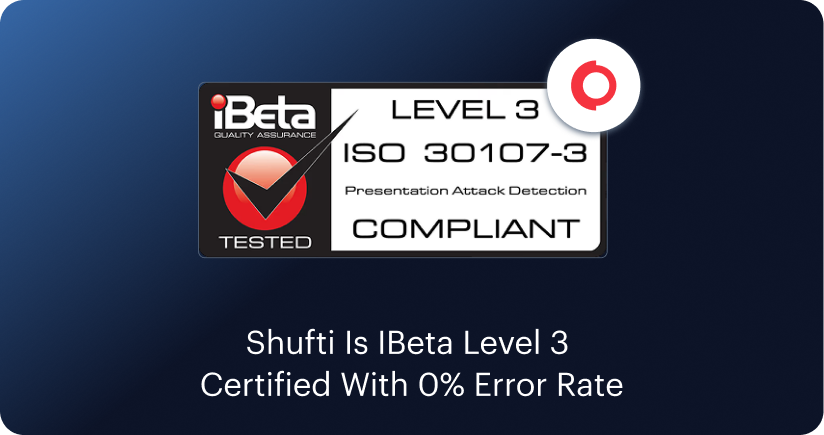
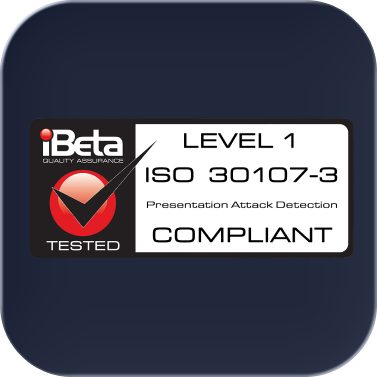
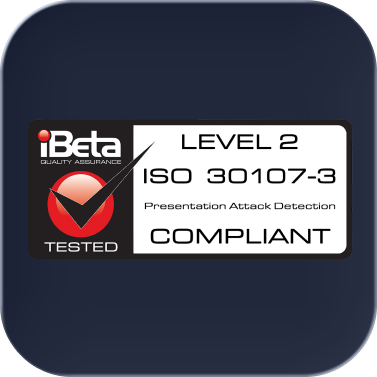
Shufti's liveness detection holds iBeta Level 3 conformance under ISO/IEC 30107-3, confirmed across Level 1, Level 2, and Level 3, which is the highest standard for presentation attack detection, covering advanced spoofing and AI deepfake attempts.
DHS RIVR 2025 independently validated a False Match Rate below 0.001 and a ~99% True Acceptance Rate. Because Shufti owns its liveness engine (not licensed from a third party), the model updates on Shufti's timeline when new attack vectors emerge.
1:N face search across 10M+ records means an account presented as new that matches a biometric from a prior verification session is flagged before the account opens. For the post-onboarding moments where mule transfer actually happens, ongoing monitoring and step-up re-verification at account recovery, device change, and limit increase forces the real person to prove presence. A transferred account or a borrowed device does not pass.
02: Step-Up Verification Beyond OTP and SIM
Shufti's face verification is explicitly designed to trigger at any point in the account lifecycle, not only at onboarding: "Use it anywhere fraud shows up; login challenges, account recovery, withdrawals, payouts, and resets." The same document + liveness + face match stack that runs at account opening can be invoked at any moment the institution classifies as a risk event.
This replaces or adds to OTP-and-SIM authentication at high-risk moments with a binding identity check: document verified, face matched to document, and liveness confirms presence. A SIM transfer or a borrowed device does not pass.
03: Defensible Audit Trails for BSP and AFASA
Shufti logs every action taken during a verification: the document submitted, each forensic layer it ran through, which layers passed, which flagged, what triggered each flag, the liveness result, the face match score, and the final decision.
This is not a pass/fail record. It is a step-by-step summary of the full verification process, retrievable for any account at any point in its history. When a regulator requests verification records, the institution can produce the complete decision chain immediately: not just the outcome, but the evidence behind it.
04: Front-Face-Only Capture, Enforced at the Platform Level
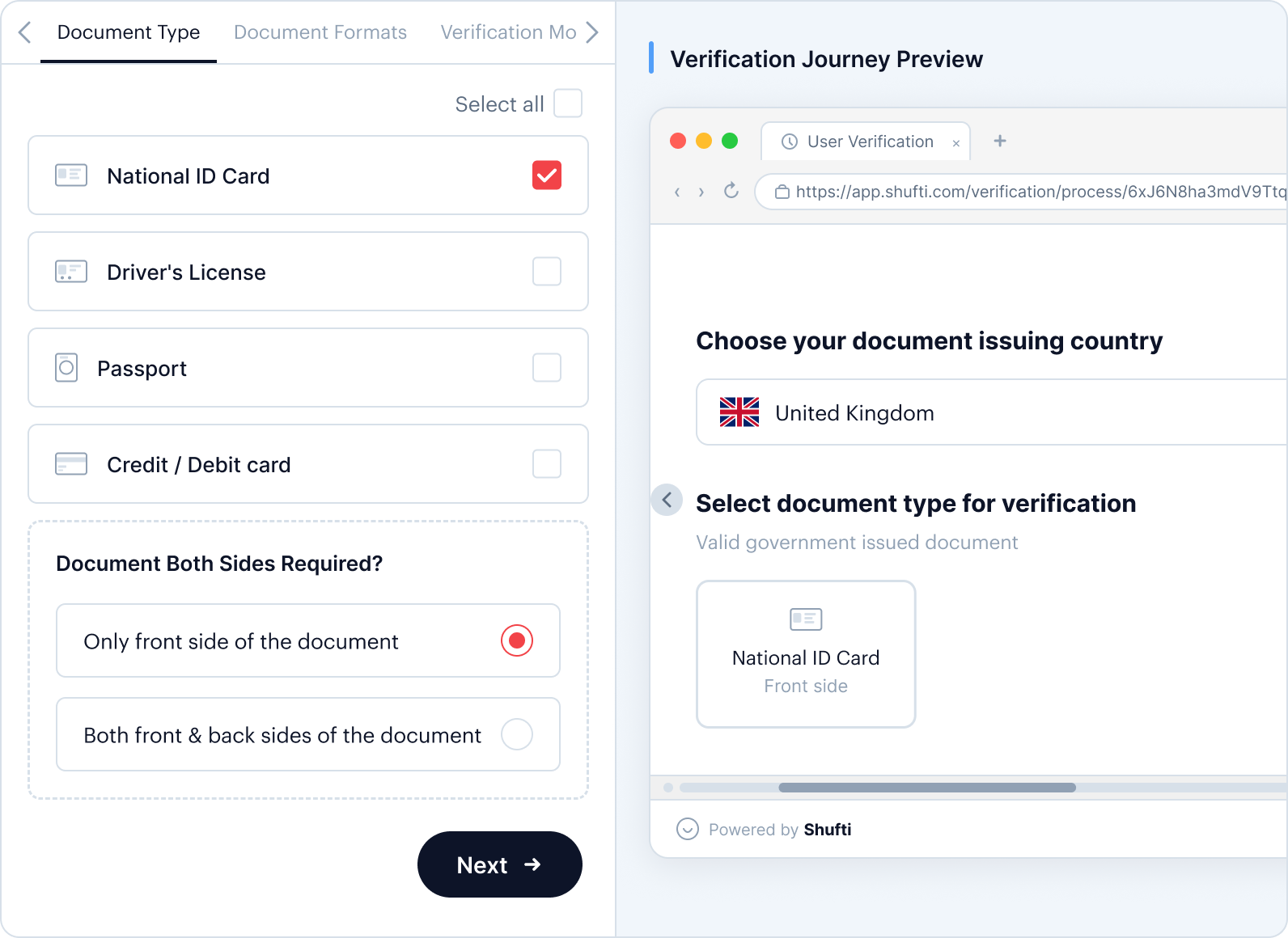
Most verification flows are built to scan both sides of an ID. For PhilID, that default creates the compliance exposure described above. Shufti's capture flow is configurable for front-face-only processing on PhilID, meaning the PSN on the reverse is never captured, stored, or transmitted, not as a policy that depends on operator behaviour, but as a platform-level configuration that enforces it automatically.
See How Shufti Covers Philippine KYC End to End
Front-face-only PhilID capture, every PhilSys format, liveness, 1:N duplicate detection, and step-up re-verification, built for BSP and AFASA.
Explore Shufti for the PhilippinesCertifications
Independently audited and certified for enterprise-grade security and data protection.




FAQs
A mule account is a verified financial account, usually a real e-wallet or bank account bundled with a registered SIM that's been sold, rented, or handed to someone else who uses it to move scam proceeds. Because it cleared KYC legitimately at onboarding, it passes standard checks; the risk only surfaces once control transfers. Under AFASA (RA 12010), buying, renting, lending, or selling these accounts is a prohibited act.
No. Under the SIM Registration Act (RA 11934), registration links a number to a document at one point in time. It doesn't prove the person presenting that number controls the account today. SIM resale, account takeover, and device transfer all happen after registration, so OTP-based checks re-authenticate the SIM, not the person behind it.
BSP Circular 1170 (March 2023) states that when a PhilID is presented, only the front face may be photocopied or scanned, the PSN on the back must stay confidential. A default scan-both-sides flow captures that number the moment a PhilID is used, creating a compliance breach. The fix is front-face-only capture enforced at the platform level, not left to operator behaviour.
Under BSP Circular 1214 (May 2025), the BSP's Consumer Account Protection Office can issue an Inquiry Order, after which the institution has 10 business days to produce full account information and supporting records. That means not just the pass/fail outcome but the complete decision trail, which document was checked, which forensic layers ran, the liveness result, and the face-match score.
Yes. The same document + liveness + face-match stack used at account opening can run at any risk event such as account recovery, device change, withdrawals, payouts, or limit increases. This is exactly where mule transfer happens, so re-verifying at these moments forces the real account owner to prove presence; a transferred account or borrowed device won't pass.
Stop verified Philippine accounts from becoming mule accounts
See the verification path built for the documents Malta issues and the captures that should never pass.