









 AMLR Solutions
  AMLR Consultation
 EUDI Wallet
 Onboarding
 Ongoing Monitoring
 FRAML
FRAML KYC
KYC KYB
KYB KYI
KYI Age Assurance
 Workforce IAM
 Candidate Verification
 Account Takeover
 Bonus/ Promotion Abuse
 Chargeback Fraud
 Deepfake
 Document Fraud
 Fraud Networks
 Impersonation Fraud
 Money Mule Activity
 Multi-Accounting
 Party Fraud
 Regulatory & Compliance Risks
 Synthetic Identity Fraud
 Adult Content
 Banking
 Crypto
 Fintech
 Forex
Forex Compliance
 Fraud prevention
 Trust & safety
 Global expansion
 Compliance Officers
 Developers
 Fraud Analysts
 Product Managers
 Journey Builder
  Global Trust Platform
 Customer Profiles
 Vendor Comparison
 IDV Case Management
 AML Case Management
 Regulatory Reporting
 Agentic Rule Builder
  AI Compliance Co-Pilot
  Fraud Analytics
 Fraud Hub
  OCR
OCR Shufti AI
 Bank Account Verification
  Biometric Duplication
 Database Checks
 Document Intelligence
 Government ID
 Mobile Driver's License
 NFC
NFC Selfie Liveness
 Brand Personalisation
 Deployment Options
 Identity Methods
 IDV Modes
 Multi-tenancy
 On-Premise IDV
 Secure Capture
 Shufti MCP





- Australia
- Austria
- Bangladesh
- Belgium
- Brazil
- Bulgaria
- Cambodia
- Canada
- China
- Croatia
- Cyprus
- Czech Republic
- Denmark
- Egypt
- Estonia
- Eswatini
- Ethiopia
- Finland
- France
- Germany
- Greece
- Haiti
- Hong Kong
- Hungary
- India
- Iraq
- Ireland
- Indonesia
- Italy
- Japan
- Jordan
- Kazakhstan
- Kenya
- Kosovo
- Kuwait
- Latvia
- Lithuania
- Luxembourg
- Malaysia
- Malta
- Mauritius
- Mexico
- Micronesia
- Moldova
- Mongolia
- Montenegro
- Morocco
- Mozambique
- Myanmar
- Namibia
- Nauru
- Nepal
- Nigeria
- Nicaragua
- Niue
- Norway
- Netherlands
- New Zealand
- Oman
- Pakistan
- Palau
- Palestine
- Panama
- Papua New Guinea
- Paraguay
- Peru
- Puerto Rico
- Philippines
- Portugal
- Poland
- Qatar
- Republic of Congo
- Romania
- Russia
- Rwanda
- Samoa
- San Marino
- Senegal
- Serbia
- Seychelles
- Sierra Leone
- Singapore
- Slovakia
- Slovenia
- Somalia
- South Africa
- South Korea
- South Sudan
- Spain
- Sri Lanka
- St Kitts and Nevis
- St Maarten
- St Lucia
- Sweden
- Switzerland `
- Syria
- Taiwan
- Tajikistan
- Tanzania
- Thailand
- Timor Leste
- Togo
- Tonga
- Trinidad and Tobago
- Turkey
- Turks and Caicos
- Turkmenistan
- Tunisia
- Tuvalu
- UAE
- Uganda
- Ukraine
- UK
- USA
- Vietnam
HUNGARY KYC, KYB AND AML
Scale Identity Verification and KYC Operations in Hungary
Verify Hungarian customers and businesses through the eSzemélyi chip, DÁP eAzonosítás, KAÜ, NFC, QES, identity documents, biometrics and KYB. Reduce manual review, maintain consistent audit evidence and run one connected workflow designed to support Act LIII of 2017 today and AMLR from 10 July 2027.
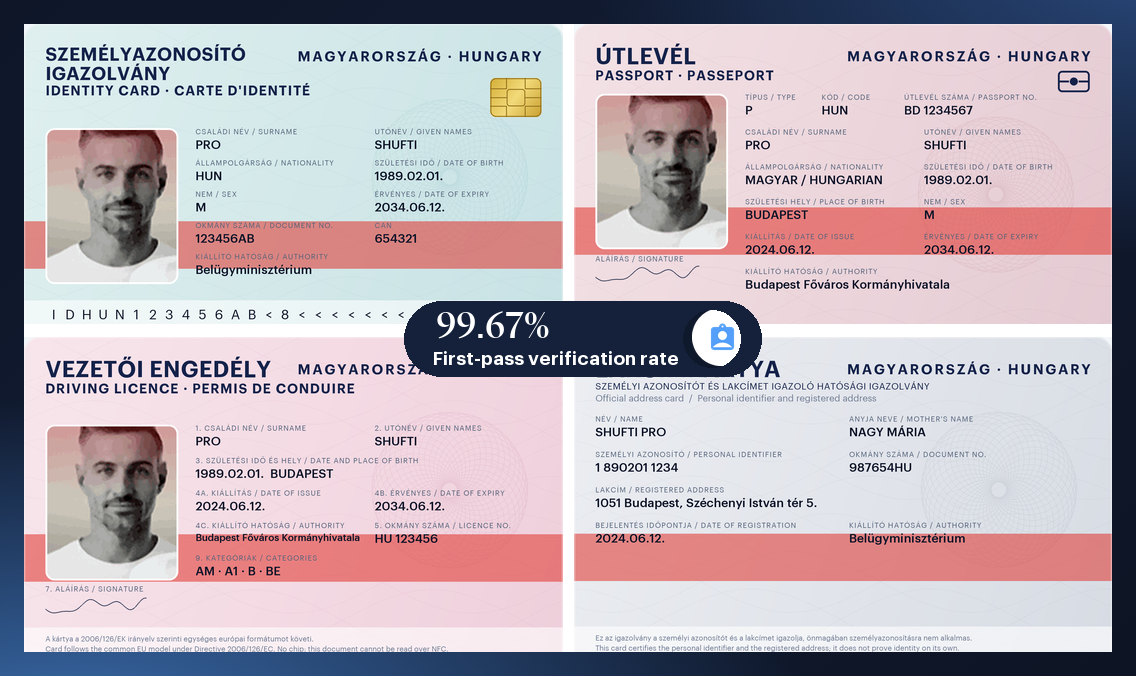







Operational Performance for Hungary KYC
Our Numbers Speak Volumes
99.67%
First-pass
verification rate
< 10 sec
Median
verification time
5+
Hungarian ID methods
supported
Hungary IDV/KYC Challenges

No Notified eID to Lean On
Hungary has notified no eID scheme under eIDAS, so it is absent from the European Commission list. The eSzemélyi chip and DÁP work at home, but neither carries an EU-wide assurance level.

The August 2026 Identity Card Changeover
Book-format Hungarian identity cards without an expiry date lost validity on 3 August 2026. Older customers held them most, so flows must handle the retired booklet and the eSzemélyi card.

Hungarian Names Break Global Matching
The family name comes first, so Károlyi Anna arrives transposed in systems built for the Western order. Diacritics drop in the machine-readable zone, so ő and ű read as o and u. A married name such as Kovács Jánosné carries no given name of her own.

Ownership Data Is Gated, Rated and Not a Verification
The tényleges tulajdonosi nyilvántartás is closed to the public, and its TT reliability index falls when a discrepancy is reported. A Cégjegyzék extract proves a company exists, not who controls it.
Pmt. service providers can access the register free of charge for due diligence and data-checking purposes under Act XLIII of 2021, Section 8(3).
Regulatory Update
What AMLR Changes for Identity Verification in Hungary
The EU Anti-Money Laundering Regulation (EU) 2024/1624 applies directly in Hungary from 10 July 2027, with no transposition period. It sets the due diligence rules that Act LIII of 2017, the Pmt., and the Magyar Nemzeti Bank framework will operate under, with AMLA, the new EU-level supervisor, established in Frankfurt.
Timeline
- End of 2026 Member State wallet issuance target
- 10 July 2027 AMLR applies, no transposition
- Late 2027 Wallet acceptance under eIDAS 2.0 Art 5f
- 2028 AMLA direct supervision begins
eIDAS Routes Recognised
Article 22(6)(b) recognises eIDAS eID at substantial or high assurance with qualified trust services, and 22(6)(a) expressly permits document checks. Hungary has no notified scheme, so the wallet route matters more here. MNB Decree 29/2024 due diligence stays usable, and non-eIDAS methods should be documented and justified.
The Ownership Test Stays at 25%
AMLR sets the test at 25% or more, or control by other means. Hungary already applies at least 25% under the Pmt., so what changes is the evidence expected behind it.
Existing Customers Get Re-Checked
AMLR expects existing customer records to be brought up to standard on a risk basis, not just new onboarding. Continuous monitoring keeps back-book files current between reviews.
Accountability Stays With You
Article 18 keeps due diligence accountable with the obliged entity even when outsourced. MNB Decree 29/2024 Section 2 expressly covers outsourced checks, so vendor evidence and clean audit trails matter more.
FOR MNB-SUPERVISED BUSINESSES
Streamline MNB-Supervised Onboarding in Hungary
Connect identity verification, QES, Penny Drop and compliance evidence in one configurable workflow for businesses operating within the Magyar Nemzeti Bank supervisory remit. Reduce customer drop-off and manual handovers while giving compliance teams a consistent, review-ready record of every decision.
1. Verify the customer
Verify identity using the configured route, such as KAÜ, DÁP eAzonosítás, the eSzemélyi chip, or document and biometric checks.
2. Complete qualified signing
Apply and validate the QES within the same journey, keeping the signed document, verification result and supporting evidence together.
3. Confirm the payment account
Penny Drop Verification confirms the payment account belongs to the customer, as a supporting fraud and account-ownership control.
Shufti’s IDV/KYC Solutions for Hungary
KYC Solutions
Onboarding designed around Pmt. requirements for Hungarian customers, with age and address in the same flow as identity, in seconds.
Explore More
Identity Verification
Shufti confirms every customer is real and present, not a spoofed or synthetic identity. Biometric face matching and liveness detection run against 10,000+ active ID document types.
.
Face Verification
Face verification binds the live person to the document with iBeta Level 3 Conformance to ISO/IEC 30107-3 liveness, stopping spoofs, masks and deepfakes.
.
Age Verification
Selfie-based age estimation combined with document verification fallback where required for regulated sectors such as online casino games and betting supervised by the Szabályozott Tevékenységek Felügyeleti Hatósága.
.
Address Verification
Shufti verifies Hungarian address-bearing documents, including utility invoices, telecom bills and bank statements from major Hungarian issuers. Proof-of-address checks remain common in regulated onboarding.
.
Document Verification
Verification of the személyazonosító igazolvány, the magyar útlevél, the tartózkodási engedély and the vezetői engedély, including NFC chip reading where the document carries one and Hungarian diacritic handling. Expressly permitted for remote verification under AMLR 22(6)(a).
.KYB Solutions
Shufti checks businesses as deeply as the people behind them, on a Pmt. risk-based basis. Shufti checks registry records, beneficial ownership and tax details in real time, then screens UBOs against 4,000+ global watchlists for sanctions and adverse media exposure.
Explore More
Business Verification
Automated validation of Cégjegyzék records, the ten-digit cégjegyzékszám whose first two digits identify the registering court, the adószám issued by NAV, the HU-prefixed VAT number and appointed representatives. Reduces manual registry lookups and onboarding delays.
.
Enhanced Due Diligence (EDD)
Structured risk profiling for complex ownership chains, cross-border entities and higher-risk sectors, designed to support the risk-based obligations in the Pmt.
.AML Screening
Shufti screens customers and transactions in 240+ countries and territories, flagging sanctions, PEP and adverse media matches as they happen. Ongoing monitoring surfaces suspicious activity in time to meet local reporting obligations.
Explore More
AI Compliance Copilot
Helps compliance teams review verification and AML data, investigate alerts, and understand the reasoning behind risk signals. It brings relevant case information together to support faster, more consistent compliance decisions.
.
Transaction Monitoring
Ongoing transaction monitoring calibrated to Hungarian financial flows flags anomalies against AML rules, supporting the risk-based controls the Magyar Nemzeti Bank and the NAV financial intelligence unit expect, including reporting through ONYA under Pmt. Section 30.
.Supported Verification Methods for Hungary
Every Verification Route Hungary Uses, in One Platform
Shufti supports the remote verification routes Hungary uses today, from DÁP digital identity to chip reading, attended video sessions and biometric checks, and is built for the EUDI Wallet from 2027. Each method below shows what is live today and what is ready for the 2027 rollout.
Hungary sets no format restriction on identity documents in electronic due diligence. MNB Decree 26/2020 removed the earlier limitation and Decree 29/2024 did not reinstate it, so only each route's technological minimums apply.
EUDI Wallet
Wallet-ready · from 2027AMLR does not name the EUDI Wallet, but it meets the Article 22(6)(b) route. Act CIII of 2023, as amended, provides for the national digital wallet. Shufti is built to accept wallet-based verification as the Hungarian wallet goes live.
National eID and digital identity
LiveHungary does not appear on the EU list of eIDAS-notified eID schemes at the time of writing, so there is no assurance-level badge on this row. Shufti runs Active eIDV and reads authentic data from the eSzemélyi chip. The state routes Hungarians use every day are KAÜ, DÁP eAzonosítás through the Digitális Állampolgár app, and Ügyfélkapu+.
Docless Database (eIDV)
LiveDatabase-driven verification confirms identity in seconds for low-risk onboarding with no document upload, using permitted reference data sources. Shufti escalates to stronger checks as risk rises.
NFC Chip Verification
LiveShufti reads the secure chip in the eSzemélyi identity card, the Hungarian ePassport and the tartózkodási engedély. MNB Decree 29/2024 recognises the chip read as an electronic due diligence route.
Document and Face Biometric
LiveExpressly permitted by AMLR 22(6)(a). Document authentication of the személyazonosító igazolvány, the magyar útlevél and the tartózkodási engedély, paired with iBeta Level 3 Conformance to ISO/IEC 30107-3 liveness to confirm a real, present person.
Video Identification
LiveMNB Decree 29/2024 (VI. 24.) sets the conditions for electronic customer due diligence on an audited electronic device. It permits an attended session with a trained employee on real-time audio and video, fully recorded, closing with a one-time code returned by the customer. Shufti runs a guided session that checks the document live and matches the face.
Qualified Electronic Signature
LiveHungarian AML law sets no QES-based identification route, so QES is used here for qualified signing rather than as a statutory identification method. Shufti runs eIDAS-qualified signing powered by Evrotrust, an EU qualified trust service provider, producing PAdES-LTV signatures. For Hungary the signing identity check runs through NFC and face biometrics.
Independent Validation
Shufti's Recognition Across Independent Evaluations

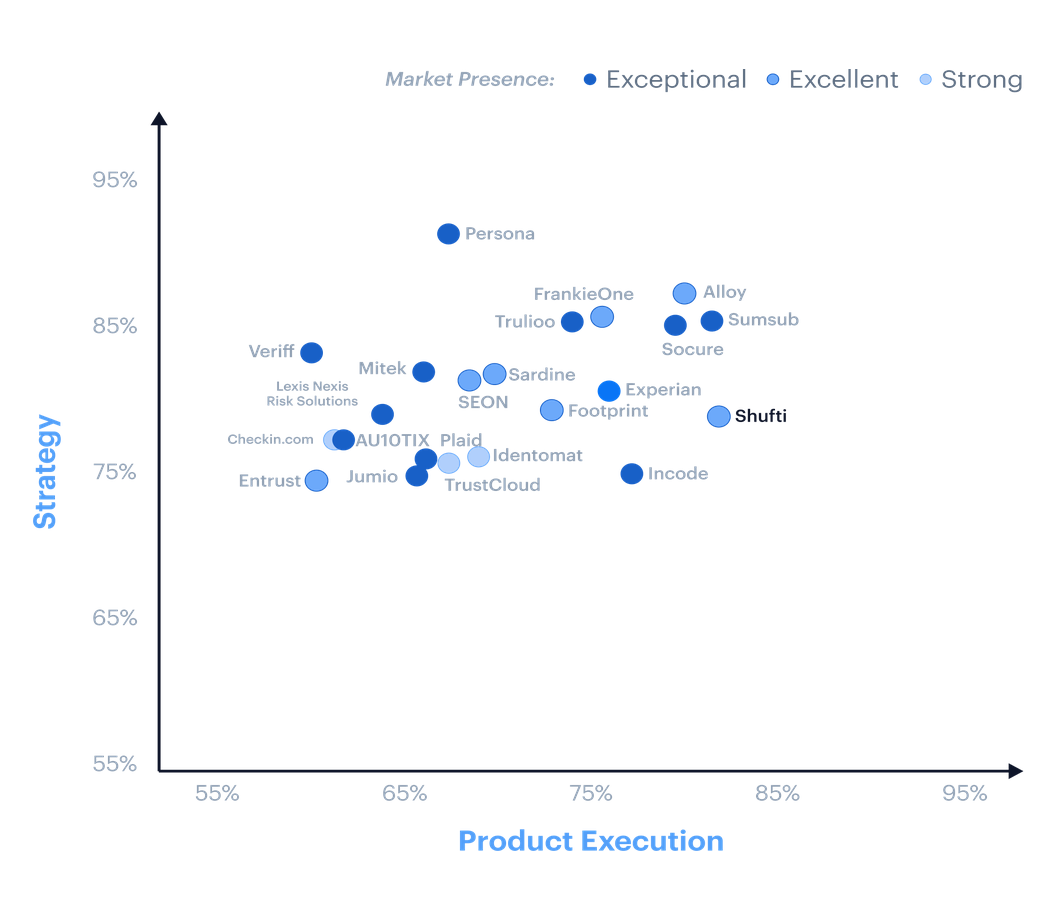
Ranked Exceptional in the Liminal Index 2026 for age estimation
View Report

Differentiated by Gartner on document diversity and country coverage
Read more
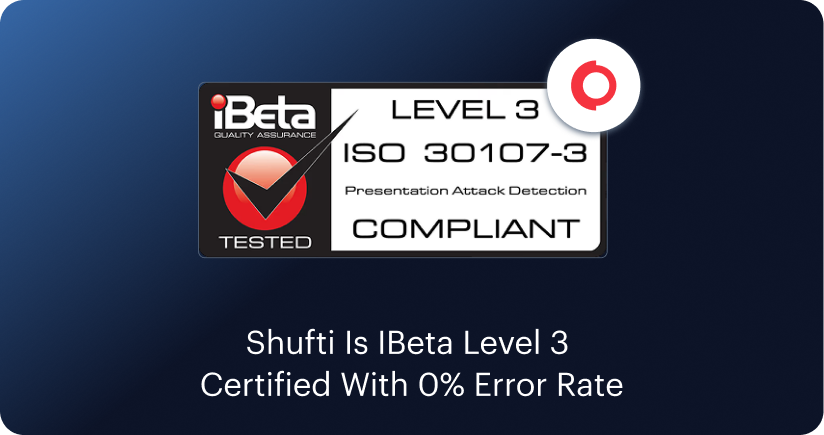
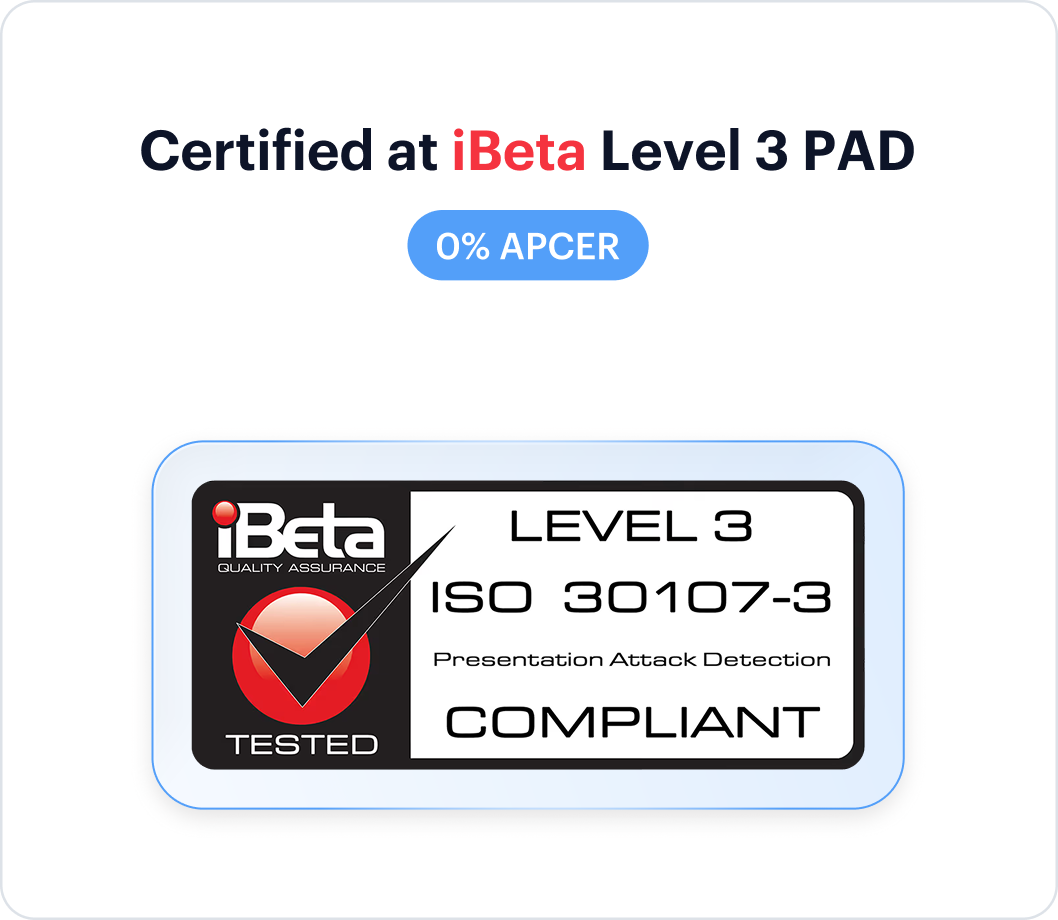
Certified at iBeta Level 3 PAD with 0% APCER
Read Blog
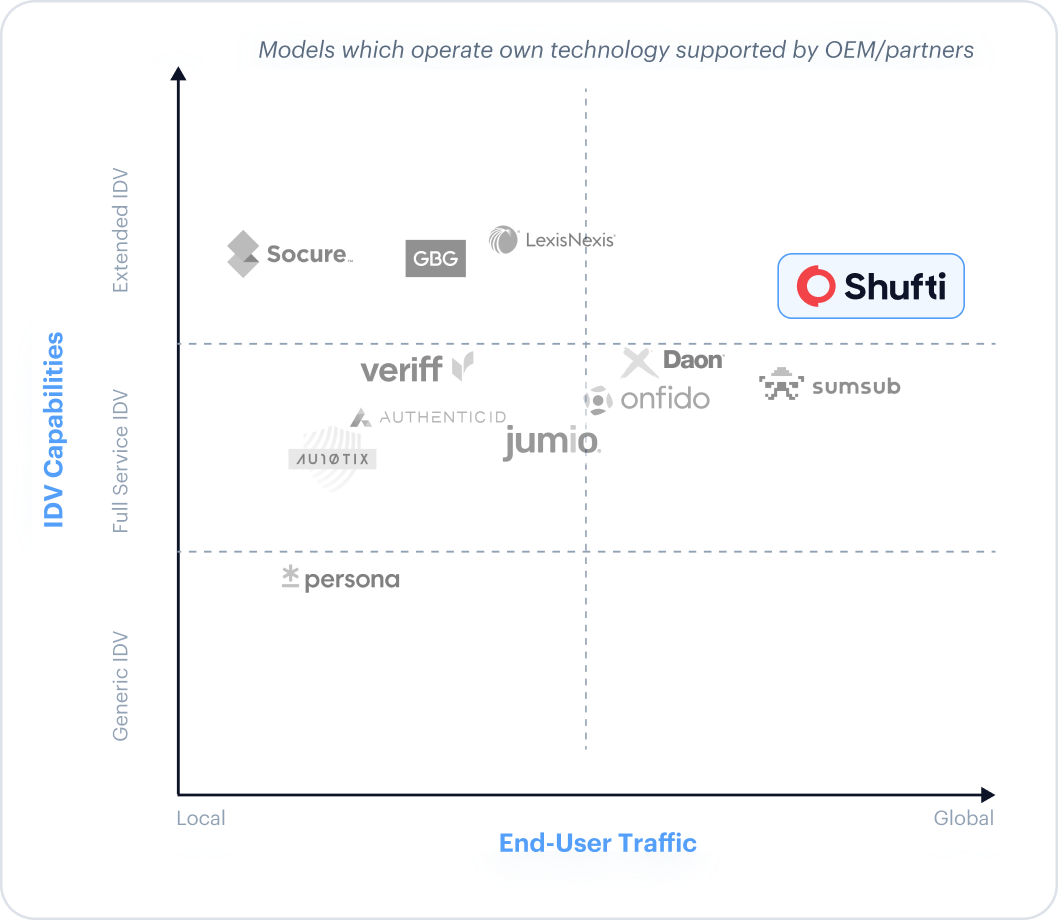
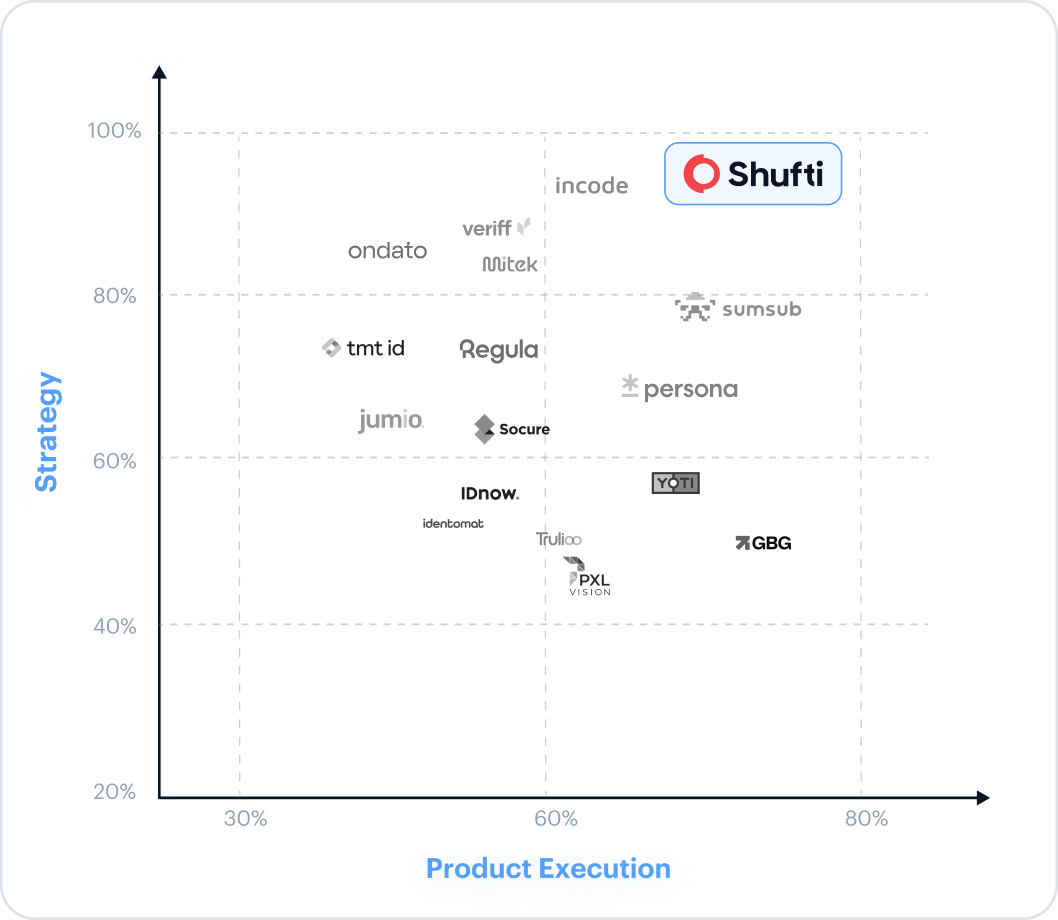
Broadest global reach in the 2025 KuppingerCole Extended IDV report
Download Report

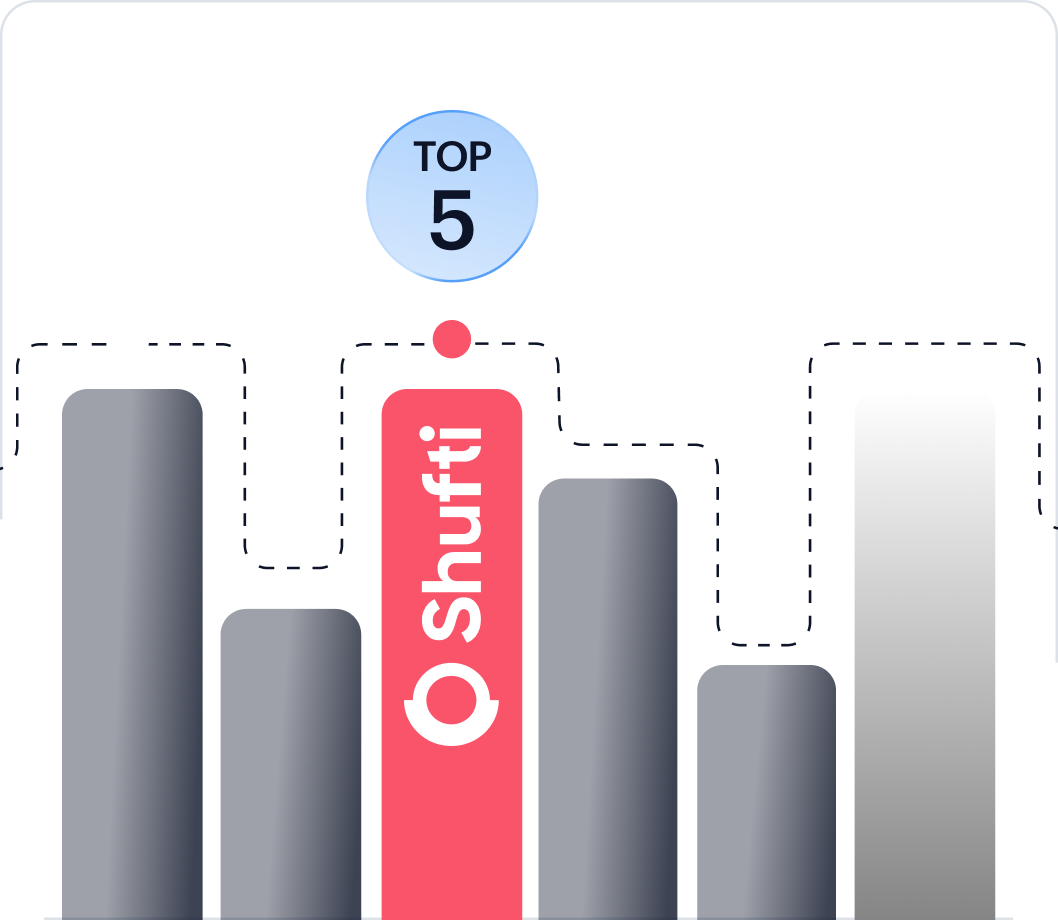
Ranked Top 5 in the DHS RIVR 2025 for identity validation
Read Blog

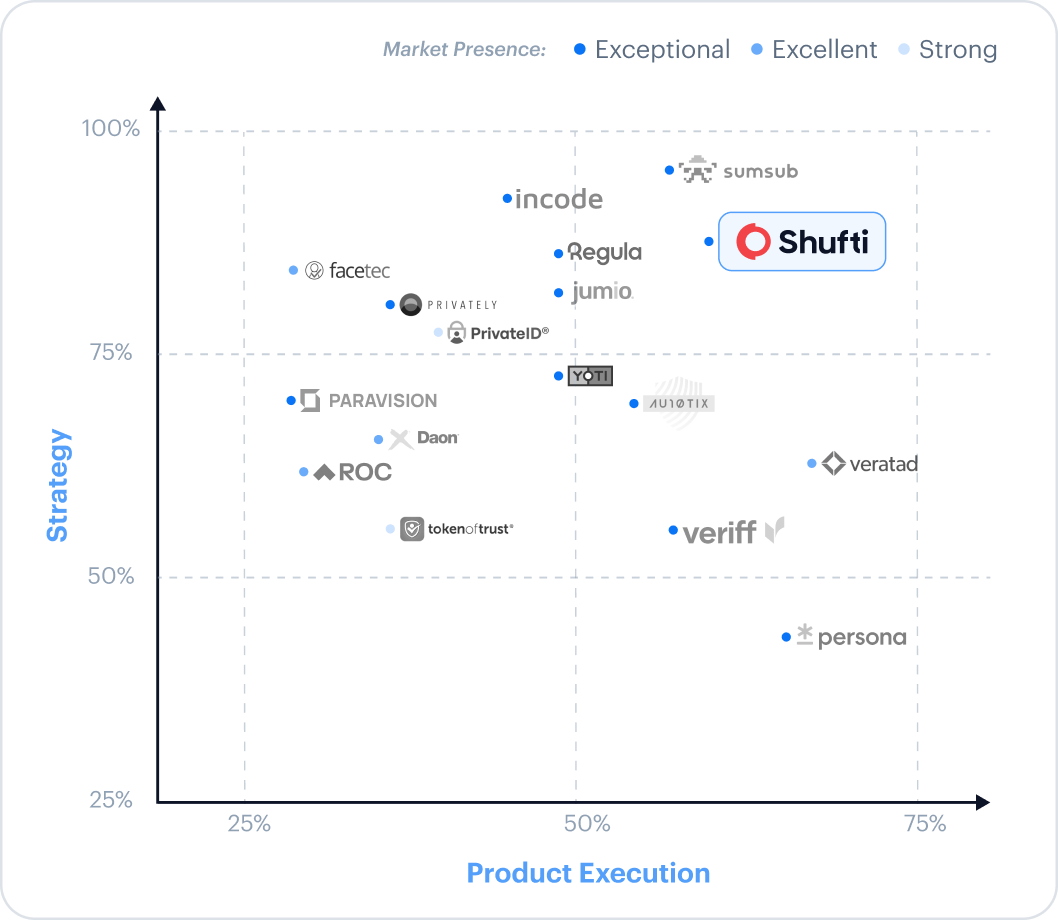
Top Vendor for Product Execution in the Liminal Index for KYC 2026
View Report

Ranked Exceptional for age verification by Liminal Index 2026
View Report
Recognised as a Leader in G2 Fall 2026 reports
Read More






Evidence-Ready Checks Across People & Businesses
Verifications with robust evidentiary support
Individual Documents We Verify
Shufti supports 10+ Hungarian document types.
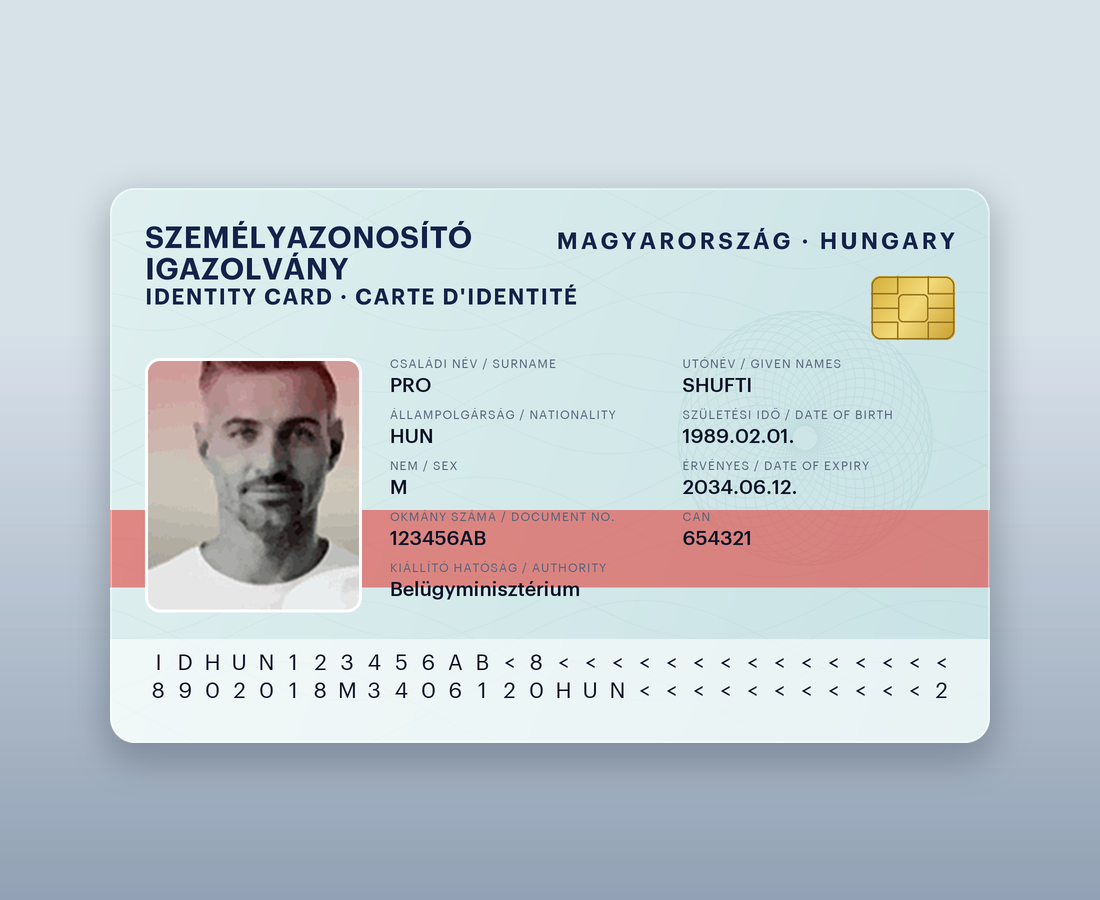
View All Supported DocumentsSzemélyazonosító igazolvány (National Identity Card)
Primary identity document for Hungarian citizens. Chipped since 2016, with the facial image and, from 2 August 2021, two fingerprints. Book-format cards lost validity on 3 August 2026.
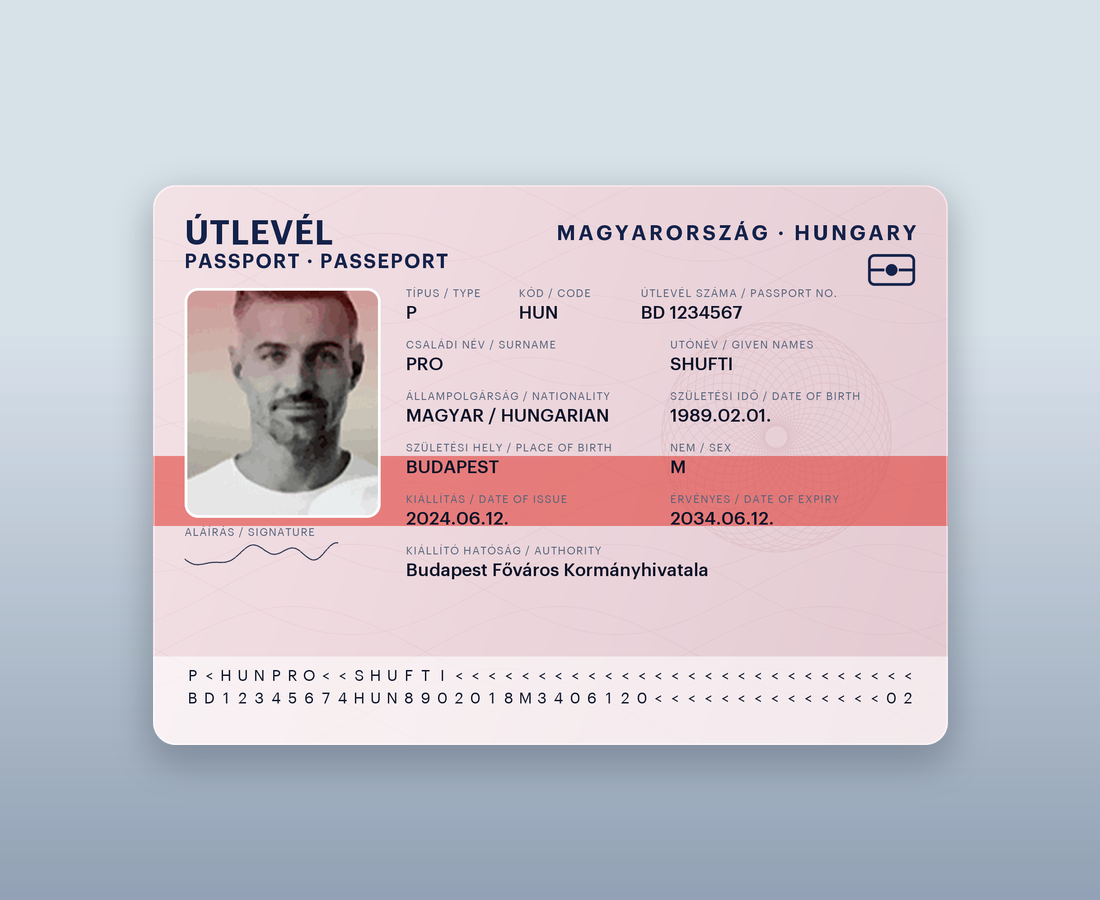
Magyar útlevél (Hungarian Passport)
Biometric travel document issued through the Hungarian authorities. ICAO-compliant with a machine-readable zone and an NFC chip that supports chip-based checks for cross-border onboarding.
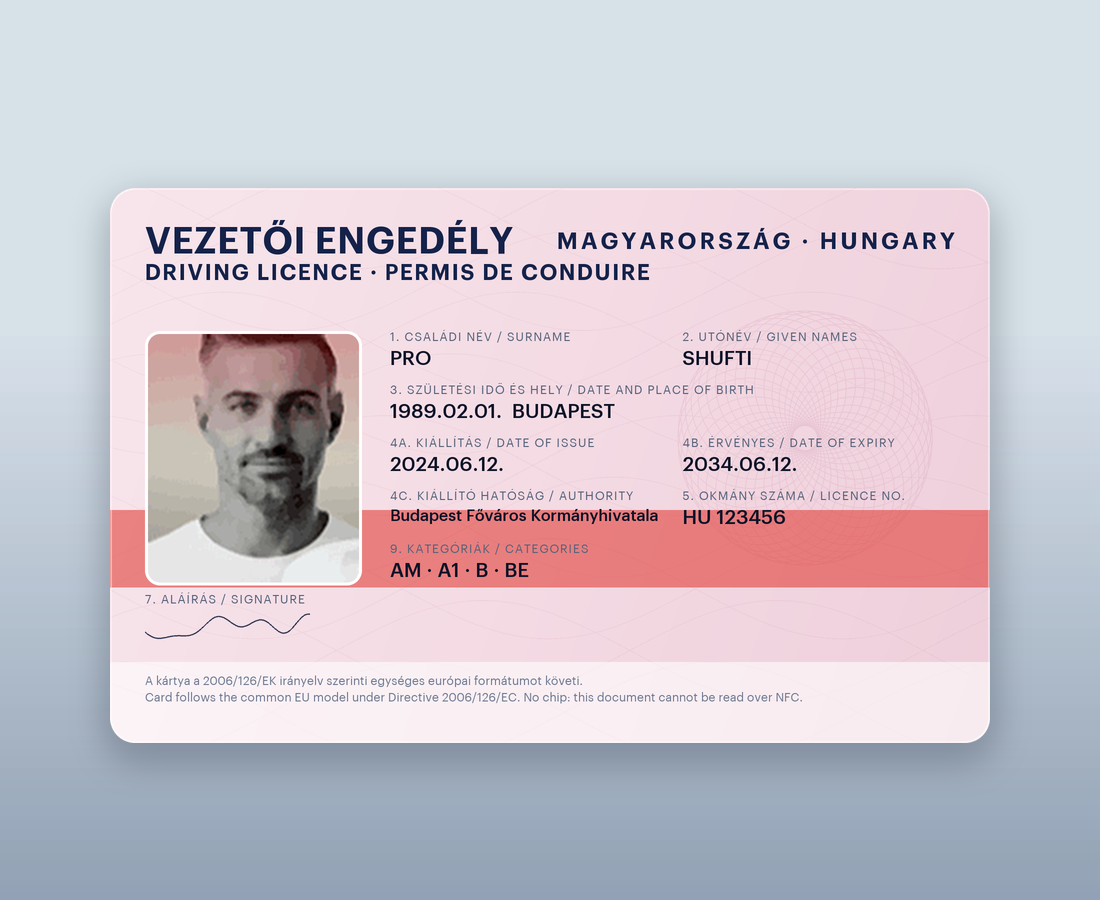
Vezetői engedély (Hungarian Driving Licence)
EU-format Hungarian driving licence, accepted as an identity document where Hungarian rules permit. Verified for authenticity through document and biometric checks, though it carries no chip and cannot be read over NFC.
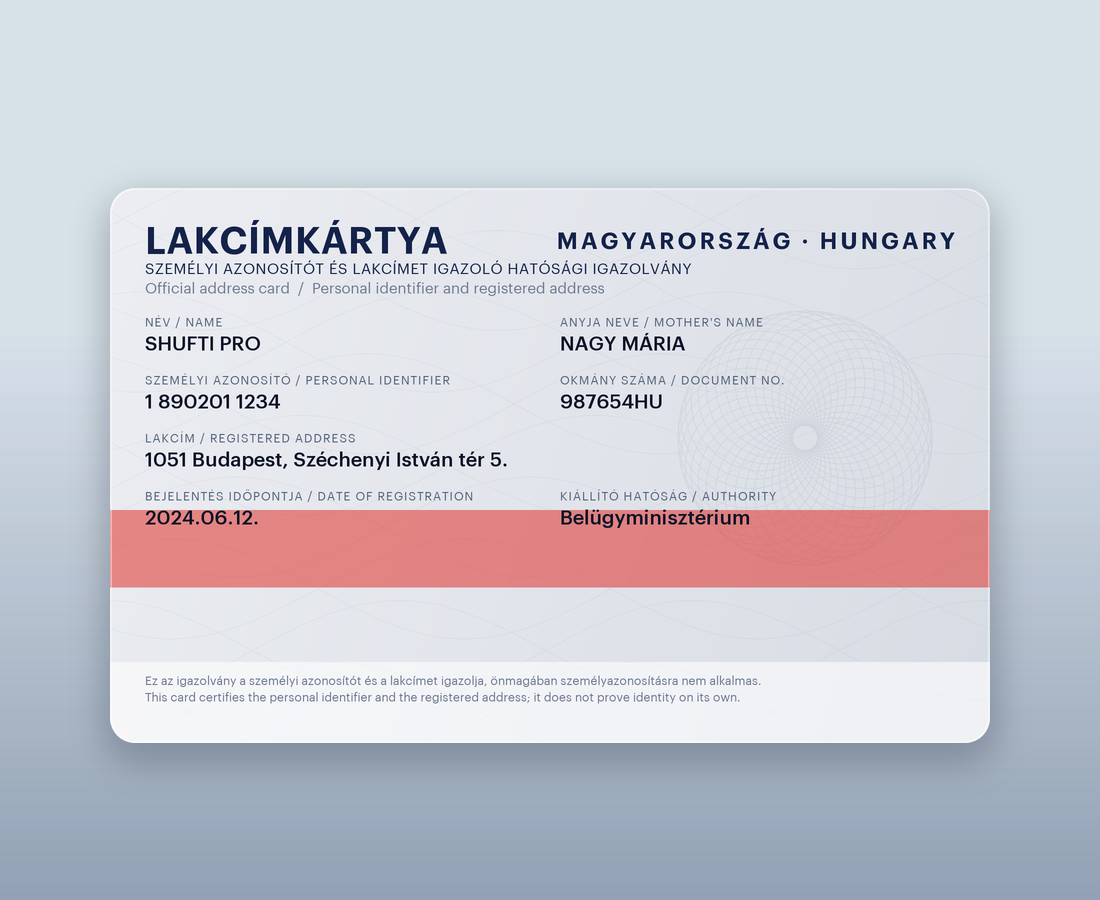
Lakcímkártya (Address Card)
Officially the személyi azonosítót és lakcímet igazoló hatósági igazolvány. It certifies the personal identifier and registered address rather than proving identity on its own, so Shufti uses it as supporting address evidence alongside a primary identity document.
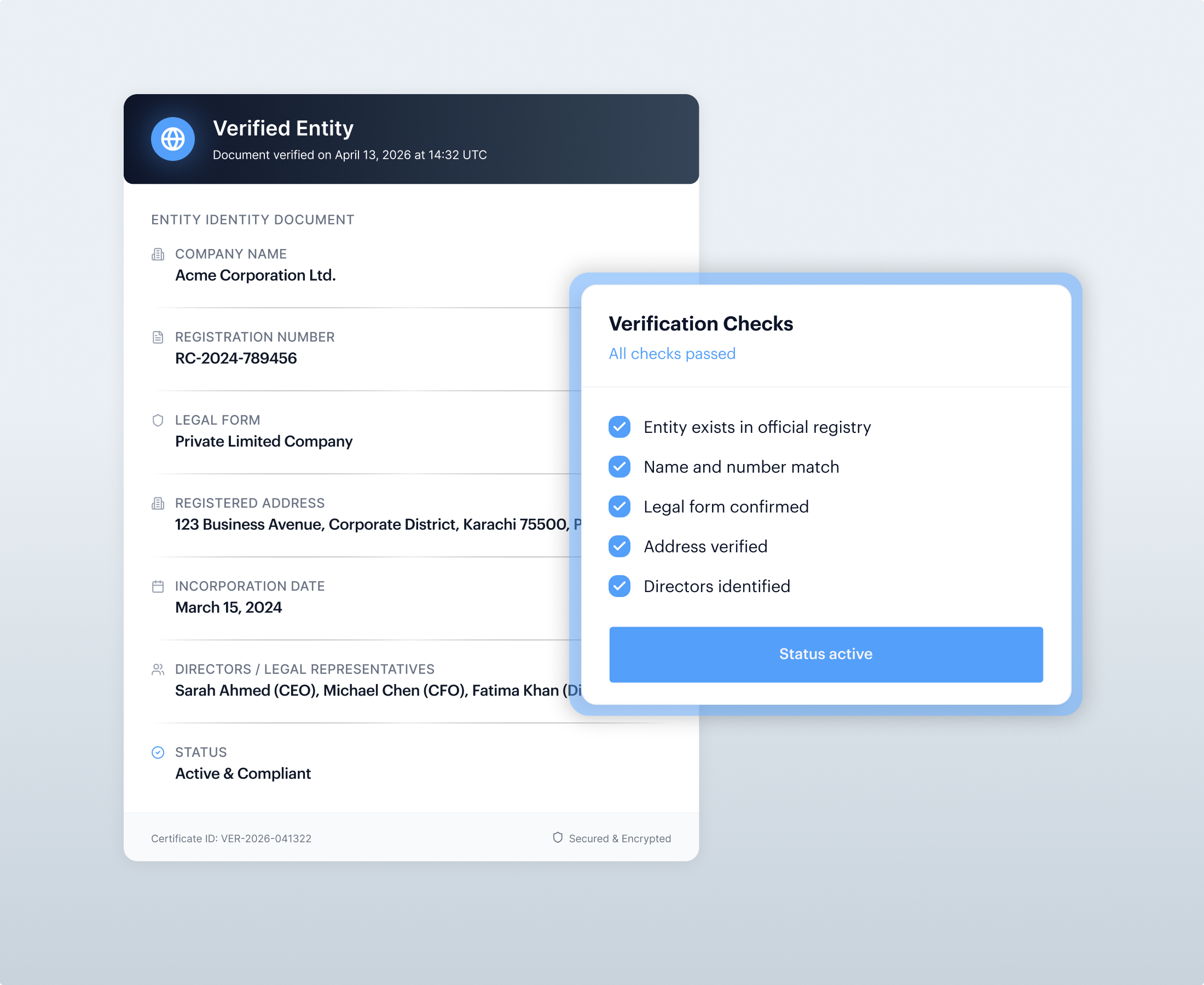
Entity Identity
Certificate Of Registration (Cégbejegyző végzés)
Official incorporation record issued by the Hungarian court of registration. Confirms legal existence, legal form and entity status for KYB verification.
Articles Of Association (Létesítő okirat)
Foundational governance document defining corporate structure, representation and internal operating rules. Issued as an alapító okirat, társasági szerződés or alapszabály depending on the company form, and countersigned by a Hungarian attorney or drawn up as a notarial deed.
Company Extract (e-Cégjegyzék)
Current company information including registered seat, TEÁOR activity codes, share capital and appointed representatives, sourced from the electronic company register for real-time KYB verification.
Tax Identity
Tax Number (Adószám)
Tax identifier issued by NAV, the National Tax and Customs Administration. The first eight digits form the törzsszám that the Hungarian VAT number is built on, and it binds entity records together across banking and registry data.
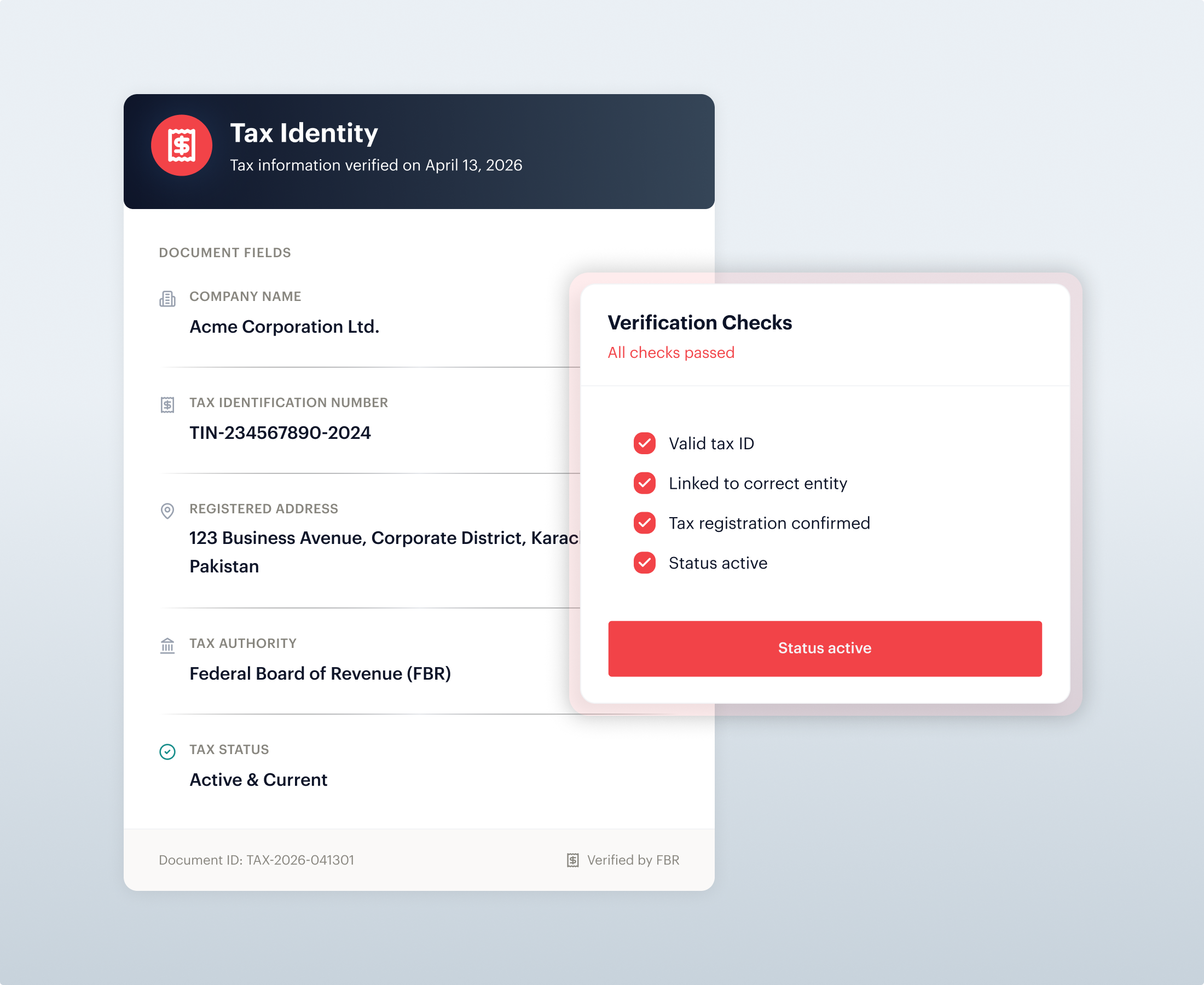
VAT Registration Number
Hungarian VAT number beginning with HU followed by the eight-digit törzsszám. Required for intra-EU trade and used to confirm a business is trading legitimately.
Company Registration Number (Cégjegyzékszám)
Ten-digit identifier issued by the court of registration. The first two digits identify the registering court, the next two the company form, and the last six are a serial number. Primary reference for entity verification.
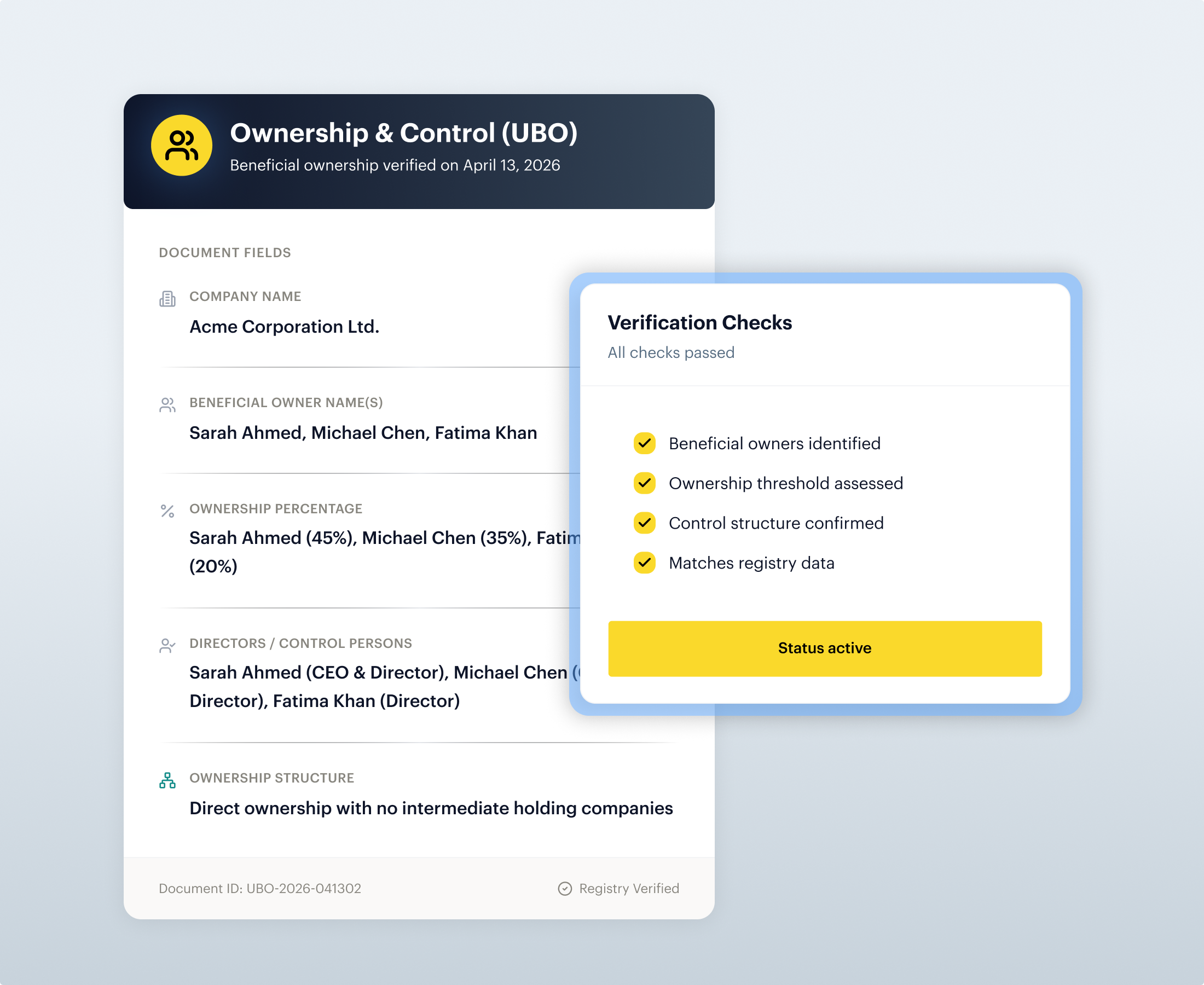
Ownership & Control (UBO)
UBO Register Declaration (Tényleges tulajdonosi nyilatkozat)
Beneficial owner declaration made to the obliged service provider under the Pmt. Hungary applies 25% or more, or control by other means, matching AMLR. The declaration is the customer-side record behind the register entry.
Beneficial Ownership Register Filing
The tényleges tulajdonosi nyilvántartás held by NAV. Data is transmitted monthly by account keepers and each record carries a TT index from 1 to 10 that falls when a discrepancy is reported, so the reliability rating is itself a risk signal.
Shareholder Register / Articles Of Association
Records evidencing the ownership chain, voting rights and percentage holdings. Shufti uses them to map the people behind a Hungarian company and trace control through layered structures.
Languages We Cover
Hungarian Language Document Handling And Diacritics
Hungarian documents use the Latin alphabet with seven long vowels, including ő and ű. Diacritics are stripped in the machine-readable zone, so ő and ű read as o and u. Shufti captures both the printed and the machine-readable form to keep checks accurate against official sources.
Name Matching Across Hungarian Name Order And Married-Name Forms
Fuzzy matching and phonetic algorithms reconcile family-name-first order, diacritic variants and married-name forms such as Kovács Jánosné and Kovácsné Nagy Mária, which would otherwise read as different people.
Evidence Consistency Across KYC And KYB Steps
Cross-document checks reconcile names and identifiers across the személyazonosító igazolvány, Cégjegyzék records, adószám data and beneficial owner declarations to catch mismatches early.
Governance & Controls
Audit-Ready Decisions, Lower Operational Drag
Fewer avoidable re-submissions
Capture tuned to the chipped eSzemélyi card and to the book-format card retiring on 3 August 2026 cuts avoidable re-submissions and manual review.
Cleaner audit trails
Structured logs aligned to the eight-year record-keeping duty under the Pmt. and to ONYA reporting keep every onboarding decision audit-ready.
Better name matching outcomes
Matching handles family-name-first order, the long vowels ő and ű, and married-name forms, reducing false positives and manual review on Hungarian names.
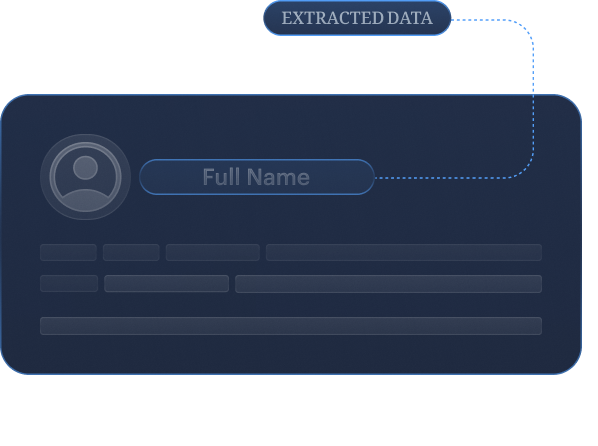
One workflow, one back office
KYC, KYB and AML screening are consolidated in one operational case view, so one back office team works on every customer file.

National ID-first flow design
eSzemélyi-first onboarding reflects Hungary’s national identity ecosystem and the way customers actually verify.
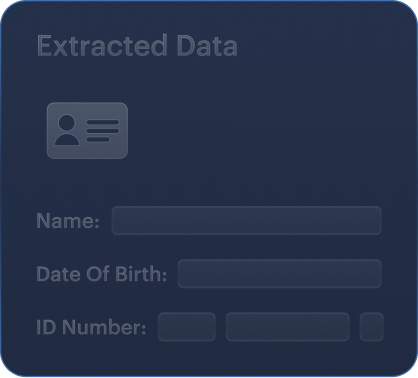
Continuous Compliance
Compliance that does not stop at onboarding
AMLR treats customer due diligence as a continuing obligation. Perpetual monitoring keeps the customer picture current between reviews, so risk is caught when it appears, not at the next annual check.
Surface Changes as it happens
DetectPerpetual monitoring flags risk when it appears, not at the next annual review. Behavioural biometrics, background fraud signals, and ongoing sanctions and PEP screening watch every active relationship.
Step up when the signal fires
VerifyWhen a signal fires, re-verification confirms the person or the ownership change using the same live methods above, so a flag turns into a resolved decision.
Keep the file audit-ready
ComplyEvery check and decision is logged to Pmt. record-keeping standards, so the file is organised and retrievable for audit and supervisory review.
Perpetual KYC
pKYCKeeps individual customer risk current with behavioural biometrics, background fraud signals and ongoing AML screening, so back-book records stay standard-ready.
Perpetual KYB
pKYBMonitors the tényleges tulajdonosi nyilvántartás and the Cégjegyzék for shareholding and control changes, so a shift past 25%, a change of control, or a fall in the TT index, is caught between reviews.
Built To Fit Hungary’s Compliance Landscape

Magyar Nemzeti Bank (MNB)
Hungary’s central bank and AML supervisor for credit institutions and financial service providers. It sets the conditions for electronic customer due diligence in MNB Decree 29/2024 (VI. 24.). Shufti aligns identity evidence, risk classification logs and recordkeeping to those conditions.

Nemzeti Adó- és Vámhivatal (NAV)
The National Tax and Customs Administration, which houses the Hungarian financial intelligence unit and operates the beneficial ownership register. Shufti produces structured case files for reporting through ONYA and supports monthly UBO data obligations.

AMLA (EU Anti-Money Laundering Authority)
The new EU-level supervisor has been established in Frankfurt since July 2025. It begins direct supervision of selected high-risk cross-border entities from 2028 and shapes technical standards under AMLR.
Deployment Option
There is no in-country cloud region in Hungary, so the nearest EU regions are used, or on-premise deployment where residency requirements are stricter. Either option keeps Hungarian customer data in-region and supports GDPR accountability.
Regulatory Alignment
Designed to support Pmt. due diligence, beneficial owner verification and record-keeping duties, as well as GDPR principles, the Infotv. and AMLR requirements applying from July 2027.
Retention Controls
Pmt. Sections 56 to 58 set an eight-year record-keeping duty for identification and transaction records, extendable to ten years at authority request. Shufti applies configurable retention to match that duty and purges records automatically once the period expires. From 10 July 2027, AMLR Article 77 sets a five-year baseline, extendable case by case by up to five more years at authority request.
Encryption & Security
Encryption in transit and at rest, access controls and audit logging support Article 32 GDPR and the Infotv., with ISO 27001 certification and SOC 2 Type II attestation.
Scope of Our Role
Shufti acts as a data processor and provides verification technology, not legal or regulatory advice. Customer due diligence and the choice of method stay with the obliged entity, documented in its own risk assessment.
Biometric Processing
The controller sets the lawful basis. Biometric data for unique identification engages Article 9 GDPR, and human review is available in the workflow.
Data and Privacy Controls in Hungary
Hungary AML Sources That Strengthen Decisions
We screen against 215+ sanction regimes, 4,000+ watchlists, 100,000+ adverse-media sources, and 6M+ PEPs across Hungary and globally. A few of them are:

Hungarian Financial Intelligence Unit, NAV Anti-Money Laundering and Counter-Terrorist Financing Office

Magyar Nemzeti Bank

Szabályozott Tevékenységek Felügyeleti Hatósága (SZTFH)

Magyar Könyvvizsgálói Kamara (Hungarian Chamber of Auditors)

Magyar Ügyvédi Kamara (Hungarian Bar Association)

Magyar Országos Közjegyzői Kamara (Hungarian Chamber of Civil Law Notaries)

Budapest Főváros Kormányhivatala

Nemzetgazdasági Minisztérium (Ministry for National Economy)

Készenléti Rendőrség Nemzeti Nyomozó Iroda (National Bureau of Investigation)

Legfőbb Ügyészség (Prosecution Service of Hungary)

FATF

EU Consolidated Financial Sanctions List

UN Security Council Consolidated List

European Banking Authority (EBA)

EU AMLA (Anti-Money Laundering Authority)

Council of Europe MONEYVAL
SEE SHUFTI IN YOUR HUNGARY WORKFLOW
Turn Hungary Verification Requirements into a Smoother Customer Journey
Share your customer types, risk rules and current onboarding process. A Shufti specialist will show you how to connect identity verification, KYB, QES, Penny Drop and ongoing monitoring, reducing operational hand-offs while keeping decision evidence organised for compliance review.
INDEPENDENTLY AUDITED. GLOBALLY CERTIFIED.
Certified to Global Standards







Frequently Asked Questions
Which identity documents can be used for Hungarian onboarding?
Customers can use the személyazonosító igazolvány, the Hungarian national identity card, including the chipped eSzemélyi issued since 2016. The Hungarian passport, the card-format driving licence and residence permits for third country nationals can also be accepted where Hungarian rules allow. Shufti supports document, NFC, video and biometric verification within one configurable workflow.
How does Shufti support MNB-supervised businesses in Hungary?
Shufti connects identity verification, KYB, AML screening, QES and decision evidence in one configurable workflow. This helps businesses within the Magyar Nemzeti Bank supervisory remit reduce manual hand-offs, standardise compliance records and prepare clearer evidence for internal audit and applicable supervisory review.
What documents are required for KYB in Hungary?
Typically a Cégjegyzék extract, the ten-digit cégjegyzékszám, the adószám issued by NAV, the HU-prefixed VAT number, the articles of association and beneficial ownership details filed in the tényleges tulajdonosi nyilvántartás. Shufti verifies these and screens the UBOs behind them against sanctions and PEP lists.
How are Hungarian name variants handled in screening?
Matching accounts for family-name-first order, Hungarian diacritics including the long vowels ő and ű, and married-name forms such as Kovács Jánosné and Kovácsné Nagy Mária. Shufti keeps both the printed and the machine-readable form on file so checks reconcile against official sources and false positives on Hungarian names stay low.
How long must AML records be retained in Hungary?
Pmt. Sections 56 to 58 set an eight-year retention duty for identification and transaction records, counted from the end of the business relationship or the transaction. It can be extended to ten years where a supervisor, the financial intelligence unit, an investigating authority, the prosecution or a court requests it. Shufti applies configurable retention to match.
Is EU-region data hosting available?
Yes. Shufti offers EU-based cloud regions, so Hungarian customer data stays in-region in line with GDPR and the Infotv. There is no in-country cloud region in Hungary, and on-premise deployment is available where residency requirements are stricter.
What changes for Hungary under AMLR from July 2027?
AMLR applies directly, so no Hungarian transposition law is needed for the Regulation itself. It expressly recognises eIDAS-notified eIDs and qualified trust services as one route and permits document and biometric verification as another. The beneficial ownership test is 25% or more, or control by other means, and Hungary already applies 25%.
How do QES and account verification work together under Hungarian rules?
Hungarian AML law does not set a QES-based identification route, so QES is used for qualified signing rather than as a statutory identification method. Hungarian rules pair some remote onboarding routes with account controls, including the verified payment account regime in Pmt. Section 17. Shufti connects QES, account verification and supporting evidence in one workflow, subject to the applicable account and transaction requirements.
When will the EUDI Wallet be usable for onboarding in Hungary?
Under eIDAS 2.0, member states target wallet issuance by end of 2026, and Article 5f then requires in-scope relying parties to accept it. Act CIII of 2023, as amended, provides for the national digital wallet, and a government decree lets data from it stand in for the physical document. Shufti is built to accept wallet-based verification as the Hungarian wallet goes live.
Can we keep using video identification in Hungary after July 2027?
Yes. AMLR recognises eIDAS methods such as the EUDI Wallet and notified eIDs for remote verification. Video identification remains usable where national rules permit it, with a documented justification for the method choice. MNB Decree 29/2024 (VI. 24.) sets the conditions for attended sessions on an audited electronic device and for automated electronic due diligence. Shufti supports both, so firms can shift the mix over time without changing platforms.
Let’s Build Trust Into Your Business
1B+Verifications Processed
240+Regions Actively Processed
99.7%Accuracy Rate
Samer Al Tamimi
CEO of Safwa Bank

“We take our client’s privacy very seriously and always look for new innovative solutions to ensure a safe banking experience. Working with Shufti feels like a breath of fresh air, as their 100% in-house tech keeps our customer’s data free from vulnerabilities and fully safe and protected.”
Trusted. Compliant. Certified


Explore Shufti For Your Business
Get a personalised demo from our experts.
PROVEN PLAYBOOKS
Explore Practical KYC & AML Resources

10 July, 2026
Identity Verification in Europe: eIDAS 2.0 & EUDI Wallet
A practitioner's guide to verifying identity in Europe, covering eIDAS 2.0, the EUDI Wallet, docless eIDV and how to choose an eID provider for onboarding in the EU.
Product Guide