











- Afghanistan
- Albania
- Algeria
- Andorra
- Angola
- Argentina
- Armenia
- Australia
- Austria
- Azerbaijan
- Bahrain
- Bangladesh
- Belarus
- Belgium
- Belize
- Bolivia
- Bosnia and Herzegovina
- Brazil
- British Virgin Islands
- Brunei
- Bulgaria
- Cambodia
- Cameroon
- Canada
- Chile
- China
- Colombia
- Costa Rica
- Croatia
- Curaçao
- Cyprus
- Czech Republic
- Denmark
- Dominican Republic
- Ecuador
- Egypt
- El Salvador
- Estonia
- Eswatini
- Ethiopia
- Finland
- France
- Georgia
- Germany
- Ghana
- Greece
- Guatemala
- Haiti
- Honduras
- Hong Kong
- Hungary
- India
- Iraq
- Ireland
- Indonesia
- Isle of Man
- Italy
- Japan
- Jordan
- Kazakhstan
- Kenya
- Kosovo
- Kuwait
- Latvia
- Lithuania
- Luxembourg
- Malaysia
- Malta
- Mauritius
- Mexico
- Micronesia
- Moldova
- Monaco
- Mongolia
- Montenegro
- Morocco
- Mozambique
- Myanmar
- Namibia
- Nauru
- Nepal
- Nigeria
- Nicaragua
- Niue
- Norway
- Netherlands
- New Zealand
- Oman
- Pakistan
- Palau
- Palestine
- Panama
- Papua New Guinea
- Paraguay
- Peru
- Puerto Rico
- Philippines
- Portugal
- Poland
- Qatar
- Republic of Congo
- Romania
- Russia
- Rwanda
- Samoa
- San Marino
- Saudi Arabia
- Senegal
- Serbia
- Seychelles
- Sierra Leone
- Singapore
- Slovakia
- Slovenia
- Somalia
- South Africa
- South Korea
- South Sudan
- Spain
- Sri Lanka
- St Kitts and Nevis
- St Maarten
- St Lucia
- Sweden
- Switzerland `
- Syria
- Taiwan
- Tajikistan
- Tanzania
- Thailand
- Timor Leste
- Togo
- Tonga
- Trinidad and Tobago
- Turkey
- Turks and Caicos
- Turkmenistan
- Tunisia
- Tuvalu
- UAE
- Uganda
- Ukraine
- UK
- Uruguay
- USA
- Uzbekistan
- Vanuatu
- Venezuela
- Vietnam
- Zambia
- Zimbabwe
Scale Identity Verification and KYC Operations in Zimbabwe
Verify Zimbabwean customers through national ID and e-passport checks, docless eIDV and 10,000+ foreign ID document types, run KYB on COBE-registered companies and their real owners, and monitor transactions and sanctions lists. One platform runs compliance and fraud prevention across the full customer lifecycle for RBZ-, FIU- and SECZ-supervised firms.
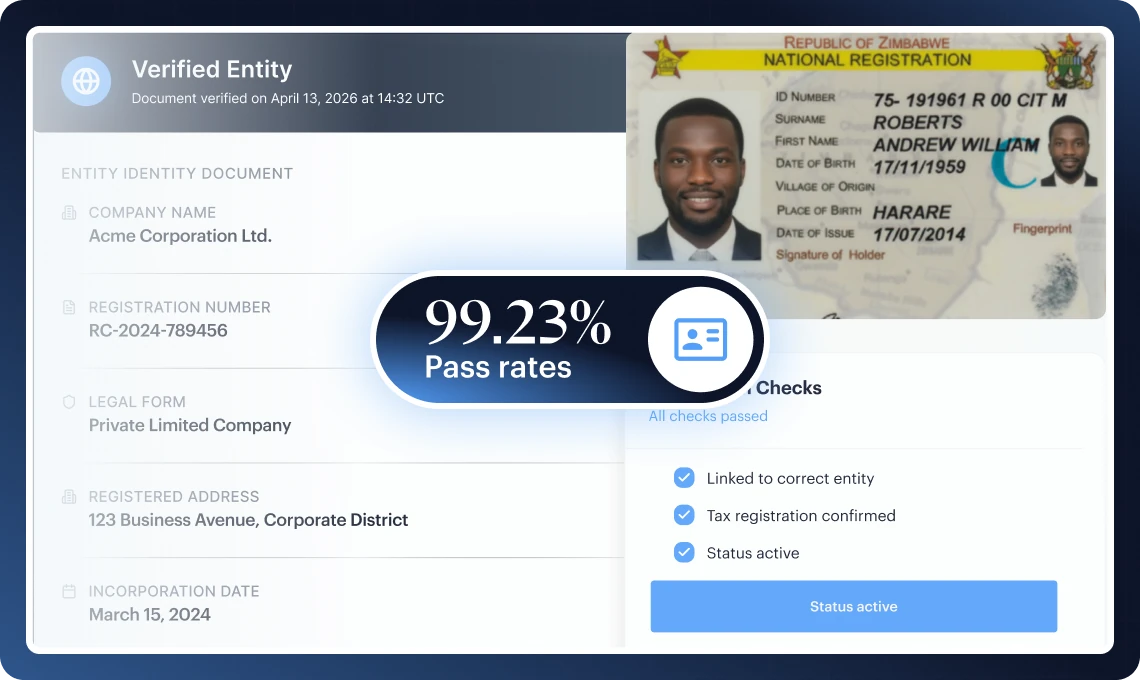


Operational Performance for Zimbabwe KYC
Our Numbers Speak Volumes
99.23%
Pass
Rates
Under 5 secs
IDV
Verification
90%
eIDV
Coverage
Zimbabwe IDV/KYC Challenges

Two Ownership Thresholds Shape Corporate KYC
KYC in Zimbabwe for companies runs on two ownership tests. The COBE Act treats anyone holding more than 20% as a beneficial owner, while the RBZ's 2025 guideline asks banks to verify owners from 10%. Shufti maps ownership to whichever threshold applies.

Ghost and Duplicate Wallets Now Face Civil Registry Checks
The RBZ directed mobile money operators to verify wallet holders against the Civil Registry Department at onboarding and periodic KYC reviews, and to clear ghost and duplicate wallets. Shufti checks national ID details and flags identities reused across accounts.

Virtual Asset Firms Carry New Registration Duties
Since the Finance Act 2025, virtual asset service providers must register with the FIU, and new regulations add Travel Rule and wallet ownership duties on top of standard CDD. Shufti verifies users, screens wallets and exchanges Travel Rule data within one onboarding flow.

Thin Case Files Weaken goAML Reports
The FIU receives suspicious transaction reports, cash transaction reports and sanctions freeze reports through goAML, often on tight statutory deadlines. Incomplete case files slow every one of those filings. Shufti's case management assembles report-ready bundles that compliance teams can submit through goAML.
Documents and Languages
Individual Documents Shufti Verifies in Zimbabwe
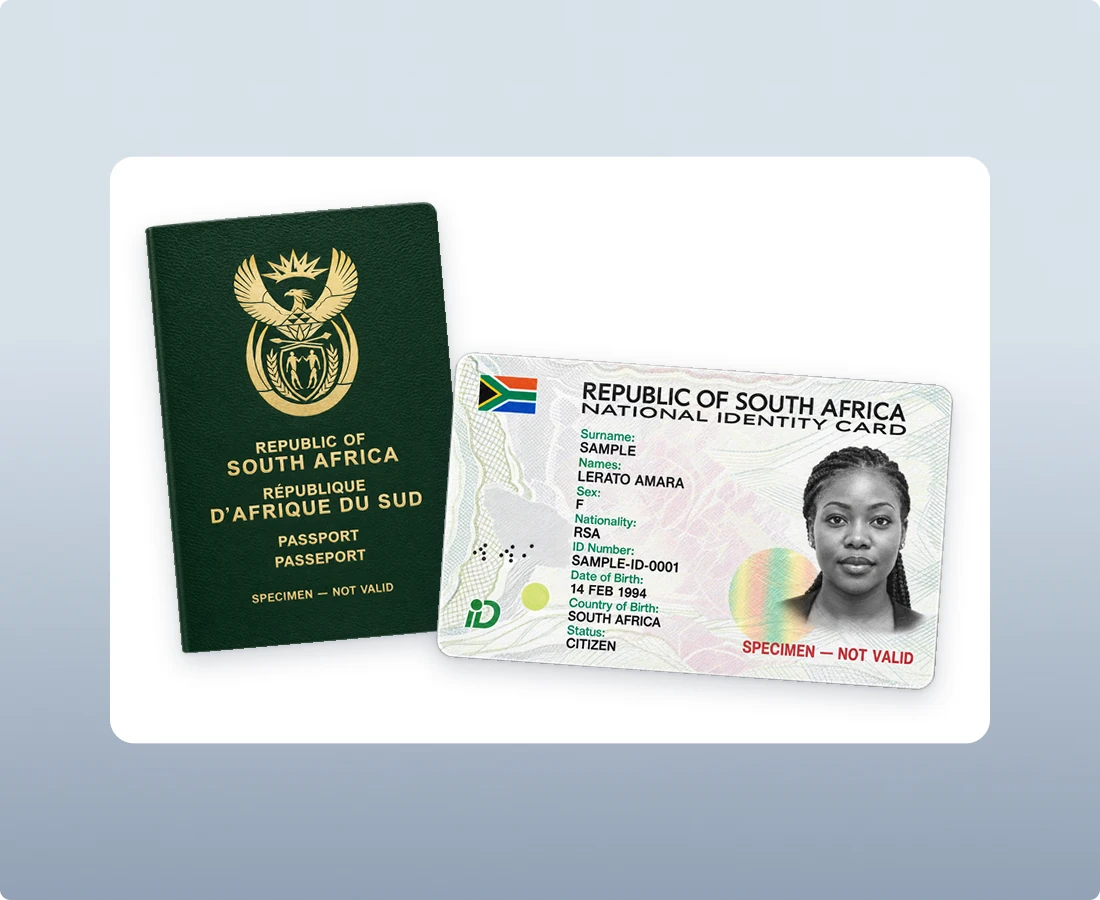
Shufti verifies 6 Zimbabwean identity documents plus passports and ID cards from other countries. The cards below cover the core documents Zimbabwe onboarding relies on, with the full list on the supported documents page.
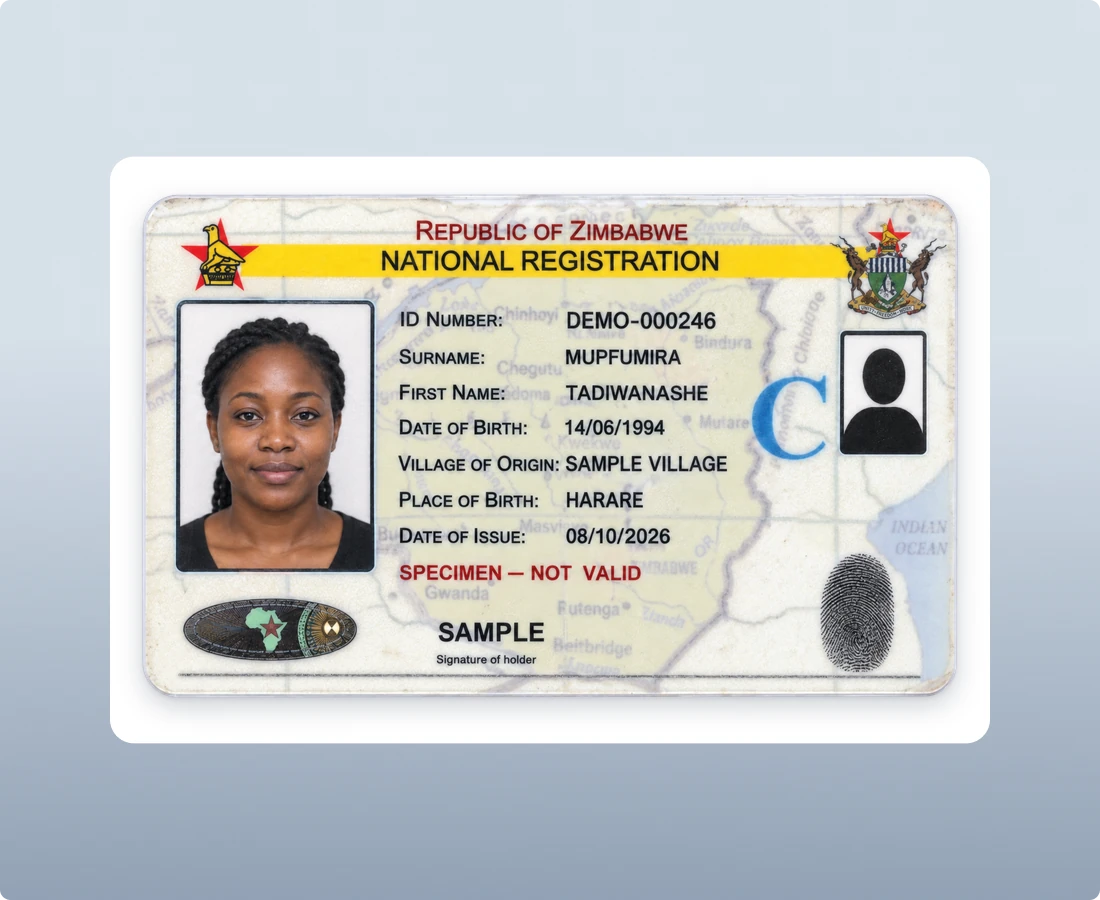
View All Supported DocumentsZimbabwe National Identity Card
Issued by the Registrar-General's Civil Registry under the National Registration Act [Chapter 10:17] to people aged 16 and over, in both metal and plastic versions. Shufti reads the ID number and district code, runs forensic tamper checks and matches the holder through biometric liveness.
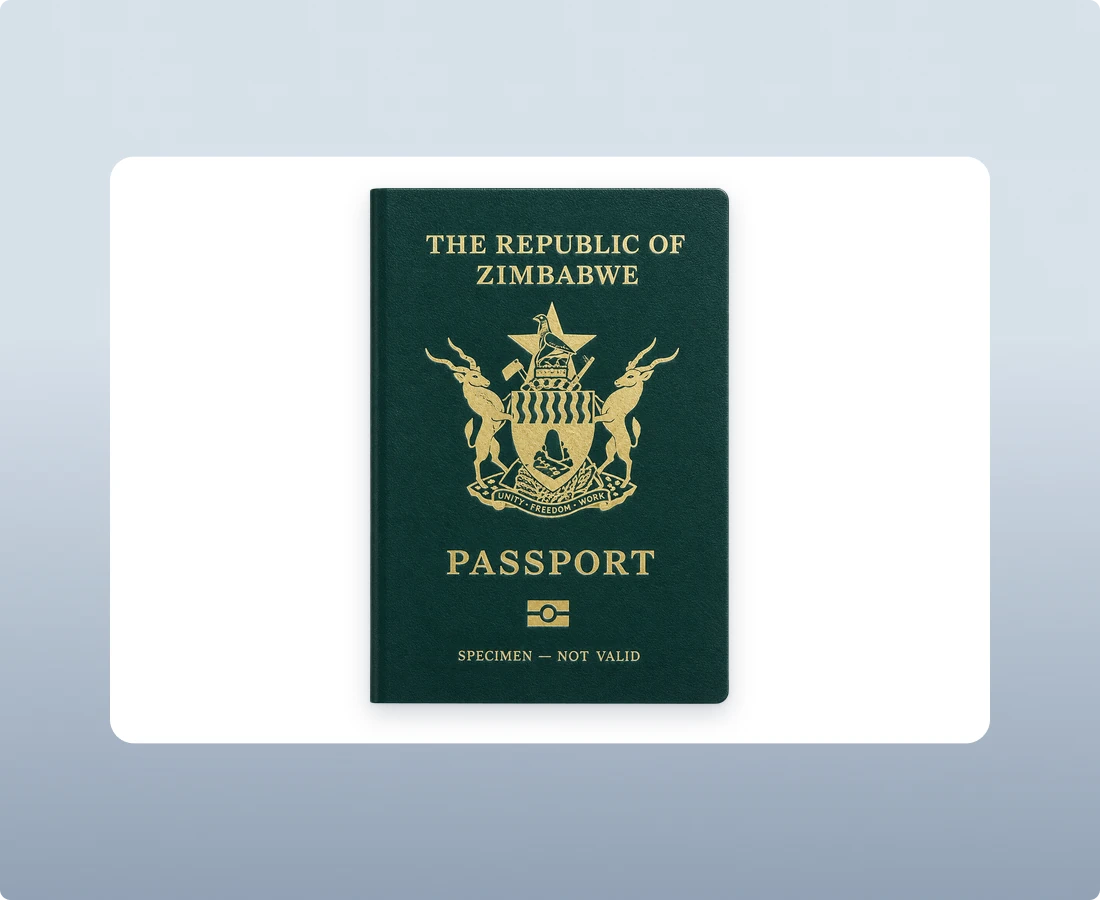
Zimbabwean Passport and e-Passport
Issued by the Civil Registry under the Citizenship of Zimbabwe Act [Chapter 4:01], with e-passports issued since 2022. Shufti reads the e-passport chip and runs nine forensic detection layers, from MRZ checksum validation to hologram analysis, so a cloned or altered passport fails before onboarding.
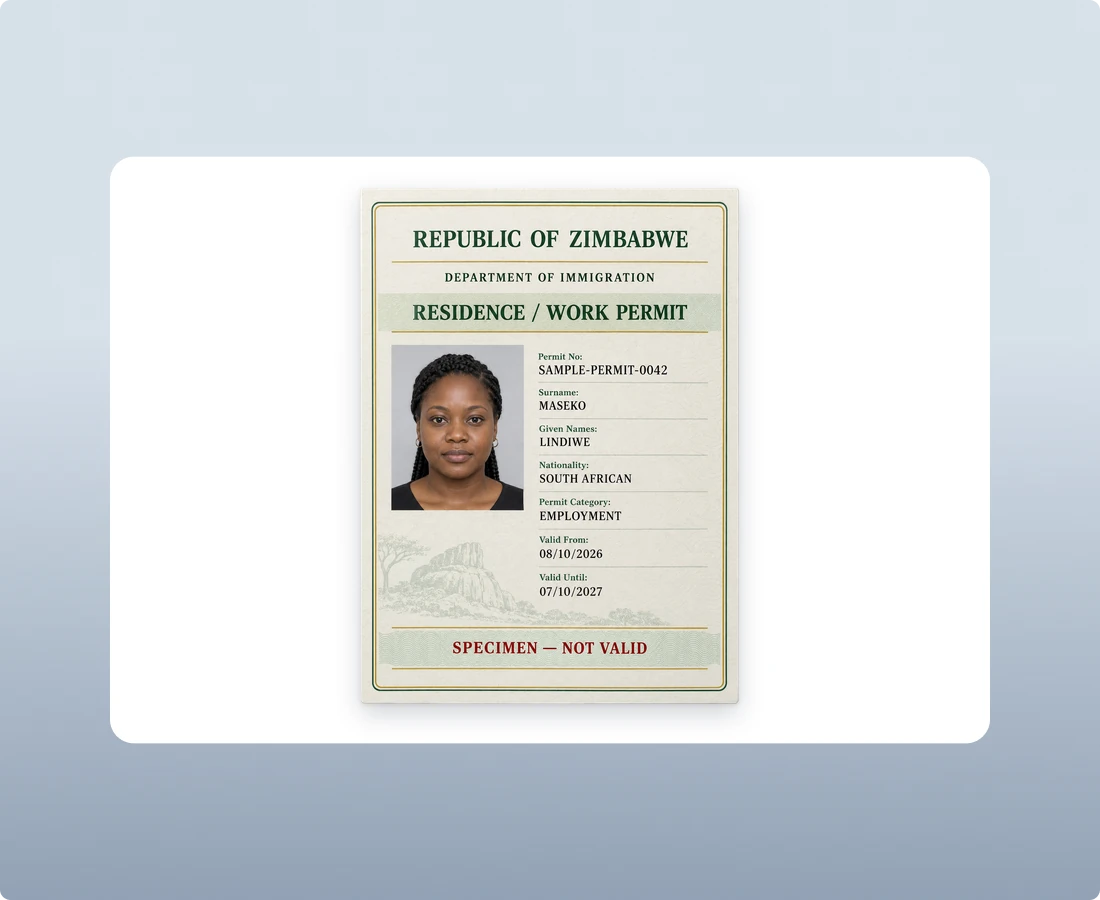
Residence and Work Permits
Permits issued under the Immigration Act [Chapter 4:02] count as identity documents under the MLPC Act for foreign residents. Shufti verifies permit authenticity and expiry, then links the permit to the holder's passport and selfie in the same session.
Foreign Passports and National ID Cards
Shufti actively processes 10,000+ ID document types from 240+ countries and territories, and its zero-shot AI learns new document formats in minutes. Expatriate workers, refugees and non-resident investors onboard with these documents in the same flow as citizens.
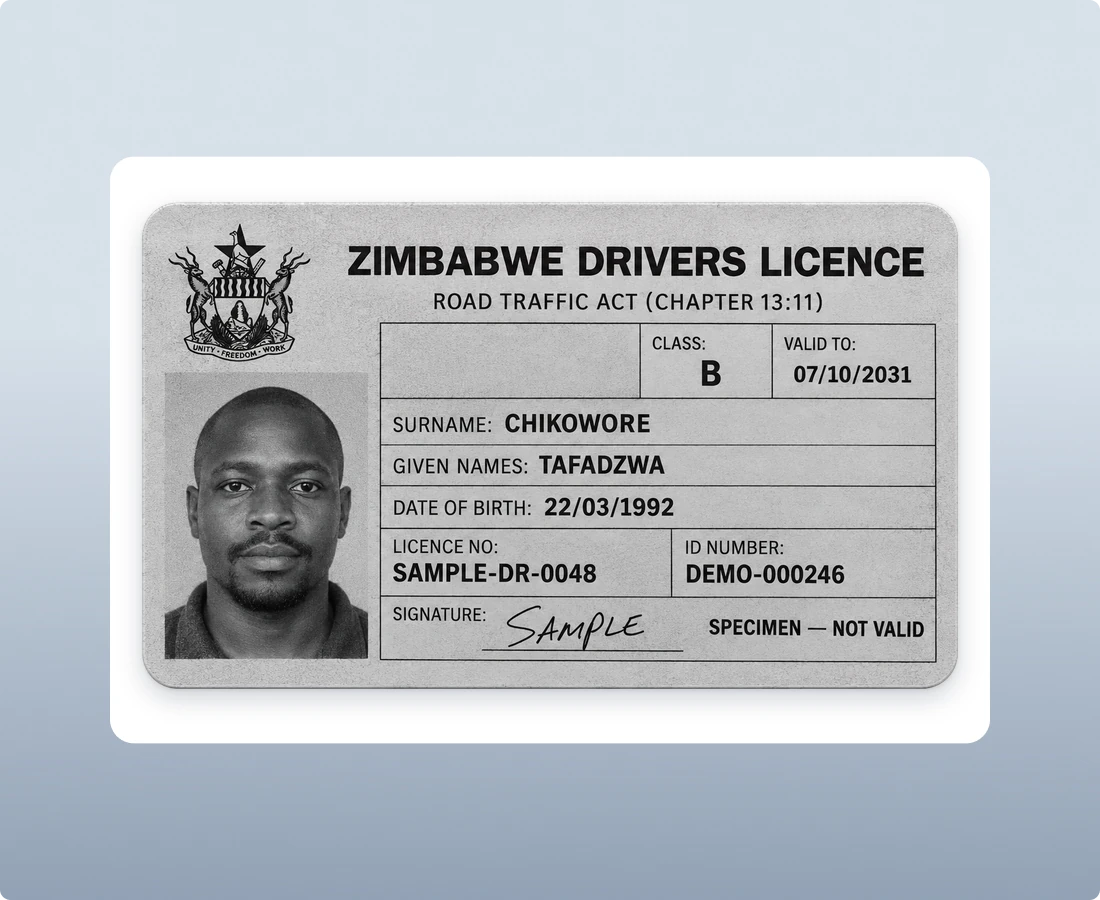
Zimbabwe Driving License
Issued under the Road Traffic Act [Chapter 13:11] and listed as an identity document in the MLPC Act. Shufti checks authenticity, expiry and the photo match, which supports onboarding for vehicle finance, insurance and delivery platforms.
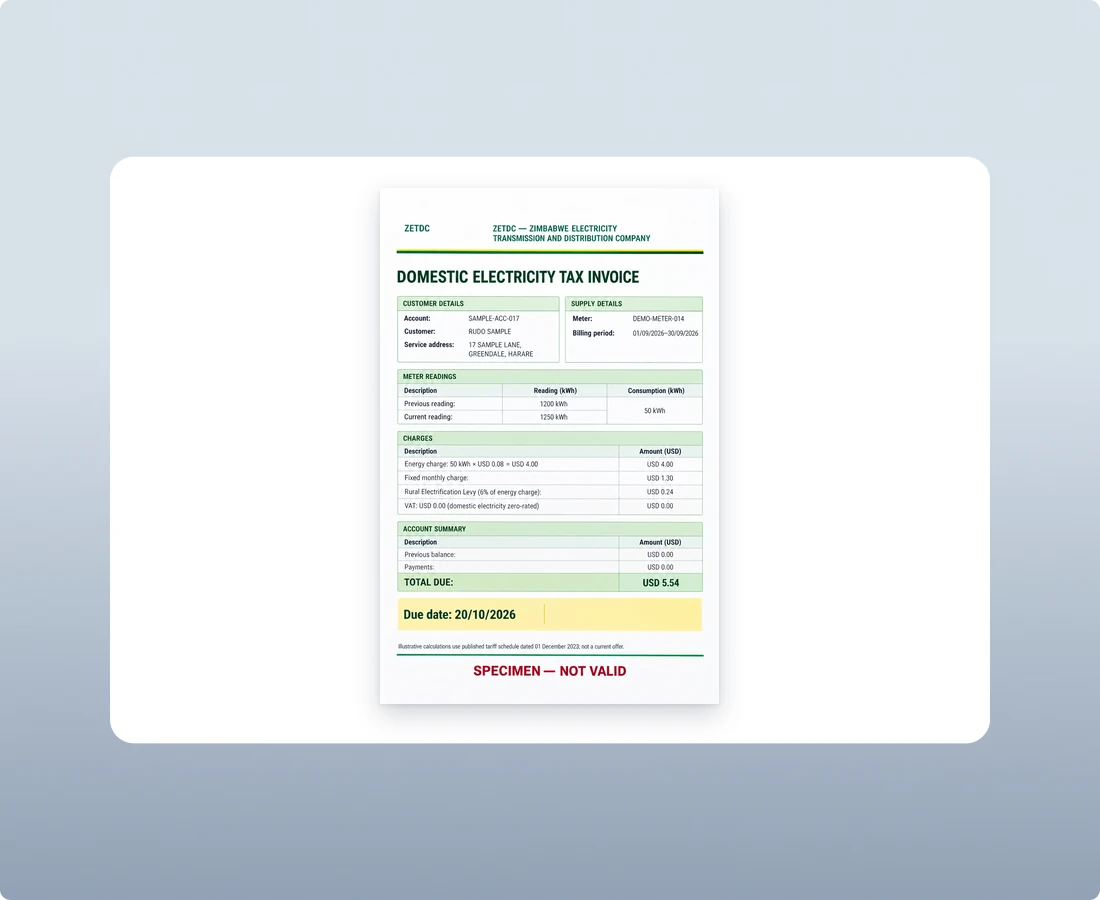
Proof of Address
ZETDC electricity bills, municipal rates statements, telecom bills, lease agreements and bank statements. Shufti extracts the address and matches it against the ID in one step, with docless address checks for customers who hold no bill in their own name.
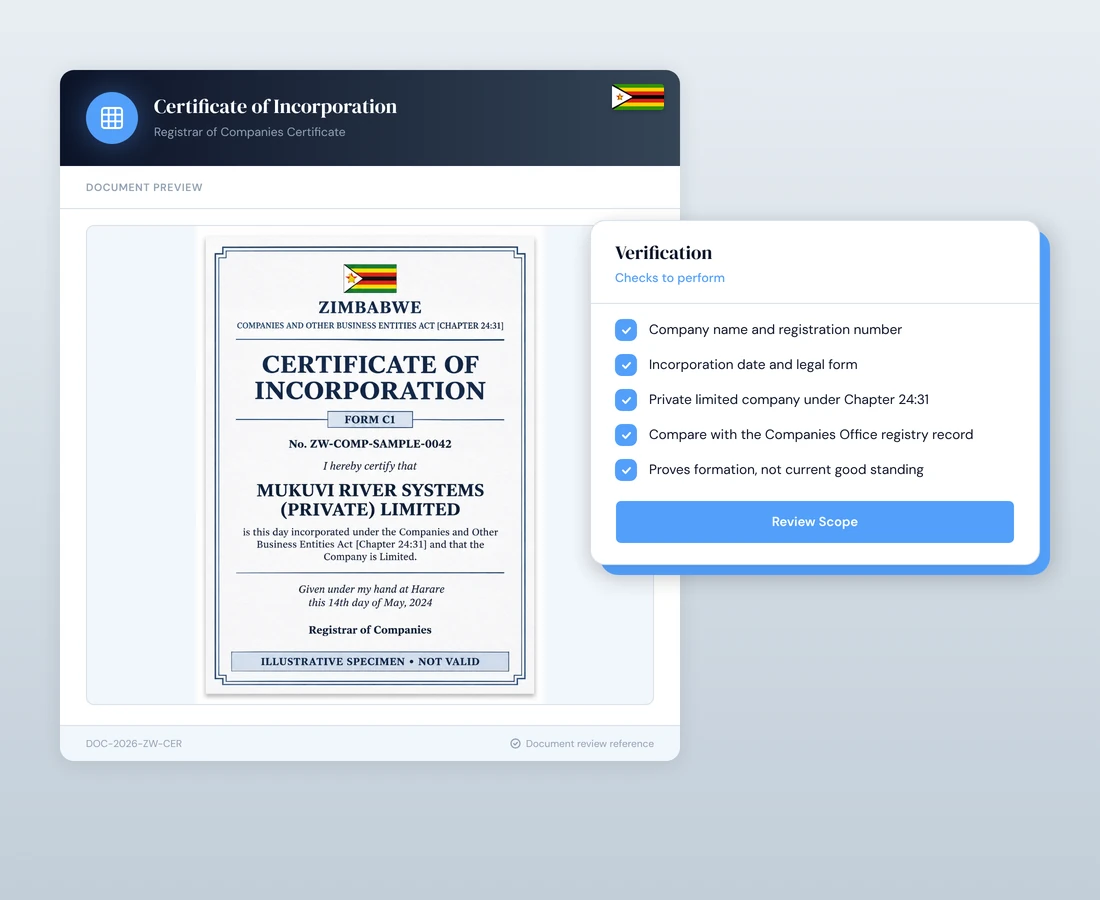
Entity Identity
Certificate of Incorporation
Issued by the Registrar of Companies under s.18 of the Companies and Other Business Entities Act [Chapter 24:31] for companies and private business corporations. Shufti's live registry call confirms the company number, status and incorporation date at every check.
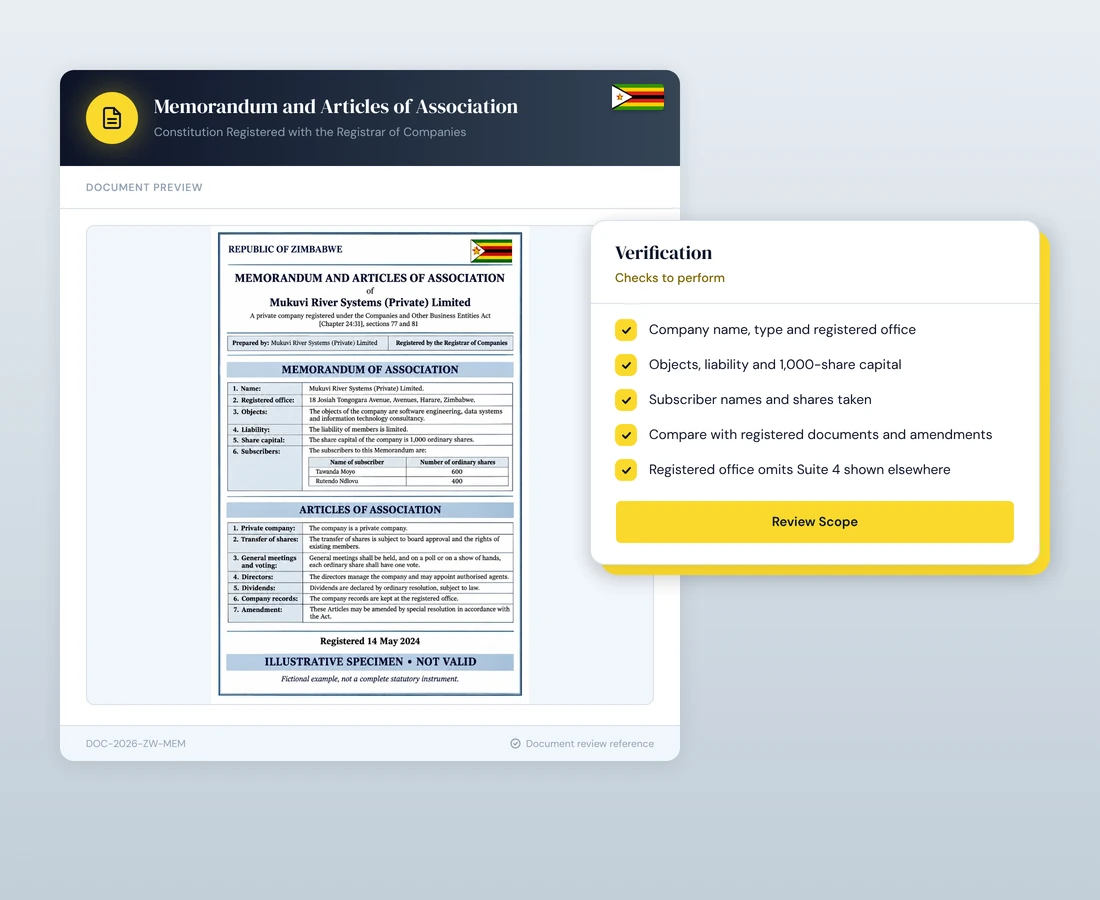
Memorandum and Articles of Association
Registered under ss.77 and 81 of the COBE Act, they set out ownership, share capital and signing authority. Shufti's AI-OCR reads these terms and flags GAN-generated or edited pages before they shape a KYB decision.
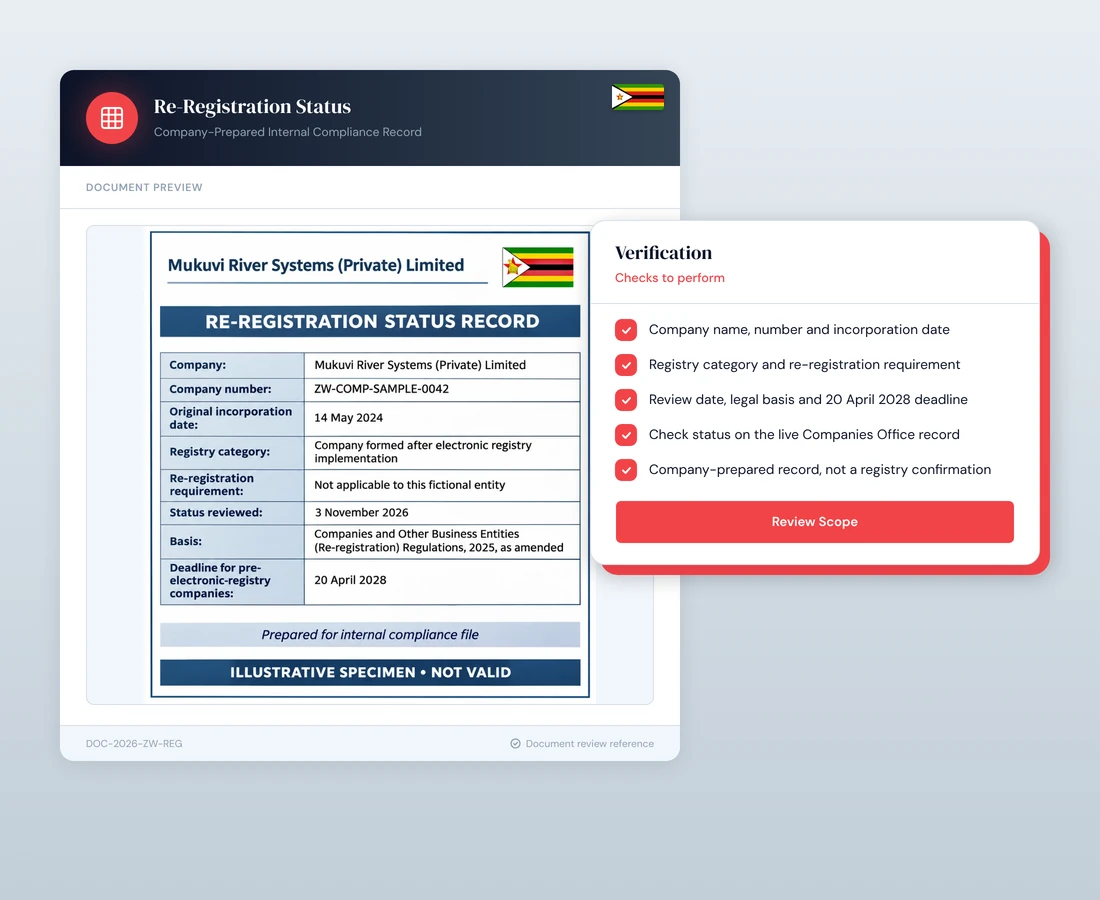
Re-Registration Status
Companies formed before the COBE Act must re-register by 20 April 2028 under SI 76 of 2026 or face deregistration. Shufti's registry check confirms current status, so a lapsed entity does not pass corporate onboarding.
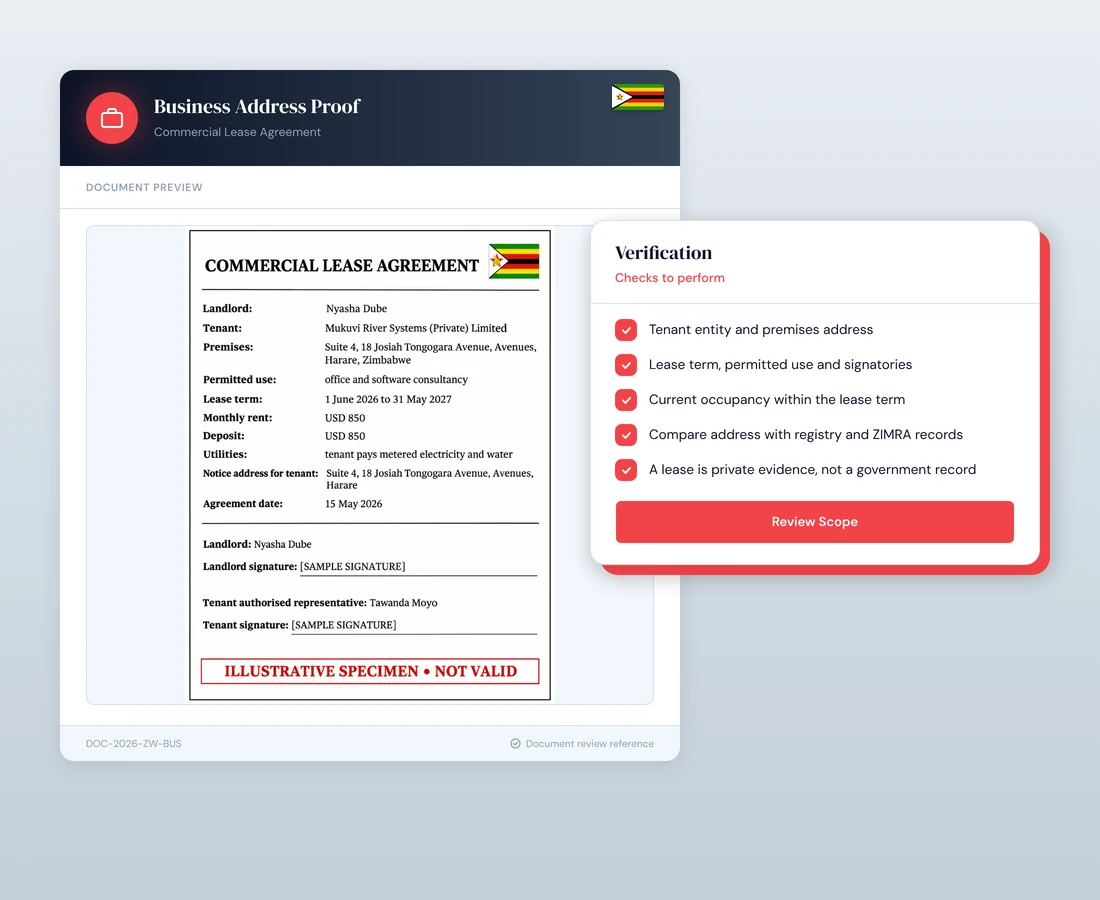
Business Address Proof
Registered office details filed under s.31 of the COBE Act. Shufti cross-checks them against lease agreements and utility bills for the trading address, so the place the business operates matches its filings.
Tax Identity
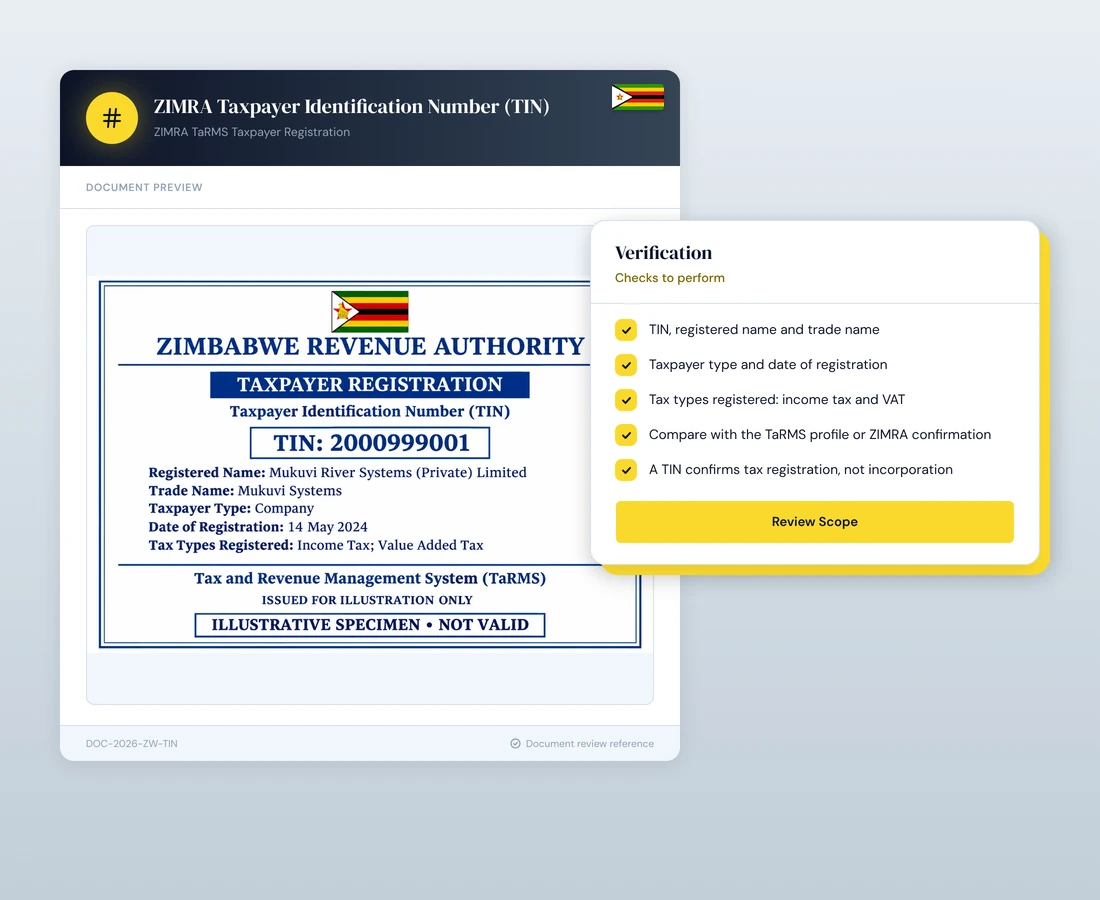
ZIMRA Taxpayer Identification Number (TIN)
Issued through ZIMRA's Tax and Revenue Management System (TaRMS), live since October 2023, which replaced the legacy Business Partner number. Shufti extracts the TIN and cross-checks the entity name against the incorporation record.
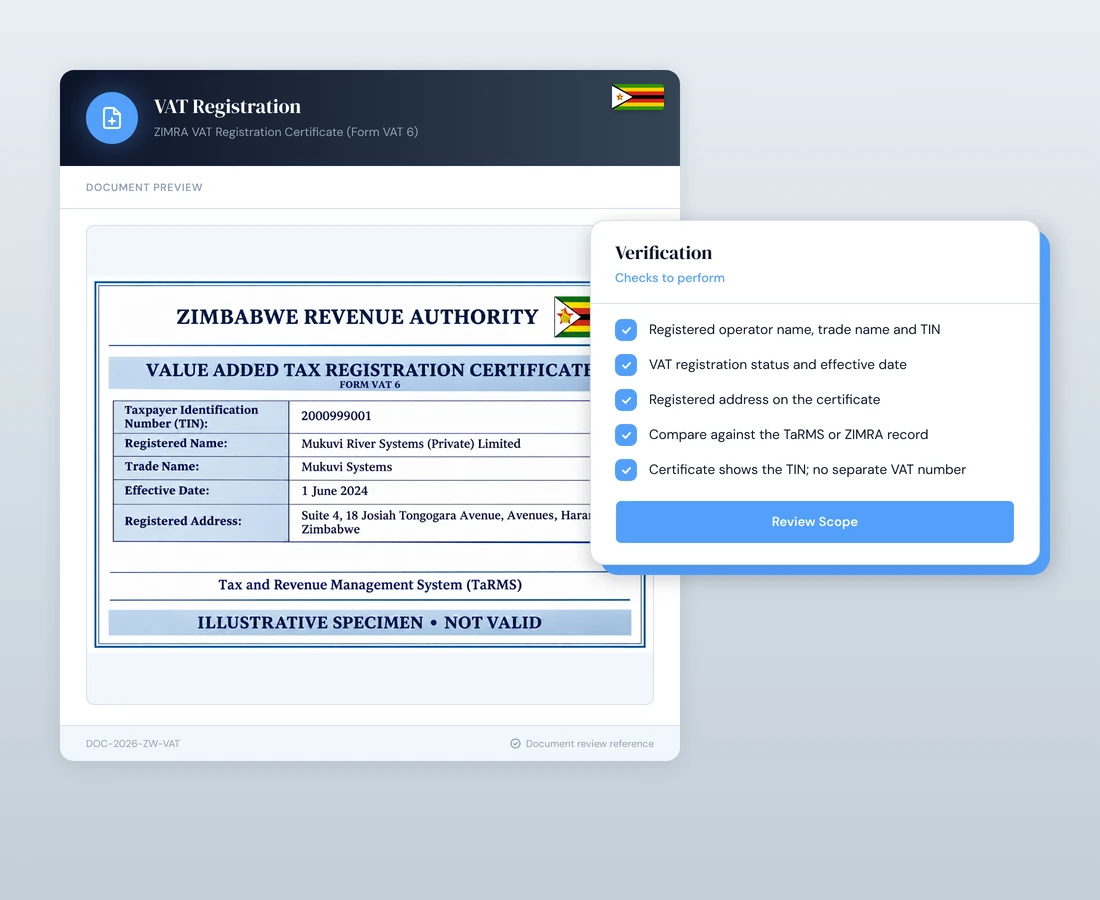
VAT Registration and Tax Clearance (ITF263)
VAT registration under the Value Added Tax Act [Chapter 23:12] and the ITF263 tax clearance issued through TaRMS. Shufti reads both, checks validity dates and matches the TIN, plus foreign tax registrations and FATCA/CRS self-certification.
Ownership and Control
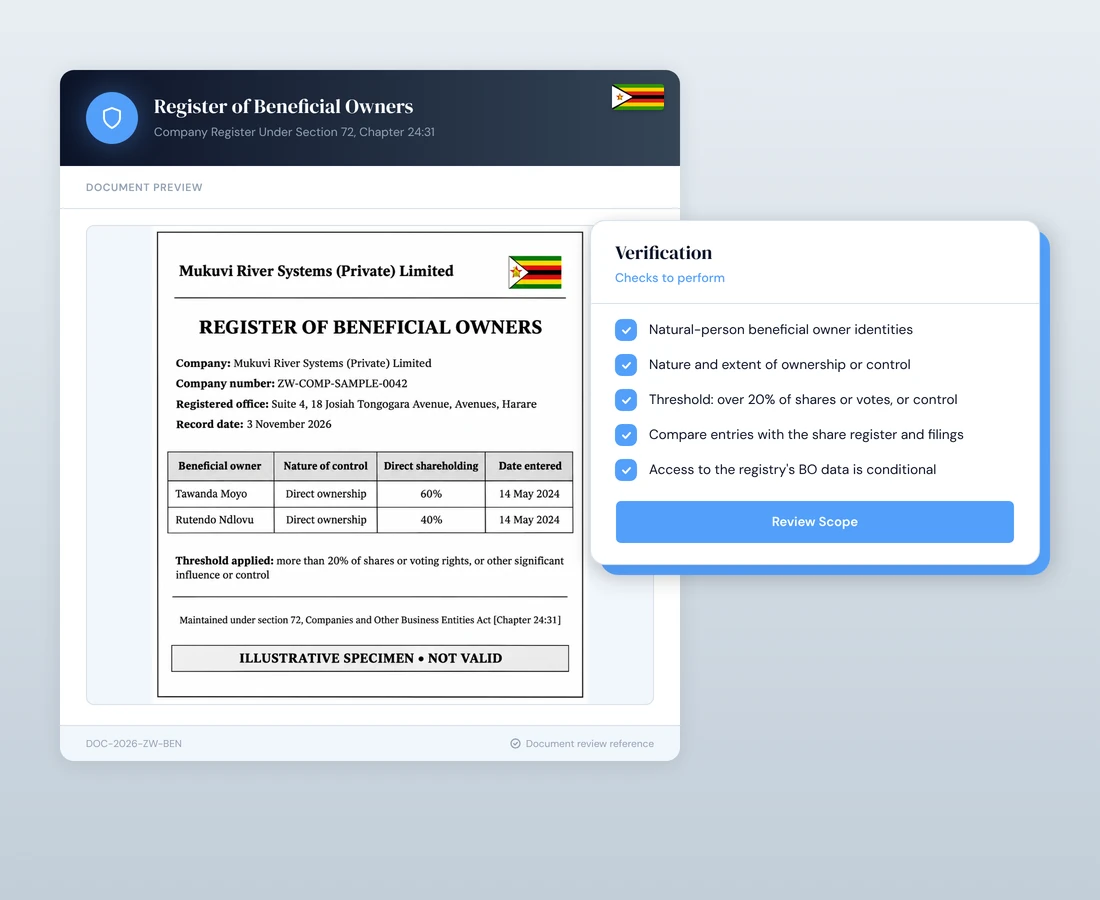
Register of Beneficial Owners
Every company files its beneficial ownership register with the Registrar under s.72 of the COBE Act and updates it within seven days of a material change. Shufti extracts each owner to the client's applicable threshold and screens them before approval.
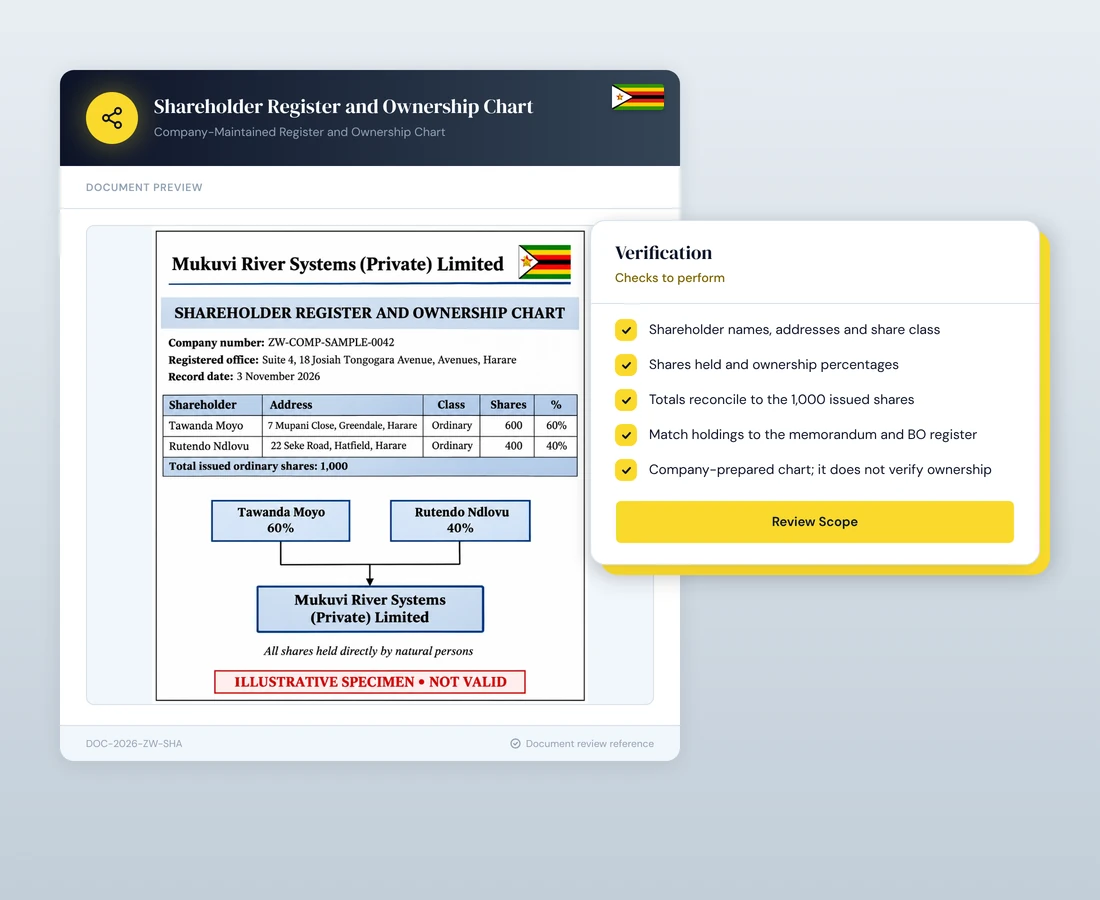
Shareholder Register and Ownership Chart
Shufti maps ownership through intermediate companies to the natural person in control, peeling back corporate layers as the RBZ guideline expects, and screens every owner against sanctions, PEP and adverse media lists.
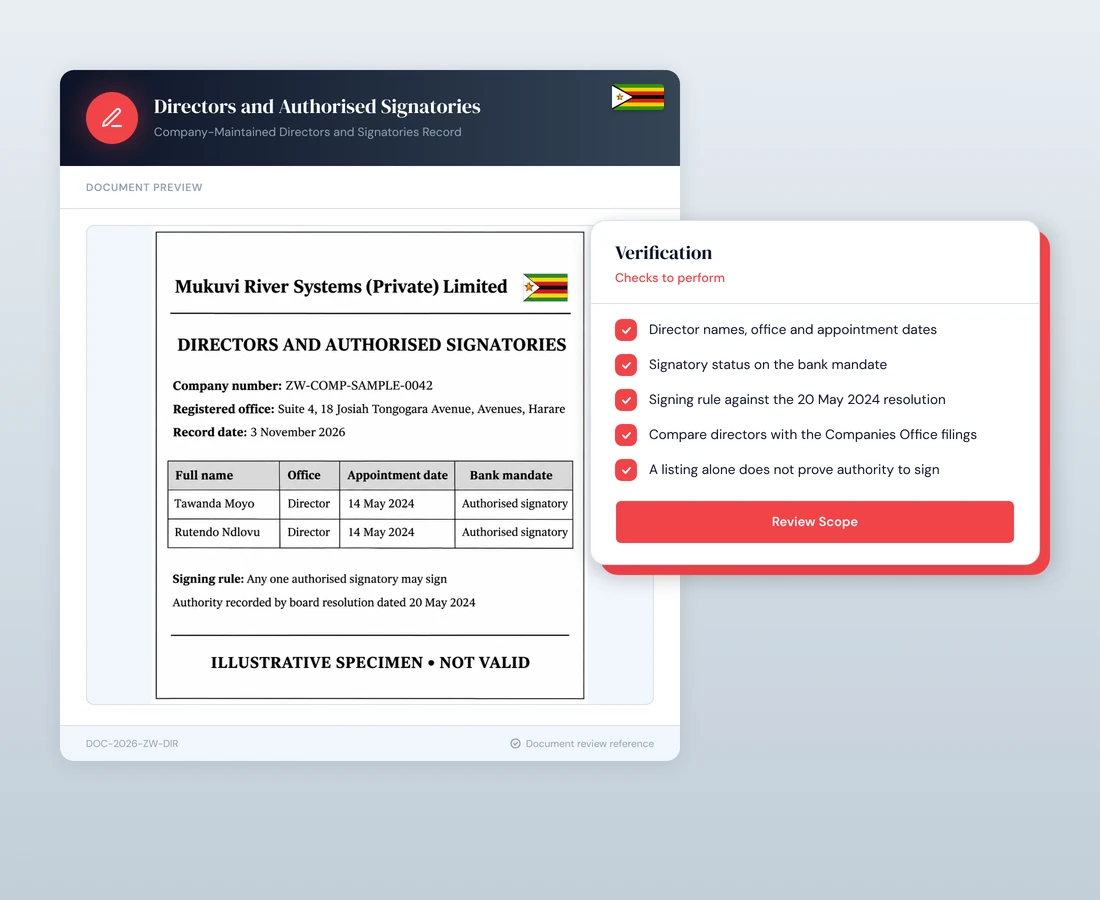
Directors and Authorised Signatories
Shufti verifies each director's identity document, screens them for sanctions and PEP exposure, and raises an alert when the board changes, so signing authority on the account stays current and every signatory is verified.
Languages We Cover
English, Shona and Ndebele Document Parsing
Zimbabwean documents are issued in English in Latin script and carry Shona and Ndebele names. Shufti's OCR reads 150+ languages and scripts at 99.7% accuracy and averages 93% against Google Vision's 78.4% across its published benchmark. Zero-shot document intelligence reads expat document layouts it has never seen on first sight, without waiting for a template.
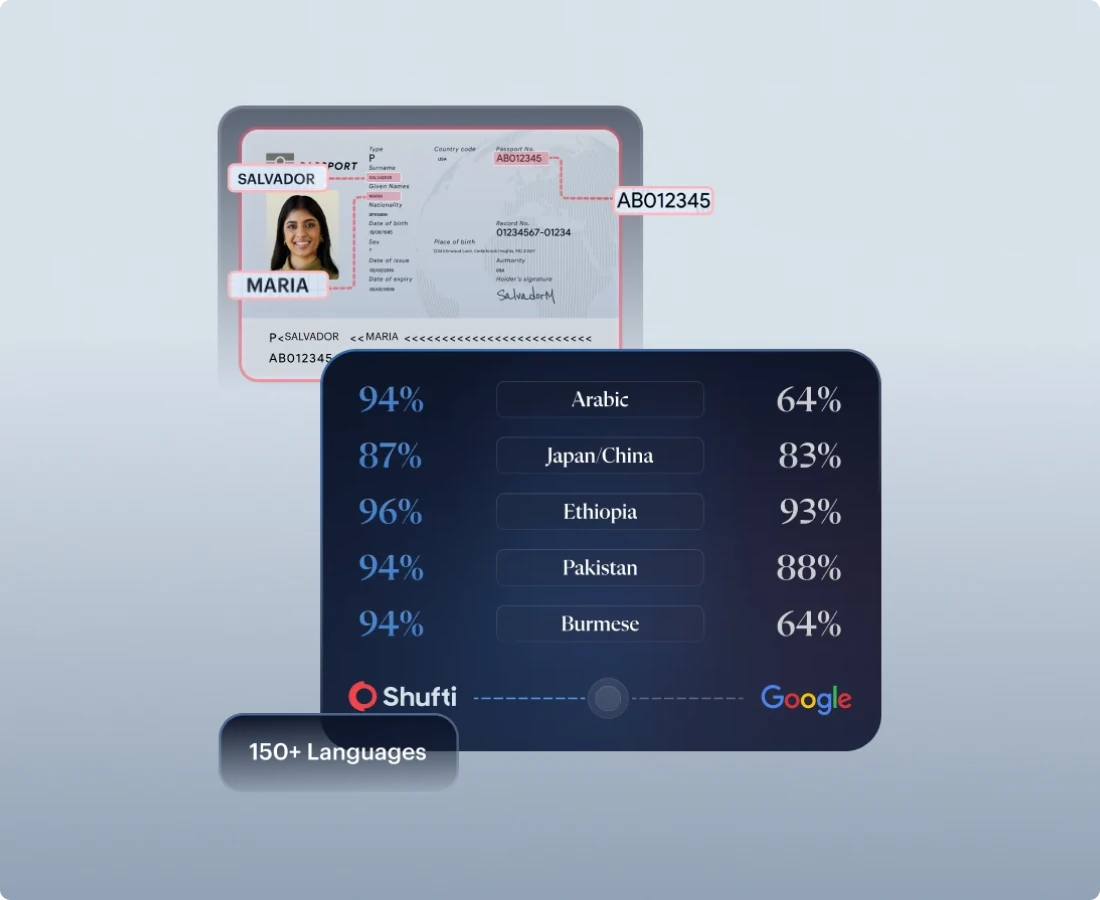
Shona and Ndebele Name Matching
Zimbabwe's Constitution recognises 16 official languages. Shufti's phonetic matching handles Shona and Ndebele spelling variants, initials and name-order changes in sanctions and PEP screening, cutting false hits on common surnames.
Cross-Document Consistency Checks
Names, dates of birth and ID numbers are reconciled across the national ID, passport, driving licence and beneficial ownership register, so a mismatch between documents surfaces before an analyst approves the customer.
Independent Validation
Shufti's Recognition Across Independent Evaluations

Ranked Exceptional in the Liminal Index 2026 for age estimation
View Report

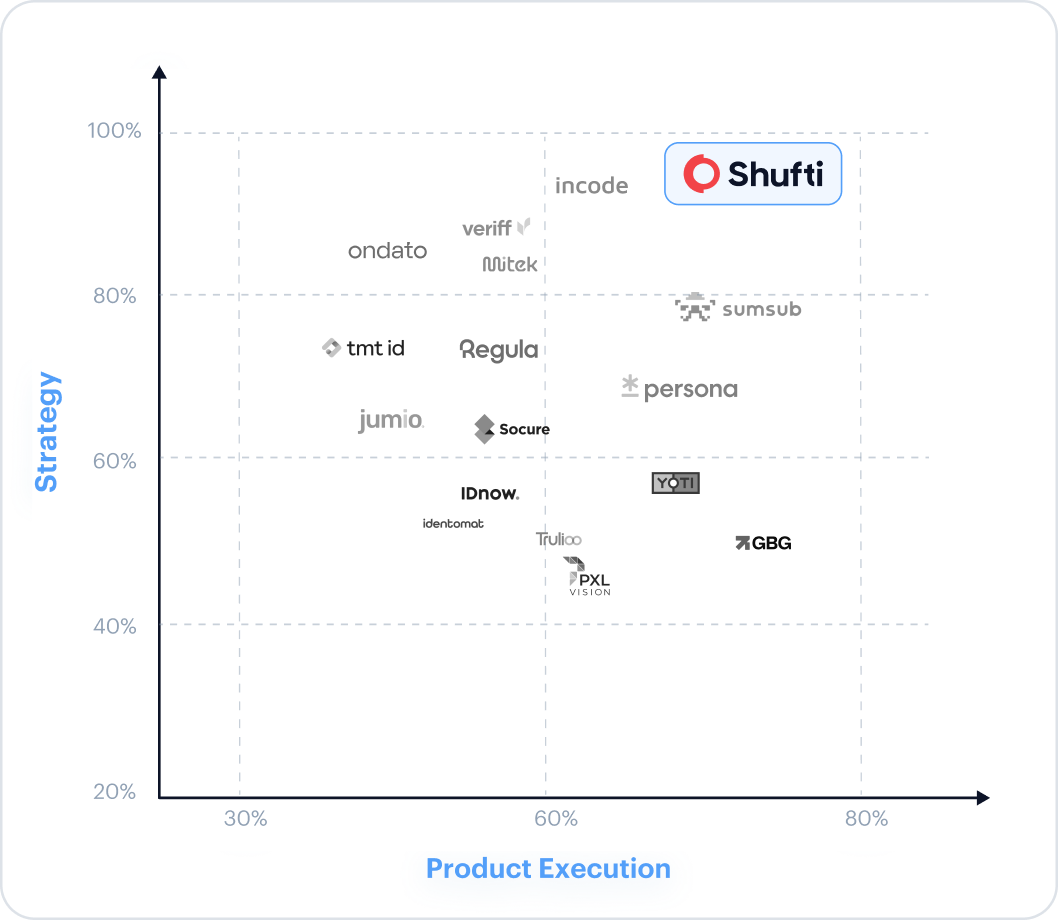
Differentiated by Gartner on document diversity and country coverage
Read more
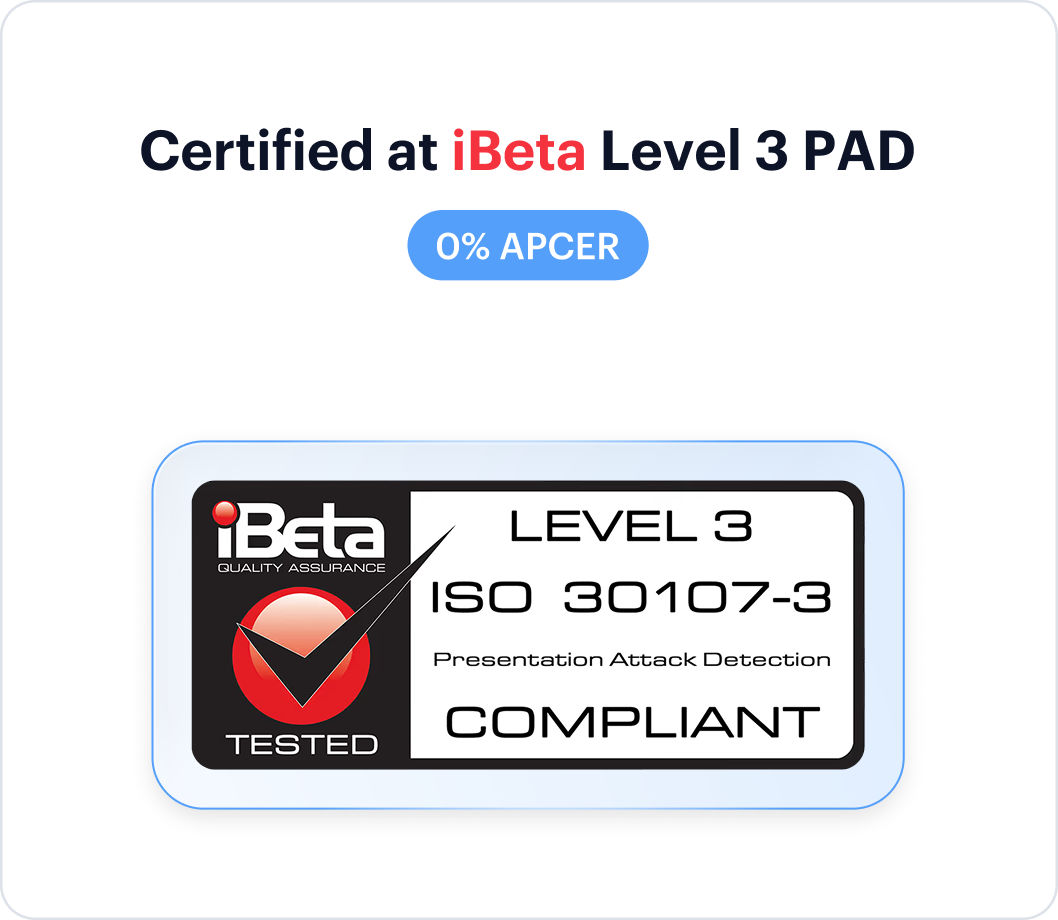
Certified at iBeta Level 3 PAD with 0% APCER
Read Blog
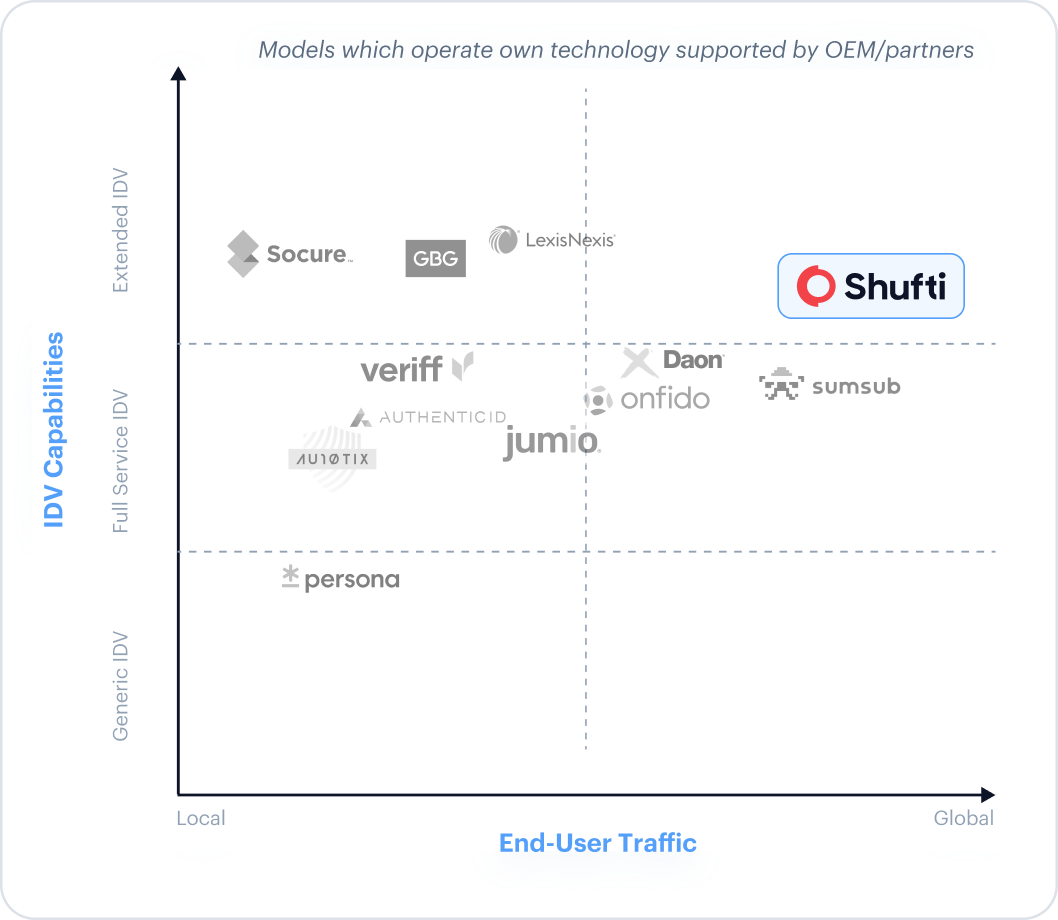
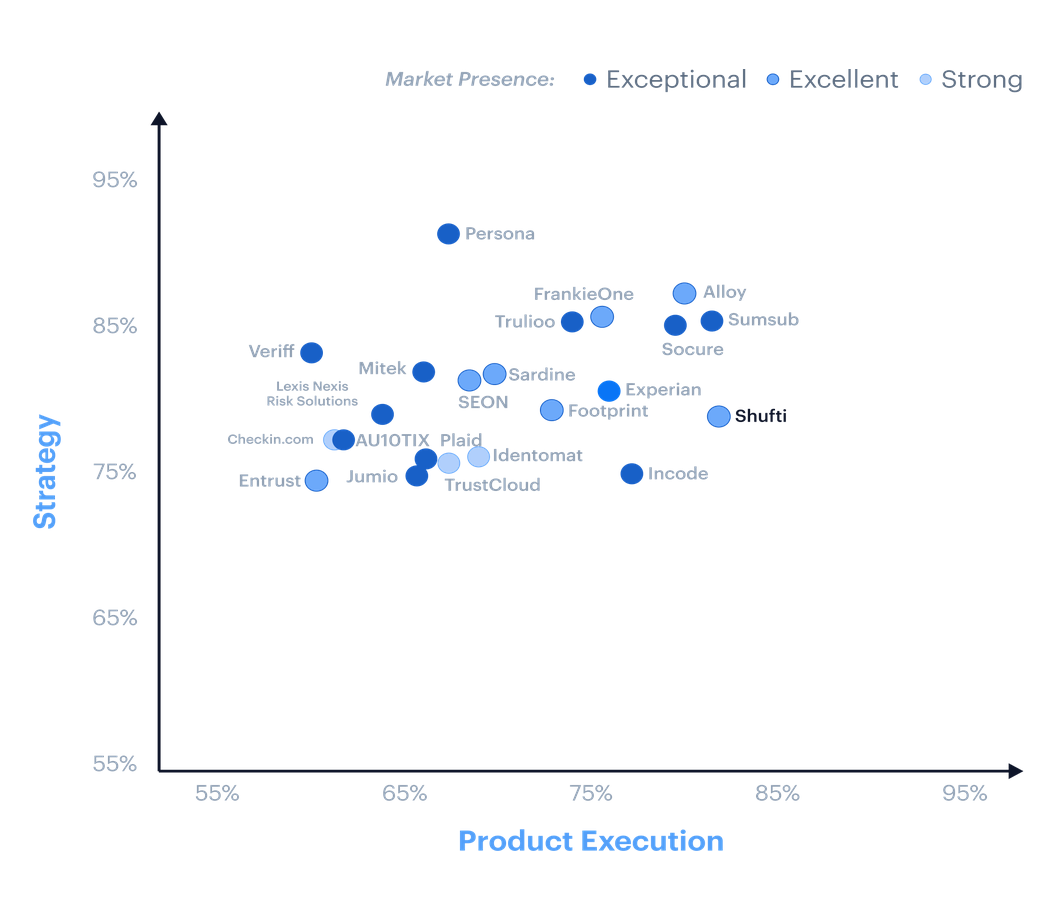
Broadest global reach in the 2025 KuppingerCole Extended IDV report
Download Report
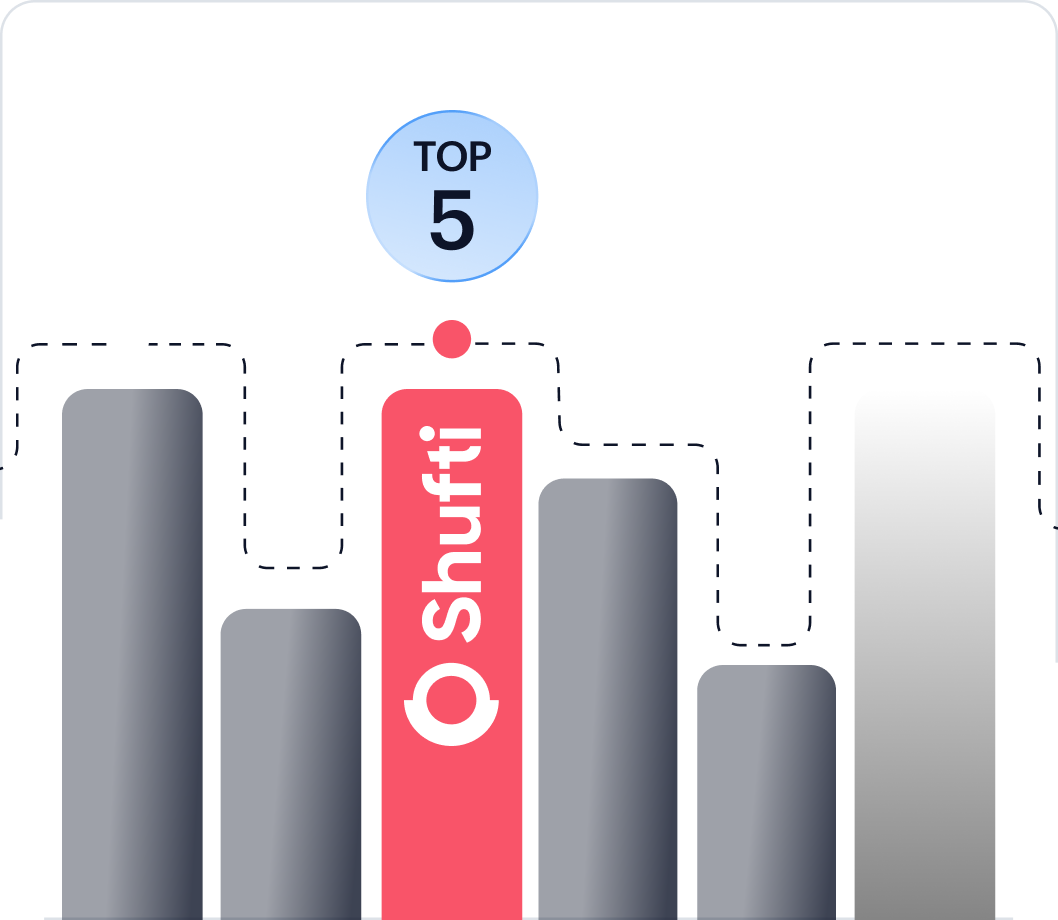
Ranked Top 5 in the DHS RIVR 2025 for identity validation
Read Blog

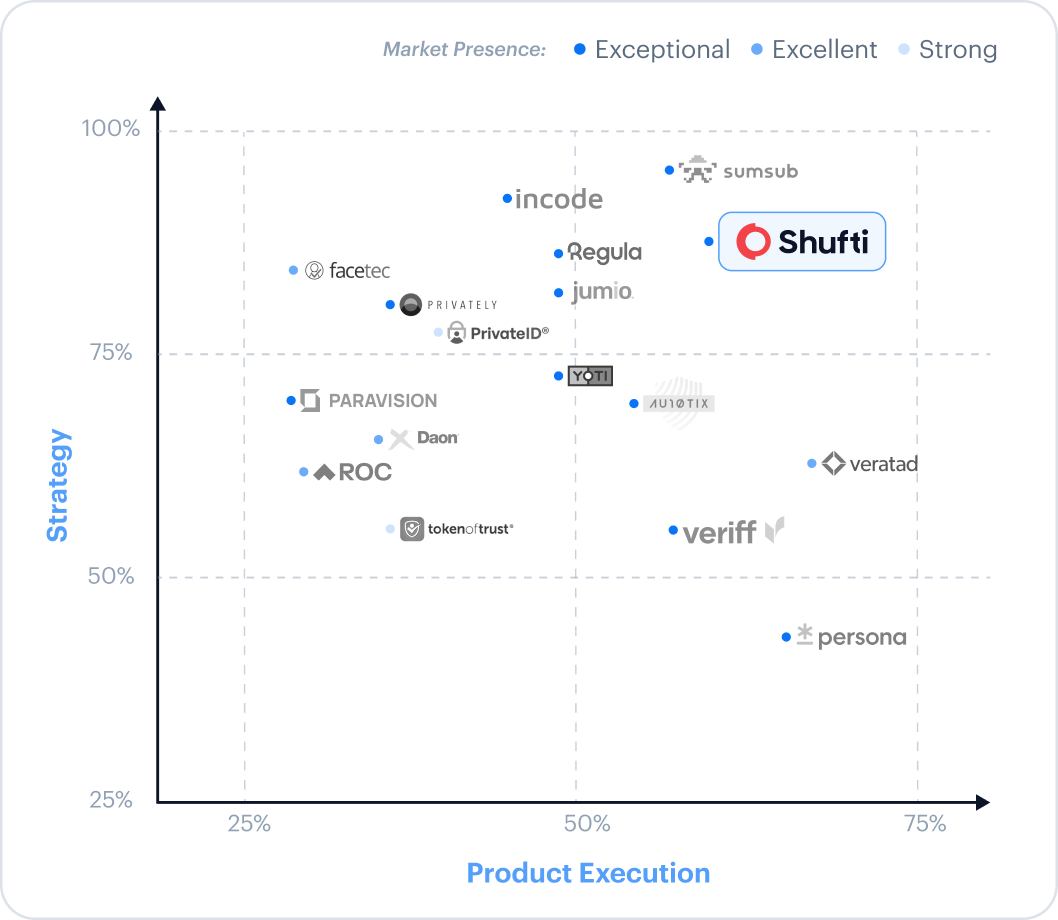
Top Vendor for Product Execution in the Liminal Index for KYC 2026
View Report

Ranked Exceptional for age verification by Liminal Index 2026
View Report
Recognised as a Leader in G2 Fall 2026 reports
Read More






Regulatory Update
Every Verification Route Zimbabwean Firms Rely On, in One Platform
Online identity verification in Zimbabwe rests on s.19 of the MLPC Act, which requires due diligence on customers who are not physically present to be no less effective than in person. Shufti supports docless eIDV for residents, plus chip, document and video routes for non-residents and customers without a national ID.
Docless Database (eIDV)
LiveThe customer enters a national ID number and personal details, and Shufti matches them against permitted Zimbabwean data sources, including registry-linked records, with a decision in seconds. It fits the Civil Registry checks now standard in wallet onboarding.
NFC Chip Verification
LiveShufti reads the chip in Zimbabwe's e-passport and in most foreign biometric passports, checking the signed data against the printed page. It is the high-assurance route for travellers, expatriates, non-resident investors and anyone holding a chip-enabled passport.
Document and Face Biometric
LiveThe customer photographs an ID and takes a selfie, and Shufti matches the two with iBeta Level 3 certified liveness. It is the route most non-residents and remote customers take, with on-screen guidance that cuts failed captures.
Video Identification
LiveAn agent-led video session in English verifies the customer and their document live, captures consent and records the full session as evidence, for high-risk and enhanced due diligence cases where firms want a human check.
Fraud Prevention Across the Zimbabwe Customer Journey
Reduce fraud losses and protect customer trust across onboarding, account access, and payments. Shufti connects identity, behavioral, device, network, and transaction intelligence to help Zimbabwe businesses act on risk while keeping legitimate customers moving.
Governance & Controls
Audit-Ready Decisions, Lower Operational Drag
Fewer Avoidable Re-submissions
Capture guidance for metal and plastic national IDs, e-passports and older passport books cuts glare, crop and blur rejections at the first attempt.
Cleaner Audit Trails
Shufti's case management records sources, results, timestamps, evidence, analyst notes and decision history, packaged as report-ready bundles for STR filing through goAML.
One Workflow, One Back Office
Unify KYC, KYB, AML screening and transaction monitoring in one case file, with perpetual KYC/KYB tracking ownership, director and transaction behavior changes across the lifecycle.

National ID and eIDV-First Flow Design
Residents verify through the national ID and docless eIDV first, while non-residents move to passport and NFC verification in the same flow.
Shufti's IDV/KYC Solutions for Zimbabwe
KYC Solutions
Zimbabwe's customers range from salaried bank clients and mobile money users to diaspora remitters, foreign residents and visiting investors. One Shufti flow routes each by risk, so nobody faces checks they don't need.
Explore More
Face Verification
Remote wallet sign-ups and agent-assisted onboarding both need proof that the person matches the ID. Shufti matches the selfie to the document photo at a false match rate below 0.001, so impostors fail while genuine customers pass first time.
.
Age Verification
Casinos and betting operators must keep minors out of gambling. Shufti estimates age from a selfie in under 5 seconds and falls back to the document's date of birth, blocking 99.8% of underage attempts at sign-up.
.
Bank Account Verification
Payouts and debit orders fail or get misdirected when the account name differs from the customer. Shufti validates Zimbabwean bank account details and matches the account-holder name in real time, so funds reach the verified customer.
.
Address Verification
Addresses are often written differently across bills, leases and ID records. Shufti's layout-aware extraction and fuzzy matching read local utility bills and statements at a 99.3% pass rate, with docless checks in under 3 seconds.
.
Document Verification
Forged and altered IDs remain a common entry point for fraud. Shufti checks Zimbabwean IDs, passports and licences within seconds, flagging GenAI edits, screenshots, replays and print-and-scan copies before the customer is approved.
.
Identity Verification
Some customers need more than one check. Shufti combines document, biometric, NFC, address and eIDV checks in one API session, so a firm can step a customer up from docless eIDV to a full check without restarting onboarding.
.KYB Solutions
Zimbabwean companies file with the Registrar of Companies, and many sit inside group structures with corporate shareholders. Shufti pulls registry data at every check, maps ownership to the COBE Act's beneficial ownership test and ties each owner to a verified identity.
Explore More
Business Verification
Onboarding a Zimbabwean company means confirming its incorporation, TIN, directors and everyone who owns or controls more than 20%. Shufti's live registry call confirms the company record, and owners are checked against the beneficial ownership register and shareholder records the company provides.
.
Enhanced Due Diligence
PEPs and customers linked to higher-risk countries need enhanced checks under ss.20 and 26A of the MLPC Act. Shufti's branching due diligence questionnaires collect source of funds and wealth, score the answers and send UBO verification links.
.AML Screening
A customer who is clean at onboarding can land on a list next week. Shufti's perpetual KYC rescreens customers against 4,000+ watchlists, including the Zimbabwean List and UN Security Council sanctions, refreshed every 15 minutes, with every alert kept in one case file.
Explore More
Business AML Screening
Sanctions exposure often sits with an owner or director rather than the company itself. Shufti screens every entity, owner and director against the Zimbabwean List, UN lists, PEP data and 50,000+ adverse media sources, and perpetual KYB rescreens the whole portfolio.
.
Transaction Monitoring
Payments move in USD and ZiG across banks, wallets and instant transfers. Shufti's library of 500+ pre-built rules covering structuring, smurfing, and mule activity flags activity around the FIU's reporting thresholds with 60% fewer false positives, and builds report-ready case bundles for goAML.
.
Travel Rule
SI 99 of 2026 requires VASPs to send originator and beneficiary data with transfers and to prove ownership of unhosted wallets on transfers above USD 1,000. Shufti's single integration connects to major Travel Rule networks, exchanges IVMS101 data and supports four wallet ownership methods.
.
AI Compliance Co-Pilot
One common name can return 140+ screening hits. Shufti's AI Compliance Co-Pilot reviews every hit, assigns a 0 to 100 confidence score with a written reason and logs each override, while the MLRO keeps the final call on every match.
.Built To Fit Zimbabwe's Compliance Landscape
The MLPC Act and the FIU apply across every sector, while the RBZ, SECZ, IPEC and the Lotteries and Gaming Board add rules for the firms they supervise. Shufti maps its KYC, KYB, AML screening and transaction monitoring controls to every regime below, so one platform covers each license your group holds.

Money Laundering and Proceeds of Crime Act [Chapter 9:24]
Zimbabwe's primary AML law requires customer identification with a listed identity document (ss.13 and 15), due diligence on remote customers no less effective than in person (s.19), enhanced checks for PEPs and high-risk customers (s.20), ongoing due diligence (s.26) and records kept for at least five years (s.24).

Financial Intelligence Unit (FIU)
Set up within the RBZ under Chapter IA of the MLPC Act, the FIU oversees AML compliance and supervises DNFBPs directly. Section 30 requires an STR within three working days of forming a suspicion, and Directive 01/04/2024 sets cash reports from USD 5,000 or ZiG 70,000, filed on goAML.

Reserve Bank of Zimbabwe (RBZ)
Supervises banks, microfinance institutions and payment service providers under the Banking Act [Chapter 24:20], Microfinance Act [Chapter 24:29] and National Payment Systems Act [Chapter 24:23]. Its AML/CFT/CPF Guideline No. 01-2025/BSSFS, effective June 2025, sets the risk-based CDD, beneficial ownership, record-keeping and suspicious transaction reporting expectations for every bank.

Virtual Asset Service Providers Registration Regulations (SI 99 of 2026)
The Finance Act 2025 inserted s.3A into the MLPC Act, requiring VASPs to register with the FIU. SI 99 of 2026 sets the registration process, a Zimbabwe residence requirement, Travel Rule duties in Part V and customer due diligence on transactions of USD 1,000 or more.

Securities and Exchange Commission of Zimbabwe (SECZ)
Licenses securities dealers, investment managers and exchanges under the Securities and Exchange Act [Chapter 24:25], and acts as a competent supervisory authority under the MLPC Act. Part VA of the Act, added in 2025, lets SECZ license virtual asset businesses, and it issues public warnings on investment scams.

Insurance and Pensions Commission (IPEC)
Supervises insurers, brokers and pension funds under the Insurance Act [Chapter 24:07] and is named in the First Schedule of the MLPC Act as a competent supervisory authority, so insurers, brokers and other intermediaries apply customer due diligence, PEP checks and record keeping to policyholders and beneficiaries.

Lotteries and Gaming Board
Licenses casinos, lotteries and gaming operators under the Lotteries and Gaming Act [Chapter 10:26] and supervises their AML compliance as a competent supervisory authority. The Board sets 18 as the minimum legal gambling age, online gambling included, and casinos file their STRs and cash reports with the FIU.
Companies and Other Business Entities Act [Chapter 24:31]
Defines a beneficial owner as a natural person holding more than 20% of shares or voting rights or controlling the board. Section 72 requires every company to keep and file a register of beneficial owners with the Registrar, and s.73 bars registering shares in a nominee's name to conceal ownership.
Suppression of Foreign and International Terrorism Act [Chapter 11:21]
Regulations under this Act, SI 76 of 2014 and SI 110 of 2021, give effect to UN Security Council sanctions and the domestic Zimbabwean List. FIU Directive PFIU 03/09/24 requires firms to freeze designated persons' funds within 24 hours and report each freeze to the FIU through goAML.
National Anti-Money Laundering Advisory Committee
Established under s.12C of the MLPC Act to coordinate AML, CFT and proliferation financing policy across competent authorities. Zimbabwe's 2024 National Risk Assessment rated overall money laundering risk as medium, and the FATF removed Zimbabwe from increased monitoring in March 2022, with ESAAMLG follow-up continuing.

Civil Registry Department
Under the Registrar-General, the Civil Registry issues national identity cards under the National Registration Act [Chapter 10:17] and passports under the Citizenship of Zimbabwe Act [Chapter 4:01]. Both documents, alongside driving licences, are listed as Zimbabwean identity documents for customer due diligence in s.13 of the MLPC Act.
Zimbabwe Data Residency and Deployment
Shufti offers on-premises deployment inside Zimbabwean infrastructure, including air-gapped setups, or nearest-region cloud hosting where a transfer is permitted. The agreement defines hosting locations, transfer safeguards and the advance notice to POTRAZ that SI 155 of 2024 requires before data leaves Zimbabwe.
Cyber and Data Protection Act [Chapter 12:07]
Enforced by POTRAZ as Data Protection Authority, the Act requires written consent for biometric data (s.12), breach notice within 24 hours (s.19) and adequate protection for transfers abroad (ss.28 and 29). Shufti applies encryption, role-based access and configurable retention to identity and biometric data.
Data Controller Licensing and DPOs
SI 155 of 2024 requires data controllers to hold a POTRAZ licence, appoint a data protection officer and notify POTRAZ of any biometric processing. Shufti supplies processing records, audit logs and a data processing agreement that support the licence filing and DPO oversight.
RBZ Cyber Resilience and Cloud Outsourcing
The RBZ's Cybersecurity and Resilience Guideline of August 2025 expects early notice before critical functions move to a cloud provider and cyber incident reports within three hours. Shufti's deployment documentation and prompt incident notices to the client's security team support both duties.
Retention Controls
Retention is configurable by client and license. The five-year minimum in s.24 of the MLPC Act is a floor, not an automatic deletion date, and legal holds keep records needed for investigations, FIU requests or supervisory inspections.
Encryption and Security
Data is encrypted in transit and at rest, with role-based access and audit logging throughout. Shufti holds ISO 27001:2022 certification and a SOC 2 Type 2 report and shares both with banks assessing AML solution providers in Zimbabwe during vendor due diligence.
Automated Decisions and Biometric Data
Section 25 gives customers the right not to face a decision based solely on automated processing without consent or a legal basis. Shufti returns verification results and supporting details through the API and back office, so teams can explain outcomes and escalate disputed results.
Scope of Our Role
As an identity verification company serving Zimbabwean clients, Shufti acts as data processor on each firm's instructions, while the firm stays the data controller responsible for its licence and lawful basis. Shufti's privacy notice identifies any activities where it acts as an independent controller.
Data Residency and Privacy Controls in Zimbabwe
Zimbabwe AML Sources That Strengthen Decisions
Financial Intelligence Unit (FIU)
Reserve Bank of Zimbabwe (RBZ)
Ministry of Finance, Economic Development and Investment Promotion
Securities and Exchange Commission of Zimbabwe (SECZ)
Insurance and Pensions Commission (IPEC)

National Prosecuting Authority of Zimbabwe (NPAZ)

Zimbabwe Republic Police (ZRP)

Zimbabwe Revenue Authority (ZIMRA)

Zimbabwe Anti-Corruption Commission (ZACC)

Law Society of Zimbabwe

Eastern and Southern Africa Anti-Money Laundering Group (ESAAMLG)

Financial Action Task Force (FATF)

Egmont Group of Financial Intelligence Units

Asset Recovery Inter-Agency Network for Southern Africa (ARINSA)

World Bank Group
Turn Zimbabwe Verification Requirements into a Smoother Customer Journey
Share your customer types, risk rules and current onboarding process. A Shufti specialist will show you how to connect identity verification, KYB and ongoing monitoring, reducing operational hand-offs while keeping decision evidence organised for compliance review.
INDEPENDENTLY AUDITED. GLOBALLY CERTIFIED.
Certified to Global Standards




PROVEN WORKFLOWS
Identity Verification Built Around Your Industry in Zimbabwe
Faster Account Opening On RBZ-Aligned Checks
RBZ compliance for banks rests on the Banking Act, the MLPC Act and the 2025 AML/CFT/CPF guideline, including the push to remove ghost and duplicate accounts. Shufti runs national ID and passport checks, liveness, corporate KYB, sanctions screening and transaction monitoring in one case file per customer.

Frequently Asked Questions
Can Shufti verify Zimbabwean customers without a document upload?
Yes. Docless eIDV matches a customer's national ID number and details against permitted Zimbabwean data sources in seconds. Zimbabwe has no national digital ID app in use, so customers without a match move to ID and selfie or e-passport NFC checks in the same flow.
Is a Zimbabwean national ID image enough to verify a customer?
An image alone leaves room for edited or borrowed cards. Shufti adds forensic tamper checks, a liveness-backed selfie match and docless eIDV where available, so remote due diligence supports the standard in s.19 of the MLPC Act of being no less effective than in person.
Can Shufti verify foreign documents or identity formats it has not encountered before?
Yes. Shufti's zero-shot document intelligence reads unfamiliar layouts and checks them for tampering, so expatriates, refugees and foreign investors onboard without waiting for a template. The MLPC Act accepts foreign passports, ID cards and driving licences, plus immigration permits and refugee documents, as identity documents.
How does Shufti OCR compare with Google OCR for Zimbabwean identity documents?
Zimbabwean documents use English in Latin script, which Shufti reads at the same accuracy it publishes across all supported languages. In its public benchmark against Google Vision, it averages 93% accuracy to Google's 78.4%, which matters when expat customers present foreign documents.
How does Shufti verify ownership when a Zimbabwean company has several corporate layers?
Shufti pulls the company's registry record, reads shareholder registers and filed beneficial ownership information, and traces each corporate shareholder to the natural person in control. It applies the COBE Act's 20% test or the RBZ's 10% guide, depending on each client's rulebook.
Does Shufti's ongoing monitoring cover more than sanctions screening?
Yes. Section 26 of the MLPC Act requires ongoing due diligence across the whole relationship. Shufti compares transactions with each customer's profile, rescreens sanctions, PEP and adverse media data, and flags registry, director and ownership changes for analyst review before the next scheduled refresh.
How does Shufti keep screening current and handle Shona and Ndebele name variations?
Watchlists, including UN Security Council lists and the Zimbabwean List, refresh every 15 minutes. Native phonetic models across 80+ languages match spelling variants, initials and reordered names, so a listed person is caught without flooding analysts with false hits on common surnames.
Can we choose Zimbabwe hosting or run verification inside our own infrastructure?
Yes. Shufti can run on-premises inside your Zimbabwean infrastructure, including fully air-gapped deployments, or in nearest-region cloud hosting where the Cyber and Data Protection Act allows the transfer. The agreement records the hosting location, the transfer safeguards and the POTRAZ notice that applies.
What controls help us protect identity and biometric data?
Encryption in transit and at rest, role-based access, audit logs and configurable retention protect identity and biometric data. Shufti's independent certifications support vendor reviews, and its consent capture supports the written consent that s.12 of the Cyber and Data Protection Act requires for biometrics.
Can we configure different retention periods for different Zimbabwe licenses?
Yes. Retention is set per client, product and license, so a bank, a VASP and a casino in one group can each keep records for their own required period, with the MLPC Act's five-year minimum as the floor and legal holds where needed.
What does Shufti provide when our compliance team needs to prepare a goAML report?
Shufti assembles a report-ready bundle with the customer's verification results, screening hits, transaction history, analyst notes and decision trail, so the MLRO can review the evidence and complete the STR on goAML well within the deadline that s.30 of the MLPC Act allows.
Can we add verification checks without rebuilding our onboarding journey?
Yes. Shufti's AI Journey Builder adds or reorders checks such as docless eIDV, NFC, address or EDD questionnaires by product and risk tier through the same API and SDK, so existing journeys keep running while new steps go live for the customers who need them.
How does Shufti make verification queries easier for our customer support team?
Support agents see each verification result in the back office with the reason behind it, the documents captured and the checks that passed or failed, so they can explain an outcome, request a resubmission or escalate a dispute without involving engineering.
Let’s Build Trust Into Your Business
1B+Verifications Processed
240+Regions Actively Processed
99.7%Accuracy Rate
Samer Al Tamimi
CEO of Safwa Bank

“We take our client’s privacy very seriously and always look for new innovative solutions to ensure a safe banking experience. Working with Shufti feels like a breath of fresh air, as their 100% in-house tech keeps our customer’s data free from vulnerabilities and fully safe and protected.”
Trusted. Compliant. Certified


Explore Shufti For Your Business
Get a personalised demo from our experts.
PROVEN PLAYBOOKS
Explore Practical KYC & AML Resources

5 January, 2026
eIDV Global Capability Matrix
Shufti's eIDV coverage across 87 jurisdictions, showing which passive, active and biometric database checks, plus address and age checks, are available in each.
Coverage Sheet

