













- Afghanistan
- Albania
- Algeria
- Andorra
- Angola
- Argentina
- Armenia
- Australia
- Austria
- Azerbaijan
- Bahamas
- Bahrain
- Bangladesh
- Barbados
- Belarus
- Belgium
- Belize
- Bhutan
- Bolivia
- Bosnia and Herzegovina
- Botswana
- Brazil
- British Virgin Islands
- Brunei
- Bulgaria
- Burundi
- Cambodia
- Cameroon
- Canada
- Cape Verde
- Cayman Islands
- Chad
- Chile
- China
- Colombia
- Costa Rica
- Croatia
- Curaçao
- Cyprus
- Czech Republic
- Denmark
- Djibouti
- Dominica
- Dominican Republic
- Ecuador
- Egypt
- El Salvador
- Estonia
- Eswatini
- Ethiopia
- Faroe Islands
- Fiji
- Finland
- France
- French Polynesia
- Gabon
- Gambia
- Georgia
- Germany
- Ghana
- Greece
- Guam
- Guatemala
- Guernsey
- Guinea
- Guyana
- Haiti
- Honduras
- Hong Kong
- Hungary
- Iceland
- India
- Iraq
- Ireland
- Indonesia
- Isle of Man
- Italy
- Japan
- Jordan
- Kazakhstan
- Kenya
- Kosovo
- Kuwait
- Latvia
- Lithuania
- Luxembourg
- Malaysia
- Malta
- Mauritius
- Mexico
- Micronesia
- Moldova
- Monaco
- Mongolia
- Montenegro
- Morocco
- Mozambique
- Myanmar
- Namibia
- Nauru
- Nepal
- Nigeria
- Nicaragua
- Niue
- Norway
- Netherlands
- New Zealand
- Oman
- Pakistan
- Palau
- Palestine
- Panama
- Papua New Guinea
- Paraguay
- Peru
- Puerto Rico
- Philippines
- Portugal
- Poland
- Qatar
- Republic of Congo
- Romania
- Russia
- Rwanda
- Samoa
- San Marino
- Saudi Arabia
- Senegal
- Serbia
- Seychelles
- Sierra Leone
- Singapore
- Slovakia
- Slovenia
- Somalia
- South Africa
- South Korea
- South Sudan
- Spain
- Sri Lanka
- St Kitts and Nevis
- St Maarten
- St Lucia
- Suriname
- Sweden
- Switzerland `
- Syria
- Taiwan
- Tajikistan
- Tanzania
- Thailand
- Timor Leste
- Togo
- Tonga
- Trinidad and Tobago
- Turkey
- Turks and Caicos
- Turkmenistan
- Tunisia
- Tuvalu
- UAE
- Uganda
- Ukraine
- UK
- Uruguay
- USA
- Uzbekistan
- Vanuatu
- Venezuela
- Vietnam
- Yemen
- Zambia
- Zimbabwe
Scale Identity Verification and KYC Operations in Bhutan
Verify citizens and residents through Bhutan NDI, Citizenship Identity Card checks and 10,000+ foreign ID document types, run KYB on CRA-registered companies and their real owners, and monitor transactions and sanctions lists. One platform runs compliance and fraud prevention across the full customer lifecycle for RMA- and GFSO-supervised firms.







Operational Performance for Bhutan KYC
Our Numbers Speak Volumes
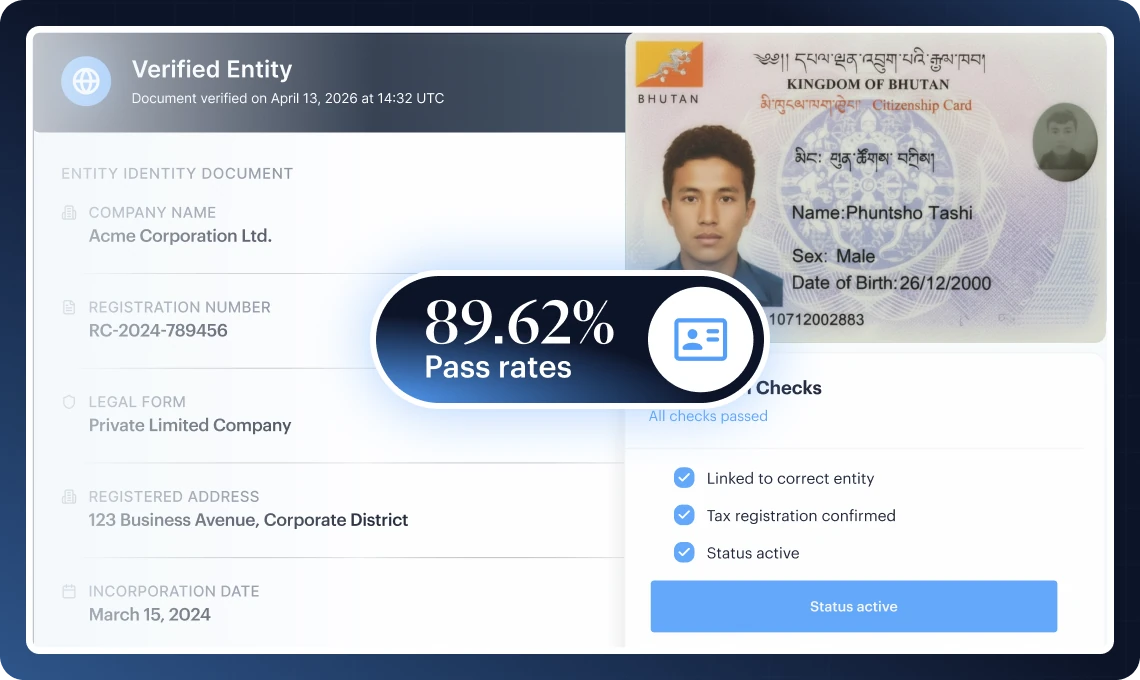
89.62%
Pass
Rates
Under 5 secs
IDV
Verification
100%
Omni-format
Document Recognition
Bhutan IDV/KYC Challenges

Mainland and Gelephu Firms Follow Different Rulebooks
KYC in Bhutan runs under two AML regimes. Mainland firms follow the AML/CFT Act 2018 and RMA rules, while Gelephu Mindfulness City firms answer to the GFSO's rulebook, with six-year records and goAML reporting. Shufti's AI Journey Builder sets checks by jurisdiction, product and risk tier.

Beneficial Owners Must Be Traced Without a Public Register
Bhutan has no beneficial ownership register yet, and the CRA only began reviewing the legal and technical design of one in November 2025. Banks must still identify everyone who owns or controls 25% or more. Shufti traces each owner through company records and verifies them.

Account Misuse Rules Demand Current KYC and Active Monitoring
RMA's account-sharing regulations, in force since 4 September 2026, require banks to keep KYC current throughout the relationship and to run monitoring that detects account misuse. Shufti refreshes customer data, tracks ID and visa expiry for non-national accounts and flags mule-style activity as it happens.

Thin Case Files Weaken FID Reports
The AML/CFT Act gives reporting entities two working days to file a suspicious transaction report with the FID, and the 2022 rules route reports through BFIAS. Incomplete case files make that deadline hard to meet. Shufti's case management builds a report-ready bundle for every alert.
Documents and Languages
Individual Documents Shufti Verifies in Bhutan
Shufti verifies 5 Bhutanese identity documents plus passports and ID cards from other countries. The cards below cover the core documents Bhutanese onboarding relies on, with the full list on the supported documents page.
View All Supported DocumentsBhutan National Digital Identity (NDI)
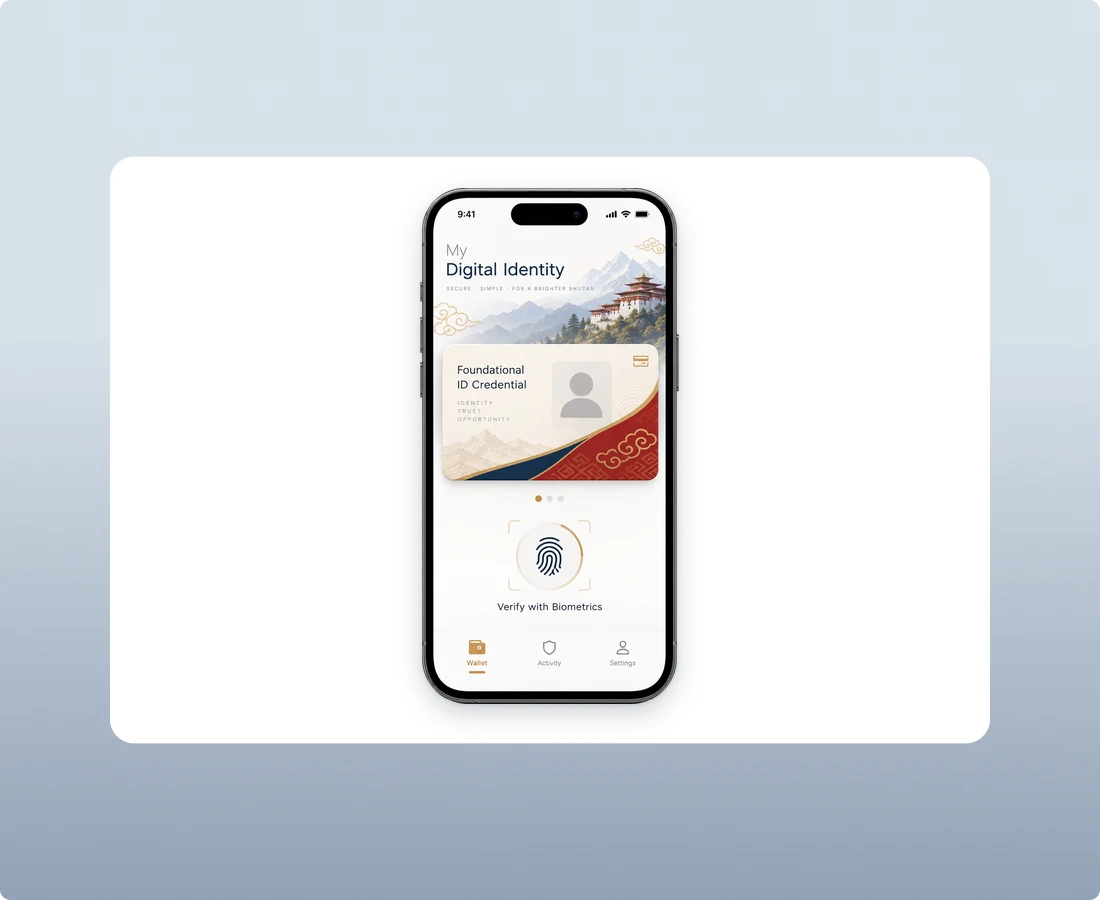
Set up under the National Digital Identity Act of Bhutan 2023 and live since October 2023, the NDI wallet holds a Foundational ID credential backed by biometrics enrolled with the Department of Civil Registration and Census (DCRC). Shufti accepts the shared credential, validates it and stores the result.
Citizenship Identity Card (CID)
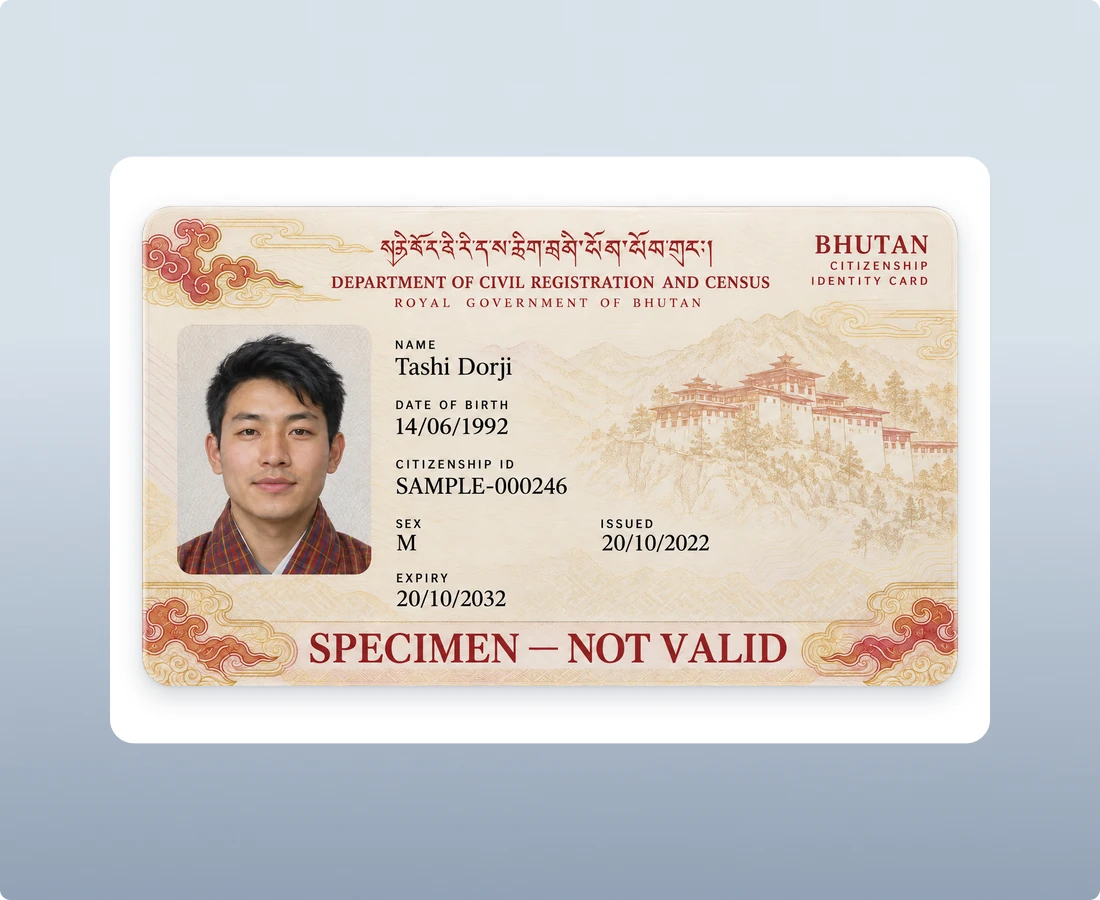
Issued by DCRC under the Ministry of Home Affairs and valid for 10 years. Third-generation cards stay valid alongside the laser-engraved fourth generation launched in August 2025, so Shufti runs forensic tamper checks suited to both and matches the card photo to a liveness-checked selfie.
Work Permit
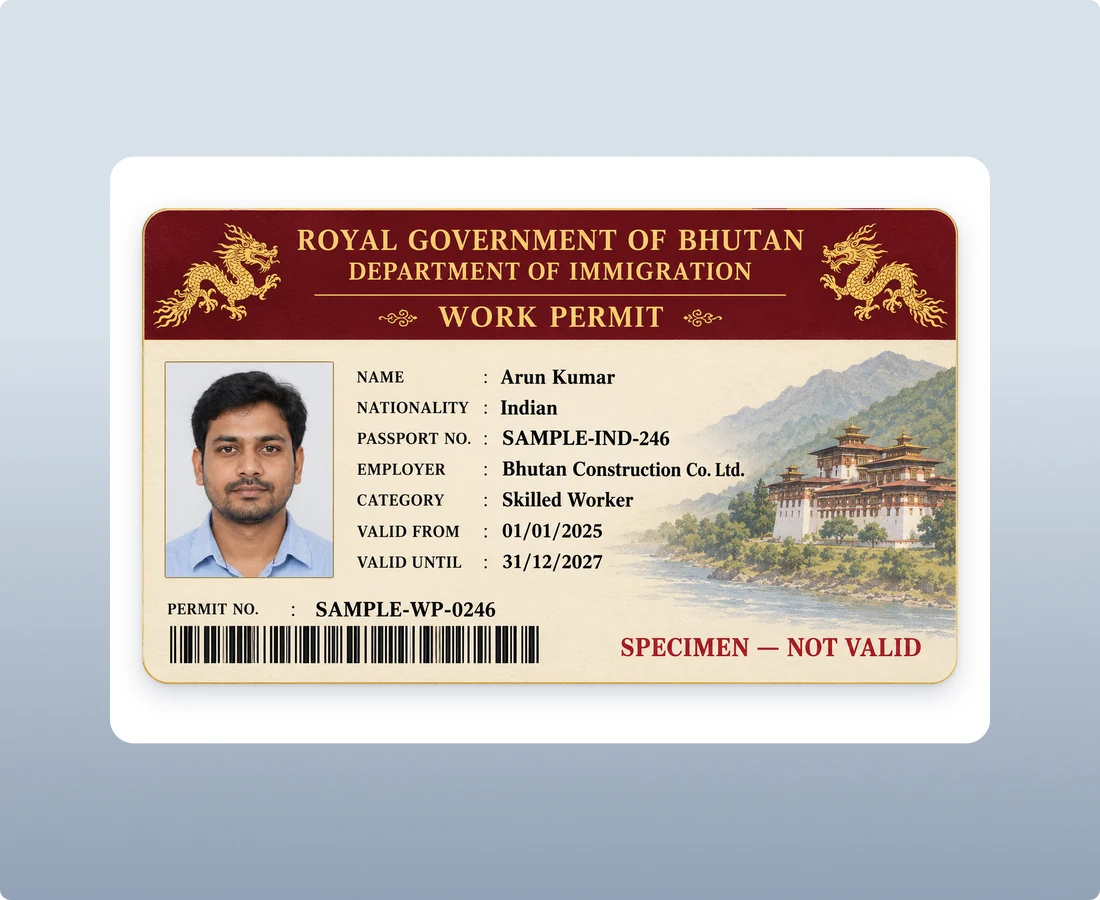
Foreign workers receive a work permit from the Department of Immigration once their recruitment is approved, under the Immigration Rules and Regulations 2023. Shufti reads the permit, matches it to the holder's passport and tracks its expiry date so an account never outlives the permit.
Bhutanese Passport
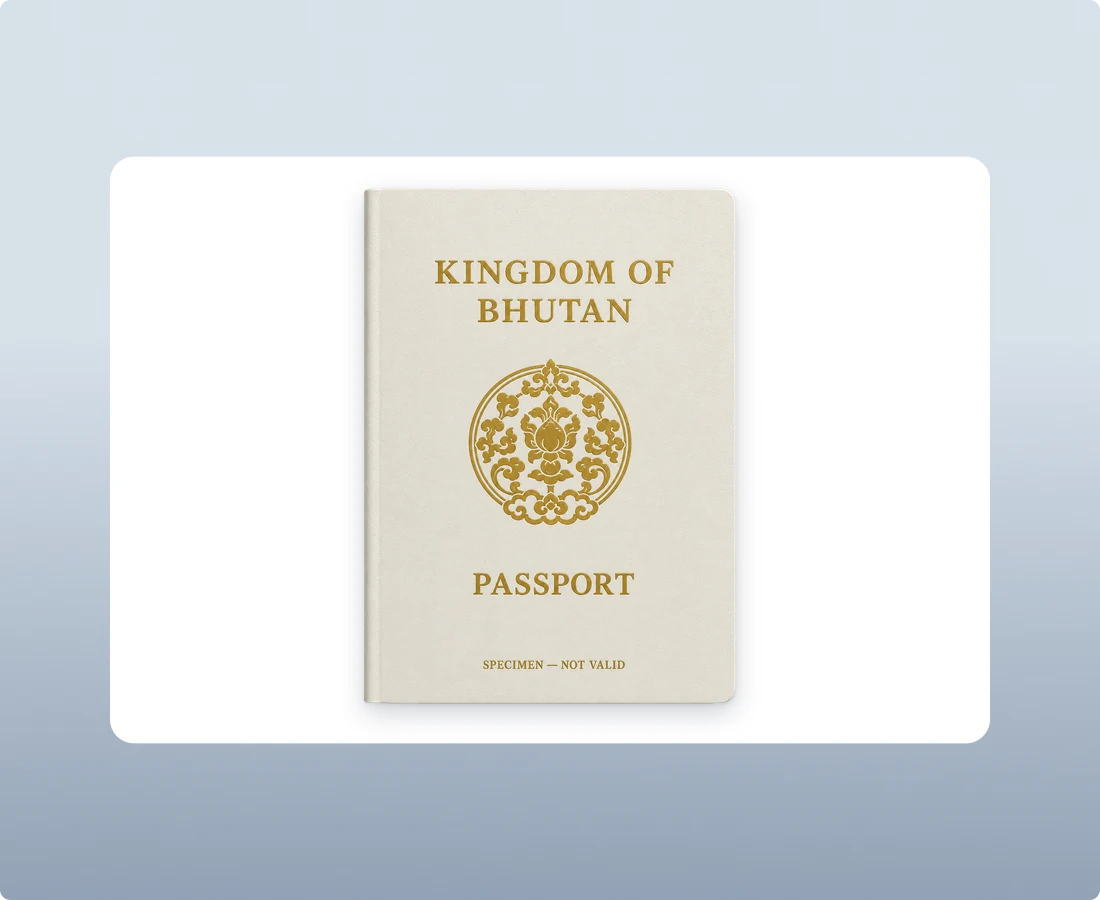
Issued by the Passport Section of the Ministry of Foreign Affairs and External Trade as a machine-readable document built to ICAO standards. Shufti runs nine forensic detection layers, from MRZ checksum validation to hologram analysis, so a cloned or altered passport fails before onboarding.
Foreign Passports and National ID Cards
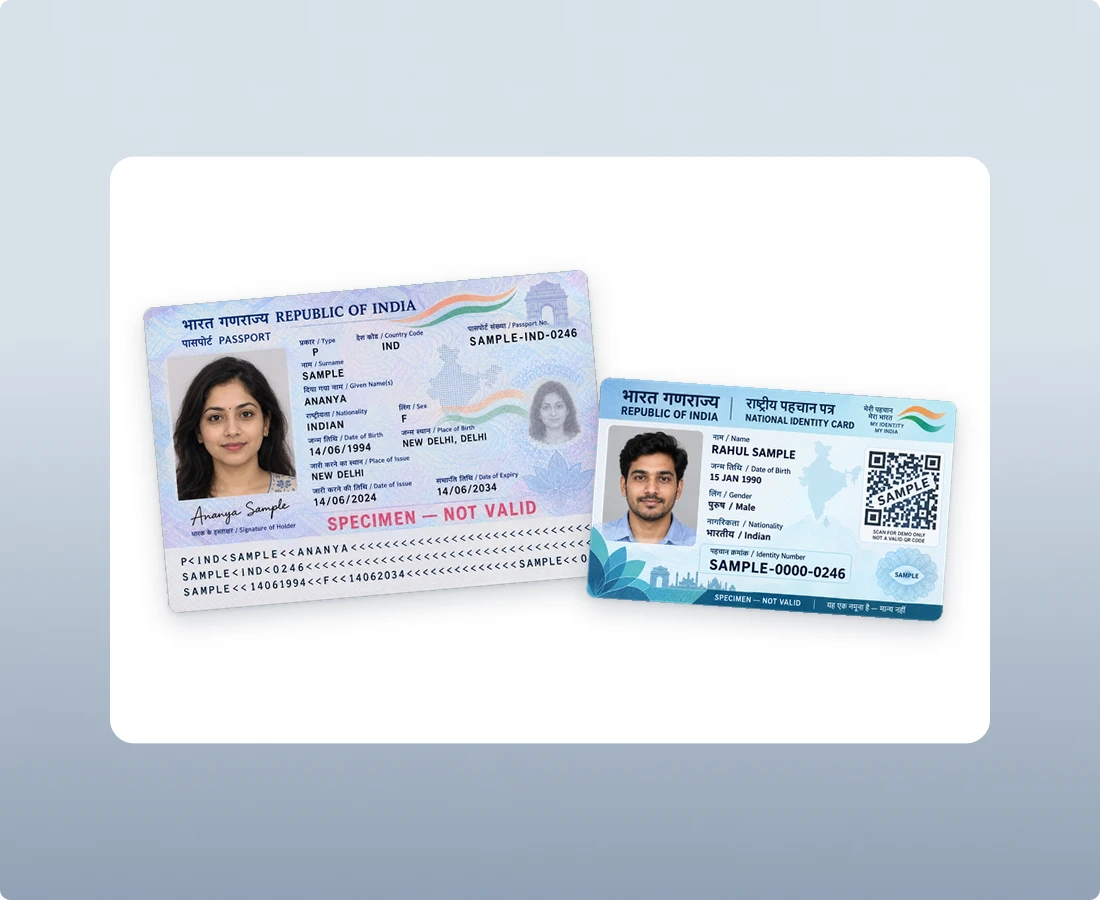
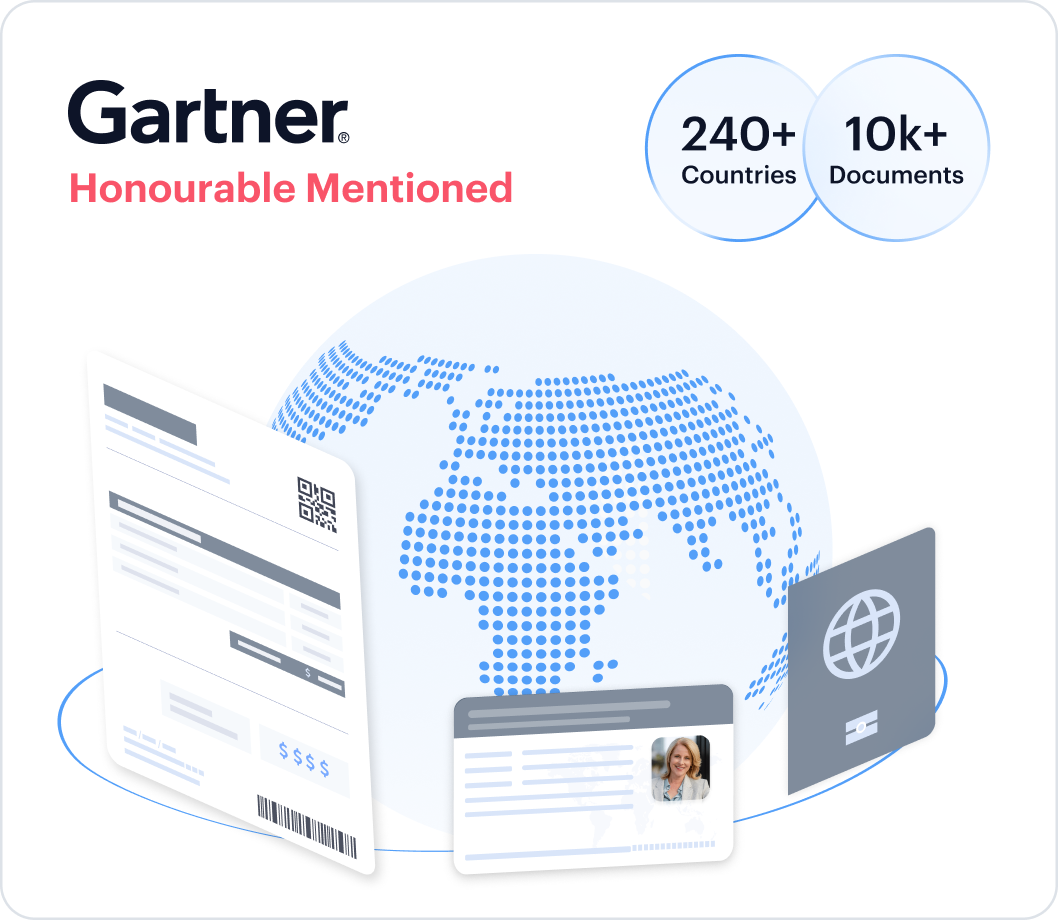
Shufti actively processes 10,000+ ID document types from 240+ countries and territories, and its zero-shot AI learns new document formats in minutes. Foreign workers, investors, students and Gelephu clients use these documents to open accounts with Bhutanese banks, insurers and wallets.
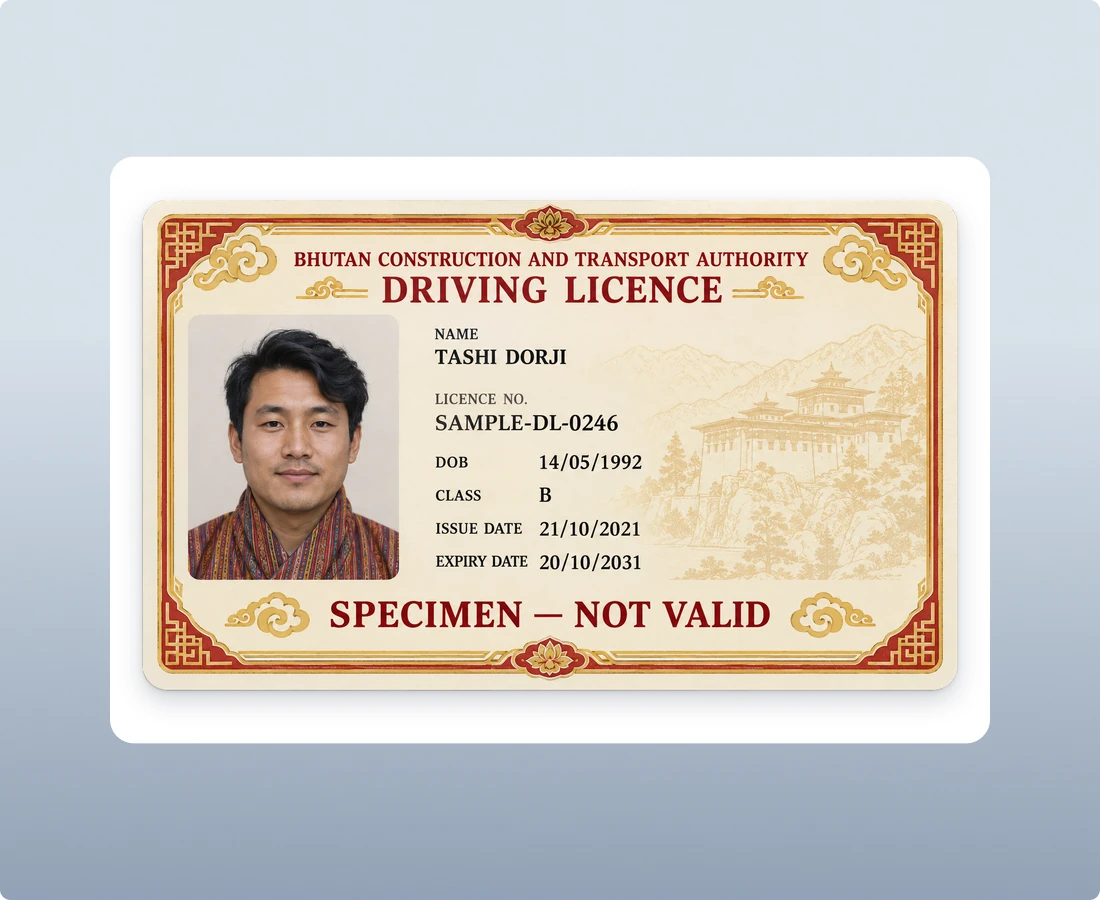
Bhutanese Driving License
Issued by the Bhutan Construction and Transport Authority, which now handles driver licensing once run by the Road Safety and Transport Authority. Shufti checks the licence's authenticity, expiry date and photo against a live selfie, giving lenders and insurers a second photo ID.
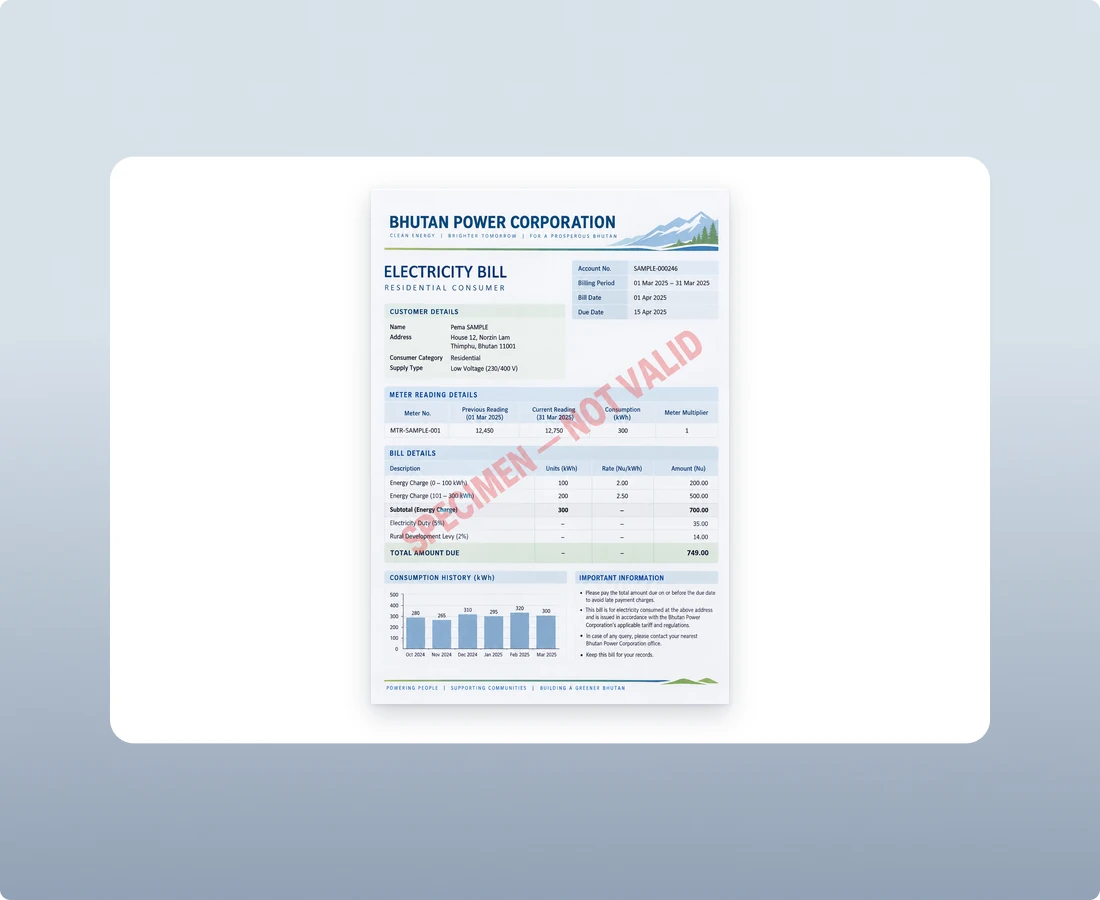
Proof of Address
Utility bills, bank statements and tenancy agreements, read with Bhutan Post's five-digit postcode and Thimphu's street addresses where they appear. Rural addresses often name the dzongkhag and gewog instead. Shufti verifies the address in the same step as the ID.
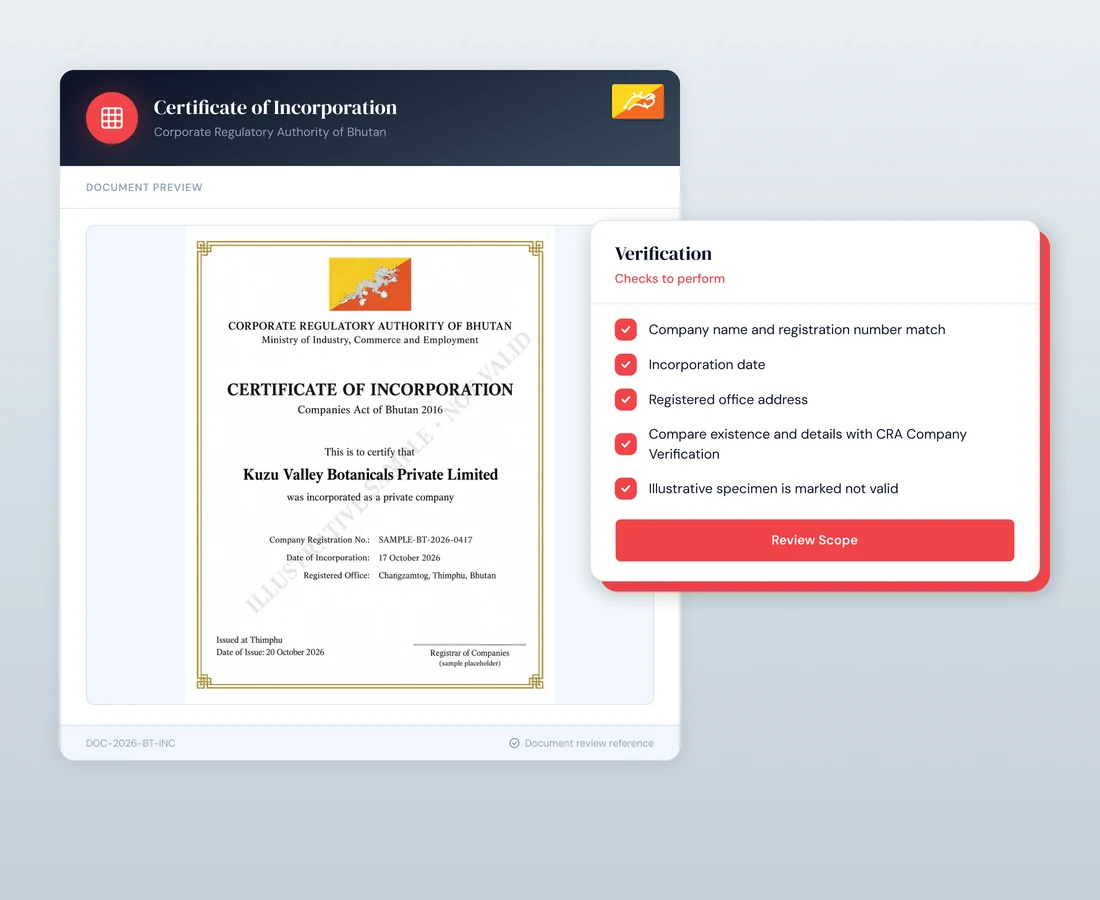
Entity Identity
Certificate of Incorporation
Issued by the Corporate Regulatory Authority under the Companies Act of Bhutan 2016. Shufti reads the company name, registration number and incorporation date and confirms them against live registry data at every check, so a struck-off or altered record surfaces before onboarding.
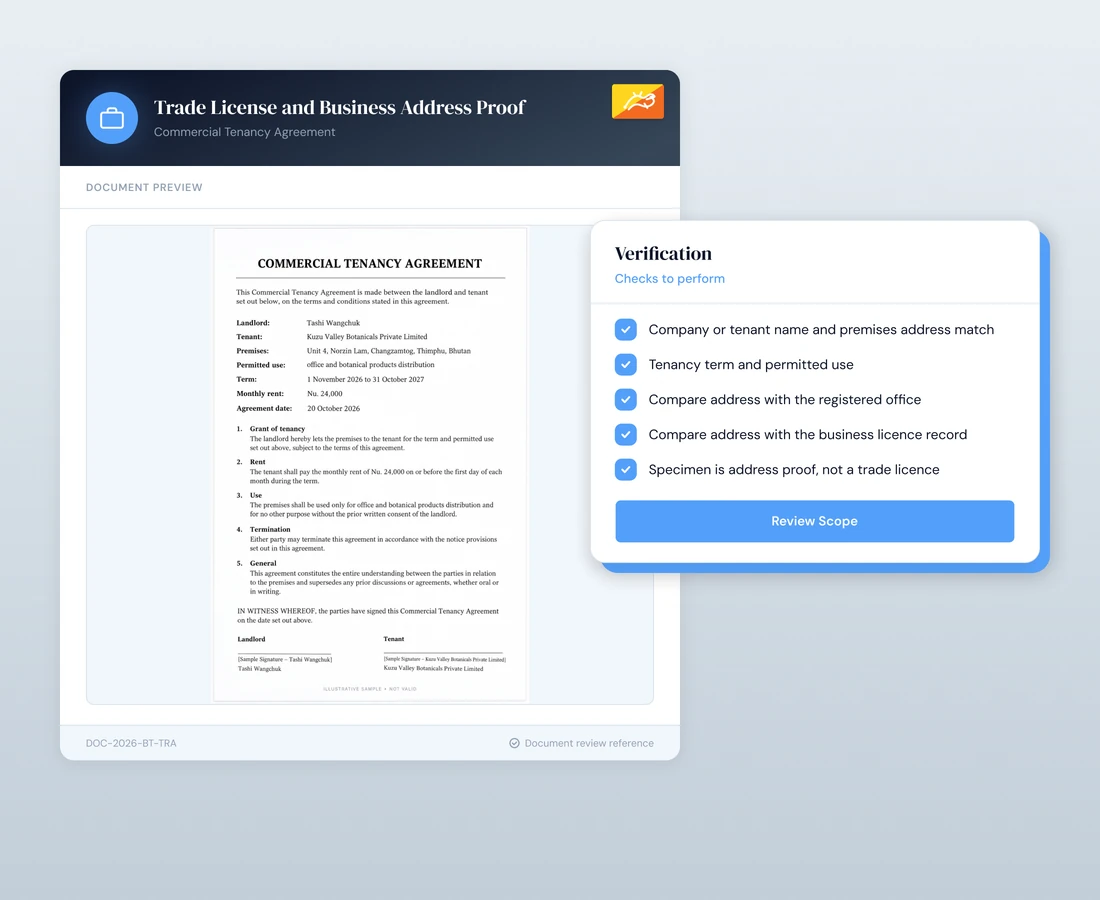
Trade License and Business Address Proof
Bhutanese firms quote a trade licence or registration number when they open accounts, along with their registered address. Shufti cross-checks the address on the licence against tenancy agreements and utility bills, so it agrees across every document a company submits.
Ownership and Control
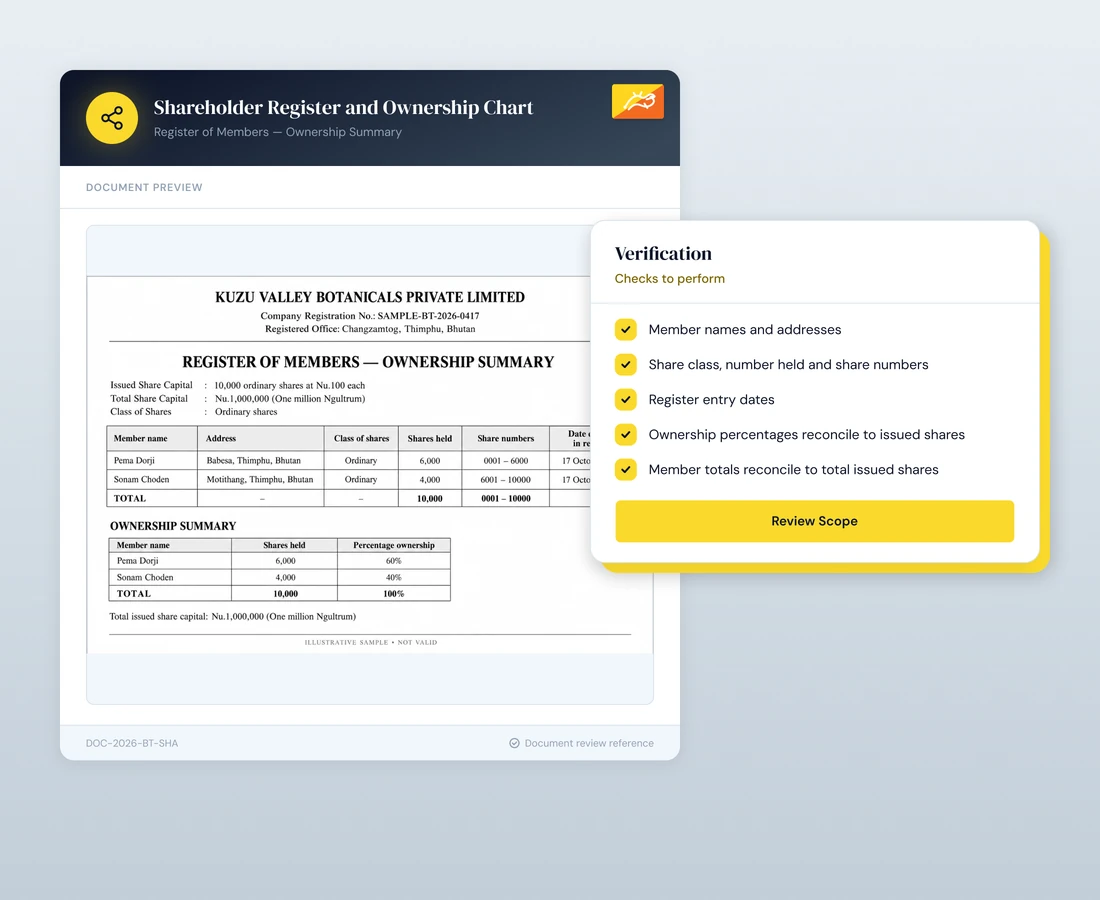
Shareholder Register and Ownership Chart
Shufti maps ownership through intermediate companies to the natural person in control and screens each layer against sanctions, PEP and adverse media data, so a holding company cannot hide who stands behind a Bhutanese subsidiary.
Languages We Cover
Dzongkha, English and Expat Document Parsing
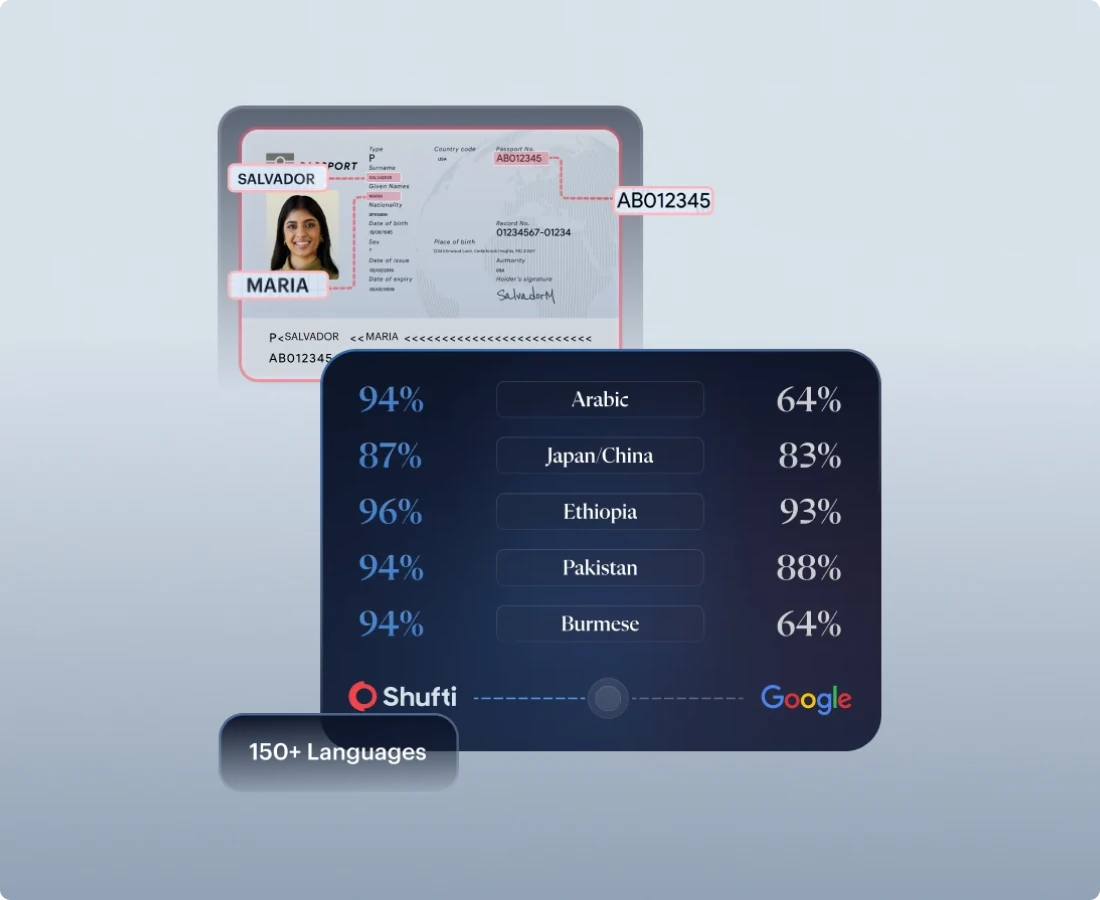
Bhutanese IDs carry Dzongkha in Tibetan script alongside English, and expat documents add many more scripts. Shufti's OCR reads 150+ languages and scripts at 99.7% accuracy and averages 93% accuracy against Google Vision's 78.4% in its published benchmark. Zero-shot document intelligence extracts data from layouts it has never seen, on first sight, without waiting for a template.
Bhutanese Name Matching
Romanised Dzongkha names can be spelled several ways across IDs, bank records and watchlists. Shufti's phonetic and transliteration rules match those variants in sanctions and PEP screening, cutting false hits without missing a listed person.
Cross-Document Consistency Checks
Names, dates of birth and ID numbers are reconciled across the NDI credential, CID, passport, driving licence and company records, so a mismatch between documents surfaces before a reviewer signs off.
Independent Validation
Shufti's Recognition Across Independent Evaluations

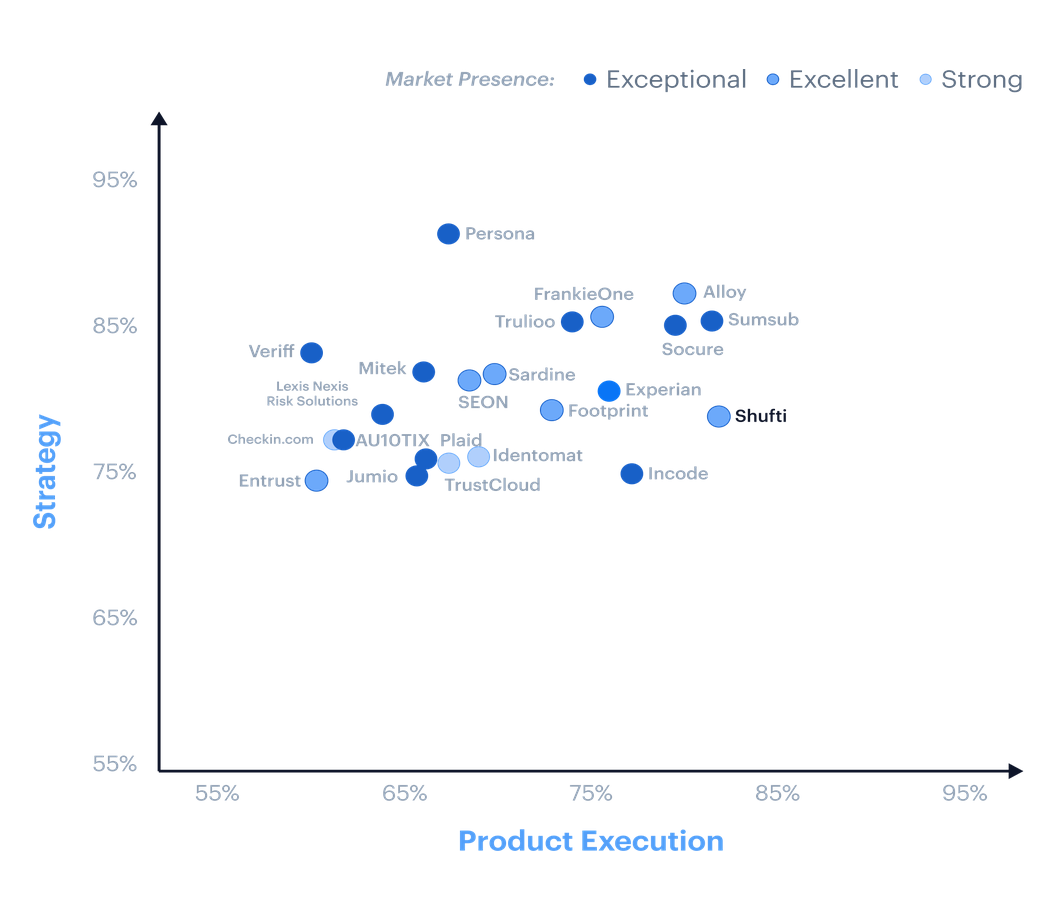
Ranked Exceptional in the Liminal Index 2026 for age estimation
View Report

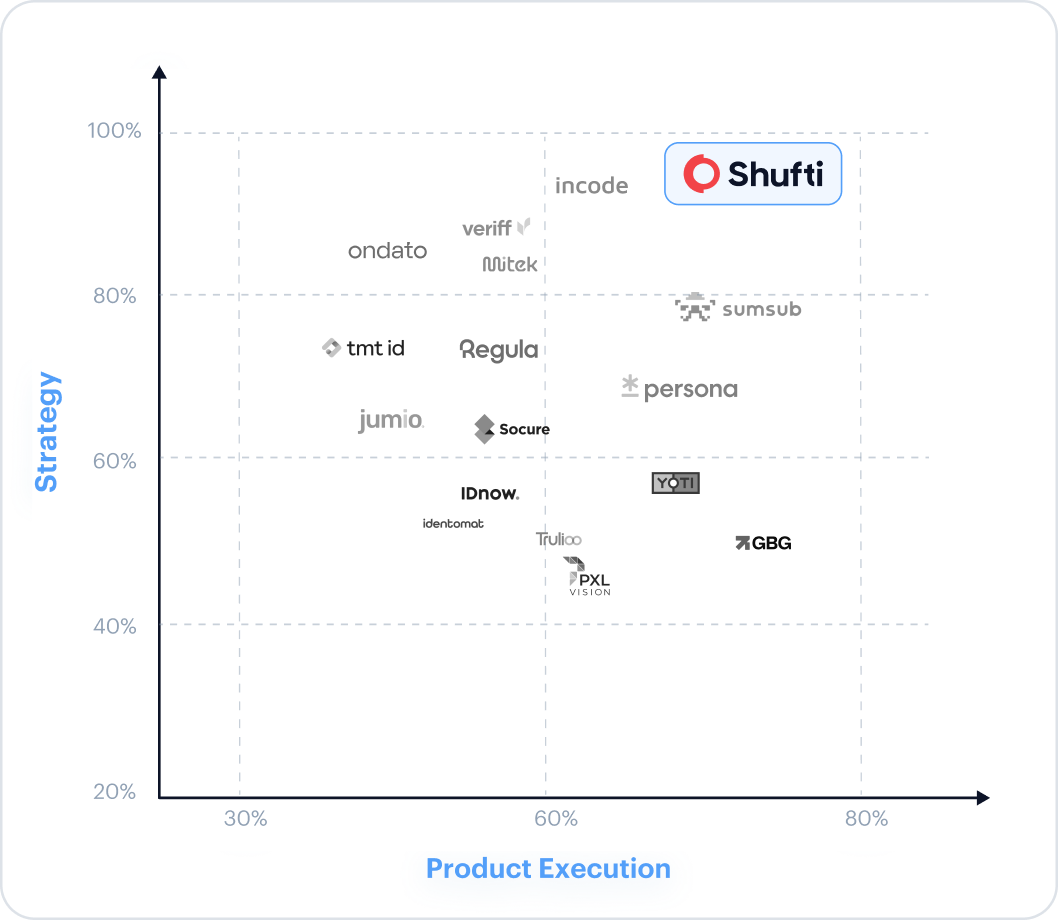
Differentiated by Gartner on document diversity and country coverage
Read more
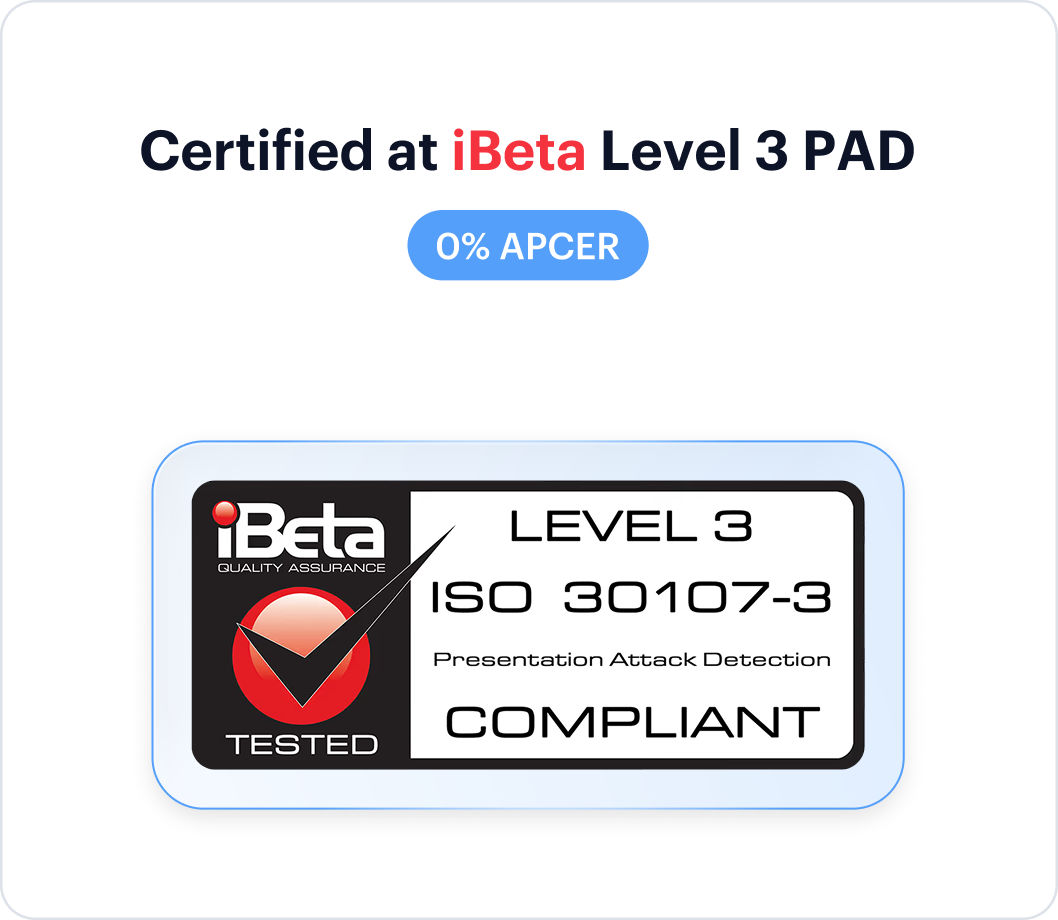
Certified at iBeta Level 3 PAD with 0% APCER
Read more
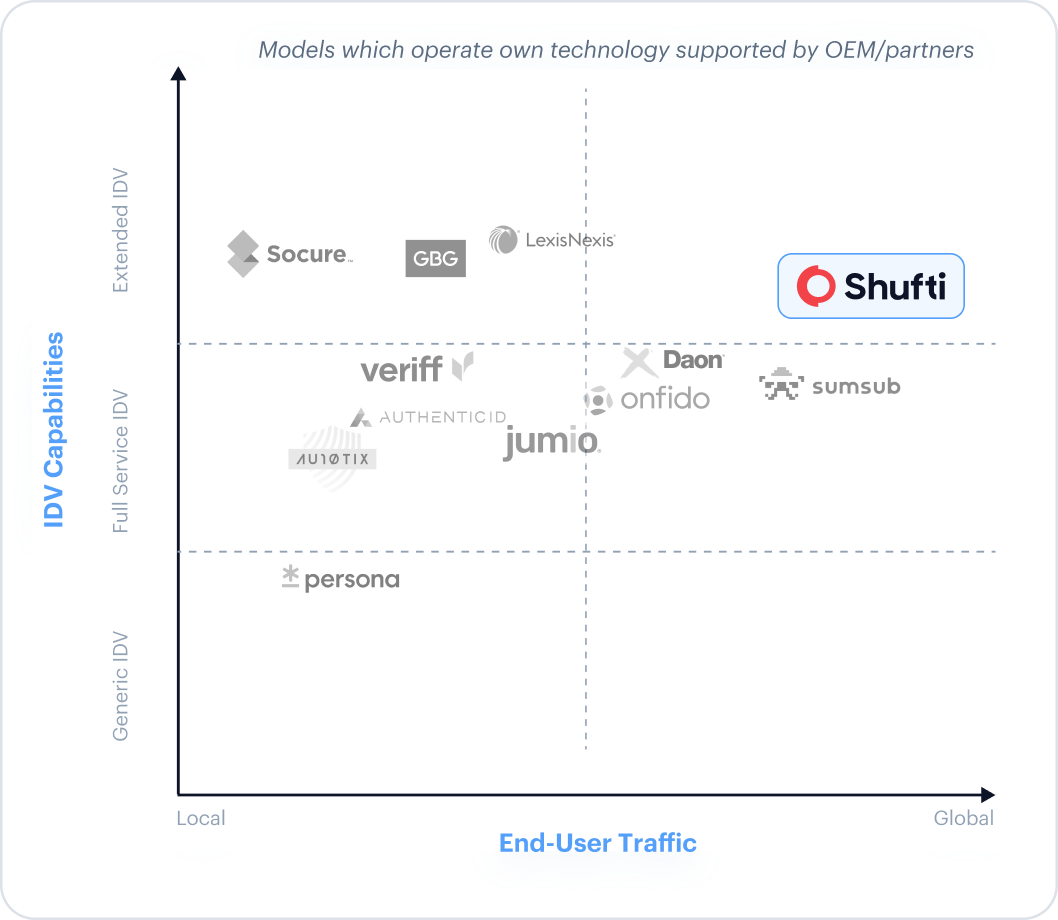
Broadest global reach in the 2025 KuppingerCole Extended IDV report
Download Report
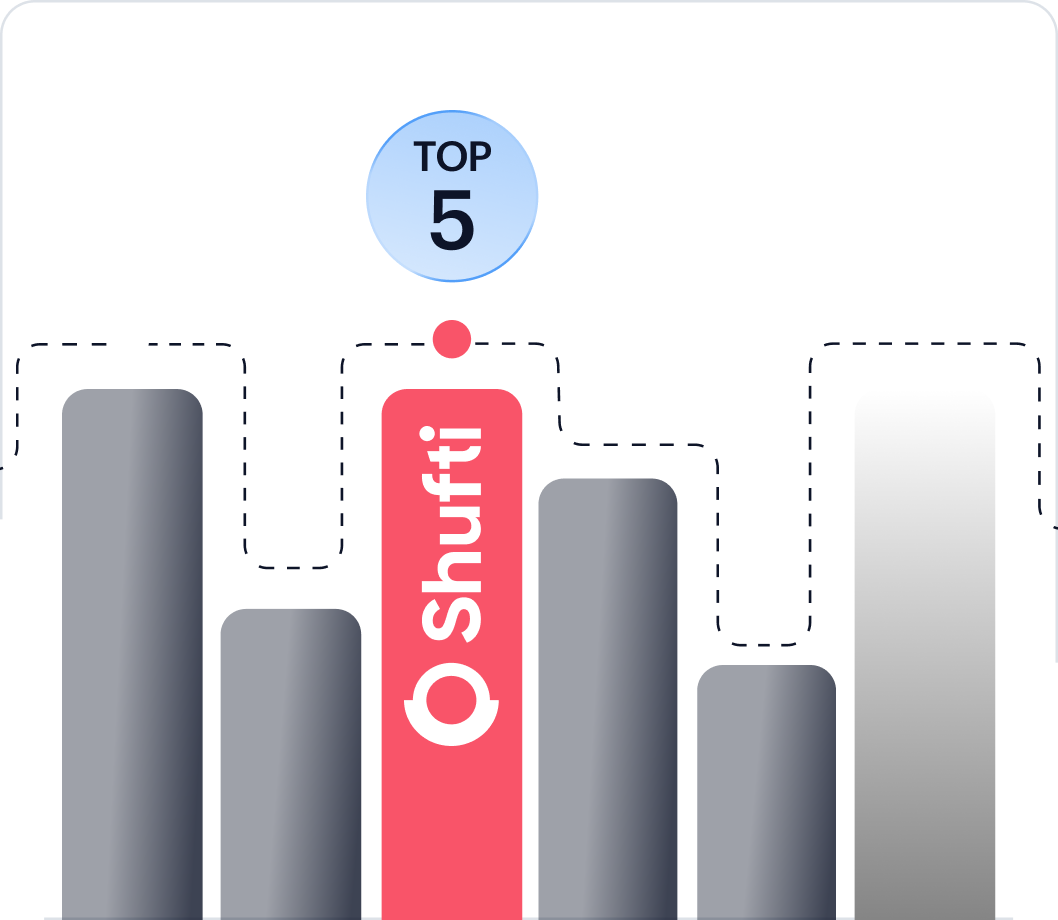
Ranked Top 5 in the DHS RIVR 2025 for identity validation
Read Blog

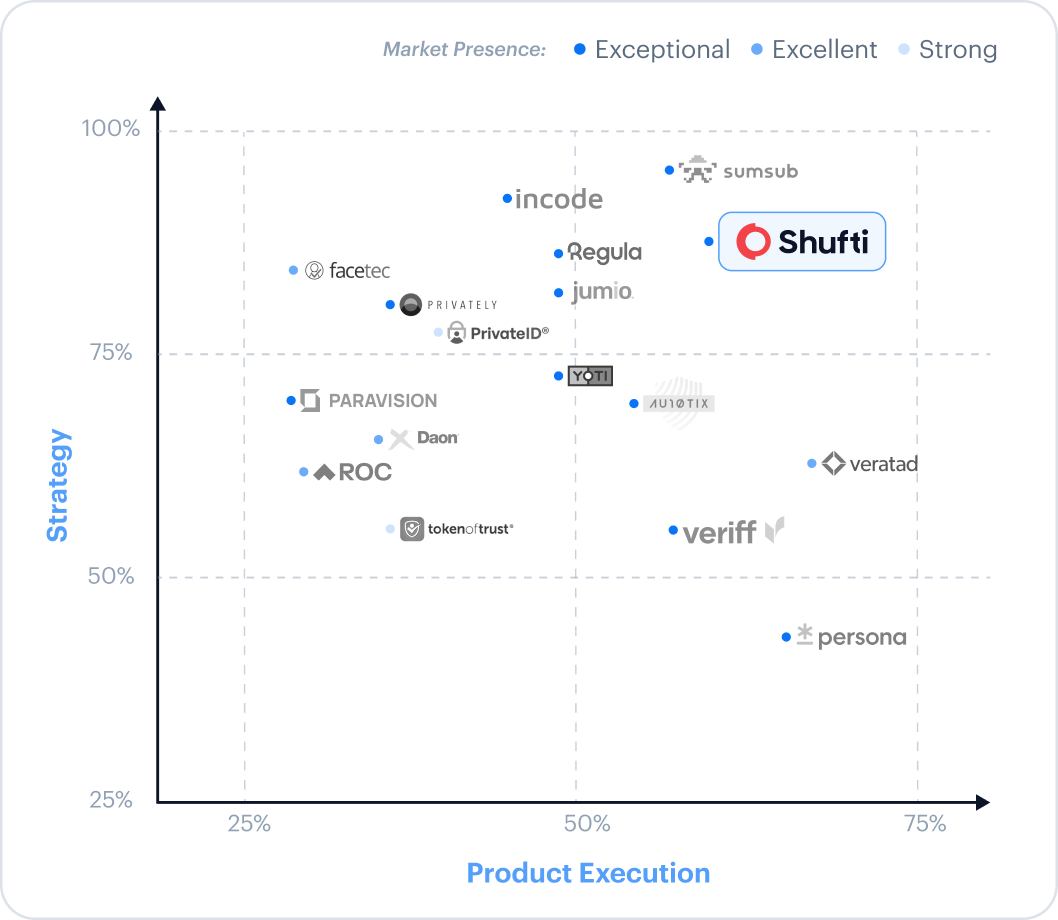
Top Vendor for Product Execution in the Liminal Index for KYC 2026
View Report

Ranked Exceptional for age verification by Liminal Index 2026
View Report
Recognised as a Leader in G2 Fall 2026 reports
Read More





Regulatory Update
Every Verification Route Bhutanese Firms Rely On, in One Platform
Identity verification in Bhutan rests on the National Digital Identity Act of Bhutan 2023, which lets onboarded verifiers validate NDI credentials (sections 49 and 50), while the GFSO expects eKYC in Gelephu to be at least as stringent as face-to-face checks. Shufti supports both, plus document, chip and video routes for non-residents and customers without NDI.
Bhutan NDI Credential Verification
LiveCustomers share their NDI Foundational ID credential, which NDI backs with a face liveness check against DCRC biometrics. Shufti validates the presentation through the firm's verifier onboarding and stores the result, so residents verify in seconds without uploading a card.
Document and Face Biometric
LiveThe customer photographs a CID, passport or work permit and takes a selfie, and Shufti matches the two with iBeta Level 3 certified liveness. It is the main remote route for customers outside NDI and for most non-residents.
NFC Chip Verification
LiveShufti reads the chip in most foreign biometric passports and checks the issuer's signed data, giving firms a high-assurance route for foreign workers and investors whose passport carries a chip.
Video Identification
LiveAn agent-led video session, run in the language your customers use, verifies the customer and their document live, captures consent and records the full session as evidence for high-risk and enhanced due diligence cases.
Fraud Prevention Across the Bhutan Customer Journey
Reduce fraud losses and protect customer trust across onboarding, account access, and payments. Shufti connects identity, behavioral, device, network, and transaction intelligence to help Bhutan businesses act on risk while keeping legitimate customers moving.
Governance & Controls
Audit-Ready Decisions, Lower Operational Drag
Fewer Avoidable Re-submissions
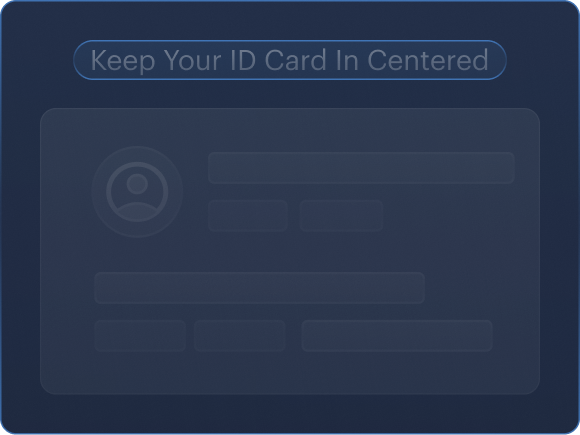
Capture guidance for CIDs, passports and work permits cuts glare, crop and blur rejections, and reads Dzongkha and English text at the first attempt.
Cleaner Audit Trails
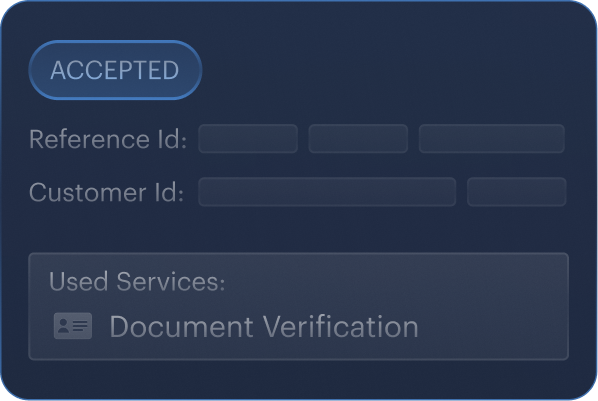
Shufti's case management records sources, results, timestamps, evidence, analyst notes and decision history, packaged as report-ready bundles for STR filing through BFIAS or goAML.
One Workflow, One Back Office
Unify KYC, KYB, AML screening and transaction monitoring in one case file, with perpetual KYC/KYB tracking ownership, director and transaction behavior changes across the lifecycle.

Bhutan NDI and CID-First Flow Design
Residents verify through Bhutan NDI first, CID holders without the wallet move to document and selfie checks, and non-residents start with their passport.
Shufti's IDV/KYC Solutions for Bhutan
KYC Solutions
Bhutanese customers range from NDI wallet holders and rural CID holders to foreign workers and Gelephu investors. One Shufti flow routes each by risk, so nobody faces checks they don't need.
Explore More
Face Verification
Remote account opening and agent-assisted sign-ups both need proof that the person matches the ID. Shufti matches the selfie to the CID or passport photo at a false match rate below 0.001, so impostors fail while genuine customers pass at the first try.
.
Age Verification
Banks, insurers and telecom operators need to confirm a customer is old enough before opening an account or signing a contract. Shufti estimates age from a selfie in under 5 seconds and falls back to the CID's date of birth, blocking 99.8% of underage attempts.
.
Bank Account Verification
Loan disbursements, insurance payouts and salary transfers go astray when the account name differs from the customer. Shufti validates Bhutanese bank account details and matches the account-holder name in real time, so funds reach the right person.
.
Address Verification
The same address can appear as a dzongkhag and gewog, a postcode or a Thimphu street name. Shufti's layout-aware extraction and fuzzy matching read local bills and statements at a 99.3% pass rate, with docless checks in under 3 seconds.
.
Document Verification
Altered and borrowed IDs remain a common entry point for fraud in remote onboarding. Shufti checks CIDs, passports, permits and licences within seconds, flagging GenAI edits, screenshots, replays and print-and-scan copies before onboarding continues.
.
Identity Verification
Some customers need more than one check. Shufti combines NDI, document, biometric, NFC and address checks in one API session, so a firm can step a customer up from a basic check to full due diligence without restarting onboarding.
.KYB Solutions
Bhutanese companies register with the CRA under the Companies Act of Bhutan 2016, and until a beneficial ownership register exists, owners have to be traced through company records. Shufti checks registry data at every review and maps every owner against the 25% test.
Explore More
Business Verification
Onboarding a Bhutanese company means confirming its certificate of incorporation, TPN, signatories and everyone who owns or controls 25% or more. Shufti's live registry call confirms the CRA record, and owners are traced through the shareholder records the company provides.
.
Enhanced Due Diligence
PEPs, high-risk customers and cross-border trading firms need deeper checks under the FID's PEP guideline and risk-based framework. Shufti's due diligence forms branch by risk, collect source of funds and verify beneficial owners through secure links, keeping every answer in the case file.
.AML Screening
A customer who is clean at onboarding can land on a list next week. Shufti's perpetual KYC rescreens customers against 4,000+ watchlists, including the UN Security Council designations the Department of Law and Order publishes, refreshed every 15 minutes, with every result in one case file.
Explore More
Business AML Screening
Sanctions exposure often sits with an owner or director rather than the company itself. Shufti screens every entity, owner and signatory against UN lists, PEP data and adverse media, and perpetual KYB rescreens them whenever CRA records change.
.
Transaction Monitoring
The 2022 rules route cash and suspicious transaction reports through BFIAS, and RMA's account-sharing regulations require systems that catch misuse. Shufti's library of 500+ pre-built rules covers structuring, smurfing and mule activity with 60% fewer false positives, and builds report-ready case bundles for the FID.
.
Travel Rule
Virtual asset firms licensed in Gelephu Mindfulness City must send originator and beneficiary details with transfers under section 10.3 of the GFSO AML Rulebook, with no minimum threshold. Shufti's Travel Rule solution connects to major networks through one integration and verifies unhosted wallet ownership.
.
AI Compliance Co-Pilot
One common name can return 140+ screening hits. Shufti's AI Compliance Co-Pilot reviews every hit, assigns a 0 to 100 confidence score and a written reason, and leaves the final decision with the MLRO, whose overrides are logged.
.Built To Fit Bhutan's Compliance Landscape
AML compliance in Bhutan starts with the AML/CFT Act 2018, the FID and RMA across the mainland, while Gelephu Mindfulness City runs its own financial regulator and rulebook. Shufti maps its KYC, KYB, AML screening and transaction monitoring controls to every regime below, so one platform covers each license your group holds.
Anti-Money Laundering and Countering of Financing of Terrorism Act of Bhutan 2018
Bhutan's primary AML law sets up the National Coordination Committee (section 7), requires suspicious transaction reports within two working days of a transaction or attempt (sections 69 to 71) and obliges every person to apply UN targeted financial sanctions once formal notice is published (section 83).

Royal Monetary Authority of Bhutan (RMA)
The central bank licenses and supervises banks, insurers, securities intermediaries, money changers and money transfer providers under the Financial Services Act of Bhutan 2011. Its Regulations on the Prohibition of Sharing and Misuse of Bank Accounts, 2026 require current KYC and monitoring that detects account misuse.
Financial Intelligence Department (FID)
Bhutan's financial intelligence unit, a full department of RMA since July 2018 and an Egmont Group member since 2020. Under the AML/CFT Rules and Regulations 2022 it receives cash and suspicious transaction reports through BFIAS, and its guidelines cover PEPs, beneficial ownership and each reporting sector.
Gelephu Financial Services Office (GFSO)
The independent regulator of financial services and virtual asset activity in Gelephu Mindfulness City, under the Financial Services Act 2025. Its Anti-Money Laundering and Sanctions Rulebook 2026 sets a 25% ownership test (Rule 8.3.3), six-year records (Rule 4.5.1) and goAML reporting (Rule 14.3.5).

Corporate Regulatory Authority (CRA)
Registers companies under the Companies Act of Bhutan 2016 within the Ministry of Industry, Commerce and Employment. In November 2025 it began a legal and technical review of a beneficial ownership registry with the World Bank and Open Ownership, in line with FATF Recommendation 24.

Department of Law and Order, Ministry of Home Affairs
Gives formal notice of UN Security Council designations under section 83 of the AML/CFT Act and publishes the international sanctions list on the Ministry of Home Affairs website. Reporting entities must then update their screening databases without delay whenever the UN list changes, under the AML/CFT Rules and Regulations 2022.
National Digital Identity Act of Bhutan 2023
Governs Bhutan NDI. Its Administrative Body onboards verifiers (section 49), relying parties can check the Trust Registry (section 53), and the infrastructure is designed to keep identity data resident in Bhutan, with external residency allowed only under set conditions (sections 115 to 117).

Department of Civil Registration and Census (DCRC)
Part of the Ministry of Home Affairs, it registers citizens and households, issues the Citizenship Identity Card to citizens who have completed 15 years and holds the biometric records Bhutan NDI matches during face authentication. Changes recorded at DCRC flow automatically into the holder's NDI wallet.

Bhutan InfoComm and Media Authority (BICMA)
Administers the Information, Communications and Media Act of Bhutan 2018, which carries the country's main privacy and data protection duties. Its Code of Practice on Registration of SIM Cards 2019 and a September 2026 cap of five SIMs per person per operator target misuse of mobile numbers.
Bhutan Data Residency and Deployment
Shufti offers on-premises deployment inside Bhutanese infrastructure, including air-gapped setups, or nearest-region cloud hosting where the client approves the transfer. The agreement defines hosting locations and transfer safeguards, matching the NDI Act's default of keeping identity data in Bhutan.
Information, Communications and Media Act of Bhutan 2018 (ICM Act)
With no standalone data protection law yet, the ICM Act sets the bar. It requires express written permission to collect personal data and written authorisation to disclose it (sections 384 and 385), and treats biometric information as sensitive. Shufti applies encryption, role-based access and configurable retention.
NDI Act Data and Incident Rules
Issuers, holders and verifiers under the NDI Act must follow recognised privacy and security standards (section 61) and report identity fraud or major cyber incidents to the Administrative Body (section 118). Shufti logs every NDI presentation, keeps only the attributes a flow needs and supplies audit records for incident reports.
Retention Controls
Retention is configurable by client and jurisdiction. Five years for mainland reporting entities and six under the GFSO rulebook are floors, not automatic deletion dates, and legal holds keep records longer. Once those periods end, the ICM Act's duty to delete obsolete data applies (section 386).
Encryption and Security
Data is encrypted in transit and at rest, with role-based access and audit logging throughout. Shufti holds ISO 27001:2022 certification and a SOC 2 Type 2 report and shares both for vendor due diligence by banks, insurers and Gelephu-licensed firms.
Automated Decisions and Biometric Data
Shufti returns every verification result with its supporting details through the API and back office, so support and compliance teams can explain an outcome to the customer, review a disputed decision and escalate it for a human check.
Scope of Our Role
Shufti processes data as a service provider on each firm's instructions, and the licensed firm keeps responsibility for customer due diligence under the AML/CFT Act and its regulator's rules. Shufti's privacy notice identifies any activities where it acts as an independent controller.
Data Residency and Privacy Controls in Bhutan
Bhutan AML Sources That Strengthen Decisions

Royal Bhutan Police

Office of the Attorney General
Anti-Corruption Commission of Bhutan

Department of Revenue and Customs

Commission for Religious Organizations of Bhutan (Chhoedey Lhentshog)
Department of Law and Order, Ministry of Home Affairs

Asia/Pacific Group on Money Laundering (APG)
Bar Council of Bhutan

Financial Action Task Force (FATF)

Department of Trade

International Monetary Fund AML/CFT Thematic Fund

Egmont Group of Financial Intelligence Units

EU Global Facility on AML/CFT
Department of Industry

International Criminal Police Organization (INTERPOL)
Turn Bhutan Verification Requirements into a Smoother Customer Journey
Share your customer types, risk rules and current onboarding process. A Shufti specialist will show you how to connect identity verification, KYB and ongoing monitoring, reducing operational hand-offs while keeping decision evidence organised for compliance review.
INDEPENDENTLY AUDITED. GLOBALLY CERTIFIED.
Certified to Global Standards



PROVEN WORKFLOWS
Identity Verification Built Around Your Industry in Bhutan
Faster Account Opening With NDI And CID Checks
Bhutan bank onboarding now runs remotely too, with Bank of Bhutan opening accounts through Bhutan NDI, while RMA's 2026 regulations require current KYC and misuse monitoring on every account. Shufti verifies NDI credentials and CIDs, screens customers at onboarding and watches accounts for mule patterns over time.

Frequently Asked Questions
Does Shufti support Bhutan NDI, and what happens when customers cannot use it?
Yes. Customers share their NDI Foundational ID credential inside the Shufti flow, and the validated result is stored in the case file. Anyone without the wallet, including most non-residents, moves to CID or passport checks with a liveness-backed selfie, NFC or video identification.
Is a CID image enough to verify a Bhutanese customer?
An image alone leaves room for edited or borrowed cards. Shufti adds forensic tamper checks for third- and fourth-generation CIDs and a liveness-backed selfie match, with Bhutan NDI or video identification for higher-risk cases, so the person behind the card is confirmed too.
Can Shufti verify foreign documents or identity formats it has not encountered before?
Yes. Shufti's zero-shot document intelligence reads unfamiliar layouts and checks them for tampering, so foreign workers, investors and Gelephu clients onboard without waiting for a template. Each document is still matched to a liveness-checked selfie and screened against watchlists before approval.
How does Shufti OCR compare with Google OCR for Dzongkha identity documents?
Shufti reads Dzongkha in Tibetan script alongside English, extracting each field at the 99.7% accuracy its OCR delivers across 150+ languages. In its published benchmark against Google Vision, Shufti averages 93% accuracy to Google's 78.4%. Extracted names are transliterated, so screening and records stay consistent.
How does Shufti verify ownership when a Bhutanese company has several corporate layers?
Shufti reads CRA registration details, Articles of Incorporation and shareholder records and traces each corporate shareholder to the natural person in control. It applies the 25% test used by mainland banks and GFSO Rule 8.3.3, checks effective control and screens every owner.
Does Shufti's ongoing monitoring cover more than sanctions screening?
Yes. RMA's account-sharing regulations require banks to maintain updated KYC throughout the relationship and run monitoring capable of detecting account misuse (clause 2.2). Shufti compares transactions with each customer's profile, rescreens watchlists and flags ownership, director and document expiry changes.
How does Shufti keep screening current and handle Bhutanese name variations?
Watchlists, including the UN Security Council designations published by the Department of Law and Order, refresh every 15 minutes. Native phonetic models across 80+ languages match romanised Dzongkha spelling variants and reordered names, so a listed person is caught without flooding analysts.
Can we choose Bhutan hosting or run verification inside our own infrastructure?
Yes. Shufti can run on-premises in your own Bhutanese data centre, including fully air-gapped deployments, or in nearest-region cloud hosting where you approve the transfer. The agreement records the hosting location and transfer safeguards for your RMA or GFSO vendor review.
What controls help us protect identity and biometric data?
Encryption in transit and at rest, role-based access, audit logs and configurable retention protect identity and biometric data, which the ICM Act treats as sensitive. Shufti's independent certifications support vendor reviews, and its access records show who viewed each file.
Can we configure different retention periods for different Bhutan licenses?
Yes. Retention is set per client, product and license, so a mainland bank keeping records for five years and a Gelephu-licensed affiliate keeping them for six can share one platform, with legal holds wherever the FID or GFSO needs records kept longer.
What does Shufti provide when our compliance team needs to prepare an FID report?
Shufti assembles a report-ready bundle with verification results, screening hits, transaction history, analyst notes and the decision trail, so the compliance officer can review the evidence and file through BFIAS within two working days, or through goAML for Gelephu-licensed firms.
Can we add verification checks without rebuilding our onboarding journey?
Yes. Shufti's AI Journey Builder adds or reorders checks such as NDI, NFC, video, address or EDD questionnaires by product, jurisdiction and risk level through the same API and SDK, so existing journeys keep running while new steps go live.
How does Shufti make verification queries easier for our customer support team?
Support agents see each verification result in the back office with the reason behind it, the documents captured and the checks that passed or failed, so they can explain an outcome, request a resubmission or escalate a disputed decision quickly.
Let’s Build Trust Into Your Business
1B+Verifications Processed
240+Regions Actively Processed
99.7%Accuracy Rate
Samer Al Tamimi
CEO of Safwa Bank

“We take our client’s privacy very seriously and always look for new innovative solutions to ensure a safe banking experience. Working with Shufti feels like a breath of fresh air, as their 100% in-house tech keeps our customer’s data free from vulnerabilities and fully safe and protected.”
Trusted. Compliant. Certified


Explore Shufti For Your Business
Get a personalised demo from our experts.
PROVEN PLAYBOOKS
Explore Practical KYC & AML Resources
19 June, 2026
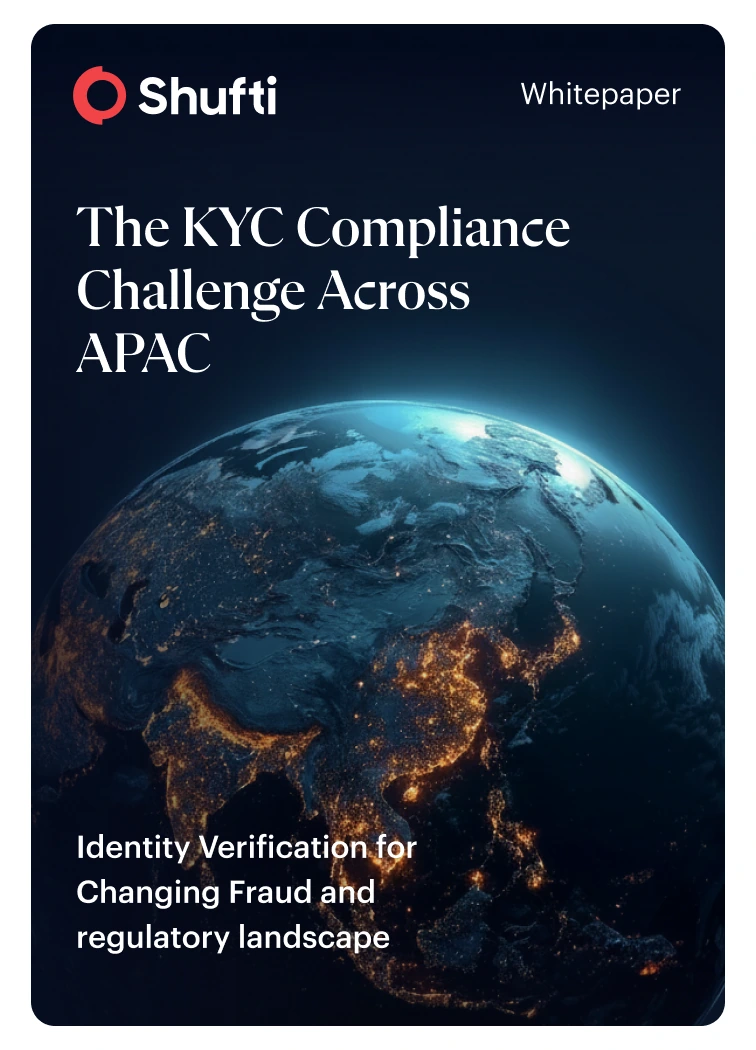
KYC Compliance and Identity Fraud Challenge Across APAC
Shufti's own verification data shows fraud climbing alongside digital growth across APAC. Where that pressure lands, and what the leading markets are doing about it.
Whitepaper